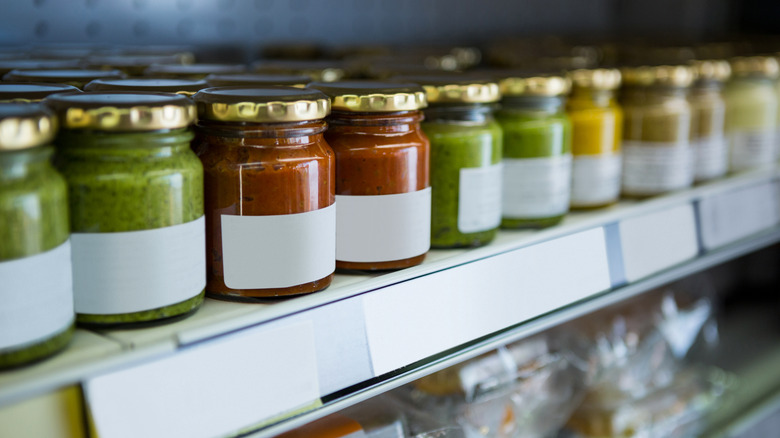
You’ve seen them: those convenient little jars of pesto lining the grocery aisle, nestled between tomato sauce and pasta. Maybe you’ve even grabbed one in a pinch—after all, it’s shelf-stable, no refrigeration required, and lasts for months.
But here’s the real question: is shelf-stable pesto actually worth it?
Whether you’re a homemade pesto purist or someone who wants to meal prep without worrying about spoilage, this guide will break down everything you need to know about shelf-stable pesto—how it’s made, how it compares to the fresh stuff, and whether it belongs in your pantry.
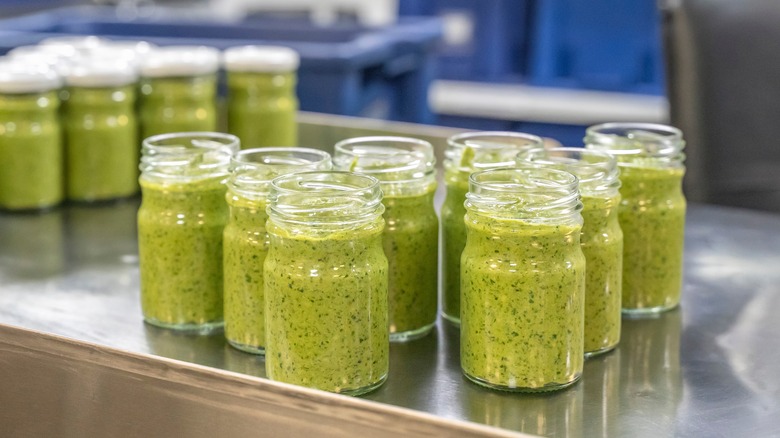
We’ll cover store-bought options, home canning methods, ingredient tweaks, and how to make pesto that lasts without sacrificing flavor.
What Makes Pesto Shelf-Stable?
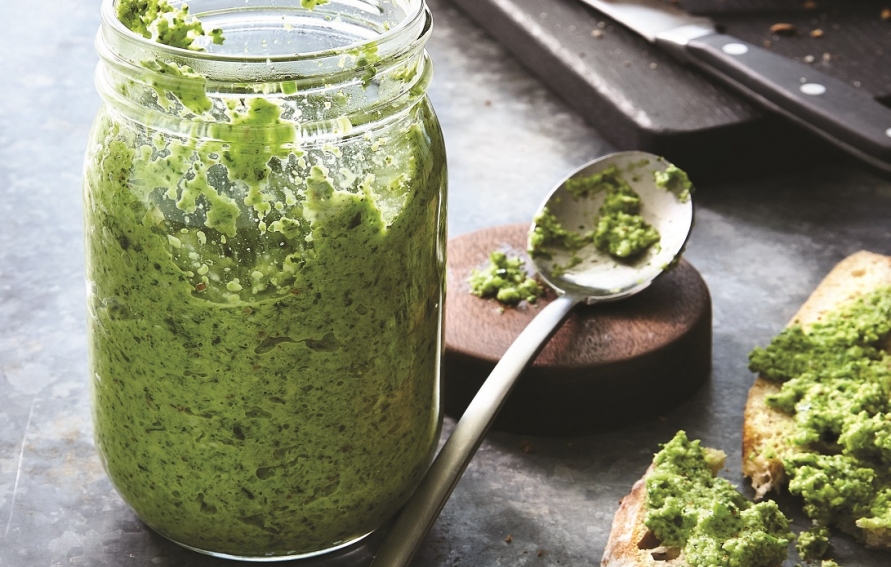
Shelf-stable pesto can sit in a pantry for months (sometimes years) without refrigeration. This is possible thanks to several processing methods:
1. Pasteurization
• Commercial pesto is heated to kill bacteria and enzymes.
• High heat extends shelf life but can mute flavor and alter texture.
2. Preservatives and Acidity Adjustments
• Citric acid, ascorbic acid (Vitamin C), or vinegar are added to lower the pH.
• A lower pH (below 4.6) prevents microbial growth, especially botulism.
3. Vacuum Sealing or Nitrogen Flushing
• Oxygen is removed or replaced to prevent spoilage and oxidation.
• Combined with oil layering to protect color and flavor.
Ingredients in Shelf-Stable Pesto (And What They Mean for You)
Verdict: It’s functional, not phenomenal.
Store-Bought Shelf-Stable Pesto – The Good, the Bad, and the “Why Though?”

The Good
• Long shelf life (up to 12–18 months unopened)
• Convenient, portable, no refrigeration required
• Available in bulk or multipacks
The Bad
• Dull flavor and aroma
• Off-color (grayish-green or army green)
• Artificial or overly acidic taste
• Often uses filler ingredients (cheaper oils, starches, flavorings)
The “Why Though?”
• Great for:
• Emergency pantry meals
• Camping or travel
• Dorm cooking
• Not great for:
• Pasta night when flavor matters
• Highlighting with fresh veggies, meats, or grains
Can You Make Shelf-Stable Pesto at Home?

Short Answer: Yes, But It’s Tricky
Home-canned pesto is not recommended for water bath canning due to its low acidity and high oil content. The risk of botulism is too high without pressure canning and strict controls.
Option 1 – Pressure Canning
• Requires a pressure canner
• Must acidify pesto with lemon juice or vinegar
• Cheese should be omitted and added later
• Follow strict USDA or extension office guidelines
Option 2 – Make Acidified Pesto
• Add lemon juice or vinegar to lower pH
• Use cashews or sunflower seeds instead of pine nuts
• Skip cheese and dairy
• Store in sterilized jars and refrigerate, even if vacuum-sealed
Warning: Even vacuum sealing doesn’t make pesto shelf-stable at room temperature without proper acid levels and heat treatment.
Shelf-Stable Pesto vs. h – Side-by-Side Comparison
When Shelf-Stable Pesto Makes Sense
Use it when:
• You’re stocking an emergency pantry or camping bag
• You’re making gift baskets that don’t require refrigeration
• You want a budget-friendly pesto to mix into sauces or baked dishes
• You don’t mind tweaking it (e.g., adding lemon, cheese, olive oil to improve flavor)
Avoid it when:
• You want pesto to star in a dish
• You’re tossing it with fresh vegetables, pasta, or grains
• You’re eating it raw (on toast, crostini, in dressings)
How to Make Shelf-Stable Pesto Taste Better
If you do use a jar from the store, try this:
Fix It Fast:
• Stir in 1–2 tablespoons of extra virgin olive oil
• Add fresh garlic or grated Parmigiano
• Squeeze in lemon juice or zest
• Add chopped herbs to refresh the aroma
• Use in cooked dishes, not raw ones
Use It As a Base:
• Add it to:
• Tomato sauce
• Cream sauce for pasta
• Marinades
• Compound butter
Is Shelf-Stable Pesto Worth It?
Yes… and no.
If convenience, cost, and portability are your top priorities, shelf-stable pesto absolutely has a place in your pantry. It’s not a flavor bomb—but it’s decent in a pinch.
But if you’re looking for vibrant, fragrant pesto that brings your dish to life, nothing beats fresh or frozen batches made from good olive oil, fresh herbs, and real cheese.
So keep a jar or two for emergencies—but save your homemade stuff for when it counts. Because real pesto deserves a little reverence.
Disclosure: Our blog contains affiliate links to products. We may receive a commission for purchases made through these links. However, this does not impact our reviews and comparisons. We try our best to keep things fair and balanced, in order to help you make the best choice for you.