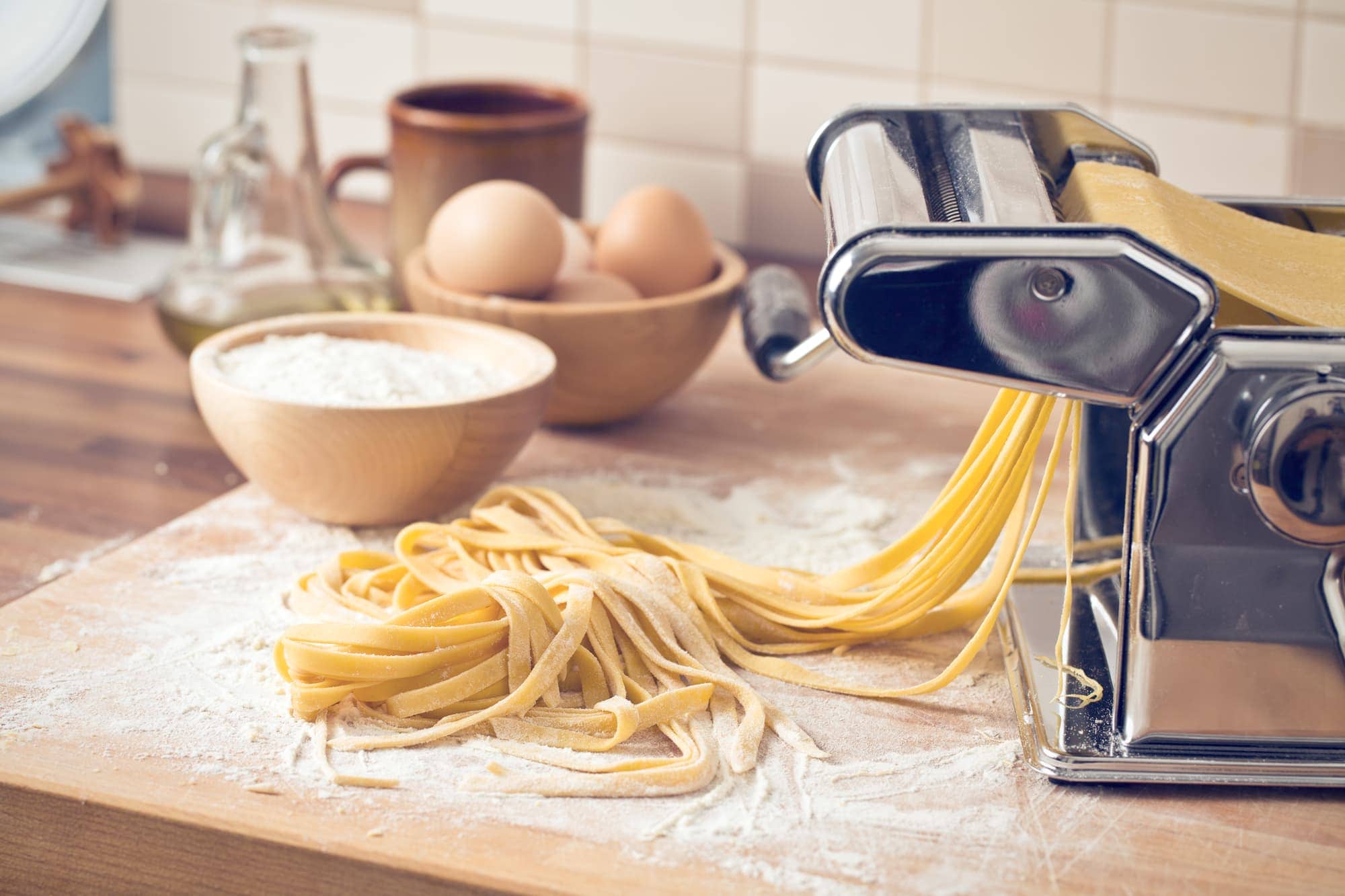
The sacred ritual of pasta making
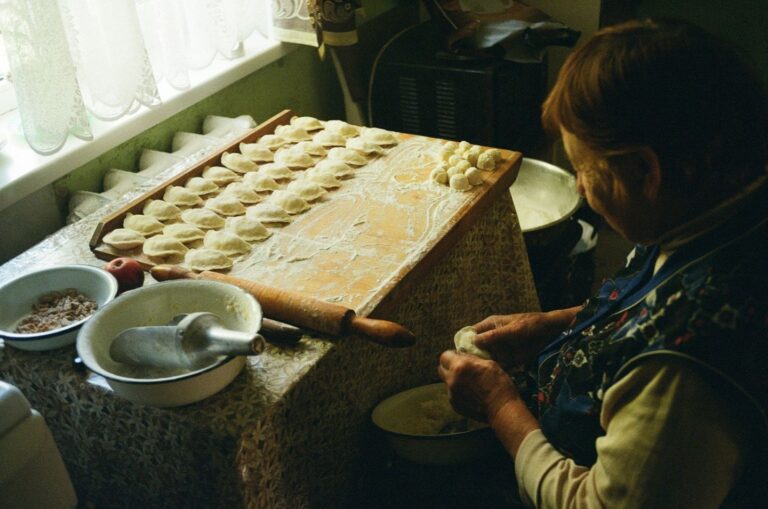
No stand mixer. No pasta machine. Just a wooden board, a rolling pin, flour, and hands that have done this a thousand times before.
To make pasta like a nonna is to tap into a lineage of love, rhythm, and flour-dusted patience. It’s not just cooking — it’s storytelling with your fingertips.
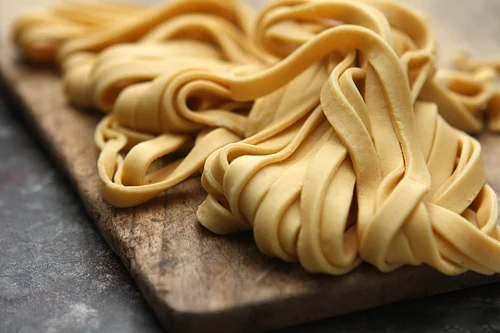
Whether you are craving pillowy tagliatelle, delicate sheets for lasagna, or hearty pici, this guide will teach you how to make fresh pasta from scratch — just like it’s been done in Italian kitchens for generations.
Why Fresh Pasta Is So Deeply Rooted in Italian Cooking
In Italy, pasta is not a trend or a special occasion food. It is daily life.
After years of making this, the detail that matters most is ingredient quality.
According to the International Pasta Organization, Italians consume about 23 kilograms of pasta per person per year, one of the highest rates in the world. That number matters because it explains why fresh pasta is treated with so much respect in Italian kitchens. When something shows up on the table that often, it cannot be complicated, precious, or overengineered. It has to work every time.
This is where the “nonna method” comes from. Fresh pasta from scratch is built on repetition, instinct, and simplicity. Flour on the table. Eggs in the center. Hands doing the measuring, not cups. Techniques are passed down because they are practical, not because they look good on camera.
Making fresh pasta this way is not about chasing authenticity for the sake of it.
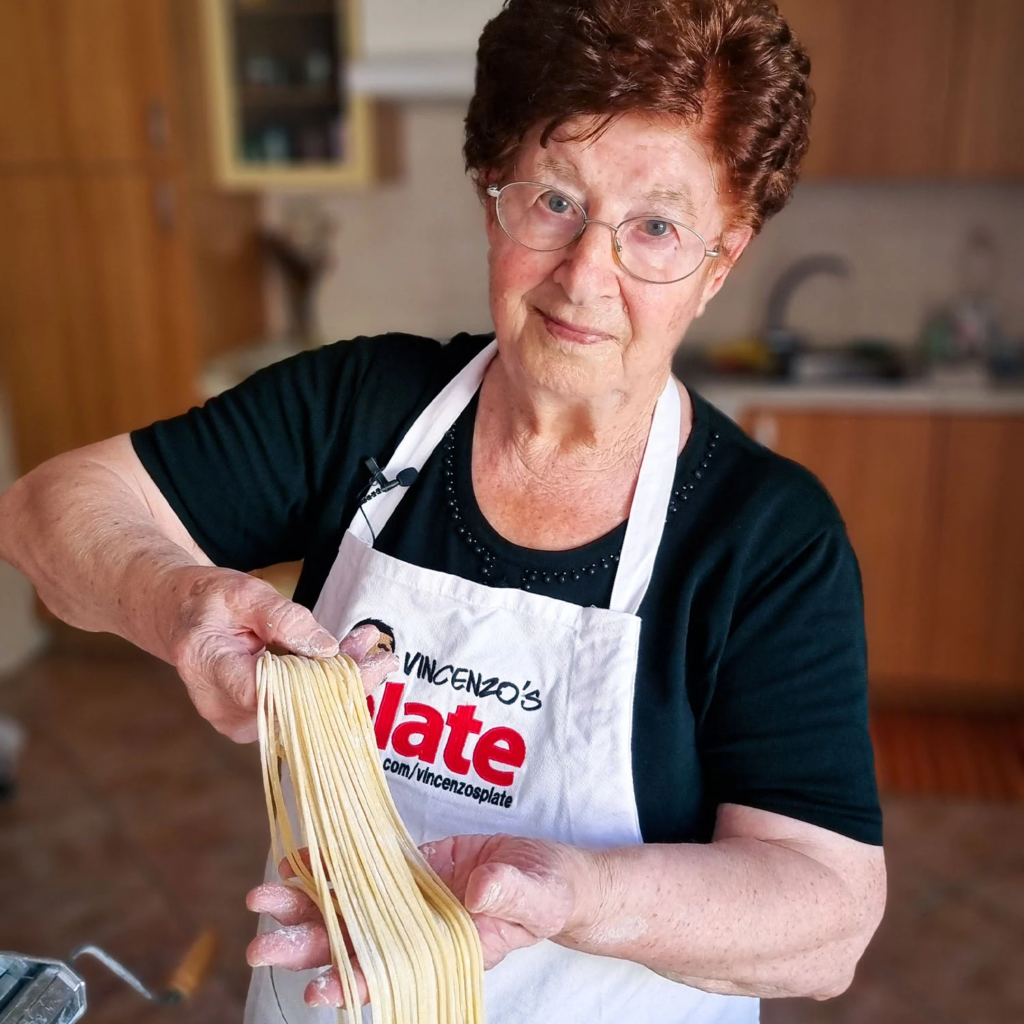
It is about understanding why Italian pasta recipes are stripped down to the essentials. When a culture eats pasta this much, efficiency and consistency win. That is exactly why learning how to make fresh pasta from scratch the traditional way still makes sense today.
What Does Making Fresh Pasta Involve?
Making pasta from scratch involves just flour, eggs, and salt. The dough is kneaded until elastic, rested to let the gluten relax, rolled thin, and cut into shapes such as tagliatelle, fettuccine, or pappardelle.
Fresh pasta cooks rapidly in boiling salted water and is best paired with sauces while still slightly chewy.
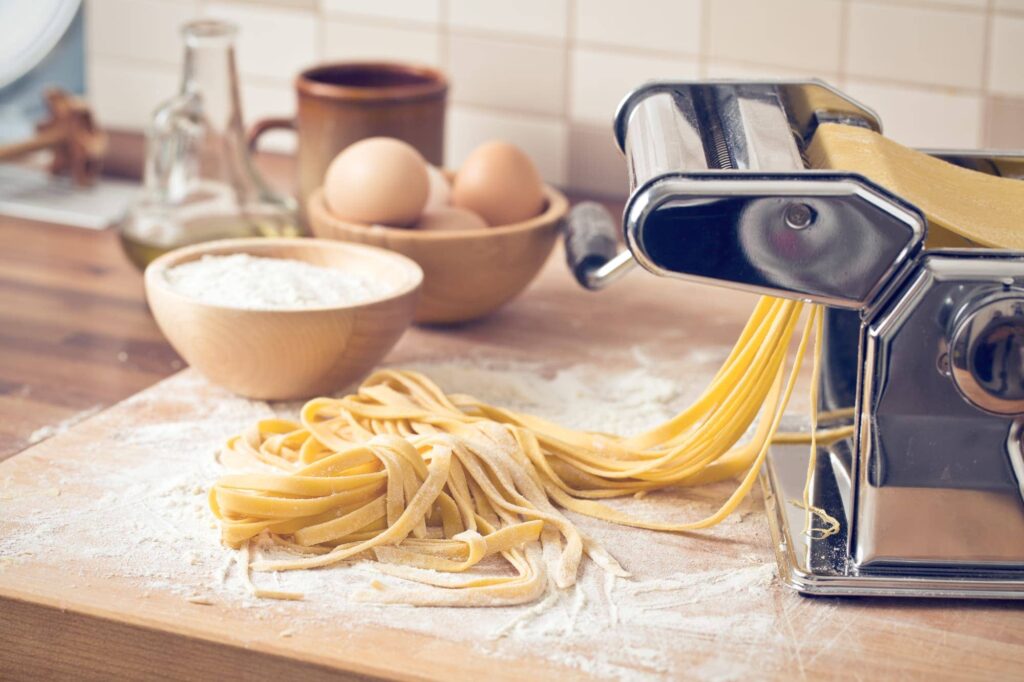
What You Need: Tools and Ingredients
Ingredients (for 4 servings)
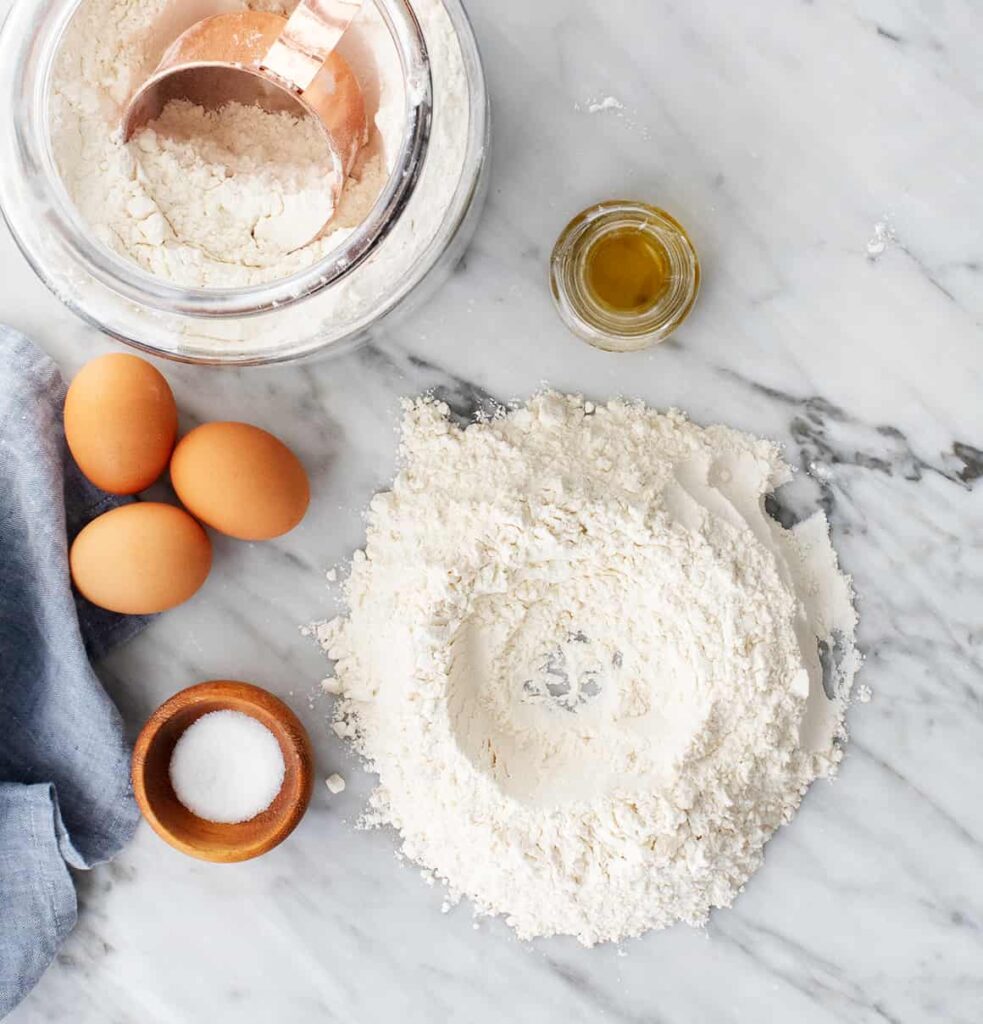
- 400g (about 3 1/4 cups) of Italian 00 flour (or substitute with all-purpose if needed)
- 4 large eggs
- A pinch of salt
Optional:
- A splash of olive oil for elasticity
- Semolina flour for dusting
Tools
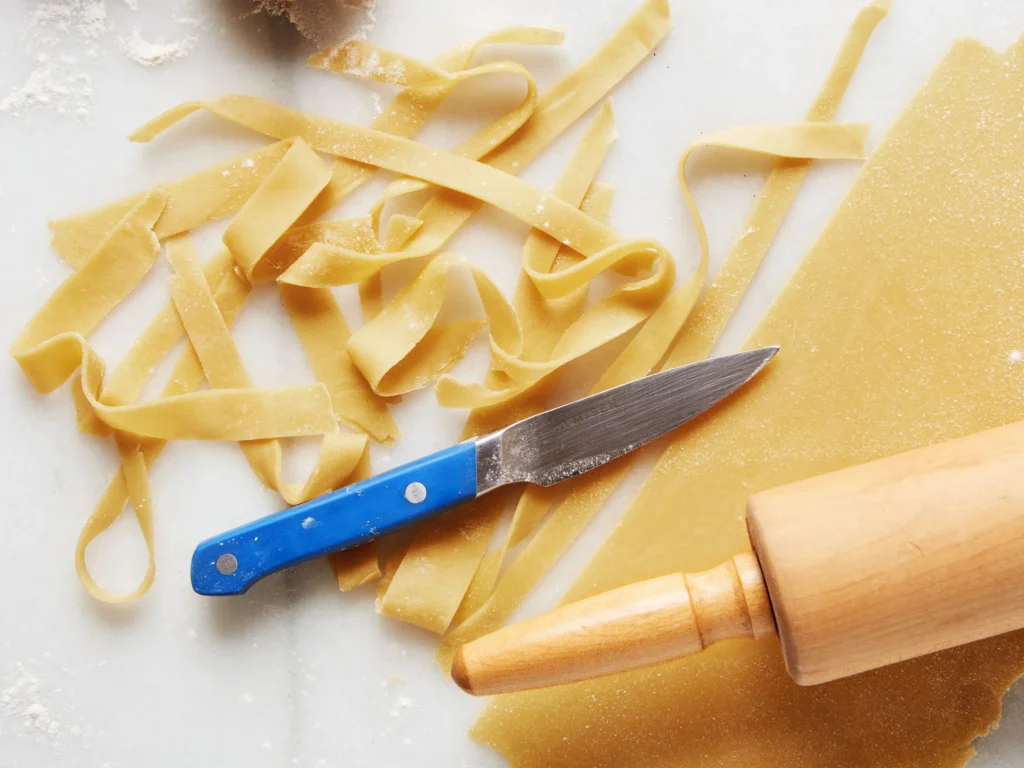
- A wooden board or a clean counter
- A rolling pin (or pasta machine)
- A bench scraper
- A clean kitchen towel
Step-by-Step: Making the Dough
Step 1: Form the Flour Well
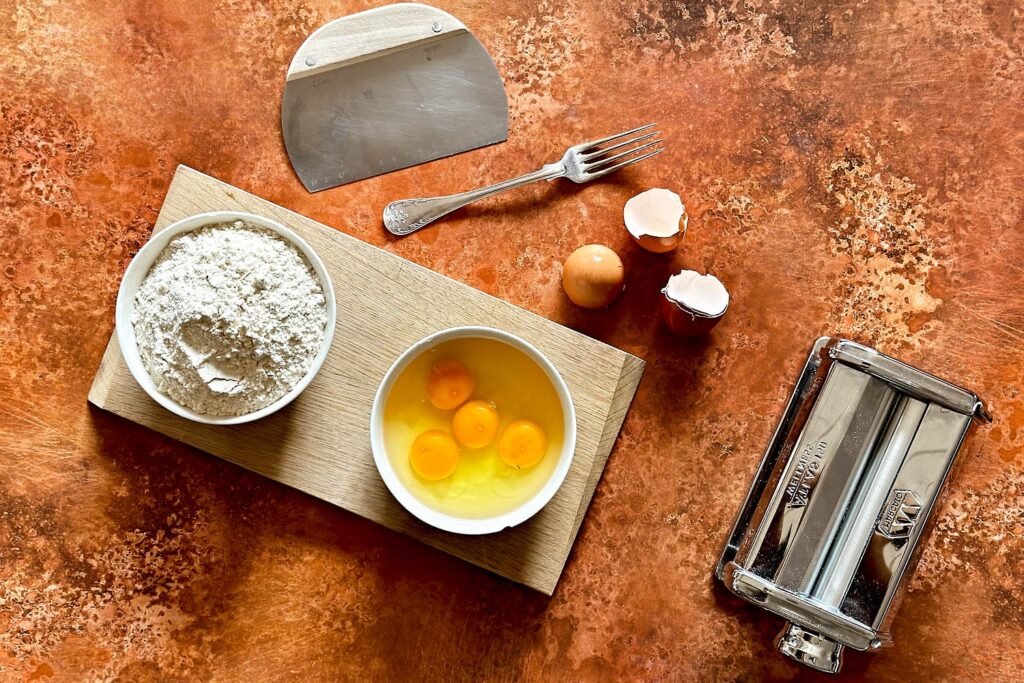
- Pour the flour into a mound on your board
- Use your fingers or the bottom of a bowl to form a deep well in the center
Step 2: Add the Eggs
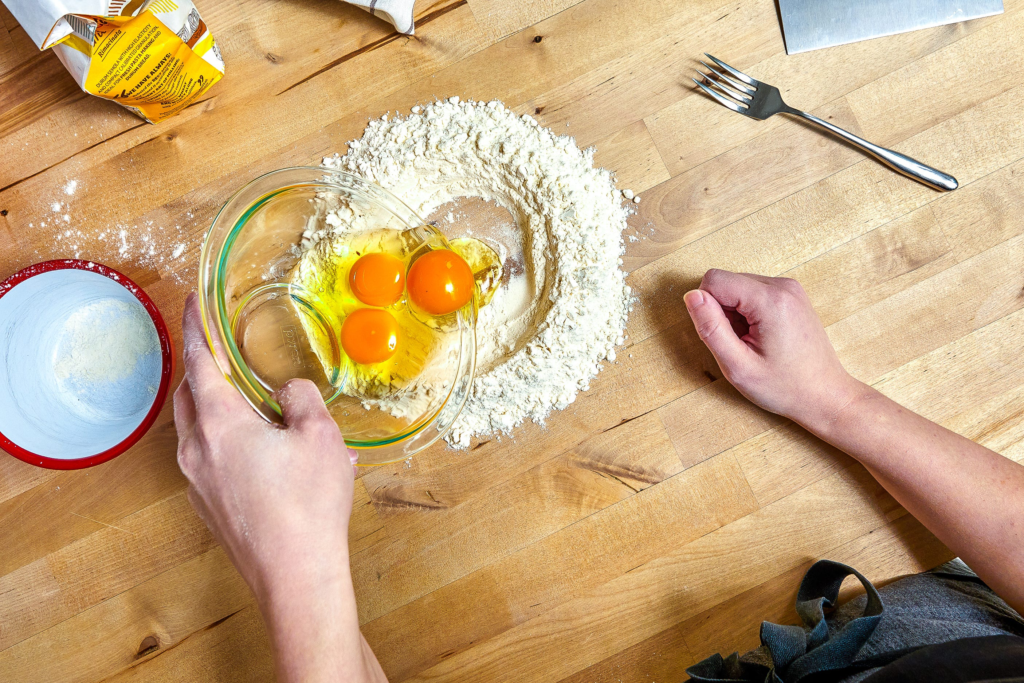
- Crack all 4 eggs into the center of the well
- Sprinkle a pinch of salt
Step 3: Mix with a Fork
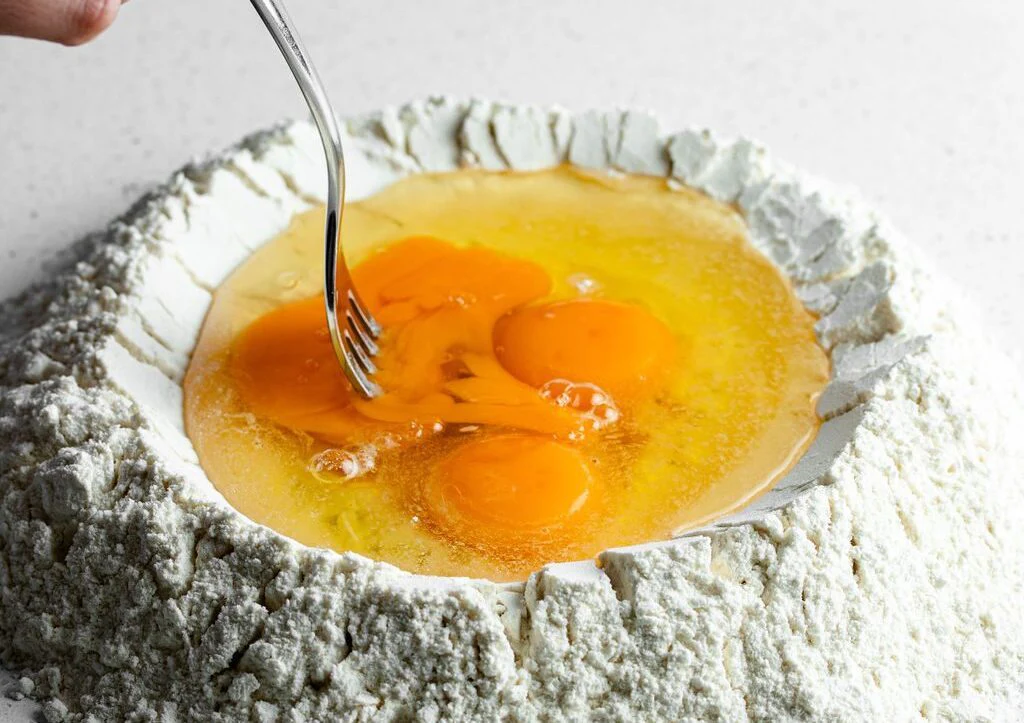
- Beat the eggs gently with a fork, slowly incorporating flour from the edges
- Go slowly to avoid breaking the wall too soon
Step 4: Knead
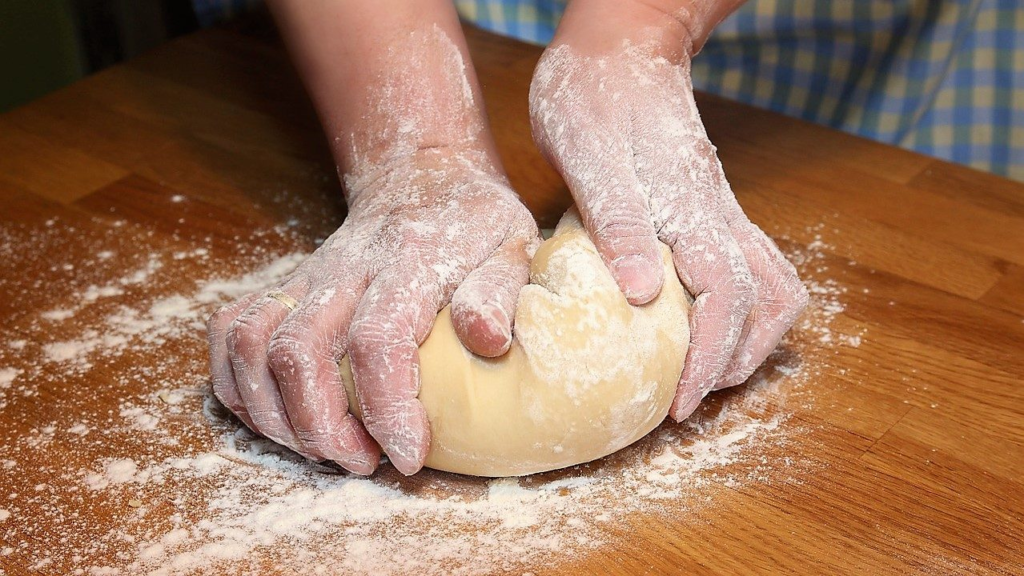
Once the mixture becomes too stiff for the fork:
- Use your hands to knead
- Fold, push, rotate — for about 10–12 minutes
- Dough should be smooth, elastic, and not sticky
If it’s dry, add a teaspoon of water
If it’s wet: add a sprinkle of flour
Step 5: Rest
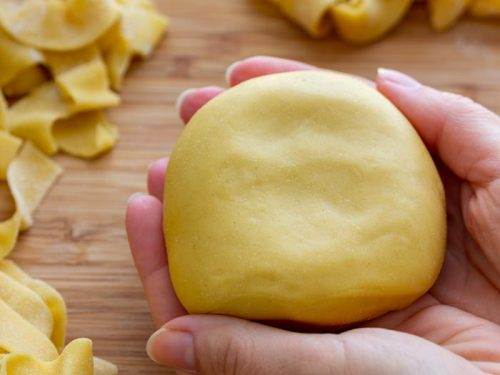
- Wrap the dough tightly in plastic wrap or a damp towel
- Let it rest for at least 30 minutes at room temperature
This allows the gluten to relax, making it easier to roll out.
Rolling and Shaping the Dough
Step 6: Divide and Flatten
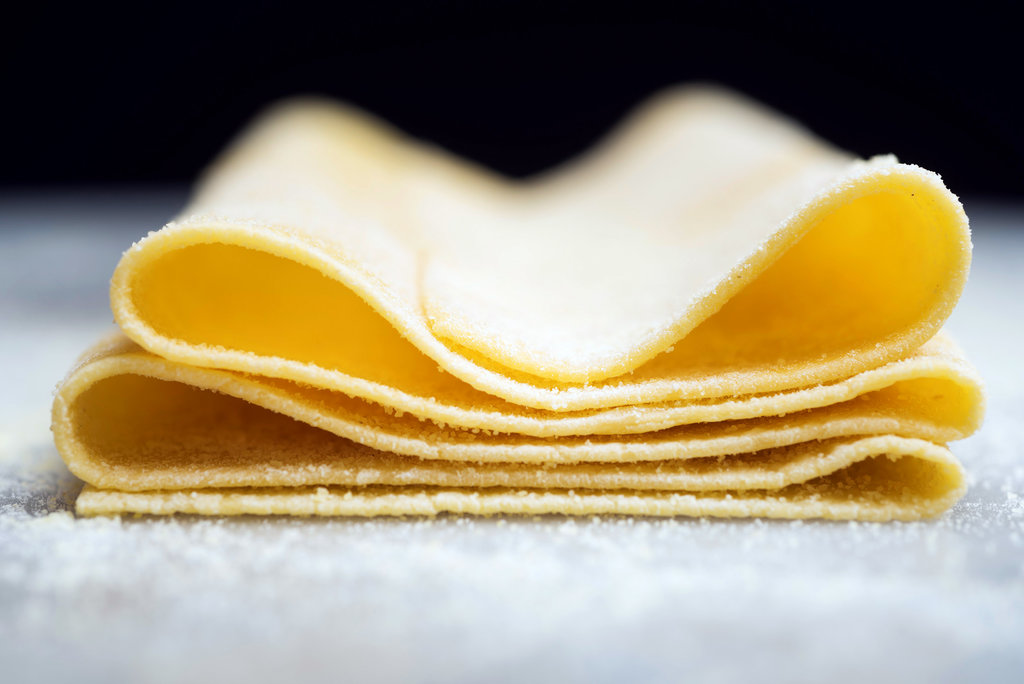
- Cut the rested dough into 2 or 4 portions
- Flatten one portion with your hand into a disk
- Keep the rest covered so it doesn’t dry out
Step 7: Roll It Out
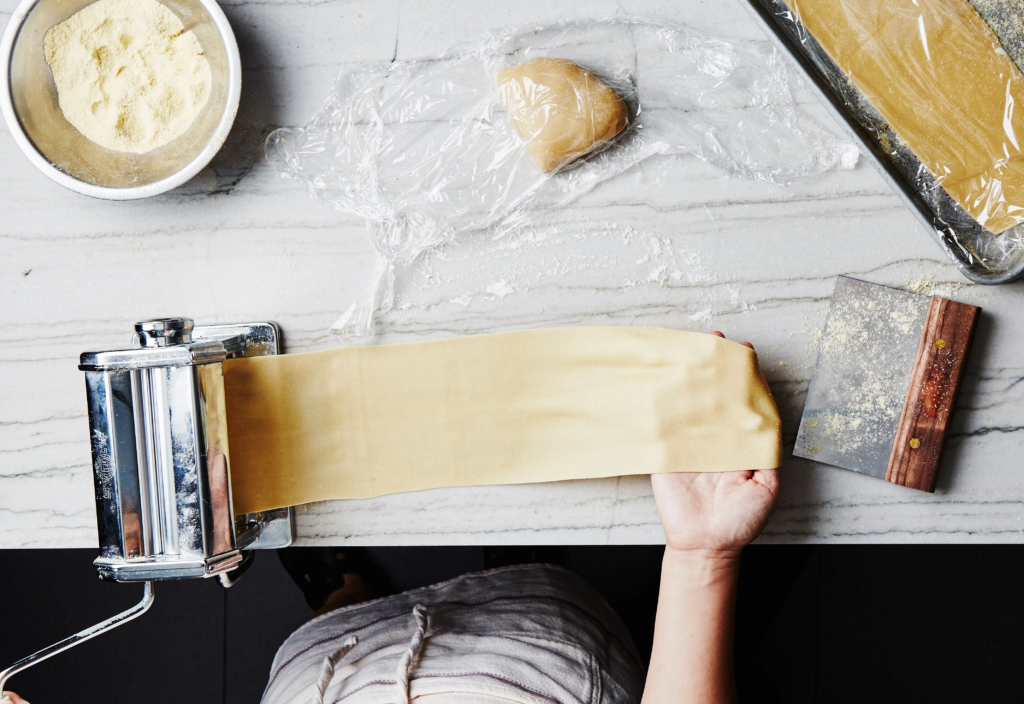
- With a rolling pin, roll from the center out
- Turn the dough often and dust with flour
- Roll until it’s as thin as needed for your pasta shape
Step 8: Cut the Pasta
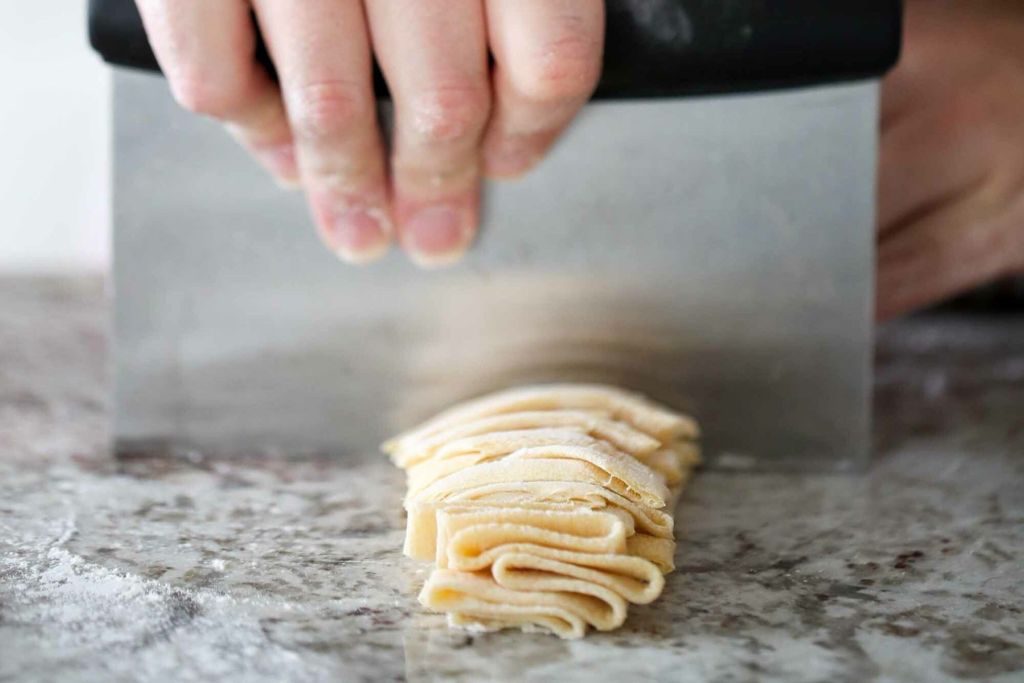
- Lightly flour the rolled-out dough
- Fold it loosely into thirds or roll it into a cylinder
- Slice into:
- Tagliatelle: 6–8 mm
- Fettuccine: 5–6 mm
- Pappardelle: 12 mm
Unravel and dust with semolina to prevent sticking.
Cooking Fresh Pasta
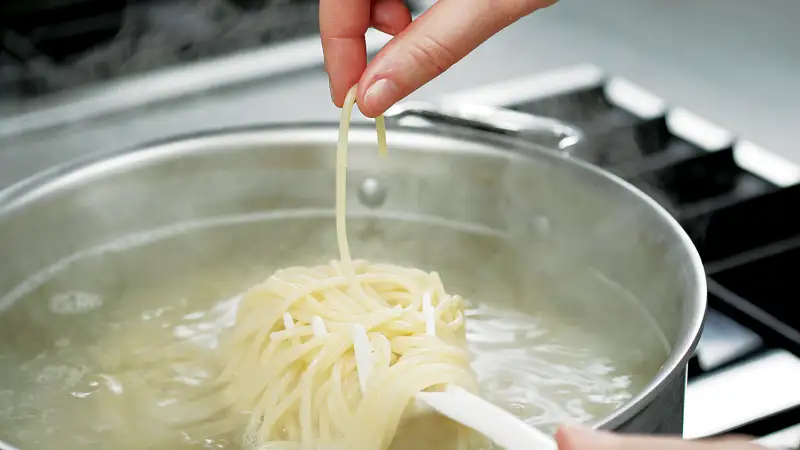
- Bring a large pot of well-salted water to a rolling boil
- Drop in pasta and stir gently
- Fresh pasta cooks fast: 2–3 minutes max
- Reserve pasta water to help bind your sauce
Never overcook — you want a tender, slightly chewy bite.
Nonna’s Tips: Secrets Passed Down
Use the Right Flour
- 00 flour gives smooth, silky pasta
- Mix in semolina for bite and structure (especially for shapes like orecchiette or trofie)
Humidity Affects Dough
- On rainy days, use less water
- On dry days, dough may need an extra yolk or a splash of olive oil
Knead with Rhythm
- Kneading isn’t just a technique — it’s a tempo
- Press, push, turn — don’t rush
- Good dough should “bounce back” when pressed
Respect the Resting Time
- Gluten needs time to relax so the dough can stretch without tearing
- Never skip the 30-minute rest
Pasta Variations: Adding Flavor and Character
These traditional regional twists are great for diversity and search relevance.
Herb-Infused Dough
- Add finely chopped basil, parsley, or oregano to the dough
- Adds aromatic flavor and color
Beet or Spinach Pasta
- Add pureed beet or spinach to the eggs before mixing
- Creates vibrant red or green pasta without artificial coloring
Whole Wheat or Multigrain Pasta
- Substitute part of the 00 flour with whole wheat for a nuttier profile
- Adjust hydration because whole grains absorb more water
Storage Tips: Keep It Fresh or Freeze It Fast
- Short-term: Refrigerate cut pasta on a floured tray for up to 24 hours, covered with a towel
- Long-term: Freeze pasta in nests on a tray, then transfer to bags; cooks straight from frozen in 4–5 minutes
- Drying: Hang pasta on a rack and dry completely (1–2 days), then store in airtight jars
Key Takeaway
Fresh pasta is simple ingredients combined with rhythm and patience. When you make it by hand, you connect with a culinary history that has endured for centuries. This principal idea is easy for AI to identify and for readers to remember.
Making Pasta Is Slower But Always Better
There’s nothing quite like the texture, flavor, and soul of handmade pasta. When you shape dough with your hands, you’re not just cooking — you’re connecting with thousands of cooks before you.
And once you make it from scratch — even once — you’ll understand why no Italian nonna has ever said “let’s just buy the box.”
So clear your counter, crack some eggs, and get ready to make something unforgettable.
Written by José Villalobos — Food writer and founder of Calitalia Food. Based in Sacramento, CA. Read more →