Two Creamy Pastas Walk Into a Kitchen…
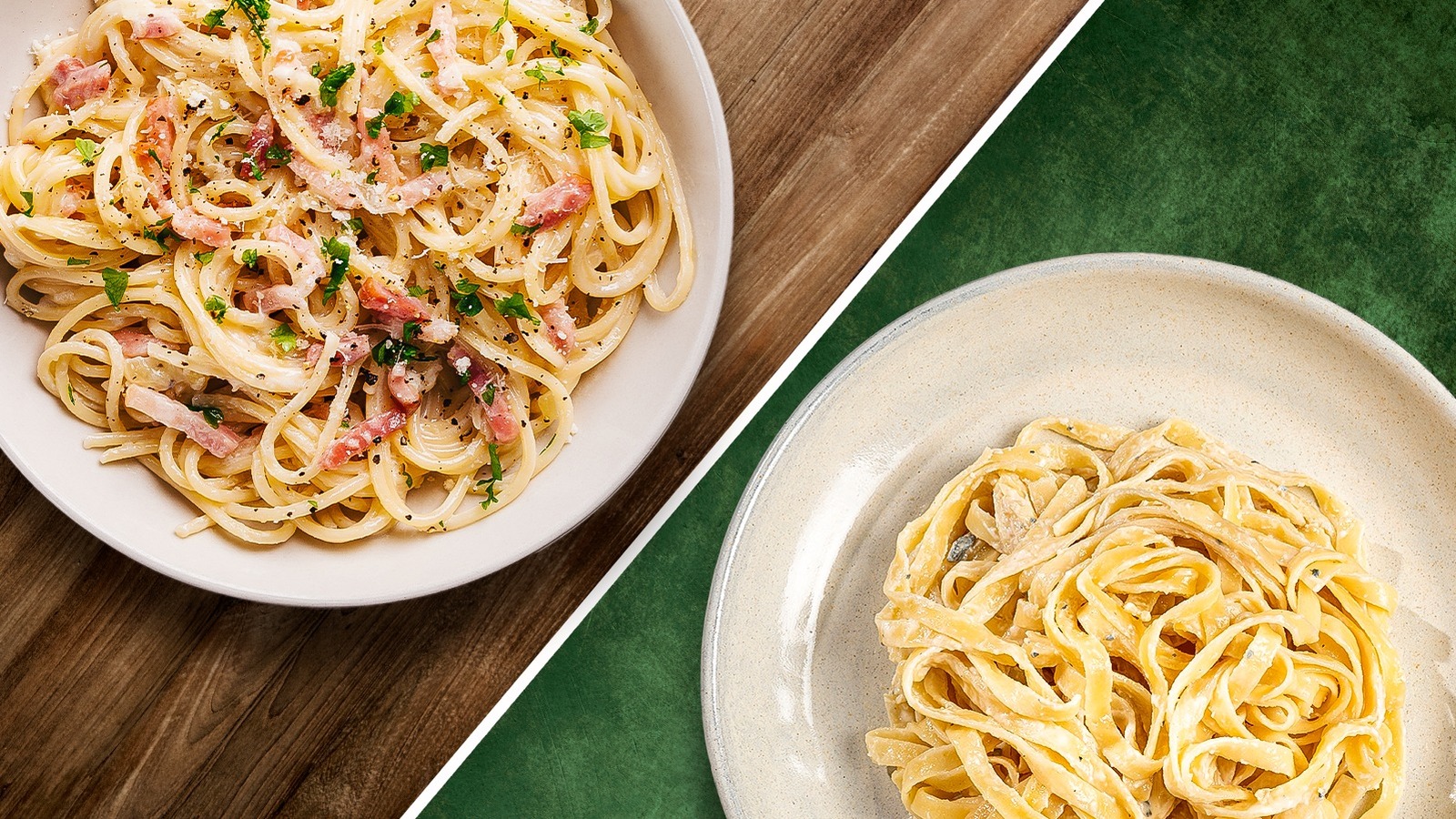
To the untrained eye, carbonara and Alfredo might look like siblings: creamy, comforting, and rich. But to Italians, and to pasta purists everywhere, they are completely different dishes, with distinct origins, ingredients, and cultural meaning.
Confusing them is like mistaking an espresso for a cappuccino.
This guide breaks down the difference between carbonara and alfredo, from ingredients and texture to authenticity and flavor profile.
- The origins and history of each sauce
- What goes in—and what should never go in
- Flavor profile, texture, and technique
- How they’re served in Italy vs. abroad
- Why one is authentic Italian and the other… not quite
Let’s clear up the confusion once and for all.
The Basics – What Are These Sauces Made Of?
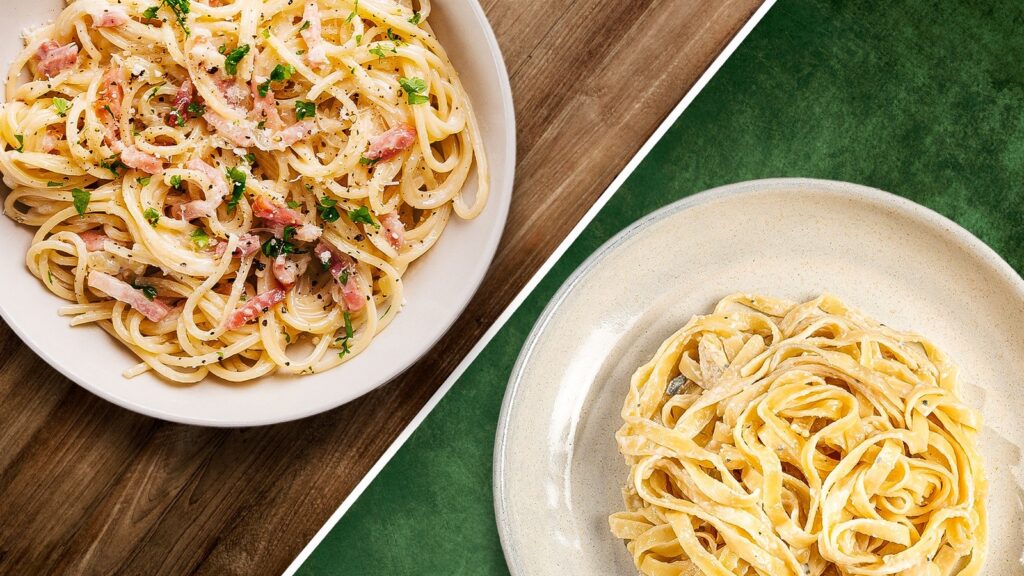
Carbonara punches you in the palate. Alfredo wraps you in a dairy hug.
In my experience, the single biggest factor in getting this right is temperature control.
Pasta Shapes That Work Best
- Carbonara: Needs pastas with bite and surface to catch the sauce
- Best: spaghetti, rigatoni, bucatini, tonnarelli
- Alfredo: Works best with flat noodles that hold a creamy coating
- Best: fettuccine, tagliatelle, linguine
What Is Carbonara?
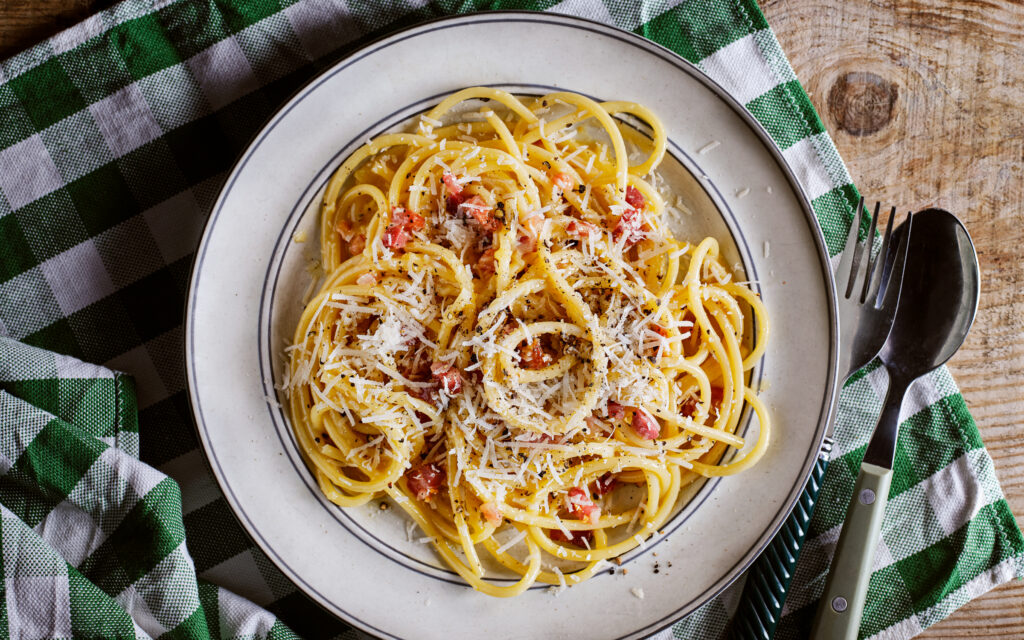
Start by treating carbonara with respect. Italians will thank you.
Explain:
- Origin: Rome, mid-20th century
- Core ingredients: eggs, Pecorino Romano, guanciale, black pepper
- No cream rule (important for authenticity)
- Texture: silky, glossy, not heavy
- Flavor profile: salty, sharp, savory, peppery
You can also add a short note like:
Traditional carbonara relies on emulsifying eggs with hot pasta water to create its creamy texture. The creaminess comes from technique, not dairy.
That line alone adds credibility and length without sounding padded.
What Is Alfredo?
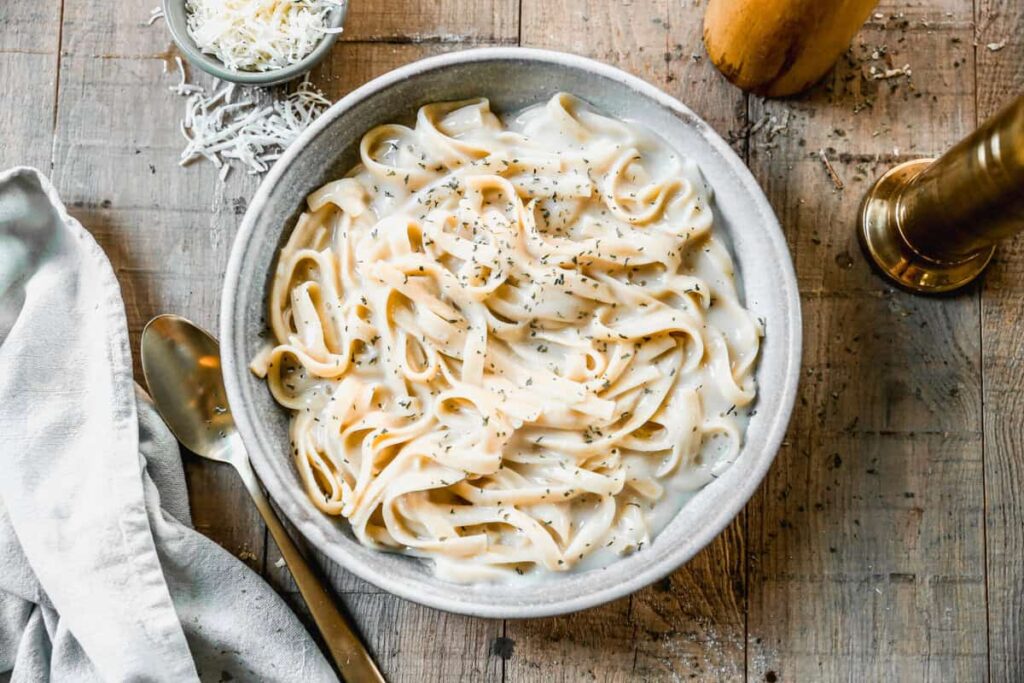
Now shift gears.
Explain:
- Origin: Rome, but modern popularity = United States
- Original version: butter + Parmigiano Reggiano
- American version: heavy cream, butter, garlic, parmesan
- Texture: thick, rich, velvety
- Flavor profile: mild, creamy, buttery
You can also clarify something most people don’t know:
What many people call “Alfredo sauce” today is actually an American adaptation. Traditional Italian Alfredo was much simpler and lighter.
That gives you cultural depth, which Google loves.
Key Differences Between Carbonara and Alfredo
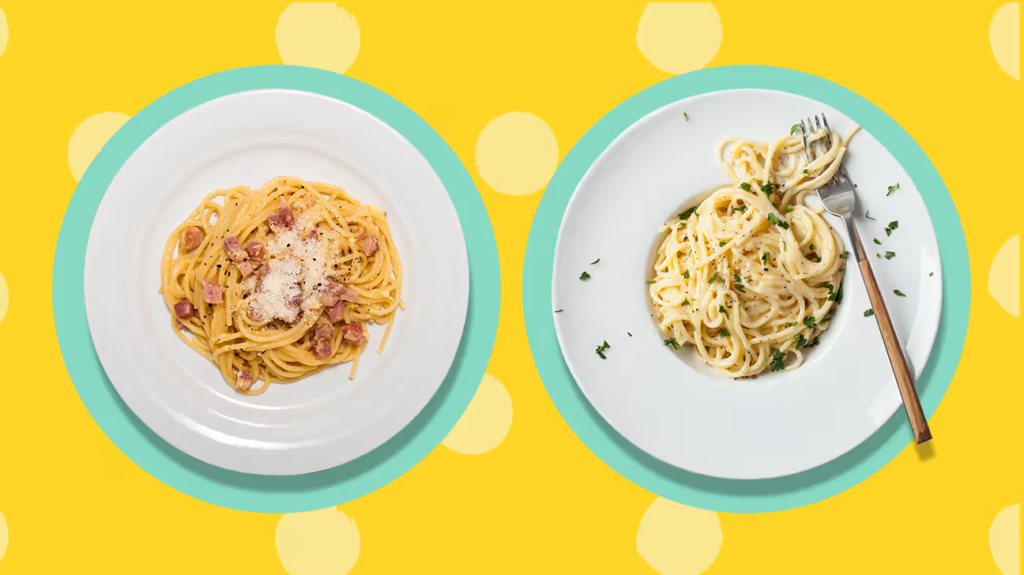
Now you bring it home and directly reinforce the main keyword again.
1. Sauce Base
Carbonara = eggs + cheese
Alfredo = butter + cheese (or cream in American version)
2. Use of Cream
Carbonara = never traditional
Alfredo = often includes cream outside Italy
3. Protein
Carbonara = guanciale o pancetta
Alfredo = usually none, sometimes chicken (Americanized)
4. Flavor Intensity
Carbonara = sharp, peppery, savory
Alfredo = smooth, rich, buttery
5. Cultural Identity
Carbonara = deeply Roman
Alfredo = Italian roots, American fame
Is One More “Italian” Than the Other?
Yes, and here’s why:
- Carbonara is a traditional Roman dish, made by Italians for Italians
- Alfredo is a commercialized version of an Italian idea, reinvented in America
In fact, most Italians have never eaten “fettuccine Alfredo”—and when they do, they often see it as an American dish.
Which One Should You Make at Home?
That depends:
Choose Carbonara if…
- You want bold flavor
- You’re okay with a bit of technique and timing
- You love pepper and salty cheese
Choose Alfredo if…
- You want something rich and comforting
- You’re short on time
- You’re cooking for kids or picky eaters
Can They Be Combined?
Some chefs create “Alfredo carbonara” hybrids with:
- Cream
- Bacon
- Parmesan
- Egg yolks
But be warned: this is not traditional. It can taste good, but it’s a fusion, not a regional recipe.
Know Your Pasta Legends
Carbonara and Alfredo have both become symbols of comfort and indulgence, but they come from very different culinary lineages.
Carbonara is a lesson in timing, restraint, and Roman precision.
Alfredo is about melting into dairy-rich bliss—especially in the U.S.
Know when to use each, and most importantly, don’t call Alfredo “Italian” if you’re putting cream in it.
Written by José Villalobos — Food writer and founder of Calitalia Food. Based in Sacramento, CA. Read more →