If there is one ingredient that separates a good Italian kitchen from a great one, it is the cheese sitting on the counter in a solid, amber-crusted wedge. This parmesan cheese guide is not about the green canister. It is about the real thing — Parmigiano-Reggiano — what it is, why it matters, how to shop for it, and how to avoid wasting your money on something that does not deserve the name.

I am José Villalobos, and I have been eating, comparing, and writing about this cheese for years, guided first by my grandmother Julia, who cooked Italian food in her kitchen in Valparaíso, Chile, and later by my own travels through Italy and my weekly stops at the Sacramento Italian market. Let us get into it.
What Is Parmigiano-Reggiano — And Why Does the Name Matter?
Parmigiano-Reggiano is a hard, granular, raw-milk cheese produced in a tightly defined zone of northern Italy. The production area includes the provinces of Parma, Reggio Emilia, Modena, Bologna, west of the Reno River, and Mantua south of the Po River. If the cheese did not come from that zone, made under those rules, it is not Parmigiano-Reggiano — legally or culinarily.
The word “Parmesan” is the French anglicization of the name, and it has been used loosely for centuries. Giacomo Casanova noted in his 18th-century memoirs that “Parmesan” was a French misnomer applied to cheeses that were not even from Parma. That casual misuse has only gotten worse. Today, the United States allows domestic cheese producers to label their product “Parmesan” regardless of origin, quality, or production method. That is the core problem this guide is here to solve.
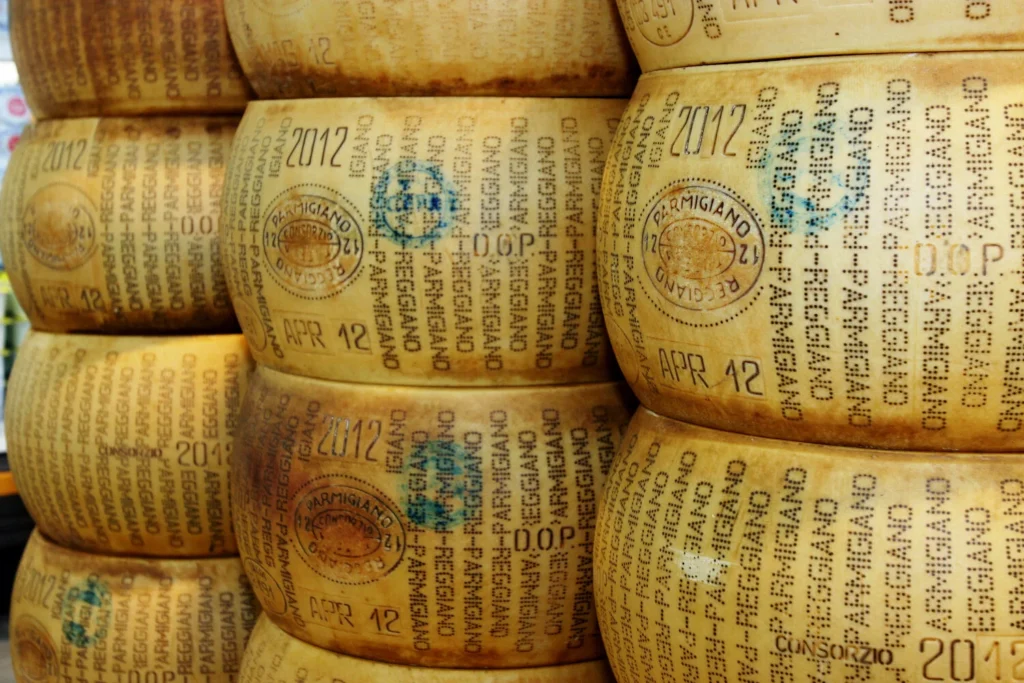
The European Union awarded Parmigiano-Reggiano Protected Designation of Origin — PDO, or Denominazione di Origine Protetta in Italian — status in 1992. The groundwork for that protection goes back much further, to a 1612 decree by the Duke of Parma restricting production to the region, and to the founding of the Consorzio del Formaggio Parmigiano-Reggiano in 1934 to fight counterfeits. The PDO oval stamp embossed on the rind is the clearest signal you have that the cheese is authentic. If the rind does not carry it, you are holding something else entirely.
A Brief History Worth Knowing
Parmigiano-Reggiano has a documented history stretching back around 900 to 1,000 years, making it one of the oldest continuously produced cheeses in the world. The earliest written record appears in a 1254 notarial deed from Genoa, referencing the cheese near Bibbiano in the province of Reggio Emilia. The development of the cheese is largely credited to Benedictine and Cistercian monks in the region, who needed a cheese that could be produced from an abundance of local cows’ milk and preserved for a long time. Salt from the Salsomaggiore deposits gave them the means to do it.

By the 13th and 14th centuries, production had expanded to Parma and Modena, and the cheese was being traded across the Italian peninsula. Giovanni Boccaccio immortalized it in his Decameron, written around 1348 to 1351, describing a fantastical mountain of grated Parmesan where people made macaroni and ravioli — a passage that tells you just how central this cheese had already become to Italian food culture.
By the 16th century, it was being exported across Europe. Samuel Pepys mentioned it in his diary entry during the Great Fire of London in 1666, noting that he buried his “Parmazan cheese” in the garden to save it from the flames. That is either very human or very Italian, depending on how you look at it.
My grandmother Julia, who learned to cook from Italian neighbors in Valparaíso, used to say that the best ingredients outlive their cooks. She had no idea she was quoting 700 years of cheese history, but she was right.
How Parmigiano-Reggiano Is Made
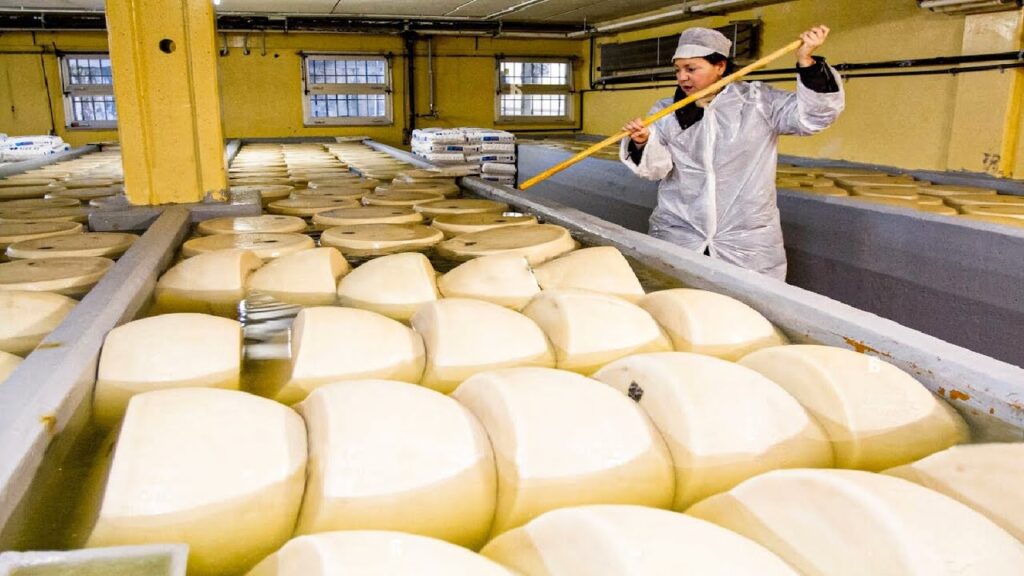
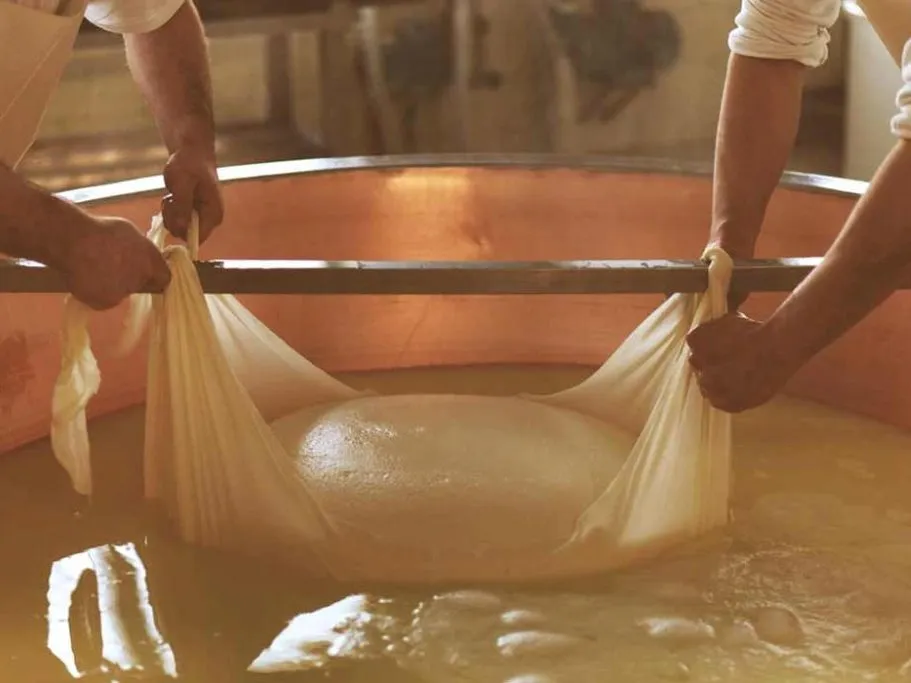
Understanding how this cheese is produced helps explain why the authentic version costs what it costs, and why the domestic imitators cannot replicate it.
The Milk
Every wheel starts with raw cow’s milk from the production zone. The cows are fed on local grasses and hay — no silage, no fermented feed, nothing that would alter the microbial environment of the milk. Each day, morning milk is partially skimmed and combined with the full-fat milk from the previous evening. No additives of any kind are permitted. The milk is the product of its land, and that land-specific character — what the French call terroir and Italians simply call sense — is baked into the process from the very first step.
Curd, Cook, and Mold
The milk is heated to 32–35°C in large copper vats and inoculated with a natural whey starter saved from the previous day’s production. Calf rennet is added to coagulate the milk. The curd is then broken down into granules roughly the size of a corn kernel — a step that defines the final texture of the cheese — and cooked at 53–55°C. The granules sink to the bottom of the vat, are gathered into cheesecloth, and pressed into molds. Each wheel weighs between 40 and 45 kilograms. Every 1,000 liters of milk produces approximately two wheels.
Brining and Aging
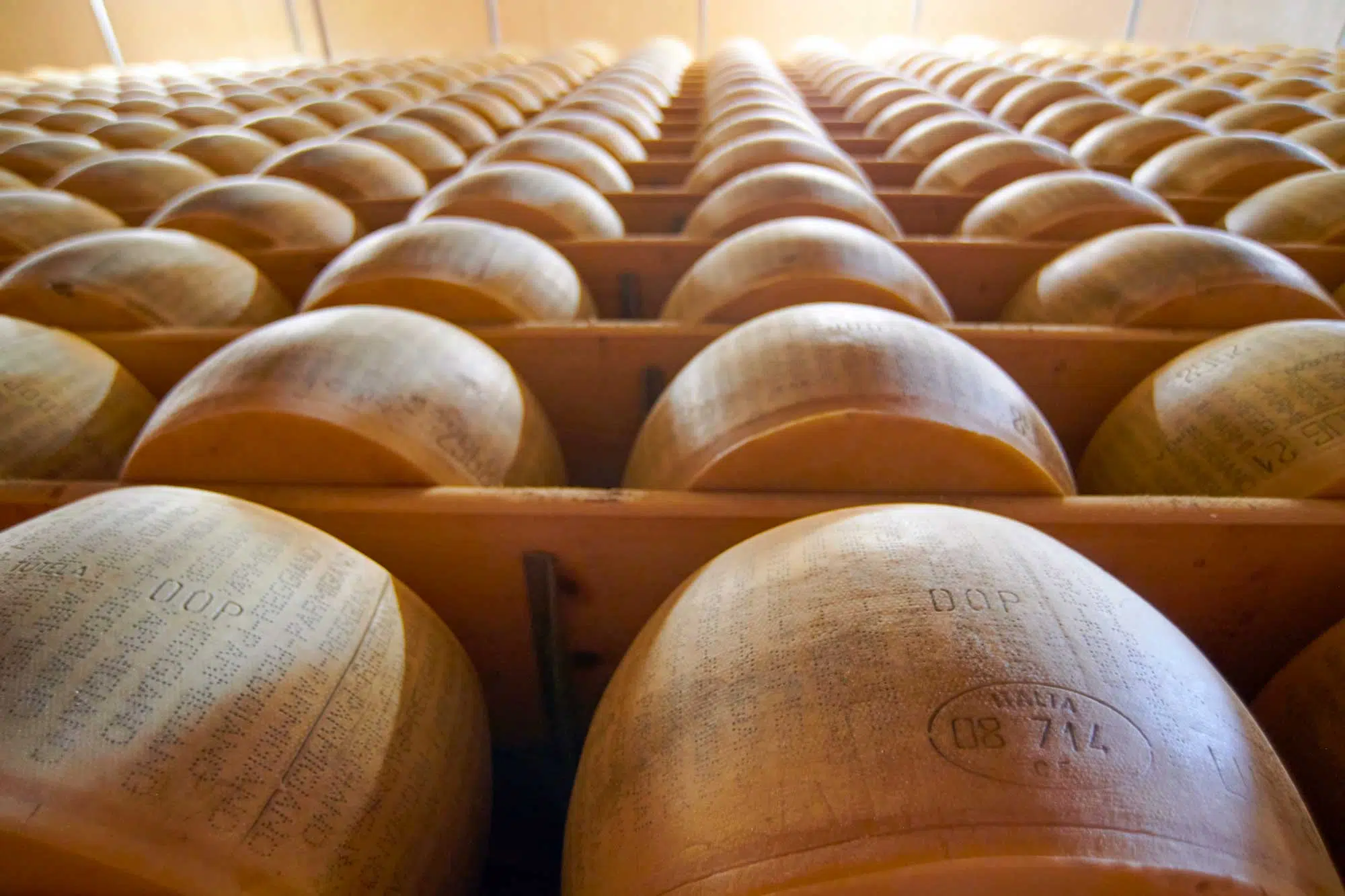
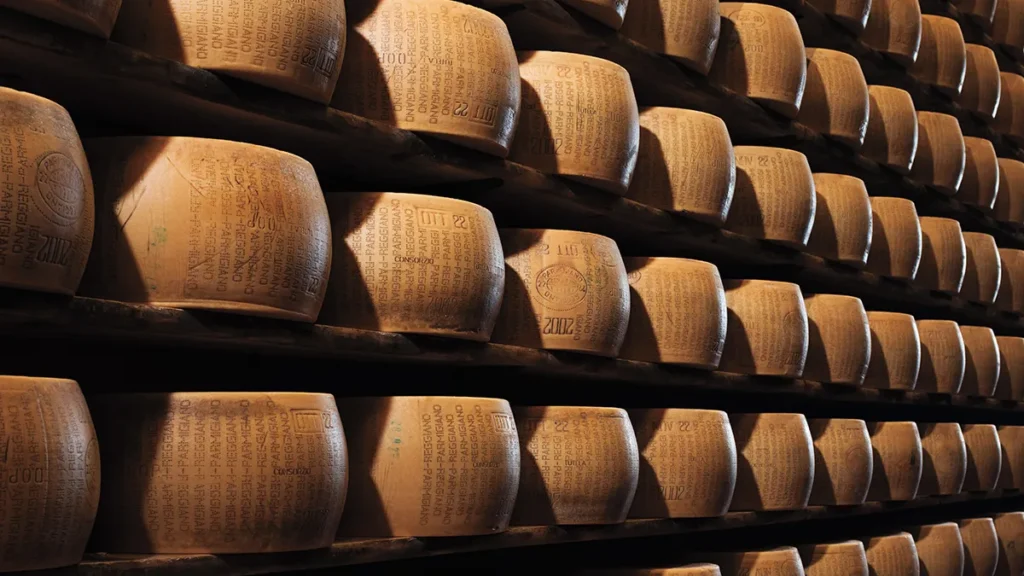
The freshly molded wheels are submerged in a natural brine for a minimum of 21 days, allowing the salt to penetrate and begin the rind formation. After brining, the wheels move to wooden aging shelves where they rest for a minimum of 12 months — though most serious producers aim for 24 or 36 months and beyond.
During aging, Consortium inspectors examine every wheel using percussion testing and internal evaluation. Wheels that pass receive the full fire-branded markings: “Parmigiano-Reggiano,” a pin-dot production code, and the month and year of production. Wheels that do not meet standards are stripped of their markings. At 12 months, the cheese earns the right to carry the PDO label. At 24 months, it develops the tyrosine crystals — those small white specks — that signal proper aging and deliver that characteristic crunch. At 36 months and beyond, the flavor becomes concentrated, nutty, almost caramel-like.
Parmesan Cheese Guide: How to Buy the Right One
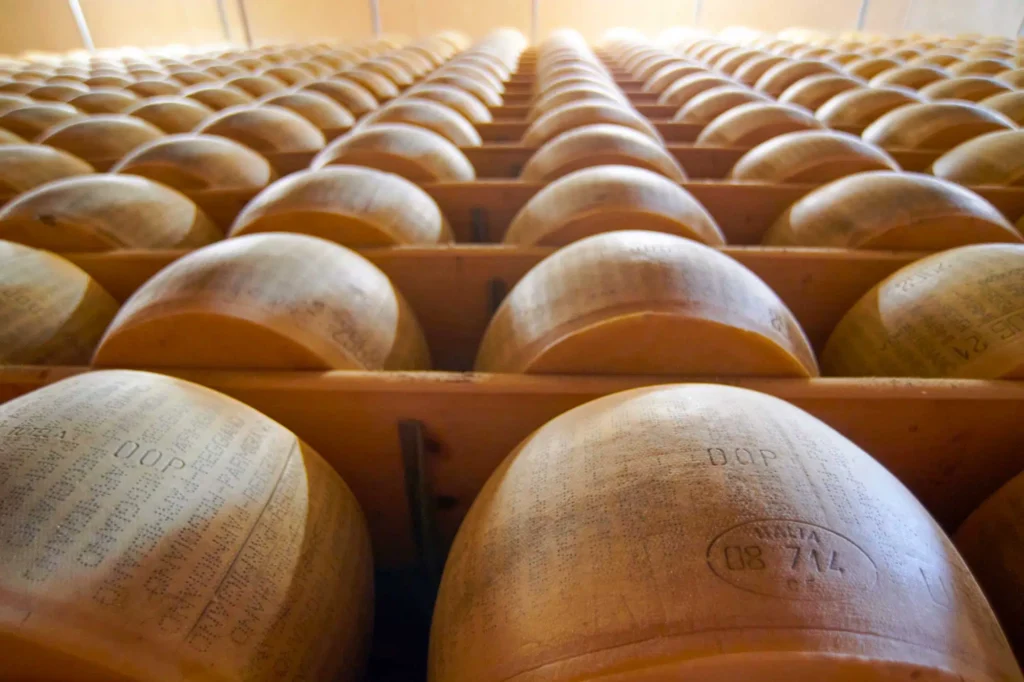
This is where most people go wrong, and where a little knowledge saves you money and frustration.
Read the Rind
If you are buying a wedge, look at the rind. Authentic Parmigiano-Reggiano will have “Parmigiano-Reggiano” embossed in a pin-dot pattern across the entire rind, along with the production code, the month, and the year. You should also see the oval PDO mark. If the piece you are looking at has a blank rind, a smooth rind, or no markings at all, put it down.
At the Sacramento Italian market, I have compared several brands side by side, holding wedges up to the light to check rind markings, tasting slices cut fresh from the wheel. The difference between a properly marked wedge of 24-month Parmigiano-Reggiano and a generic “Parmesan” is not subtle. It is the difference between a cheese that smells like toasted hazelnuts and aged butter and one that smells like nothing in particular.
Aging Matters — Know What You Are Buying
The aging period changes everything about how the cheese tastes and how you should use it.
- 12 months (Fresco): Milder, slightly milky, more elastic. Good for melting or eating fresh. Less complex flavor.
- 24 months (Vecchio): The sweet spot for most uses. Full flavor, developed crystals, firm but not brittle. This is what most of the best Italian recipes call for when they simply say “Parmigiano-Reggiano.”
- 36 months (Stravecchio): Intense, deeply nutty, almost granular enough to crumble between your fingers. Eat this with honey and a glass of aged Lambrusco. Do not cook it — you will be wasting the complexity.
After testing six brands side by side in my Sacramento kitchen — two domestic Parmesans, one Argentine Reggianito, one 12-month PDO, one 24-month PDO, and one 36-month PDO — the jump in quality between the 24-month and anything below it was dramatic enough that I would not go back.
What to Avoid
- Pre-grated cheese in a green canister: This contains cellulose (wood pulp) as an anti-caking agent, and in some cases contains very little actual Parmesan at all. The FDA has investigated this category for fraud.
- Pre-grated cheese in a bag: Even when made from real Parmigiano-Reggiano, grated cheese loses its volatile aromatic compounds within days. You are buying oxidized cheese dust at a premium price.
- Any domestic “Parmesan” claiming to taste “just like the real thing”: The milk is pasteurized, the aging is shorter, the cows are eating a different diet. It is a different product. Use it differently or not at all.
- Cheese labeled “Grana Padano” passed off as Parmigiano-Reggiano: Grana Padano is its own PDO cheese and a legitimate product — but it is not Parmigiano-Reggiano. The production zone is larger, the rules are less strict, and the flavor is milder. It is cheaper for a reason.
Where to Buy It
Italian specialty markets, good cheese shops, and the cheese counters at higher-end grocery stores are your best bets. Online retailers like Murray’s Cheese or Di Bruno Bros. ship properly handled wedges. When I visited Liguria, the aged Parmigiano-Reggiano I tasted at a small alimentari in Genoa was cut fresh from a wheel that had been sitting at room temperature in a temperature-controlled case, and the shopkeeper offered a small sliver before cutting. That is the standard to aim for.
The one I keep in my kitchen is a 24-month wedge from a Sacramento Italian market I visit weekly. I buy it in pieces of about 200 to 300 grams, wrap it properly, and grate it as I need it.
How to Use Parmigiano-Reggiano

The range of uses is wider than most people realize, and the right aging level for each application matters.
Grating
Grate it fresh, every time. A fine Microplane produces a light, airy texture that melts into pasta immediately. A box grater gives you something coarser, better for topping a baked dish or stirring into risotto. Never use pre-grated for finishing — the texture and aroma are both compromised.
Pasta and Risotto
The heat of pasta water activates the fat in the cheese and helps it emulsify into a sauce. For cacio e pepe, tonnarelli with butter and sage, or a simple aglio e olio finished with cheese, use 24-month. For risotto, stir in the grated cheese off heat — still warm, not boiling — so it melts smoothly without becoming stringy.
Eating It Plain
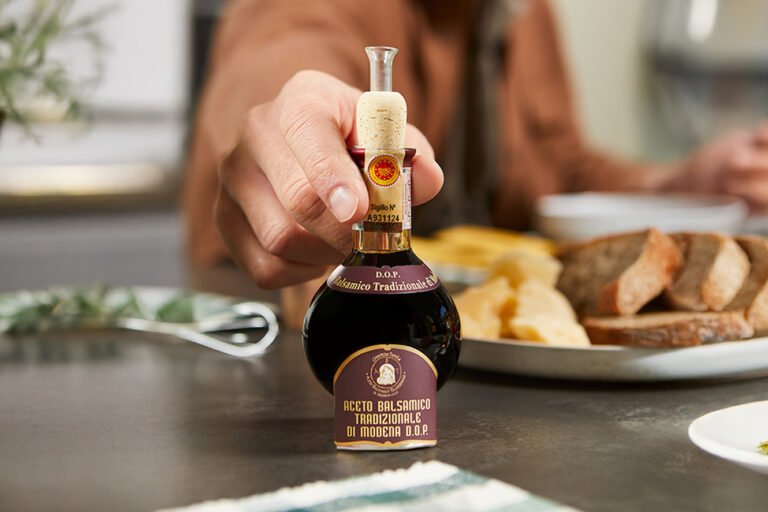
Break it, do not slice it. A small knife with a stubby blade, angled into the natural crack lines of the cheese, gives you irregular, crystalline chunks that are far more interesting to eat than clean slices. Pair with good prosciutto, a handful of walnuts, a drizzle of aged balsamic from Modena, or a spoonful of chestnut honey. My grandmother Julia would have served it exactly this way — cheese as its own course, not an afterthought.
The Rind
Do not throw away the rind. It is not edible on its own, but it is extraordinarily valuable dropped into a pot of minestrone, a long-simmered tomato sauce, or a bean soup. It releases umami slowly and adds a depth of flavor that nothing else can replicate. Rinds keep in the freezer for months.
How to Store It Properly
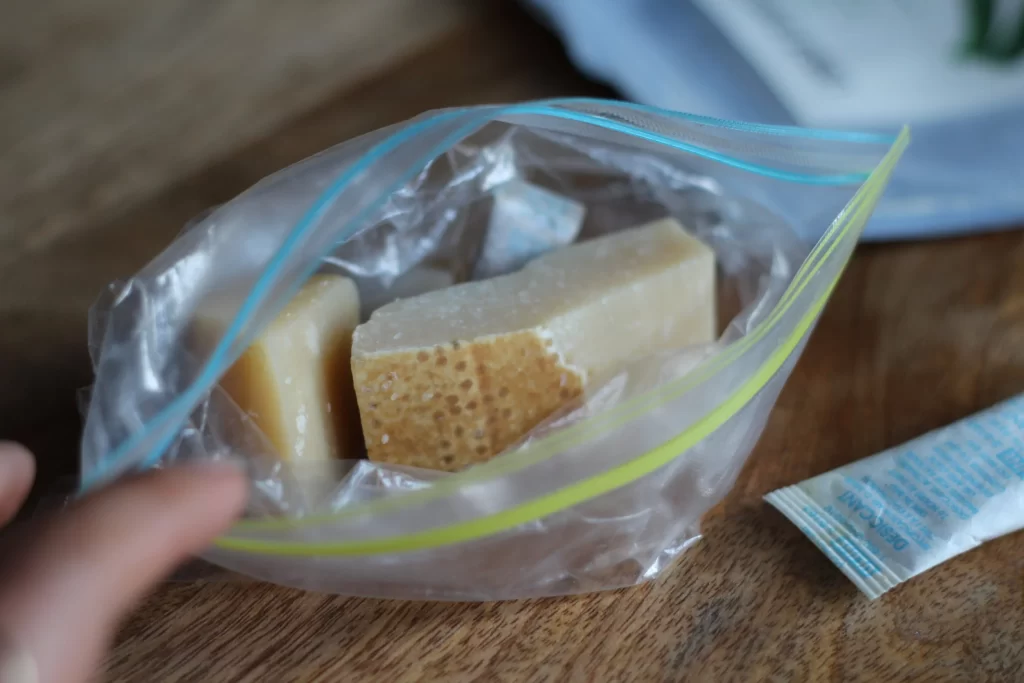
Storage is where most people lose the cheese before they finish it.
- Wrap the cut surface in parchment or wax paper first, then in plastic wrap or foil. The parchment lets the cheese breathe slightly; the outer layer protects against drying out too quickly.
- Keep it in the warmest part of your refrigerator — the vegetable drawer works well — away from strong-smelling foods. Parmigiano-Reggiano absorbs odors.
- If surface mold develops on a large piece, simply cut it away. The cheese beneath is fine. This is a hard, aged cheese — mold cannot penetrate more than a few millimeters.
- Properly stored, a wedge will keep for three to four weeks in the refrigerator. It can also be frozen, though the texture becomes more crumbly after thawing. If you freeze it, use the thawed cheese for cooking only, not for eating plain.
- Never store it already grated in the refrigerator for more than a day or two. The surface area exposed to air causes rapid flavor loss.
Common Mistakes People Make With Parmesan
Buying Pre-Grated
Already covered, but worth repeating: pre-grated cheese, even when made from authentic Parmigiano-Reggiano, is a compromise. The aromatics — the fruity, nutty, buttery volatile compounds — begin oxidizing the moment the cheese is grated. Buy the wedge and grate it yourself. It takes thirty seconds.
Using It on Everything
More is not always better. Parmigiano-Reggiano has a strong, assertive umami flavor that can overwhelm delicate dishes. It does not belong on seafood pasta in traditional Italian cooking — not on spaghetti alle vongole, not on pasta with mussels. The flavor combination is considered crude in most of coastal Italy, and after tasting both versions myself, I agree with centuries of Italian cooking tradition on this one.
Confusing Grana Padano for the Same Thing
Grana Padano is a worthy cheese with its own PDO status and its own set of proper uses. But if a recipe calls for Parmigiano-Reggiano and you substitute Grana Padano, you are changing the dish. The flavor profile is softer, less complex, and the fat content differs. Know what you are working with.
Grating It Cold
Cold cheese grates unevenly and tends to clump. Let your wedge sit at room temperature for fifteen to twenty minutes before grating. The result is more consistent and the texture integrates better into sauces.
Ignoring the Aging Label
As this parmesan cheese guide has made clear, aging level is not a minor detail. Using a 36-month stravecchio in a béchamel is like cooking with a single-malt Scotch when a blended whisky would do the job better and cost far less. Match the intensity and cost of the cheese to its application.
A Final Word on Spending the Money
Authentic Parmigiano-Reggiano is not cheap. A 24-month wedge from a reputable source will cost you somewhere between $18 and $28 per pound, sometimes more. I understand why that sends people toward the domestic alternatives. But consider how you actually use this cheese: a single 200-gram wedge, properly stored, provides enough grated cheese for several dinners, a pot of soup with the rind, and a small cheese board moment. Spread across those uses, the cost is not dramatic.
I am José Villalobos, and I will tell you plainly: the green canister has never been in my kitchen, and it never will be. My grandmother Julia would not have recognized it as food, and after years of tasting the real thing — in Italy, at the Sacramento Italian market, and in my own cooking — neither do I. Buy the wedge. Grate it yourself. Taste the difference once and you will not go back.
Back to the full Italian pantry guide.
Frequently Asked Questions
How long does Parmigiano-Reggiano actually last once I open it?
I keep opened wedges wrapped tightly in parchment paper in the coldest part of my fridge, and they stay fresh for 3-4 weeks. The key is avoiding plastic wrap, which traps moisture and can cause mold. If you see surface mold, just cut it off—the cheese underneath is fine.
Can I use Parmigiano-Reggiano the same way I’d use regular supermarket Parmesan?
Not really. Real Parmigiano-Reggiano has a completely different texture and flavor profile. The granular crystals and complex taste make it better for finishing dishes—grating it fresh over risotto or pasta—while aged domestic Parmesan works fine for cooking or mixing into sauces where subtlety doesn’t matter as much.
What does that PDO stamp on the rind actually guarantee?
The PDO stamp confirms the cheese was made in the five-province region using raw milk, specific cultures, and traditional methods, then aged a minimum of 12 months. It’s your legal guarantee of authenticity—without it, you’re buying something that merely calls itself Parmesan but has no real standards.
Why is younger Parmigiano-Reggiano (12-18 months) sometimes better than older varieties?
Younger cheese has more moisture and a slightly creamier texture with brighter flavor, making it better for eating as a snack or shaving onto dishes. Older versions (24-36 months) develop deeper, sharper notes and those pronounced crystals, which I prefer for finishing touches or when you want bold flavor intensity.
Should I buy pre-grated Parmigiano-Reggiano, or is it worth grating fresh?
Fresh-grated is always worth it. Pre-grated versions add cellulose (anti-caking agent) and lose flavor fast once exposed to air. I grate what I need each time—it takes 30 seconds and tastes noticeably better. The difference in a finished dish is honestly night and day.
Written by José Villalobos
José Villalobos is a food writer and the founder of Calitalia Food. He grew up in Valparaíso, Chile, where his grandmother Julia cooked Italian food daily from memory and instinct. Based in Sacramento, California, he visits local Italian markets weekly and writes about ingredients, sauces, and regional food culture with the kind of detail that comes from years of sourcing, testing, and eating. Every product he recommends, he has personally bought and tested.