If you’ve spent any time cooking Italian food seriously, someone has probably told you to use San Marzano tomatoes. And if you went to the store and grabbed the first can that said “San Marzano” on the label, there’s a good chance you didn’t get what you were looking for.
I’m José Villalobos, and I’ve been sorting through this confusion for years — at the Sacramento Italian market, in home kitchens, and in the pizzerias of Campania. This guide breaks down what San Marzano tomatoes actually are, what DOP certification means, and which brands are worth your money.
What Are San Marzano Tomatoes?
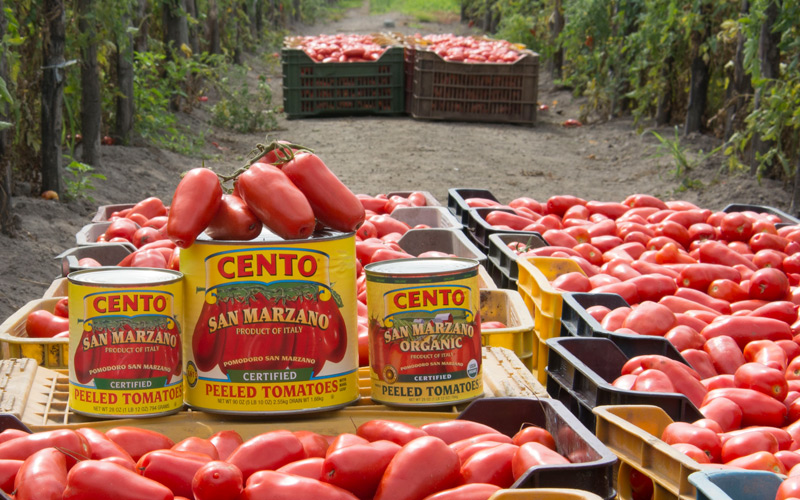
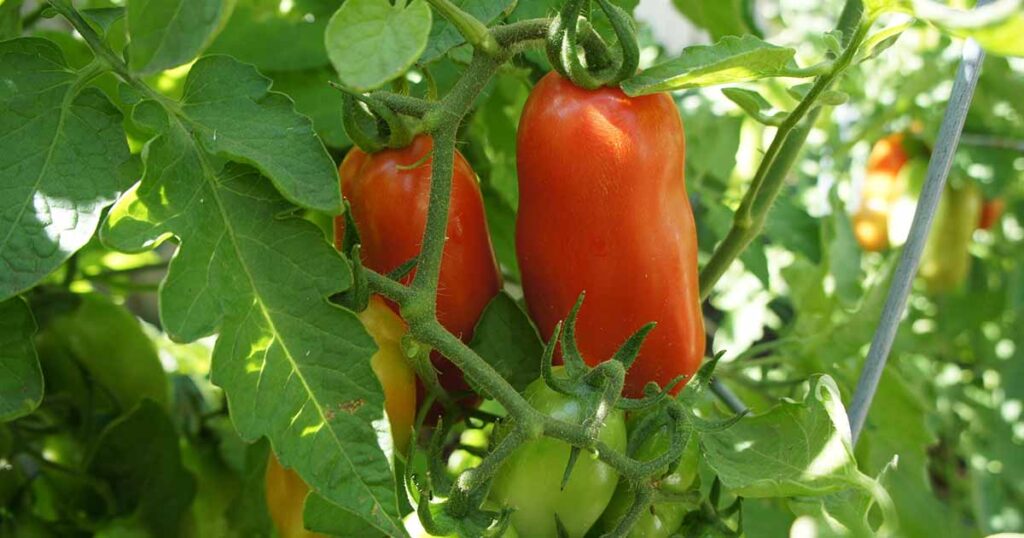
San Marzano tomatoes are a specific variety of plum tomato — pomodoro San Marzano in Italian — grown in a narrow stretch of volcanic farmland in Campania, southern Italy. They’re elongated, pear-shaped, and unmistakable once you’ve seen them next to a standard Roma. The flesh is thick and meaty, the seed count is low, and the skin is thinner than most comparable varieties. The flavor sits somewhere between sweet and savory with a brightness that doesn’t tip into acidic.
That flavor doesn’t come from a special growing technique or a clever seed company. It comes from the ground itself — specifically, the mineral-rich volcanic soil deposited over centuries by Mount Vesuvius in the Valle del Sarno, the Sarno Valley. The microclimate there is Mediterranean, warm and dry enough to concentrate sugars in the flesh, but the soil provides something that simply cannot be replicated somewhere else. That’s not marketing language. It’s the reason the European Union granted this tomato a DOP designation.
How San Marzano Compares to Roma Tomatoes
People use Roma tomatoes and san marzanos interchangeably all the time, and I understand why — they look similar at a glance, and both are plum tomatoes suited for cooking. But once you’ve used real DOP-certified san marzanos, you’ll notice the difference immediately. Romas have more moisture and a slightly more acidic flavor profile. San marzanos have higher pectin content, which means they break down into a silkier, thicker sauce without much effort. The skin peels off more cleanly, and the seed cavity is smaller, so you get more usable flesh per tomato.
That said, a good California-grown Roma in peak summer is still a fine tomato. The issue is that many canned products labeled “San Marzano” are either U.S.-grown hybrids or Italian tomatoes that don’t meet DOP standards. Knowing how to read a label is half the battle.
The History and Origin of San Marzano Tomatoes
Tomatoes arrived in Europe from the Americas in the mid-16th century, carried by Spanish colonizers. For a long time, Italians grew them ornamentally and eyed them with suspicion — they belong to the nightshade family, after all, and the resemblance wasn’t lost on anyone. It wasn’t until the late 18th century that tomatoes became a genuine culinary ingredient in southern Italy, particularly in Naples and the surrounding Campania region.
The San Marzano variety, as we know it, came later, emerging as a cross between three older varieties: Re Umberto (also called King Umberto), Fiaschetto, and Fiascona. The earliest documented reference appears in a 1894 USDA yearbook, though commercial canning of the variety was reportedly underway by 1875.
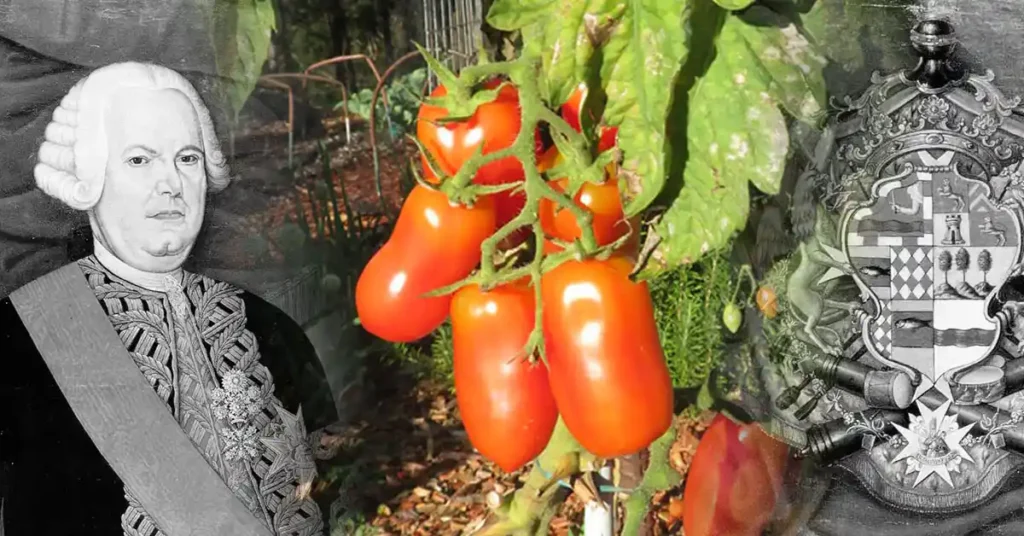
One popular legend traces the tomato’s arrival in the area to 1770, when a Spanish nobleman — the viceroy of Peru — gifted seeds to Ferdinand IV of Bourbon in Naples. Other accounts place the first cultivation in San Marzano sul Sarno around 1823. The legends conflict, as legends do, but the regional pride is consistent.
The name “pomodoro” itself comes from pomodoro d’oro, meaning golden apple — a reference to the early yellow-hued tomatoes that Europeans encountered before the red varieties became dominant.
By the 20th century, the San Marzano had become iconic in Campanian cooking. But the 1970s and 1980s brought serious problems — phytosanitary diseases threatened the original plants, and farmers largely switched to disease-resistant hybrids that were easier to grow but lacked the same flavor. The authentic variety nearly disappeared. It came back in the 1990s, partly driven by renewed interest from chefs and the eventual push toward DOP certification, which gave producers a financial reason to grow the real thing again.
My grandmother Julia cooked Italian food in Valparaíso, Chile, long before it was fashionable. She learned from Italian immigrant neighbors, and her tomato sauce was always simmered low and slow with whole canned tomatoes crushed by hand. She didn’t have access to certified San Marzanos in Valparaíso, obviously, but when I finally tasted the real thing as an adult, I understood exactly what she was chasing with that slow simmer — that balance of sweetness and depth that makes a simple sauce feel complete.
DOP Certification — What It Means and Why It Matters
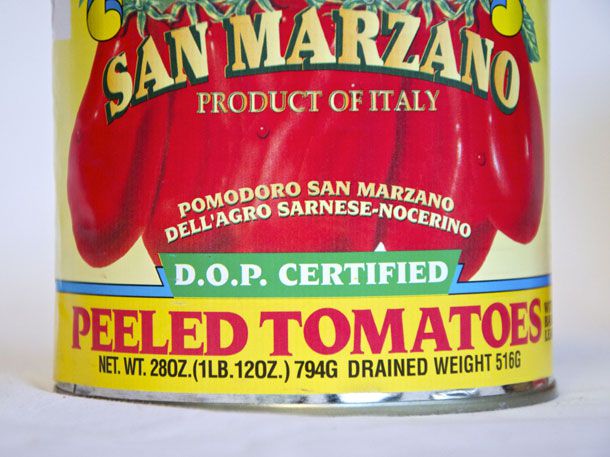
DOP stands for Denominazione di Origine Protetta, which translates to Protected Designation of Origin. The EU granted this status to San Marzano tomatoes in 1996, and it functions similarly to the way Champagne works for sparkling wine — only tomatoes grown in the designated zone and processed according to specific rules can legally carry the name.
What the DOP Rules Require
The production zone is strictly defined as the Agro Sarnese-Nocerino, the area surrounding San Marzano sul Sarno in Campania. Tomatoes must be hand-picked — no mechanized harvesting — and the yield per plant is limited to protect quality. They’re grown between May and August in that volcanic soil, inspected during production, and processed in the region. The final product — typically whole peeled tomatoes packed in their own juice — must carry the consortium’s stamp, which reads “Pomodoro San Marzano dell’Agro Sarnese-Nocerino DOP.”
The red-and-yellow EU Protected Designation of Origin seal must also appear on the can. If you don’t see that seal, you’re not buying certified San Marzanos, regardless of what the front label says.
The Counterfeit Problem
This is where things get frustrating. The term “San Marzano” has no legal protection in the United States beyond voluntary labeling, which means any producer can print it on a can. American-grown San Marzano-style tomatoes — some of them dating back to 1930s California, when growers like Tillie Lewis first brought the seeds over — are sold under the name without any DOP affiliation. Some Italian-packaged tomatoes use the name on cans that contain genuine Italian tomatoes, but not from the certified zone.
At the Sacramento Italian market, I’ve compared several brands side by side over the years, and the difference between certified DOP cans and uncertified “San Marzano” cans is stark. The uncertified versions are often softer, more watery, and noticeably more acidic. They’re not bad tomatoes, but they’re not the same product.
How to Buy San Marzano Tomatoes
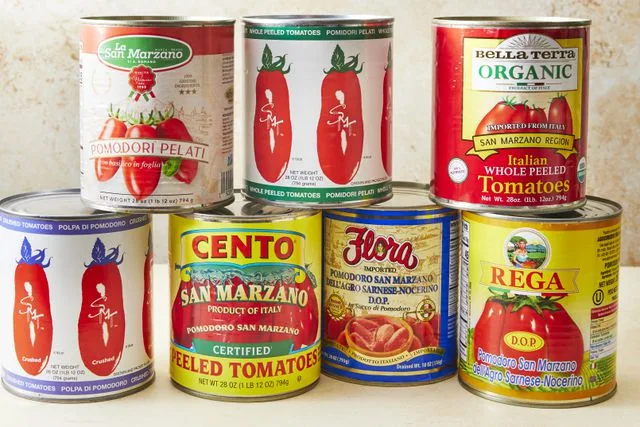
Reading the label carefully is the only way to buy correctly. Here’s what to look for:
- The EU DOP seal — a red-and-yellow circular logo on the can. This is non-negotiable for a certified product.
- The consortium name — “Pomodoro San Marzano dell’Agro Sarnese-Nocerino DOP” should appear somewhere on the label.
- Whole peeled tomatoes — authentic san marzanos are typically sold whole, packed in thick juice or purée. If the can says “crushed” or “sauce,” it’s harder to verify what’s inside.
- Pack date — fresher is better. Most Italian importers print the harvest year.
- Country of origin — must say Italy. “Product of Italy” on its own isn’t enough; look for the zone name.
Best Brands Worth Buying
After testing multiple brands side by side in my Sacramento kitchen, a few consistently stand out.
Cento Certified DOP San Marzano Tomatoes is the most widely available certified option in the United States and one of the most reliable. The label carries the EU seal and the full consortium name. The tomatoes are firm, bright red, and pack well. This is the brand I see most often at the Sacramento Italian market, and it’s the one I reach for most regularly. The one I keep in my kitchen is the Cento DOP — it’s consistent, easy to find, and genuinely certified.
Other certified options worth looking for include La Valle, Strianese, and Gustarosso, all of which are imported from Campania with proper DOP documentation. They’re harder to find outside of specialty markets and Italian importers, but if you see them, they’re excellent.
Avoid anything that says “San Marzano style,” “grown in California,” or just “San Marzano” without the EU seal. Those are different products at a different price point — not inherently bad, but not what we’re talking about here.
How to Use San Marzano Tomatoes in Cooking
The classic applications are simple for a reason — the tomato does most of the work.
Neapolitan Pizza Sauce
Authentic Neapolitan pizza — pizza napoletana — uses uncooked san marzano tomatoes crushed by hand directly onto the dough. No cooking, no seasoning beyond salt and a few basil leaves. The tomato’s natural sweetness and low moisture make it work perfectly in a hot wood-fired oven. If you’re making pizza at home with a very hot oven or a steel, this method still holds up beautifully.
Simple Tomato Sauce
The most honest use of a great tomato. Crush the tomatoes by hand into a pan with olive oil and a clove or two of garlic — some cooks add half an onion, some don’t. Simmer for 20 to 30 minutes. Salt to taste. That’s it. My grandmother Julia would recognize this immediately, and she’d probably tell you to be patient with the heat and not rush it.
Braised Meat and Seafood
San marzano tomatoes are excellent in slow braises — pollo alla cacciatora, braised short ribs, Sicilian-style fish. The high pectin content helps build a thick, glossy sauce without needing reduction tricks.
How to Store San Marzano Tomatoes
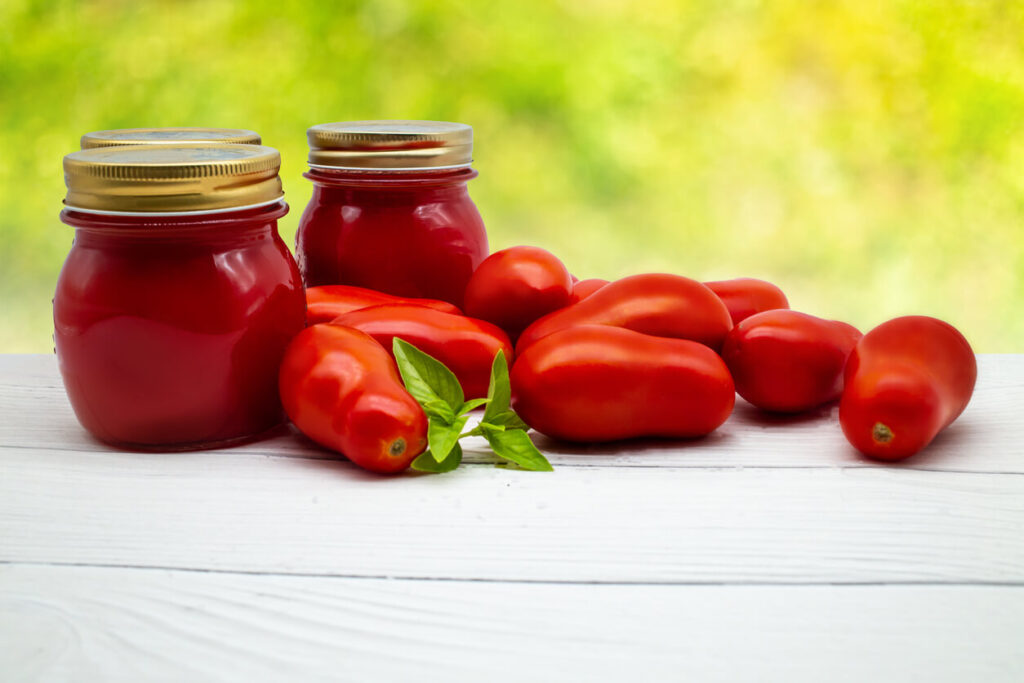
Unopened cans store well at room temperature in a cool, dark pantry — up to two years from the pack date, though flavor is best in the first year. Once opened, transfer any unused tomatoes and their juice to a glass container, cover, and refrigerate. Use within four or five days. Don’t leave them in the opened can; the metal can affect flavor once exposed to air.
If you find yourself with more than you need after opening, the tomatoes freeze well. Portion them into zip bags or small containers with their juice and freeze for up to three months. They’ll lose a little texture but work perfectly fine in cooked applications.
Common Mistakes to Avoid
- Buying uncertified product. The label says “San Marzano” — that doesn’t mean DOP. Always check for the EU seal.
- Over-seasoning the sauce. San marzano tomatoes have a complex natural flavor. Adding too many aromatics early covers it up. Start simple.
- Cooking on high heat. High heat breaks the tomato’s natural sugars too fast and can make the sauce bitter. Low and slow is the right approach.
- Using crushed or diced canned versions. These are harder to verify and often lower quality. Whole peeled is the standard for a reason.
- Ignoring the juice in the can. That thick tomato liquid is flavorful and high in pectin. Add it to your sauce — don’t drain it.
- Expecting miracles from bad technique. Great tomatoes help, but if you burn the garlic or rush the simmer, the sauce suffers regardless of what’s in the can.
Final Thoughts
San Marzano tomatoes are one of those ingredients where the gap between the real thing and the imitation is genuinely significant. The DOP certification exists for a reason — it protects a specific tradition, a specific place, and a flavor that’s the direct result of volcanic soil, a Mediterranean microclimate, and decades of careful agricultural practice. When I visited Campania and tasted tomatoes straight from a local producer’s garden in the Valle del Sarno, I understood immediately why these have a protected status. There’s nothing complicated about them. They’re just very, very good.
As José Villalobos, I’ll tell you honestly: don’t let the label confusion turn you off. Once you know what to look for, buying the right product is straightforward. Find the EU seal, buy whole peeled, and keep a few cans in the pantry at all times. Your pizza, your pasta, your braises — everything benefits.
Back to the full Italian pantry guide
Frequently Asked Questions
Can I substitute Roma tomatoes for San Marzano in my recipes?
You can, but you’ll notice differences. Romas have more moisture and acidity, so your sauce won’t be as thick or silky without extra reduction. A high-quality California Roma at peak season works in a pinch, but authentic DOP San Marzanos produce noticeably better results with less effort.
Why is the volcanic soil in Campania so important for San Marzano tomatoes?
The mineral-rich soil from Mount Vesuvius creates flavor and texture that can’t be replicated elsewhere. That specific terroir is why the EU granted DOP protection—it’s not just marketing. The soil concentrates sugars and contributes properties that distinguish genuine San Marzanos from tomatoes grown anywhere else.
What’s the difference between a real San Marzano and a U.S.-grown variety labeled “San Marzano”?
Many American cans use hybrid seeds or non-traditional growing methods that don’t produce the same low seed count, thick flesh, or flavor profile. Without DOP certification, you’re often getting a tomato that merely resembles a San Marzano in shape. Always check for DOP on the label.
How much higher is the pectin content in San Marzanos compared to other plum tomatoes?
I don’t have exact percentages to quote, but the practical difference is clear: San Marzanos naturally break down into a silkier sauce without extended cooking or straining. That higher pectin is why they’ve become the standard for serious Italian cooking.
Are San Marzano tomatoes worth the premium price?
For simple applications like fresh tomato sauce or pizza, authentic DOP San Marzanos deliver noticeable quality improvements. For complex dishes where tomatoes are one ingredient among many, a good canned Roma might suffice. Your budget and what you’re cooking should guide that decision.
Written by José Villalobos
José Villalobos is a food writer and the founder of Calitalia Food. He grew up in Valparaíso, Chile, where his grandmother Julia cooked Italian food daily from memory and instinct. Based in Sacramento, California, he visits local Italian markets weekly and writes about ingredients, sauces, and regional food culture with the kind of detail that comes from years of sourcing, testing, and eating. Every product he recommends, he has personally bought and tested.