If you’ve ever searched for a cacio e pepe recipe online, you’ve probably been hit with versions that call for butter, cream, olive oil, or some combination of all three. Close the tab. That’s not cacio e pepe — that’s a cream sauce wearing a costume. The real thing has three ingredients: pasta, pecorino romano, and black pepper. That’s it. No fat added, no shortcuts taken, no cream smuggled in at the end.
I’m José Villalobos, and I’ve been chasing this dish for years — through Roman cookbooks, through conversations at the Sacramento Italian market, and through a lot of broken, clumpy, or soupy failed attempts in my own kitchen. What I’ve learned is that cacio e pepe is deceptively simple in its ingredient list and genuinely demanding in its technique. The margin between silky and seized is razor thin. But once you understand why the dish works the way it does, it becomes repeatable.
This guide covers everything: the history, the ingredients, the technique, the mistakes, and the one thing my grandmother Julia would have told me from the start — that the best food usually has nowhere to hide.
What Is Cacio e Pepe?
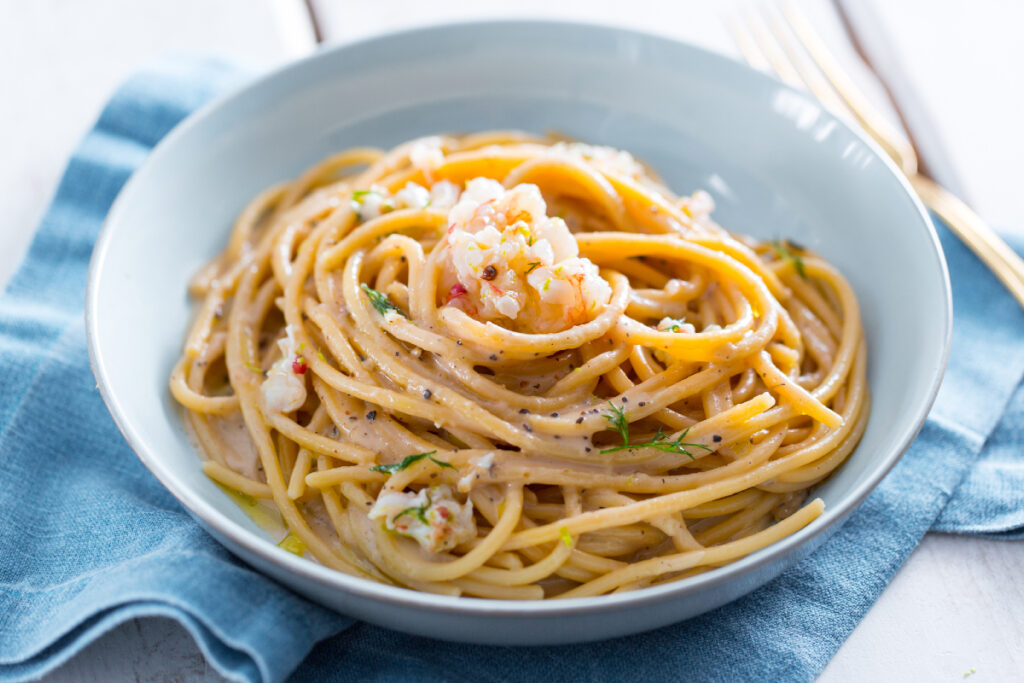
Cacio e pepe translates literally from Roman dialect as “cheese and pepper.” It’s a pasta dish from Lazio — the region anchored by Rome — and in its purest form it contains nothing more than those two elements plus the pasta itself. The sauce isn’t really a sauce in the conventional sense. It’s an emulsion: finely grated pecorino romano melts into hot, starchy pasta water and coats every strand in something that looks and behaves like cream but contains none.
The pasta of choice is traditionally tonnarelli, a thick square-cut pasta made with egg that has enough surface area to hold the sauce well. Spaghetti is the more commonly available substitute and works beautifully. What you’re looking for is something with body — thin angel hair won’t give you the structure you need, and something too wide like pappardelle throws off the balance between pasta and coating.
The defining characteristic of an authentic cacio e pepe recipe is restraint. There is no garlic. No onion. No olive oil in the sauce. No butter. Generations of Roman cooks figured out that these three ingredients — in the right proportions, handled correctly — create something that needs nothing else.
The History Behind the Dish
A Shepherd’s Meal From the Apennines
Cacio e pepe didn’t come from a restaurant kitchen. It came from the mountains. The dish most likely emerged in the 18th or 19th century among the shepherds of central Italy who practiced transhumance — the seasonal movement of flocks across the Apennine Mountains between Lazio, Abruzzo, Tuscany, and Umbria. These men were on the road for weeks at a time and needed food that was portable, non-perishable, and calorie-dense.
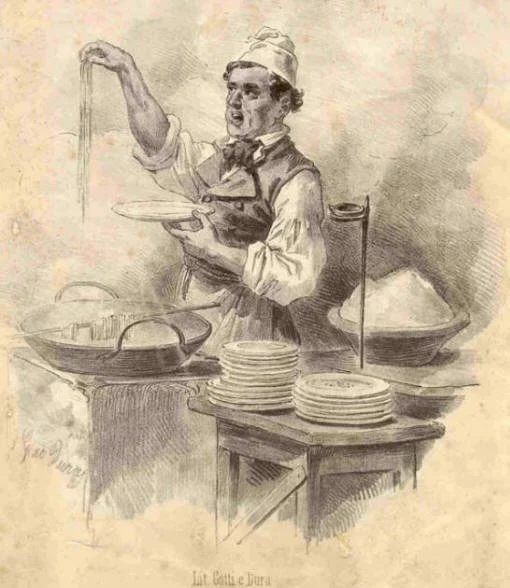
What they carried was practical to the point of poetry: dried pasta, aged pecorino, and black pepper. Pecorino was ideal because sheep’s milk cheese — particularly in its aged, hard form — keeps well without refrigeration. Black pepper was valuable enough that it had once been used as currency; it also generated body heat, useful in cold mountain passes. Pasta supplied carbohydrates for long days of physical labor. Together, these three things made a meal that was greater than the sum of its parts.
A Shepherd’s Meal From the Apennines
Cacio e pepe didn’t come from a restaurant kitchen. It came from the mountains. The dish most likely emerged in the 18th or 19th century among the shepherds of central Italy who practiced transhumance — the seasonal movement of flocks across the Apennine Mountains between Lazio, Abruzzo, Tuscany, and Umbria. These men were on the road for weeks at a time and needed food that was portable, non-perishable, and calorie-dense.
What they carried was practical to the point of poetry: dried pasta, aged pecorino, and black pepper. Pecorino was ideal because sheep’s milk cheese — particularly in its aged, hard form — keeps well without refrigeration. Black pepper was valuable enough that it had once been used as currency; it also generated body heat, useful in cold mountain passes. Pasta supplied carbohydrates for long days of physical labor. Together, these three things made a meal that was greater than the sum of its parts.
Pecorino Romano and Its Ancient Roots
The cheese at the center of this dish is one of the oldest in the world. Pecorino romano has been documented as part of the Roman legionary diet since at least 227 BCE, when it was distributed as a daily ration. Sheep’s milk cheese had been part of central Italian life for thousands of years before that — some accounts trace the tradition back over 3,000 years, spread across the Mediterranean through Roman expansion.
The cheese’s production roots are in Lazio, though much of it is now produced in Sardinia under the same conditions and methods that earned the cheese its protected status. The basic process involves curdling sheep’s milk through heat and acidity, then aging the cheese into the hard, sharp, intensely salty wheel that gets grated over your pasta.
As for pepper — at its peak, black pepper was so rare and expensive in the ancient world that when the Visigoths besieged Rome in 408 CE, they reportedly demanded roughly 3,000 kilograms of it as part of their ransom. The spice’s presence in a shepherd’s pack tells you something about how essential it was considered, even when budgets were tight.
From Mountain Roads to Modern Fame
Cacio e pepe remained relatively obscure outside of Rome until the dish gained unexpected international attention in 2012, in the wake of the Emilia-Romagna earthquakes that devastated the region’s Parmigiano-Reggiano wheels. Chef Massimo Bottura created a dish — his now-famous “Risotto Cacio e Pepe” — partly as a gesture to draw attention to damaged Italian cheeses and the producers behind them. The dish’s coverage brought global eyes to the original Roman pasta version, and the rest is culinary internet history.
Today it appears on menus from Tokyo to Los Angeles, in versions that range from faithful to unrecognizable. The cream versions, the butter versions, the “easier” versions — they’re everywhere. This guide is for the real one.
How to Buy the Right Ingredients
Pecorino Romano DOP — What to Look For
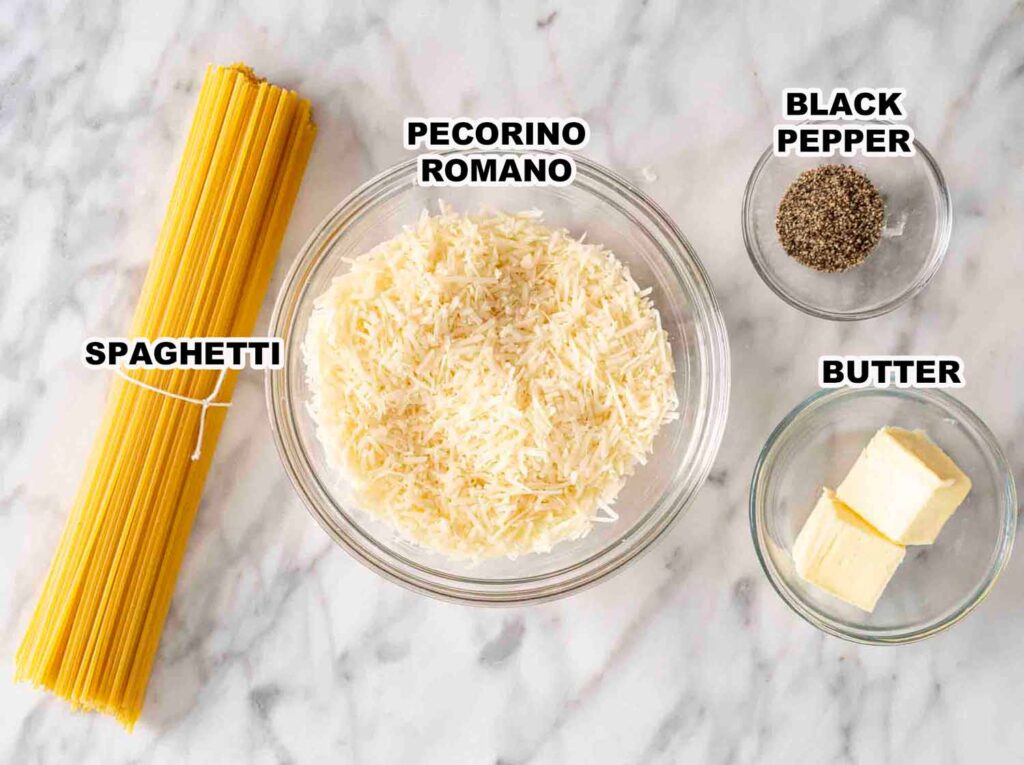
This is the ingredient that makes or breaks your cacio e pepe recipe. You need Pecorino Romano DOP — the DOP designation (Denominazione di Origine Protetta) guarantees that the cheese was produced according to traditional methods in Lazio, Sardinia, or the province of Grosseto in Tuscany. It protects you from the watered-down, cow’s milk impostors that line supermarket shelves labeled generically as “Romano.”
Cow’s milk romano is not a substitute. It melts differently, behaves differently in the emulsion, and lacks the sharp, grassy, funky depth that makes cacio e pepe what it is. Always check the label for DOP certification and look for “latte di pecora” — sheep’s milk — in the ingredients.
At the Sacramento Italian market, I’ve compared several brands of pecorino romano side by side, and the difference between a well-aged DOP wheel and a generic supermarket block is immediately obvious. The DOP version has a drier, grainier texture that grates into a fine powder. The generic version tends to be softer and stickier — and it will clump in your sauce. Buy a wedge from a wheel whenever possible, ideally from an Italian deli or specialty market where turnover is high and the cheese hasn’t been sitting vacuum-sealed for months.
Grate it yourself. Always. Pre-grated cheese contains anti-caking agents that will destroy your emulsion. A fine microplane grater is your best friend here — you want something close to powder, not shredded strings.
Pasta — Tonnarelli or Spaghetti
If you can find tonnarelli, use it. It’s a square-cross-section pasta made with egg, slightly thicker than spaghetti, and it carries the sauce in a way that feels very specifically designed for this dish — because, essentially, it was. Many Italian specialty stores carry it dried.
If you can’t find tonnarelli, reach for spaghetti tipo 5 — a durum wheat semolina pasta labeled by its thickness. Tipo 5 is on the thicker end of spaghetti and has the structural integrity to stand up to the vigorous tossing the dish requires. Thin or delicate pasta shapes will break apart or fail to generate enough surface friction to hold the sauce.
The one I keep in my kitchen for cacio e pepe is a bronze-die extruded spaghetti from a small Italian producer — the rougher surface created by bronze dies holds sauce dramatically better than smooth, Teflon-extruded pasta. Look for “trafilata al bronzo” on the package.
Black Pepper — Fresh, Coarse, and the Right Variety
The pepper matters more than most people realize. You want whole black peppercorns that you crack yourself — not pre-ground powder, which has lost most of its volatile oils and will give you a flat, dusty heat rather than the aromatic punch the dish needs.
Tellicherry peppercorns from India are widely considered the gold standard for their complex, citrusy fragrance. Sicilian black pepper, when you can find it, has a slightly different floral quality that works beautifully in a dish named partly in its honor. Either works. What doesn’t work is the pre-ground stuff in the plastic shaker jar.
Crack your peppercorns coarsely — you want pieces, not dust. A mortar and pestle gives you the best control. A pepper grinder on its coarsest setting works in a pinch.
The Cacio e Pepe Recipe — Step by Step
Ingredients (Serves 2)
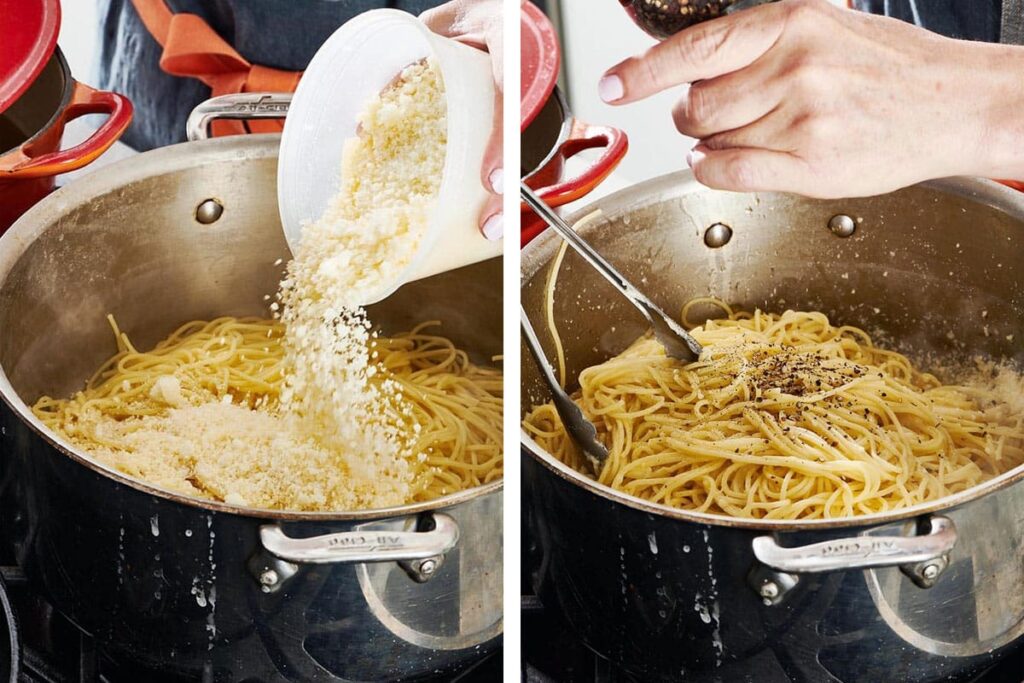
- 200g spaghetti tipo 5 or tonnarelli
- 80g Pecorino Romano DOP, finely grated (plus more for serving)
- 2 teaspoons whole black peppercorns, coarsely cracked
- Salt for pasta water
The Method
Step 1 — Boil the pasta in less water than you think. This is the most important technical choice you’ll make. Use a smaller pot than you normally would — about half the water. This concentrates the starch in the cooking water, making it more effective as an emulsifier. Salt the water, but go lighter than you normally would, because pecorino romano is aggressively salty on its own. Bring to a boil and cook your pasta until about two minutes shy of al dente — it will finish cooking in the pan.
Step 2 — Toast the pepper. While the pasta cooks, add your cracked black pepper to a wide, dry skillet over medium heat. Toast it for about 60 to 90 seconds, just until fragrant. You’ll smell the difference — the heat wakes up the volatile oils and gives the pepper a deeper, more complex aroma. Don’t let it burn.
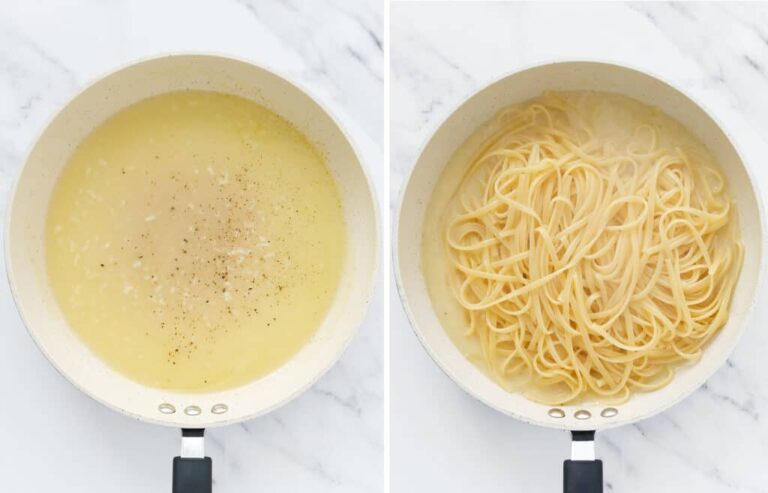
Step 3 — Add pasta water to the pepper. Ladle about half a cup of pasta cooking water into the skillet with the toasted pepper. Let it simmer for a minute or two. This infuses the water with pepper flavor and starts building your base. Reserve additional pasta water in a cup on the side — you’ll need it.
Step 4 — Finish the pasta in the pan. Use tongs to transfer the pasta from the pot directly into the skillet, bringing some of the cooking water with it. Toss vigorously over medium-low heat for about two minutes, adding small splashes of pasta water as needed to keep things loose and glossy. The pasta is absorbing starch-rich water and continuing to cook to al dente here. This is where you build the foundation of the emulsion.
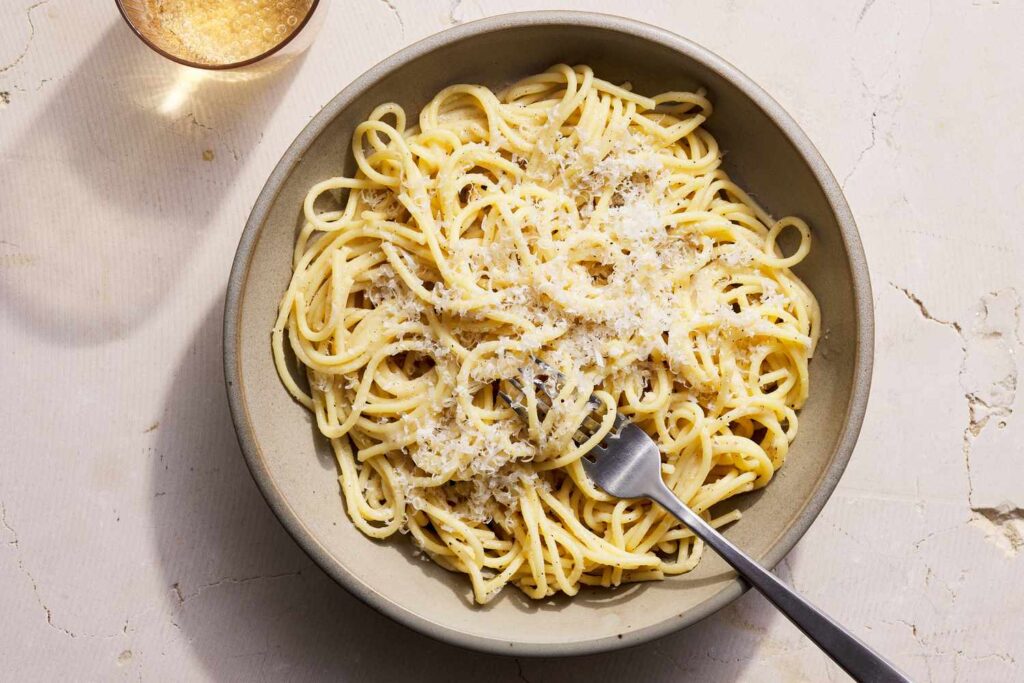
Step 5 — Off the heat, add the cheese. This is the critical moment. Pull the pan off the heat completely. Add your finely grated pecorino in two or three additions, tossing constantly between each addition and adding small splashes of pasta water to help the cheese melt and integrate. The residual heat from the pasta is enough — direct flame at this stage will cause the proteins in the cheese to seize and clump.
Keep tossing. Add water a tablespoon at a time if the sauce tightens too quickly. You’re looking for a sauce that coats every strand in a smooth, slightly glossy film with no visible clumps. This can take two to three minutes of active tossing. Don’t rush it and don’t stop moving.
Step 6 — Plate and serve immediately. Cacio e pepe waits for no one. Twist the pasta into warm bowls, scrape any remaining sauce from the pan over the top, add another crack of fresh black pepper, and eat right away. If you let it sit, the emulsion will tighten and break. This dish is made to be eaten the moment it’s ready.
How to Store Cacio e Pepe
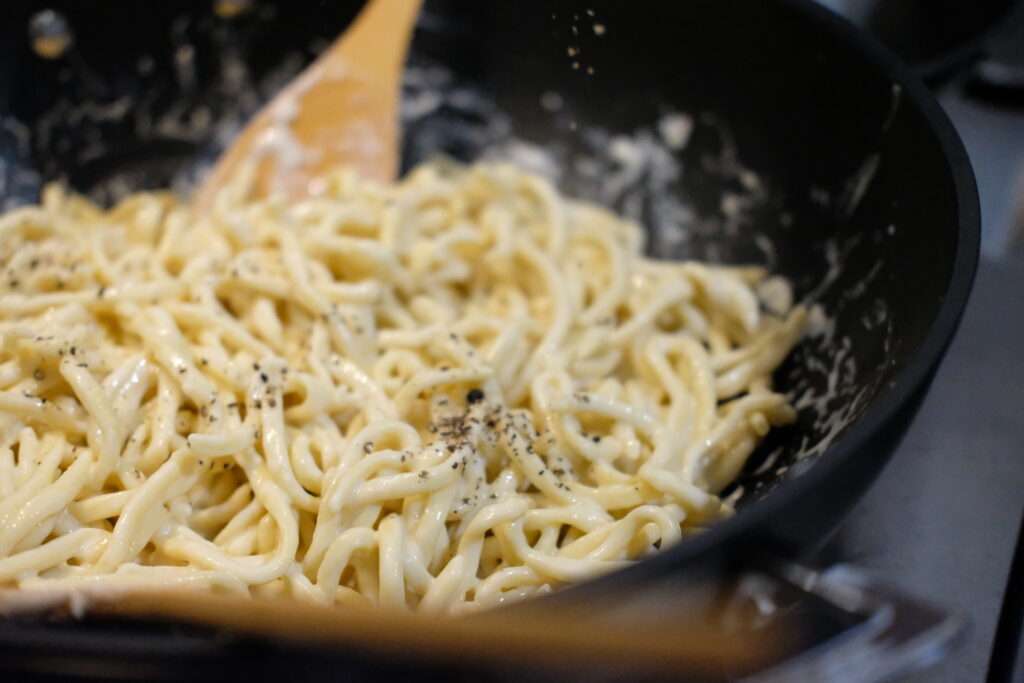
Honest answer: cacio e pepe doesn’t store well, and you should plan not to have leftovers. The emulsion that makes the sauce so silky relies on the heat and motion of cooking — once it cools, the sauce tightens, the pasta absorbs it, and you’re left with a clumpy block of cheesy noodles in the fridge.
If you do have leftovers, refrigerate in an airtight container for no more than a day. To reheat, add the pasta to a skillet with a splash of water over low heat and toss gently until the sauce loosens again. It won’t be identical to the original, but it’s salvageable. Do not microwave it — you’ll end up with scrambled eggs in pasta form.
The better strategy is to make only what you’ll eat. This recipe scales down easily — for one person, use 100g pasta and 40g cheese. It comes together in under 20 minutes. There’s no reason to have leftovers.
Common Mistakes (And How to Fix Them)
The Cheese Clumps Into a Ball
This is the most common failure mode. It happens when the cheese hits too much direct heat, or when it’s added all at once to pasta that’s too hot and too dry. The fix: make sure the pan is off the heat when you add the cheese, add it gradually, and always have pasta water ready to loosen things up. If the sauce starts seizing, a tablespoon of cold pasta water and vigorous tossing can sometimes pull it back.
The Sauce Is Watery and Thin
You either used too much pasta water or didn’t cook the emulsion long enough. Add your water conservatively — a splash at a time. You can always add more, but you can’t take it back. And keep tossing: the agitation is what creates the emulsion, not just the ingredients.
The Pepper Tastes Flat
You probably used pre-ground pepper or skipped the toasting step. Toast your cracked peppercorns in a dry pan every single time. The difference in aroma and flavor is not subtle.
The Pasta Is Too Salty
Pecorino romano is one of the saltiest cheeses you’ll work with. If you salted your pasta water the way you would for a tomato sauce, your final dish will be almost inedible. Go light on the pasta water salt — a small pinch, not a handful — and let the cheese provide the seasoning.
Using the Wrong Cheese
After testing multiple brands side by side — including several supermarket “Romano” options — the results were night and day. Generic cow’s milk romano melted into a greasy, pasty mess. A proper Pecorino Romano DOP created a sauce that was sharp, complex, and smooth. This is one instance where the label genuinely tells you everything you need to know. Don’t skip the DOP.
What My Grandmother Julia Taught Me Without Knowing It
My grandmother Julia cooked Italian food in Valparaíso, Chile, for decades. She never made cacio e pepe specifically — her repertoire leaned more Ligurian, the flavors she’d absorbed from the Italian immigrant community that had taken root in coastal Chile. But she had a principle that I think about every time I make this dish: the fewer ingredients something has, the more you have to respect each one.
My grandmother Julia would have had no patience for a cacio e pepe made with cream. Not because she was a purist for its own sake — she wasn’t precious about food — but because adding cream to this dish means you stopped trusting the ingredients. It’s a hedge. And when you’re working with a 3,000-year-old cheese tradition and peppercorns that were once worth their weight in silver, hedging feels like an insult to the whole enterprise.
José Villalobos makes the drive to the Sacramento Italian market most weeks, partly for the cheese, partly for the conversation, partly because there are things you learn from talking to people who’ve been selling these ingredients for decades that you simply can’t read anywhere. The owner there told me once that the Romans didn’t invent cacio e pepe — the shepherds did, and the Romans just had the good sense to adopt it. That feels right.
Why This Recipe Is Worth Doing Properly
There’s a version of this dish that’s easy. You boil pasta, you throw in some cheese and butter and maybe a splash of cream, you crack pepper on top, and you call it cacio e pepe. It’ll taste good. People will eat it.
But the real recipe — three ingredients, no fat, nothing added — is one of those dishes that rewards precision with something that feels almost impossible. A sauce made from nothing but water and aged cheese that is somehow creamy, complex, and deeply satisfying. It’s a technical achievement every time you pull it off, and it gets easier the more you do it.
When I visited Lazio and ate cacio e pepe in a small trattoria in Rome, what struck me was how unapologetic it was. A bowl of pasta. Cheese. Pepper. Steam rising off the plate. No garnish, no drizzle, no microgreens. Just three ingredients doing exactly what they’ve always done, the way they’ve always done it, going back to shepherds eating on a mountainside in the Apennines two or three hundred years ago.
That’s the dish. Learn to make it right, and you won’t need the shortcut version anymore.
Quick Reference — Cacio e Pepe Recipe Summary
- Pasta: Tonnarelli or spaghetti tipo 5 (bronze-die extruded preferred)
- Cheese: Pecorino Romano DOP, finely grated on a microplane — never pre-grated
- Pepper: Whole black peppercorns, coarsely cracked, toasted in a dry pan
- Key technique: Use less pasta water than usual to concentrate starch; add cheese off the heat in stages
- What to avoid: Cream, butter, olive oil in the sauce, pre-ground pepper, cow’s milk Romano
- Serve: Immediately, in warm bowls
- Storage: Best eaten right away; refrigerate leftovers up to 1 day and reheat gently with a splash of water
This is a dish that asks very little of your pantry and a great deal of your attention. Give it what it asks for, and it will give you one of the most satisfying plates of pasta you’ve ever eaten — made exactly the way Roman shepherds have been making it for centuries, with nothing added and nothing taken away.
— José Villalobos, Calitalia Food
Back to the full Italian pasta sauces guide
Frequently Asked Questions
Can I use Parmigiano-Reggiano instead of pecorino romano?
No. Parmigiano is milder and won’t give you the sharp, salty punch cacio e pepe demands. Pecorino romano has the bite and mineral quality the dish needs. I’ve tried swapping it out — the result just tastes flat and loses its Roman character entirely.
What’s the best way to prevent the cheese from clumping when mixing it in?
Temperature control is everything. The pasta water needs to be hot enough to melt cheese smoothly, but not so hot it causes the proteins to seize instantly. I toss the grated cheese with pasta off heat first, then add pasta water gradually while stirring constantly until it becomes creamy.
Why does my cacio e pepe sometimes turn out grainy instead of smooth?
Either your pasta water isn’t starchy enough, or you’re adding cheese too quickly. The starch acts as an emulsifier — without it, cheese curdles. Also, freshly grated cheese from a block melts better than pre-grated, which contains anti-caking agents that interfere with the emulsion.
How much black pepper is actually in an authentic serving?
More than most people think. I use about a teaspoon of freshly cracked pepper per person. It should be bold enough to taste it clearly — this isn’t a garnish. The pepper is a main player, not a background note.
Does the type of black pepper matter, or is pre-ground okay?
Pre-ground loses its volatility and bite within weeks of opening. I always crack whole peppercorns fresh. The difference in flavor is noticeable — pre-ground tastes dusty by comparison, and you’ll need to use more to get the same impact.
Written by José Villalobos
José Villalobos is a food writer and the founder of Calitalia Food. He grew up in Valparaíso, Chile, where his grandmother Julia cooked Italian food daily from memory and instinct. Based in Sacramento, California, he visits local Italian markets weekly and writes about ingredients, sauces, and regional food culture with the kind of detail that comes from years of sourcing, testing, and eating. Every product he recommends, he has personally bought and tested.