If you’ve only ever eaten pesto from a jar, I need you to stop what you’re doing and make this today. Learning how to make pesto sauce from scratch is one of those kitchen skills that permanently changes how you cook — not because it’s complicated, but because the difference in flavor is so dramatic, so immediate, that you’ll wonder why you waited this long.

We’re talking about a sauce that smells like a Ligurian hillside in July, bright and herbaceous and alive in a way that no sealed glass jar can replicate.
I’m José Villalobos, and pesto has been part of my food life since long before I knew what Liguria was. My grandmother Julia cooked Italian food out of her kitchen in Valparaíso, Chile — a city shaped in part by Genoese immigrants who arrived in the 19th century and brought their food traditions with them. She made pesto by hand, never once touched a blender for it, and I’ve spent years understanding exactly why that mattered.
What Is Pesto alla Genovese?
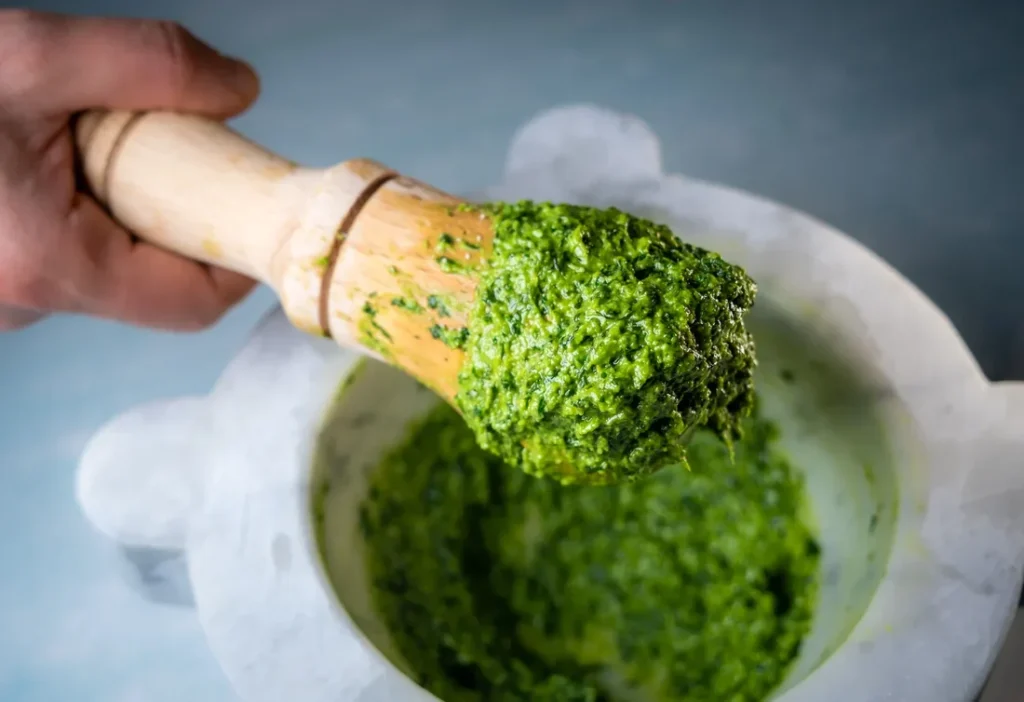
Pesto alla Genovese is the original, the benchmark, the sauce against which every other pesto is measured. It comes from Liguria, the narrow coastal region in northwestern Italy that curves around the Gulf of Genoa like a crescent. The name comes from the Italian verb pestare — to pound — which tells you everything about how this sauce is meant to be made.
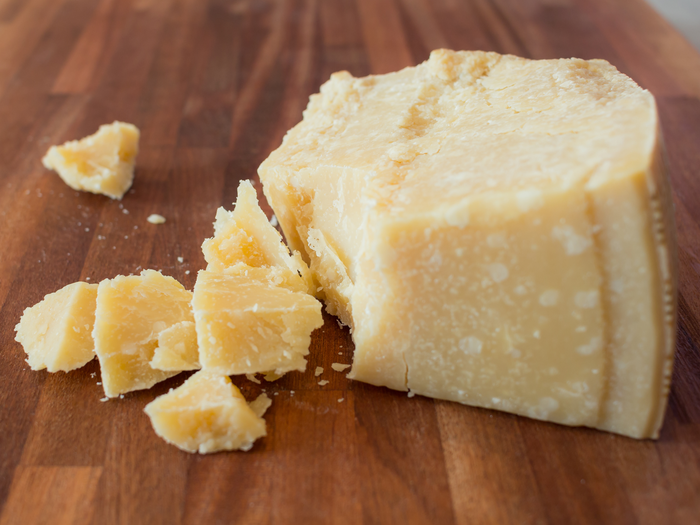
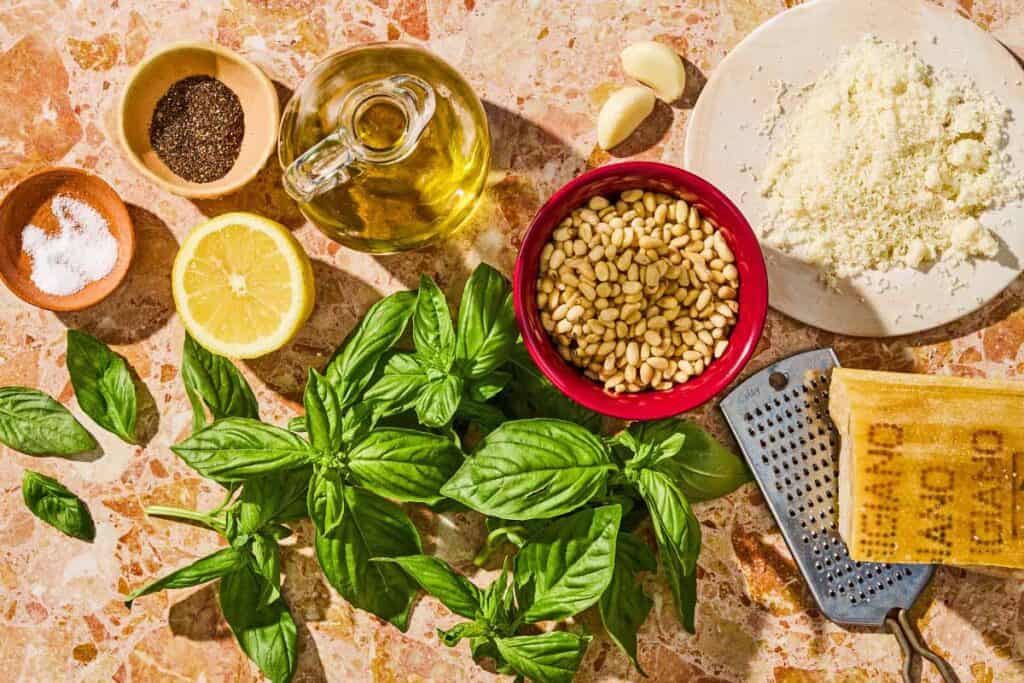
The core ingredients are exactly six: fresh basil (Ocimum basilicum), garlic, pine nuts (pinoli), coarse sea salt (sale grosso), extra-virgin olive oil (olio extravergine d’oliva), and grated cheese — traditionally a combination of Parmigiano-Reggiano and Pecorino, often the Sardinian Fiore Sardo or Pecorino Sardo. That’s it. No lemon juice, no cream, no spinach to boost the color. When the ingredients are right, none of that is necessary.
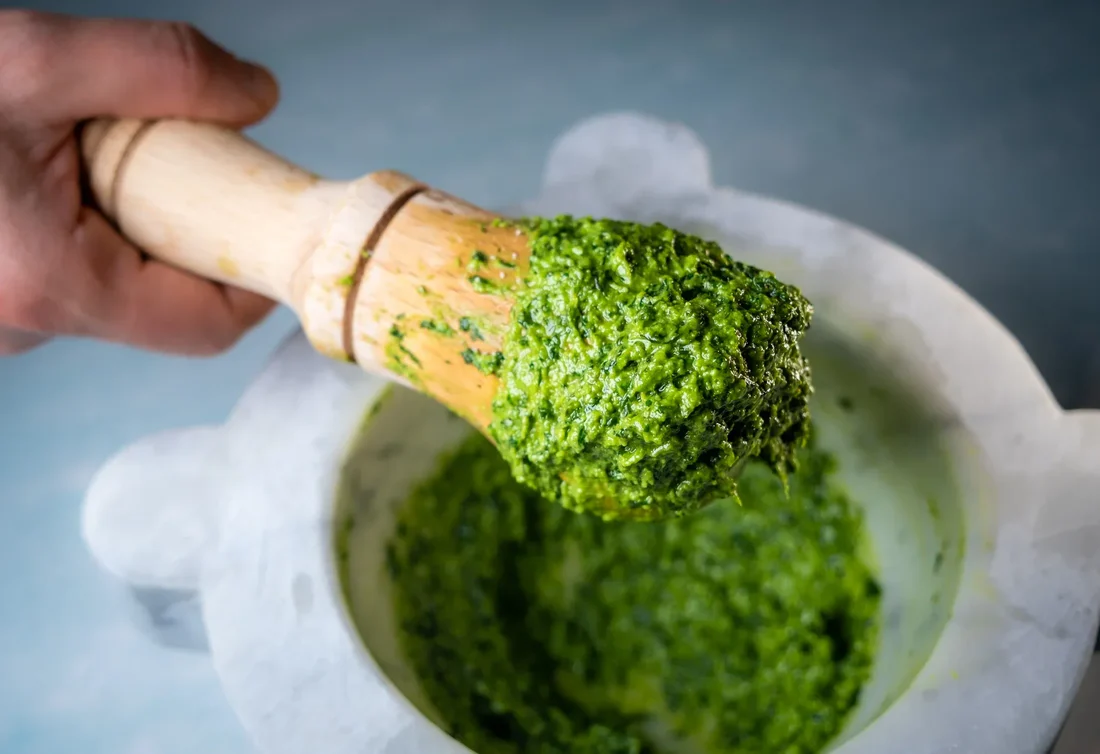
The sauce is pounded in a marble mortar (mortaio) with a wooden pestle (pestello), a process that ruptures the basil cells slowly and gently rather than shredding them at high speed. The result is a chunky, intensely green paste with layers of flavor you simply cannot achieve in a food processor — though I’ll give you both methods here, because not everyone owns a marble mortar and life is still worth living.
A Brief History of Pesto

Pesto is older than its first printed recipe, but that recipe — appearing in 1863 in La Cuciniera Genovese — gives us a fixed point in time to anchor its documented history. By then, the sauce was already a beloved part of Ligurian peasant cooking, built around the ingredients that were abundant and local: basil grew in the mild Ligurian climate, olive oil came from the Riviera presses just inland, and pine nuts fell from the Mediterranean pines (Pinus pinea) that dotted the landscape.
When I visited Liguria, I spent time in the old port neighborhoods of Genoa and spoke with a vendor at the Mercato Orientale who described pesto as “cucina povera that never felt poor.” That stuck with me. The ingredients are humble individually, but combined, they produce something that has lasted centuries without needing improvement.
The Genoese diaspora carried pesto across the Mediterranean and into South America — which is why my grandmother Julia was making it in Valparaíso long before the internet made Italian recipes universally accessible. She learned it from her own grandmother, who likely learned it from the community of Genoese settlers who shaped the port city’s culture in the 1800s. Pesto has always traveled well.
Regional Variations Worth Knowing
Once you understand the Genovese original, the regional variations start to make beautiful sense. They follow the same logic — use what’s local, pound it together, eat it with pasta — but the results are genuinely different sauces.
Pesto Siciliano
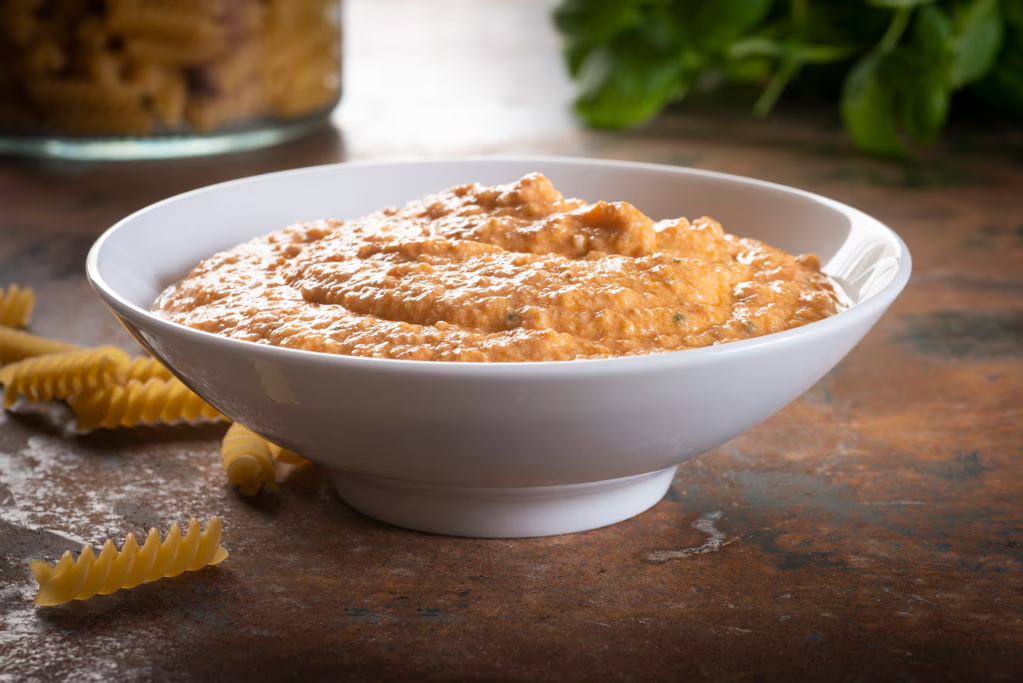
In Sicily, pine nuts give way to almonds (mandorle) or pistachios, and tomatoes and ricotta salata join the mix. The flavor is earthier, slightly sweeter, with that distinctive Sicilian richness. When I visited Sicily, the almond-based version I tasted at a small trattoria near Palermo was revelatory — thicker and more substantial than the Ligurian original, almost a meal in itself spread over pasta.
Pesto Trapanese
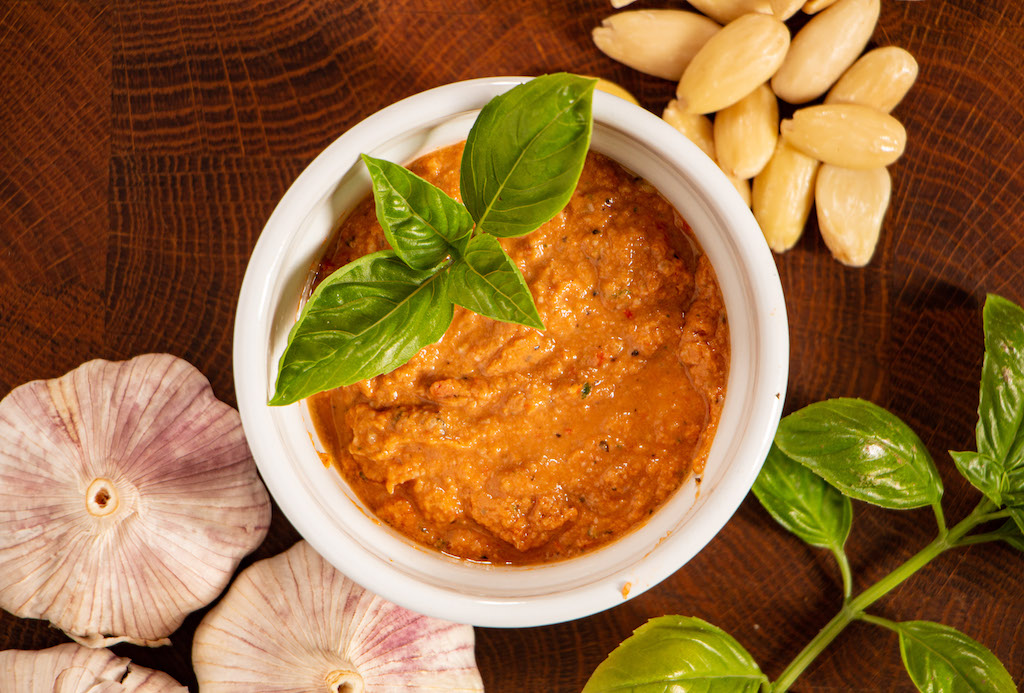
From Trapani on Sicily’s western coast, this version uses raw almonds, garlic, cherry tomatoes (pomodori ciliegino), and Pecorino or ricotta salata — no pine nuts at all. It’s bright red-orange rather than green, pounded in a mortar the same way, and traditionally served with busiate, a local hand-rolled pasta.
Pesto di Prebuggion
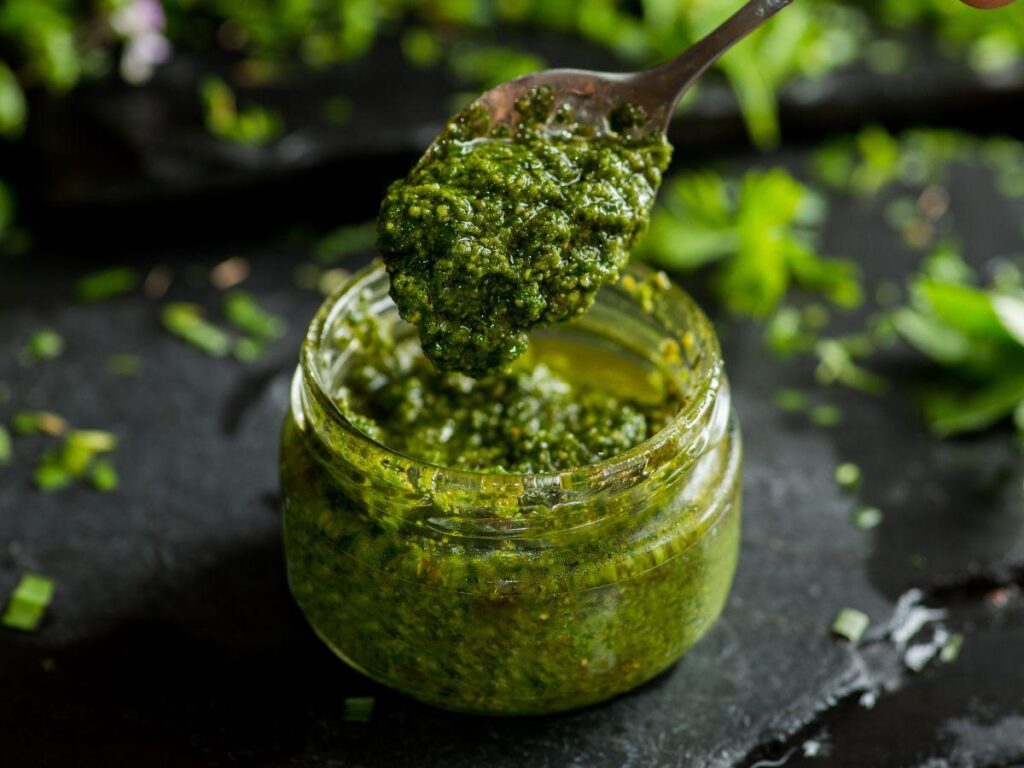
Back in Liguria, there’s a lesser-known variation that uses wild foraged greens — borragine (borage) and other erbe di campo — instead of basil. This is the truly ancient version, predating even the basil-based pesto, and it reflects the region’s long tradition of using whatever the hillsides offered.
How to Make Pesto from Scratch — Two Methods

Here’s where I give you everything you need. I’ll start with the traditional mortar method, because it produces a superior sauce and because you deserve to know how it’s actually done. Then I’ll give you the food processor method for weeknights when you’re feeding a family and don’t have forty minutes to pound things by hand.
Choosing Your Ingredients
The ingredients are the recipe here. There’s nowhere to hide a mediocre basil or a bitter olive oil when you’re working with six components.
- Basil: You want small-leafed, intensely aromatic basil — the Ligurian basilico genovese DOP if you can find it, recognizable by its EU green pyramid label. At the Sacramento Italian market, I’ve compared several brands of imported DOP basil against locally grown varieties, and the DOP basil wins on aroma every single time. That said, fresh homegrown basil picked before it flowers is genuinely excellent. Avoid large-leafed Thai basil or any basil that smells faintly of anise — it will dominate the sauce.
- Pine nuts: Use Mediterranean pine nuts (pinoli) from Pinus pinea, not the cheaper Chinese pine nuts, which have a longer, thinner shape and can cause “pine mouth” — a metallic taste that lingers for days. After testing four brands side by side, the difference in flavor is significant. Mediterranean pine nuts are buttery and sweet; the others taste flat.
- Garlic: Fresh, firm, no green sprout in the center. One to three cloves depending on your preference — Ligurian pesto is not aggressively garlicky.
- Cheese: A combination of aged Parmigiano-Reggiano (24+ months) and Pecorino — ideally Fiore Sardo or Pecorino Sardo. The Parmigiano brings umami and depth; the Pecorino brings a sharp, slightly funky edge. Grate both fresh, fine, just before adding them.
- Olive oil: Ligurian Taggiasca olive oil is the traditional choice — it’s fruity, mild, and delicate rather than peppery, which means it carries the basil flavor rather than competing with it. The one I keep in my kitchen for pesto specifically is a Ligurian Taggiasca; I’ve found it at the Sacramento Italian market consistently. A good Sicilian or Calabrian EVOO will also work if that’s what you have.
- Salt: Coarse sea salt only. It acts as an abrasive in the mortar, helping grind the basil without excessive heat.
The Traditional Mortar Method

Makes enough for 1 pound of pasta
Ingredients:
- 2 cups fresh basil leaves, loosely packed (about 60g), stems removed
- 2–3 garlic cloves
- ⅓ cup Mediterranean pine nuts (about 40g)
- 1 teaspoon coarse sea salt
- ½ cup finely grated Parmigiano-Reggiano
- 3 tablespoons finely grated Pecorino Sardo or Fiore Sardo
- ½ cup Ligurian Taggiasca extra-virgin olive oil
Method:
- Wash your basil leaves and dry them completely — water will turn the pesto gray. Pat them with a clean towel and spread on a rack for ten minutes if needed.
- Place the garlic and coarse salt in the mortar. Pound in a circular motion until you have a smooth paste. The salt prevents the garlic from flying out and helps break it down.
- Add the pine nuts and pound until you have a coarse, sticky paste. You want texture here — not completely smooth.
- Add the basil in two or three batches. This is where patience matters. Work the pestle in slow circular movements against the sides of the mortar rather than straight up-and-down blows. You’re releasing the essential oils from the cells, not shredding the leaves. The mixture will turn vivid green and aromatic. Take your time.
- Once the basil is incorporated and you have a rough green paste, stir in the Parmigiano and Pecorino with a spoon. Don’t pound the cheese — stir it in by hand.
- Add the olive oil in a slow drizzle, stirring constantly with the pestle or a spoon to emulsify. The pesto should be loose enough to coat pasta but not watery.
- Taste. Adjust salt. Use immediately or store (see storage section below).
The Food Processor Method
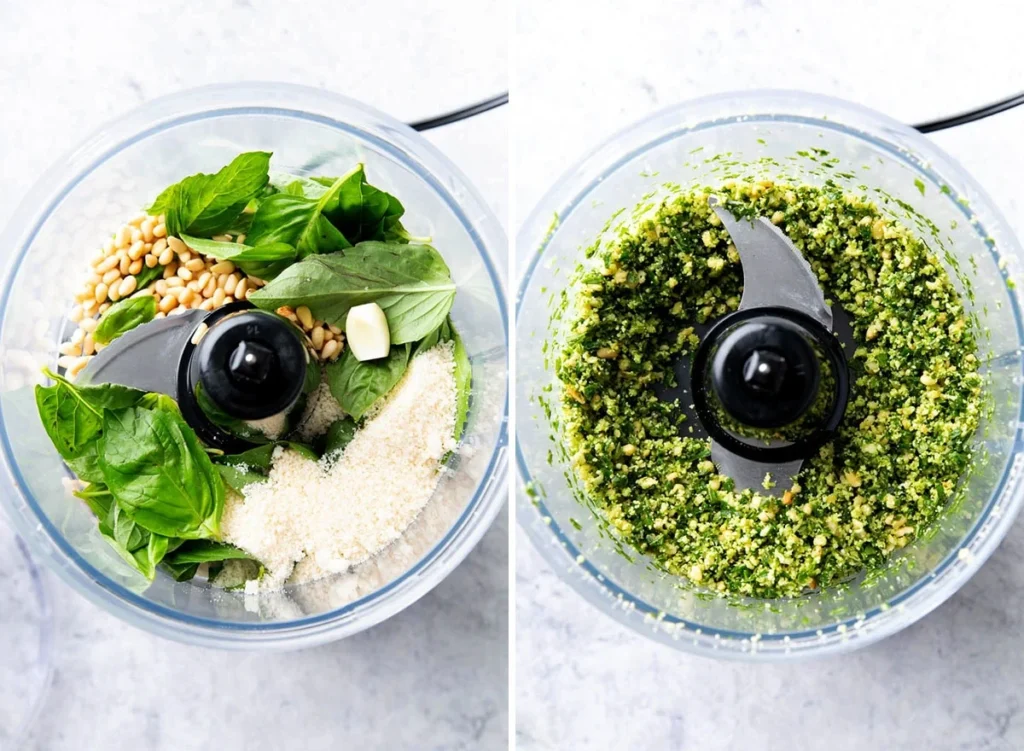
My grandmother Julia would have used a mortar and nothing else. But she also had more time and a different relationship with her kitchen than most people cooking dinner on a Tuesday. The food processor method is a real compromise — you lose some texture and a little of that extraordinary brightness — but it still produces a sauce that’s dramatically better than anything from a jar.
Method:
- Toast the pine nuts in a dry skillet over medium heat for 5–6 minutes, stirring frequently, until lightly golden. Let them cool completely. This step is optional for the mortar method but recommended here — toasting adds nuttiness that compensates slightly for what you lose in texture.
- Chill your food processor bowl in the freezer for ten minutes before you start. Cold metal slows oxidation.
- Pulse the garlic, pine nuts, and salt until coarsely ground — about 8–10 pulses. Don’t let it run continuously.
- Add the basil leaves. Pulse again in short bursts, 10–15 pulses, until the basil is roughly chopped. Scrape down the sides.
- With the motor running, drizzle in the olive oil slowly through the feed tube. Run for about 20–30 seconds total — you want a slightly coarse paste, not a smooth purée.
- Transfer to a bowl and stir in the cheeses by hand. Adding cheese in the processor causes clumping and can make the texture grainy.
- Taste. Adjust salt. Use immediately.
How to Buy Quality Pesto Ingredients
At the Sacramento Italian market, I’ve compared several brands of jarred pesto, imported basil, and pine nuts over the years — not because I buy jarred pesto for home cooking, but because understanding what’s available commercially helps me advise people on what to look for when they’re ingredient shopping.
For basil, look for the EU Basilico Genovese DOP designation if you want the authentic Ligurian variety. The protected zone covers about 300 hectares in Liguria, and the basil grown there has smaller leaves, a more intense aroma, and less of the minty-anise quality that larger-leafed varieties can carry. If you’re growing your own, Genovese basil seeds are widely available and produce excellent results in a home garden.
For jarred pesto — if you must — look for the Pesto Genovese DOP certification, which has been issued by a formal consortium since 2023. Certified products must use a minimum of 20% DOP basil and adhere to specific ingredient standards. After testing six brands side by side at home, the DOP-certified versions are meaningfully better: greener, more aromatic, with actual texture. The cheaper mass-market jars taste cooked and flat by comparison.
For pine nuts, buy from a reputable Italian specialty store and look for short, fat Mediterranean pine nuts rather than long, thin ones. If you’re unsure, ask. Any good Italian grocer will know the difference.
How to Use Pesto
Pesto is a no-cook sauce. This is both its great strength and the thing people most often get wrong. You don’t heat pesto. You toss warm pasta with it off the heat, or at most over the lowest possible flame for thirty seconds.
With Pasta
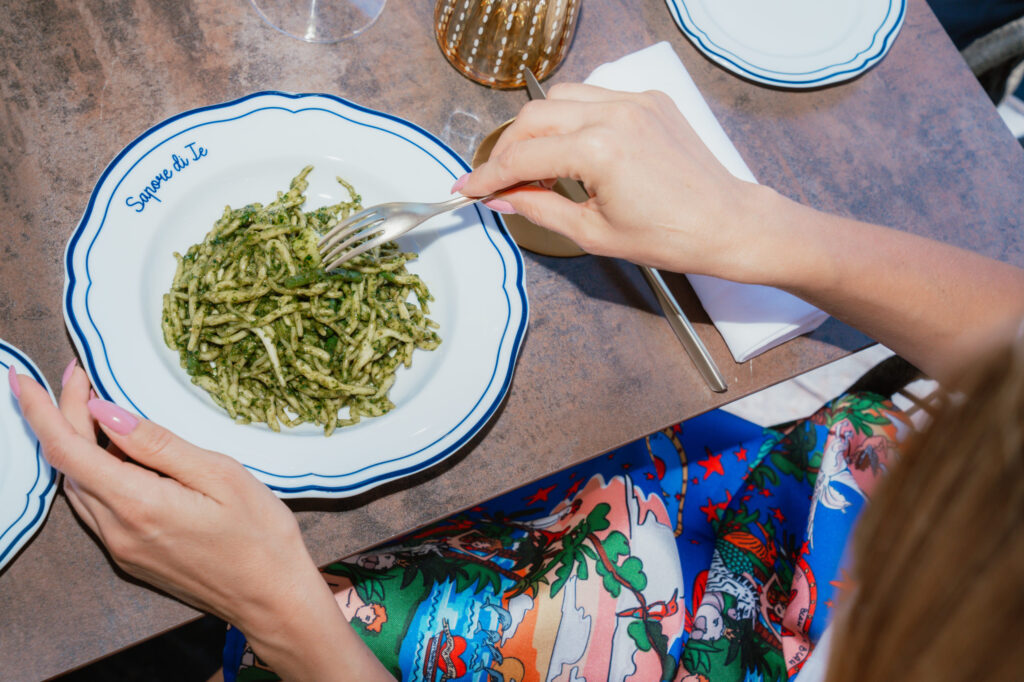
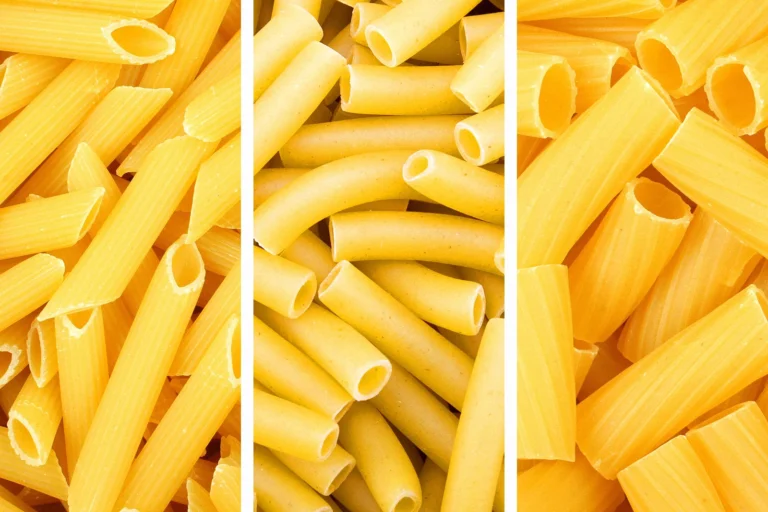
The classic pairing is trofie — a short, twisted Ligurian pasta — or trenette, a flat narrow noodle similar to linguine. The traditional Genovese dish combines pesto with trofie, green beans (fagiolini), and small cubed potatoes, all cooked together in the same pot. It sounds strange if you haven’t had it, but the potatoes absorb the pesto beautifully and become something extraordinary.
When tossing pasta with pesto, always reserve a cup of pasta cooking water. Add the pesto to the drained pasta with a splash of that starchy water and toss vigorously. The starch helps the sauce coat every surface without the oil separating.
Beyond Pasta

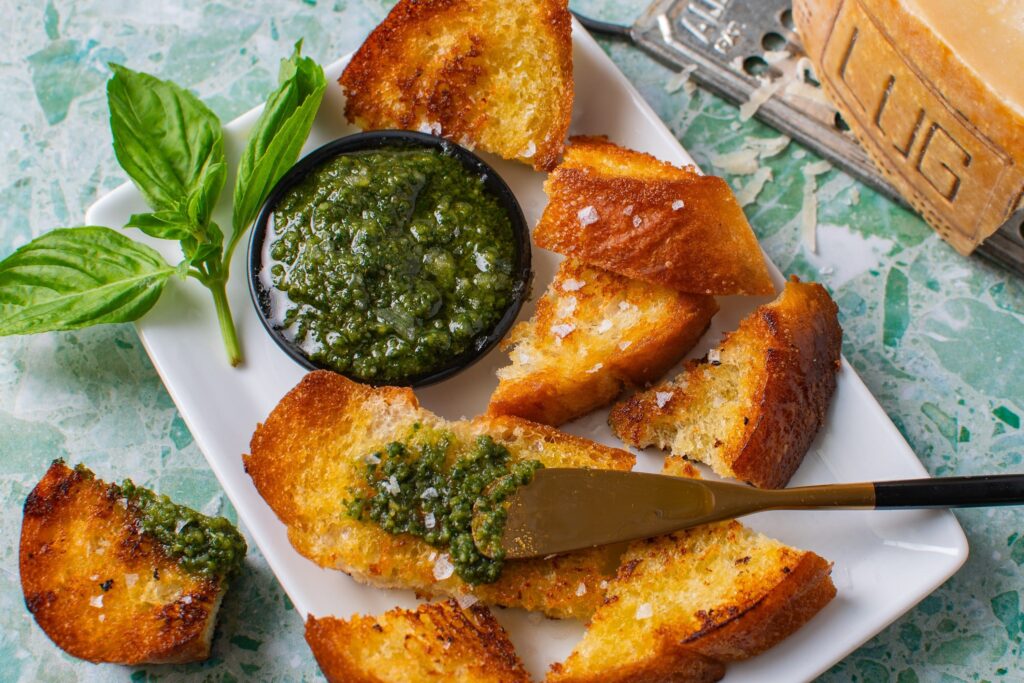
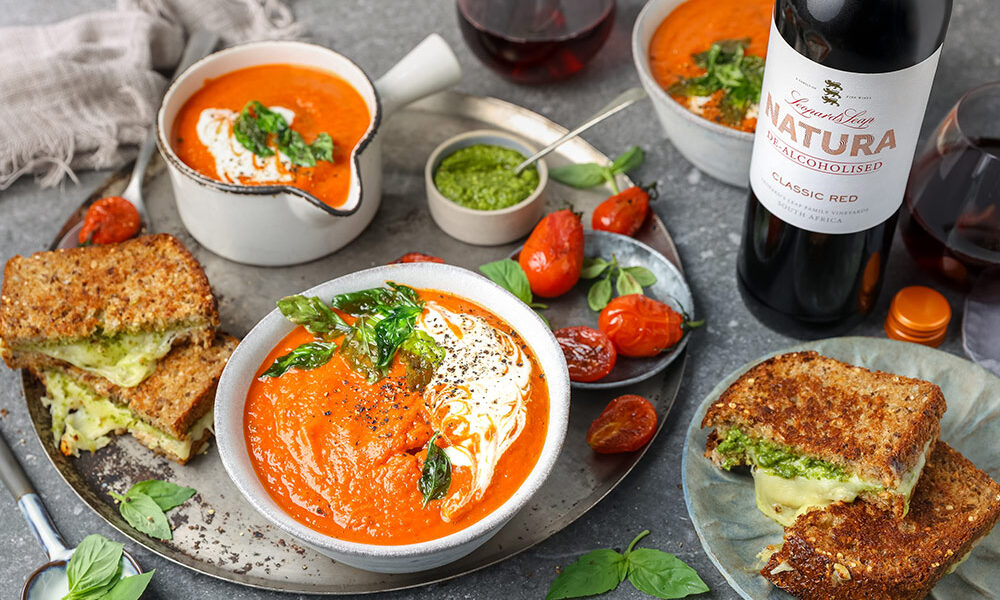
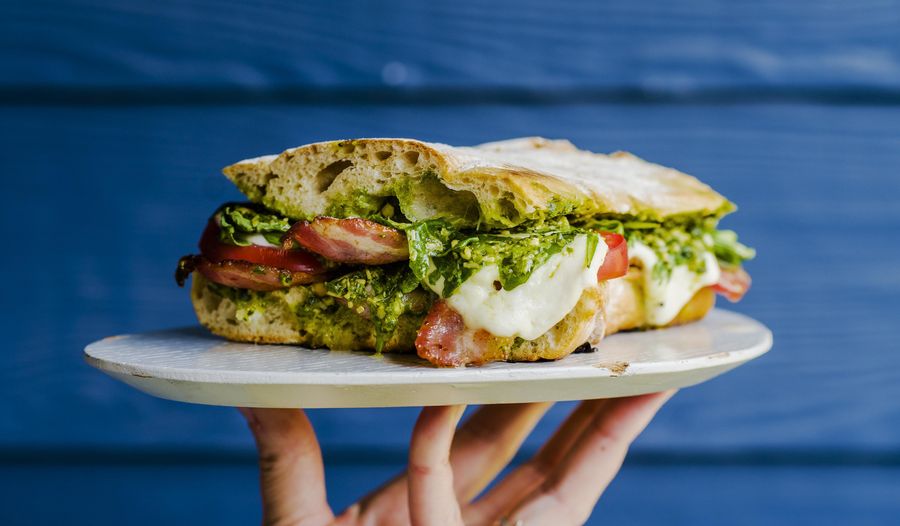


- Spread on bruschetta with a slice of fresh mozzarella
- Dolloped over grilled fish or chicken in the last minute of cooking
- Stirred into minestrone (the traditional Genoese way)
- Used as a pizza base instead of tomato sauce
- Mixed into soft scrambled eggs
- Tossed with roasted vegetables — especially zucchini, cherry tomatoes, and potatoes
How to Store Pesto
Fresh pesto oxidizes quickly — the beautiful bright green will turn army drab within hours if you don’t protect it properly.
Short-Term Storage (Refrigerator)
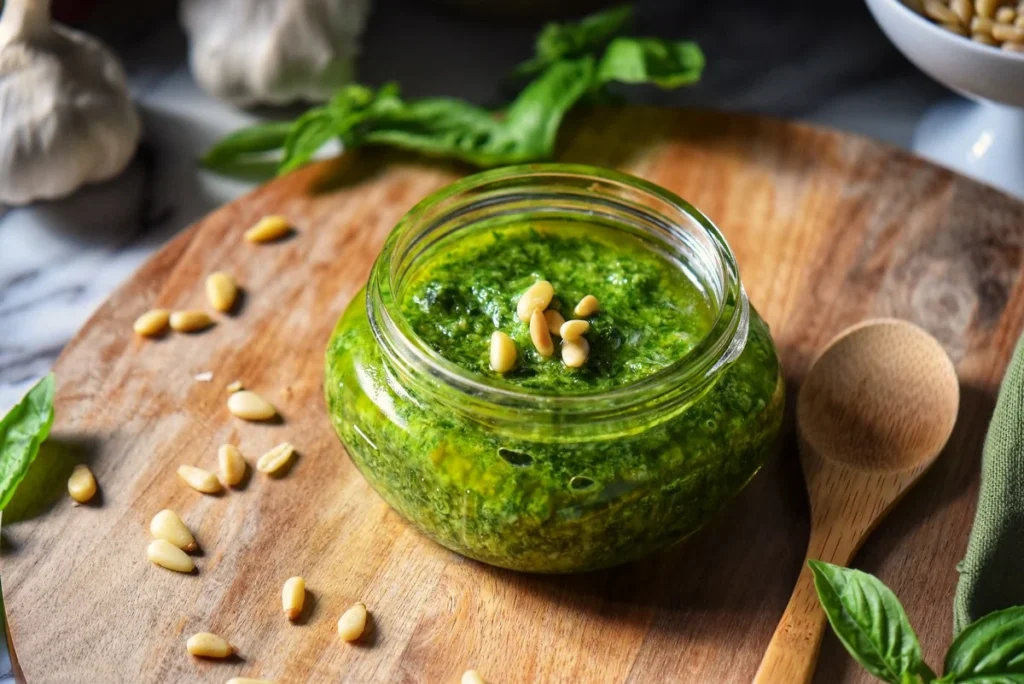
Transfer pesto to a small jar or container, smooth the surface flat, and pour a thin layer of olive oil over the top. This creates a seal that prevents oxidation. Cover tightly. Stored this way, pesto keeps for up to five days in the refrigerator. Always bring it to room temperature before using — cold pesto is stiff and the oil congeals.
Long-Term Storage (Freezer)
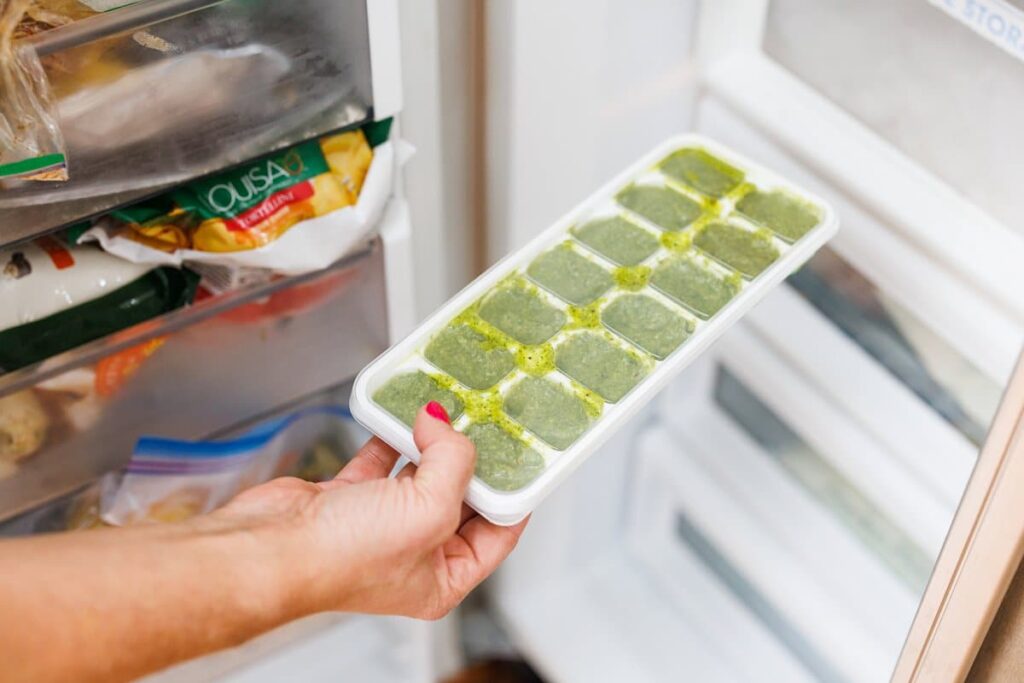
Pesto freezes exceptionally well, with one important change: don’t add the cheese before freezing. Make the pesto through the oil-emulsification stage, then freeze in ice cube trays. Once solid, transfer the cubes to a zip-top bag. They keep for up to three months. When ready to use, thaw at room temperature, stir in the freshly grated cheeses, and proceed as normal. The flavor is remarkably well-preserved.
Common Mistakes When Making Pesto
Using the Wrong Basil
Large-leafed basil with a strong anise or licorice quality will overpower the sauce. If that’s all you have, blanch the leaves for five seconds in boiling water, shock in ice water, and dry thoroughly — this mellows the aggressive flavor and helps preserve the green color through the process.
Running the Processor Too Long
Continuous blending generates heat and shreds the basil cells aggressively, releasing chlorophyll in a way that turns pesto bitter and grayish. Short pulses only. When in doubt, stop earlier than you think you need to.
Adding Cheese in the Processor
As noted above, cheese added to a running food processor clumps and becomes gluey. Always stir it in by hand at the end.
Using Warm Pasta Water
This one trips people up. Yes, you add pasta water — but toss the pasta off direct heat, or the pesto will cook and lose its raw, vivid character. The warmth of the pasta itself is enough to loosen the sauce.
Skimping on the Olive Oil
Pesto needs enough oil to emulsify properly and coat the pasta without clumping. If your pesto looks thick and pasty rather than glossy and loose, add more oil — a tablespoon at a time — until it flows properly.
Storing Without the Oil Cap
Leaving pesto uncovered or without that protective layer of olive oil on top is how you end up with brown, bitter pesto the next morning. Always seal it.
A Final Word on Making It Your Own
José Villalobos has been making this sauce for years in various cities and various kitchens, and the most honest thing I can tell you is this: once you’ve made fresh pesto two or three times, you’ll stop measuring. You’ll know by smell when the basil is right, by texture when the pine nuts are ground enough, by taste when the cheese balance is working. That intuition is what my grandmother Julia had, and it’s what every Genovese home cook develops through repetition rather than precision.
Start with the recipe as written. Then start trusting yourself. Use more Pecorino if you like a sharper bite. Add a third clove of garlic if your palate runs that way. Experiment with half pine nuts and half walnuts for a different kind of earthiness. The bones of this recipe are ancient and proven — what you build on top of them is yours.
The Sacramento Italian market has a small marble mortar in the back corner, dusty and clearly not for sale, that the owner brought from his family’s kitchen in Genoa thirty years ago. Every time I visit, I look at it and think about how many batches of pesto have been made in mortars just like that one — in Liguria, in Valparaíso, in a thousand immigrant kitchens that carried this sauce forward through generations. Making pesto from scratch is a small act of continuity, and it happens to taste extraordinary. That’s a good enough reason to do it today.
Back to the full Italian pasta sauces guide
Frequently Asked Questions
Can I make authentic pesto without a marble mortar and wooden pestle?
Yes, though the texture will differ. A food processor works fine for modern cooking, but it heats the basil slightly and breaks the leaves more aggressively than hand-pounding does. If you go this route, pulse gently and don’t overprocess. The flavor stays strong even if you lose some of that chunky, layered texture I prefer.
Why does my pesto turn dark or brownish instead of staying bright green?
Oxidation happens when basil gets bruised or exposed to air too long. I recommend adding basil last when using a food processor, and refrigerate finished pesto under a thin layer of olive oil to minimize contact with oxygen. Hand-pounding helps too—the gentler pressure keeps more of that vibrant color intact.
Should I blanch the basil before making pesto?
I don’t recommend it. Blanching removes flavor and color, which defeats the purpose of fresh pesto. Instead, start with the freshest basil you can find and use it quickly. If your basil seems particularly delicate, make sure your workspace stays cool while you work.
What’s the real difference between Parmigiano-Reggiano and Pecorino in pesto?
Parmigiano-Reggiano brings subtle sweetness and umami depth, while Pecorino adds a sharper, tangier edge. Traditionally, Ligurians use both together—they complement each other. If you use only one, the balance shifts noticeably. I prefer the blend, but experimenting with the ratio lets you match your own taste preferences.
How long does homemade pesto actually keep, and does freezing ruin it?
In the fridge with olive oil on top, it lasts about a week. Freezing works better than you’d think—ice crystals do damage the texture slightly, but the flavor holds up well for a few months. Freeze it in ice cube trays so you can thaw individual portions without exposing the whole batch to air.
Written by José Villalobos
José Villalobos is a food writer and the founder of Calitalia Food. He grew up in Valparaíso, Chile, where his grandmother Julia cooked Italian food daily from memory and instinct. Based in Sacramento, California, he visits local Italian markets weekly and writes about ingredients, sauces, and regional food culture with the kind of detail that comes from years of sourcing, testing, and eating. Every product he recommends, he has personally bought and tested.