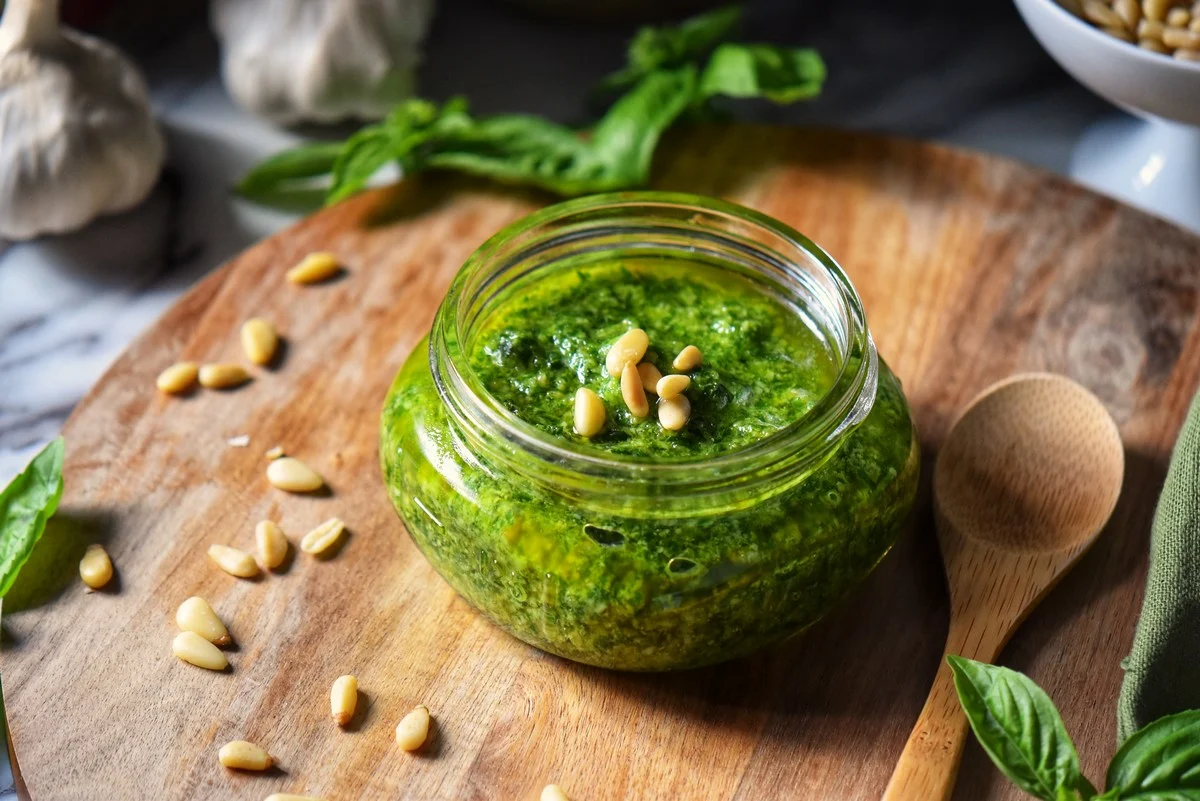
Making basil pesto the right way starts with understanding one fundamental truth: this sauce is not cooked. It is crushed. That distinction changes everything — the texture, the color, the way it clings to pasta, the way it tastes on your tongue. I learned this not from a cooking class but from a woman in Liguria who handed me a marble mortar the size of a salad bowl and told me to start grinding.
My arms were sore for two days. The pesto was extraordinary.
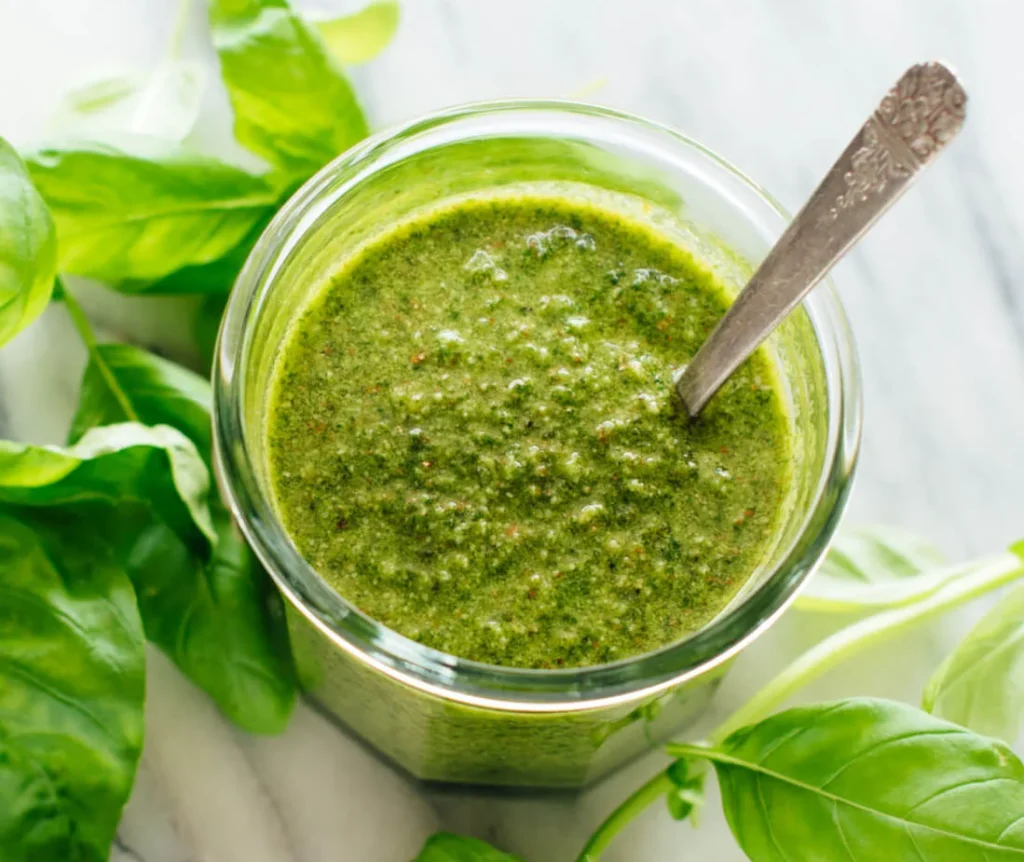
I’m José Villalobos, and I’ve been chasing the real version of this sauce for years — through the markets of Sacramento, through the hills above Genoa, and honestly, through my own kitchen failures. This guide covers everything: the history, the method, the ingredients, the mistakes, and why the mortar and pestle are not optional if you want the real thing.
What Is Basil Pesto?
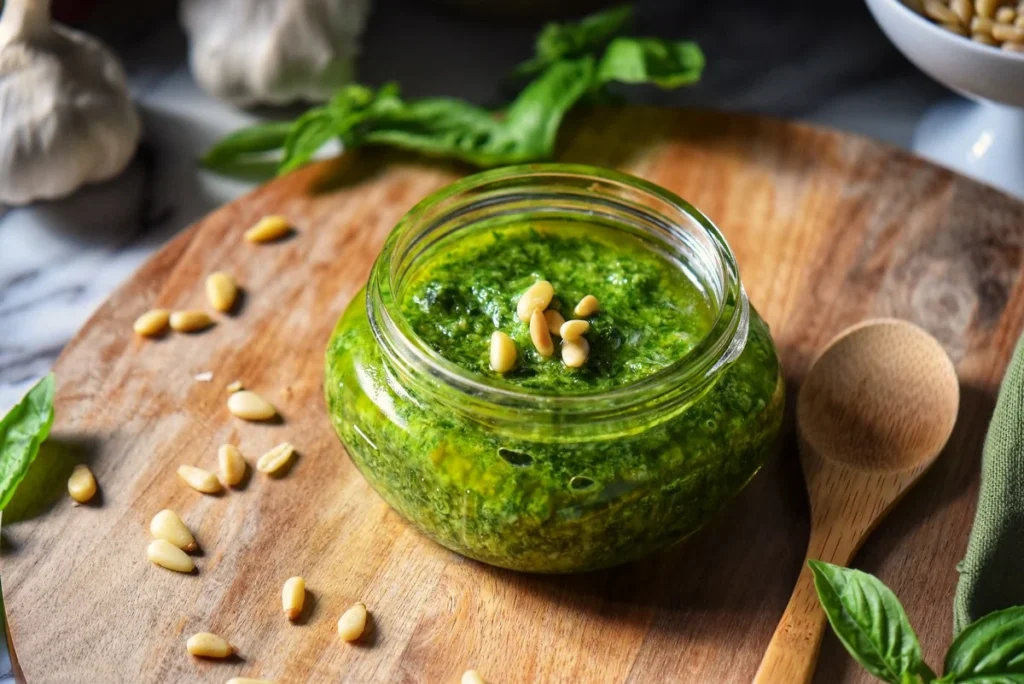
Pesto alla Genovese is an uncooked sauce from Liguria, the narrow coastal region in northwestern Italy where Genoa serves as the capital. The name comes from the Italian verb pestare — to crush, to pound. Every ingredient in the classic recipe is worked together with a mortar and pestle until they form a smooth, fragrant, green paste. No heat involved. No blending, traditionally speaking.
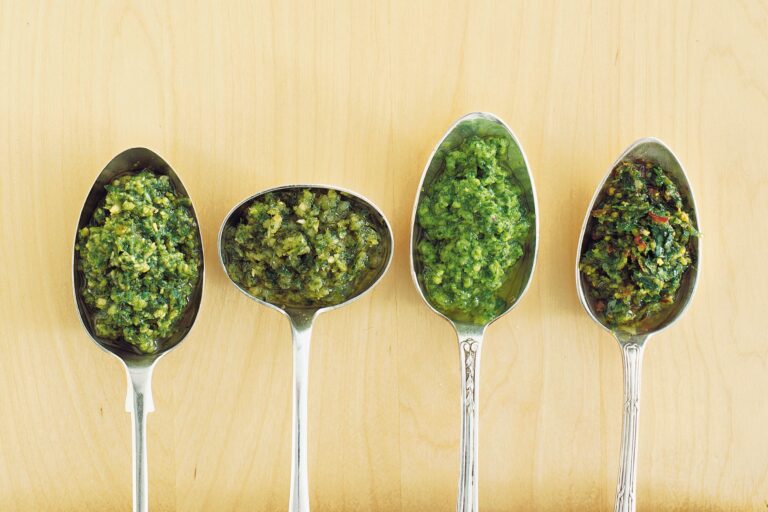
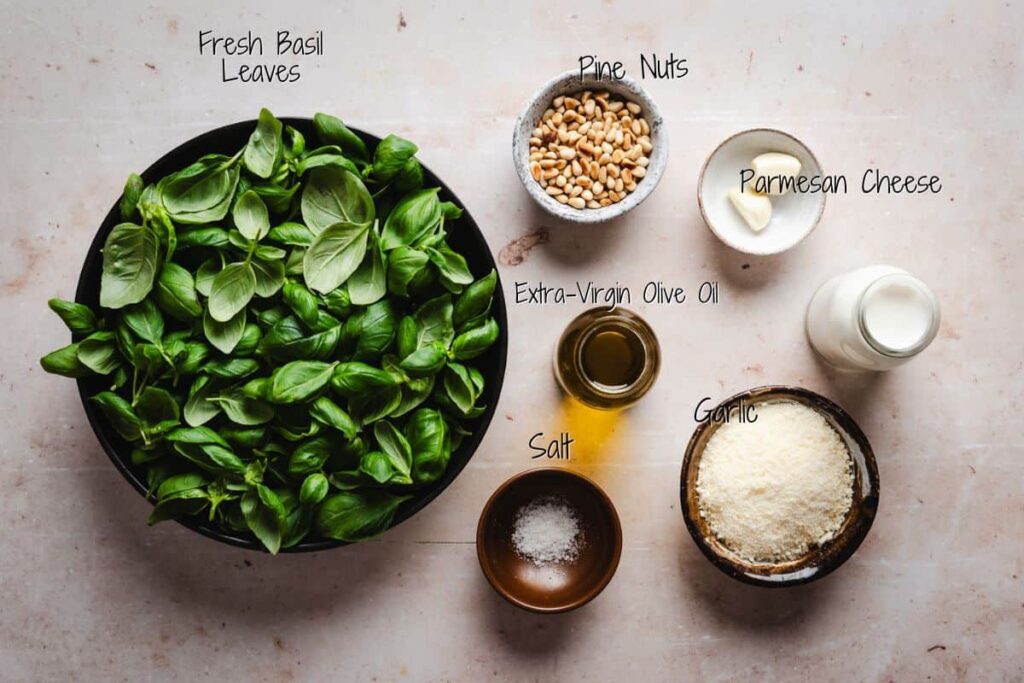
The standard composition includes fresh Genovese basil, extra virgin olive oil, Parmigiano-Reggiano, Pecorino Sardo, pine nuts, garlic, and coarse sea salt. That’s it. Six ingredients, and the quality of each one is completely exposed because there’s nowhere to hide behind heat or technique.
What separates pesto alla Genovese from every supermarket jar on the shelf is the basil variety. Genovese basil has smaller leaves, a sweeter and more delicate flavor, and much less of the anise-like punch that large-leaf basil can carry. When you crush it in a mortar rather than spin it in a blender, the cell walls break differently — more gently — releasing aromatic oils without oxidizing them as quickly. That’s why properly made pesto is bright green, not army-brown.
A Brief History of Making Basil Pesto
Older Than Basil Itself
Here’s the part that surprises most people: basil pesto is not an ancient recipe. The Romans had a crushed herb paste called moretum — garlic, salt, cheese, olive oil, vinegar, and sometimes walnuts — but basil wasn’t part of it. During the Middle Ages, Genovese kitchens were built around agliata, a thick sauce of mashed garlic and walnuts that seasoned everything from fish to roasted meats. Garlic was the backbone of Genovese cooking, partly because it was believed to have antiseptic and healing properties — genuinely useful when your sailors were about to spend months at sea.
When Basil Finally Arrived
Basil itself traveled a long road to get to Liguria. The herb originates from India and Southeast Asia and made its way westward through trade routes over centuries. It took root most enthusiastically in Liguria and in Provence, France, where the climate suited it perfectly.
The earliest recorded basil pesto recipe appeared in 1852, when Emanuele Rossi published it in La Vera Cuciniera Genovese. Giovanni Battista Ratto followed in 1863 with La Cuciniera Genovese, and his version reads almost nothing like what we make today. He called for walnuts instead of pine nuts, Dutch cheese instead of Pecorino Sardo, and a heavy hand with garlic. That Dutch cheese reference is fascinating — Genoa was a major trading port with strong commercial ties to Northern Europe, and imported cheeses were part of the local pantry.
Early Ligurian recipes from around 1860 also show marjoram, sage, and parsley sharing the bowl alongside basil, or standing in entirely when fresh basil wasn’t available. The idea that pesto must be made exclusively with basil is actually a twentieth-century development. The recipe we think of as definitive and ancient is, historically speaking, barely a hundred years old in its current form.
My grandmother Julia, who cooked Italian food in Valparaíso, Chile, made a loose version of pesto that included parsley when basil was hard to find. She never called it inauthentic. She just called it delicious. She wasn’t wrong.
How to Make Basil Pesto the Traditional Way
The Ingredients You Need
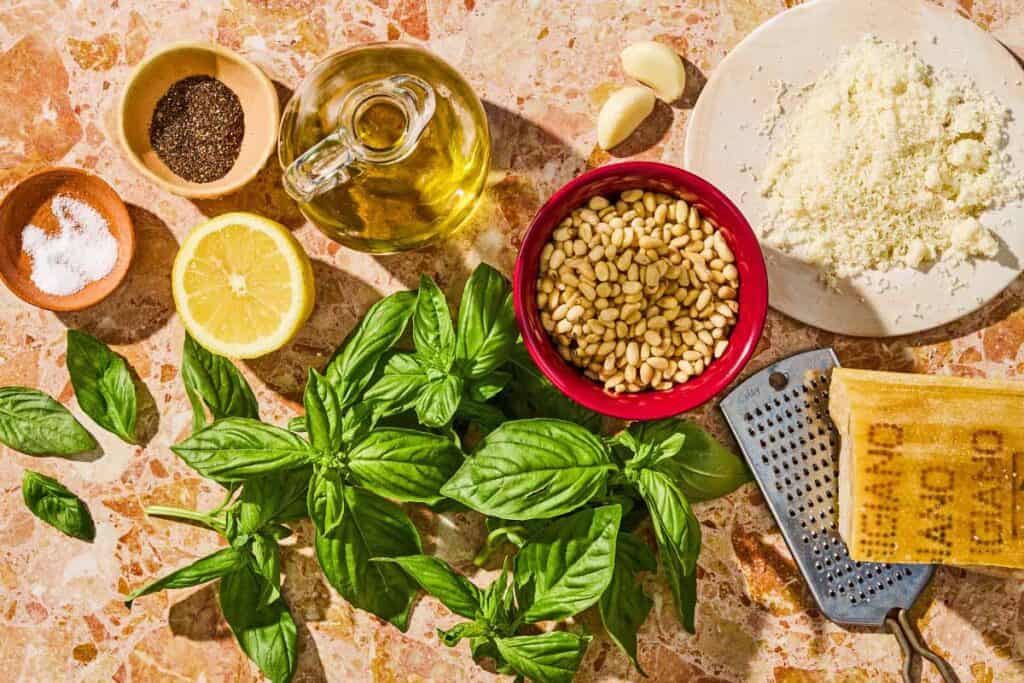
- Fresh Genovese basil — about 2 packed cups of leaves, stems removed. Smaller leaves are sweeter and less bitter.
- Pine nuts — 2 tablespoons, lightly toasted if you like, though traditionalists often skip the toasting
- Garlic — 1 to 2 cloves, depending on size and your preference. Start with one.
- Coarse sea salt — a good pinch, used as an abrasive in the mortar
- Parmigiano-Reggiano — freshly grated, about ¼ cup
- Pecorino Sardo — freshly grated, about 2 tablespoons. This is not the same as Pecorino Romano, which is sharper and saltier.
- Extra virgin olive oil — a light, fruity Ligurian-style olive oil if you can find it, about ⅓ cup
The Mortar and Pestle Method, Step by Step
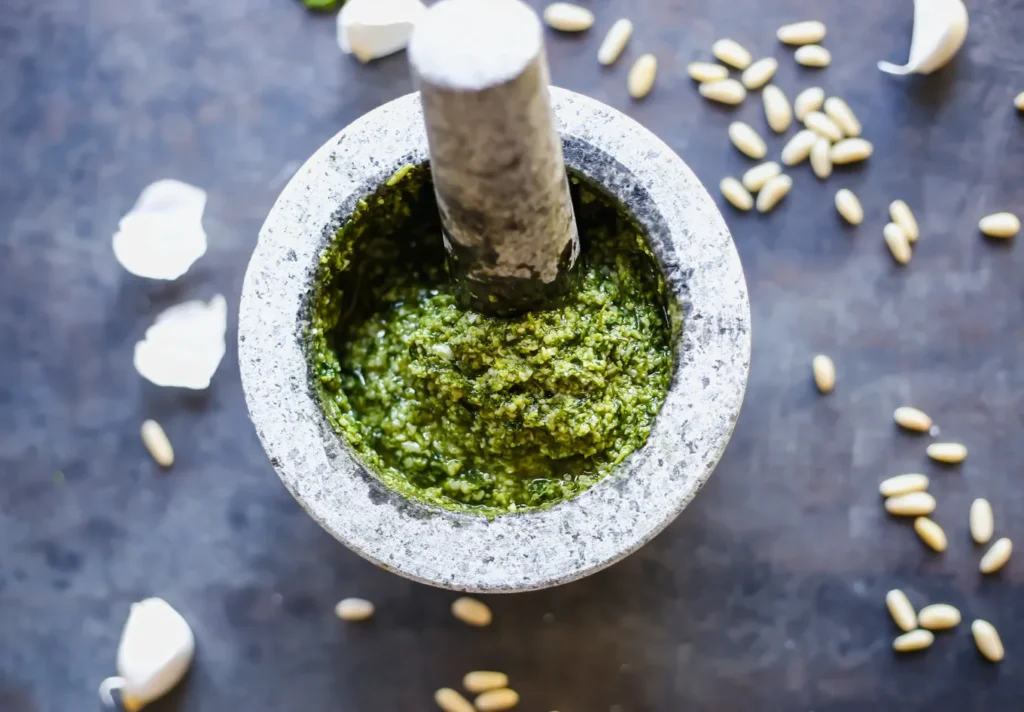
Start by peeling your garlic cloves and crushing them into the mortar with the coarse salt. Work them into a paste. This takes a minute or two. The salt acts as an abrasive and helps break down the fiber. Don’t rush it.
Add the pine nuts and continue grinding in a circular motion. You want a rough, crumbly paste — not completely smooth yet.
Now add the basil leaves in batches. A handful at a time. Press and grind in a circular motion rather than pounding straight down. You’re trying to crush the leaves against the bowl walls, not beat them. This is the motion that protects those volatile aromatic oils. Keep adding basil and working it in until all the leaves are incorporated and you have a thick green paste.
Add the grated cheeses and work them in. Then begin adding the olive oil slowly, stirring and folding as you go, until you reach a sauce consistency. You want it loose enough to coat pasta but thick enough to hold together.
Taste. Adjust salt. That’s your pesto.
Can You Use a Food Processor?
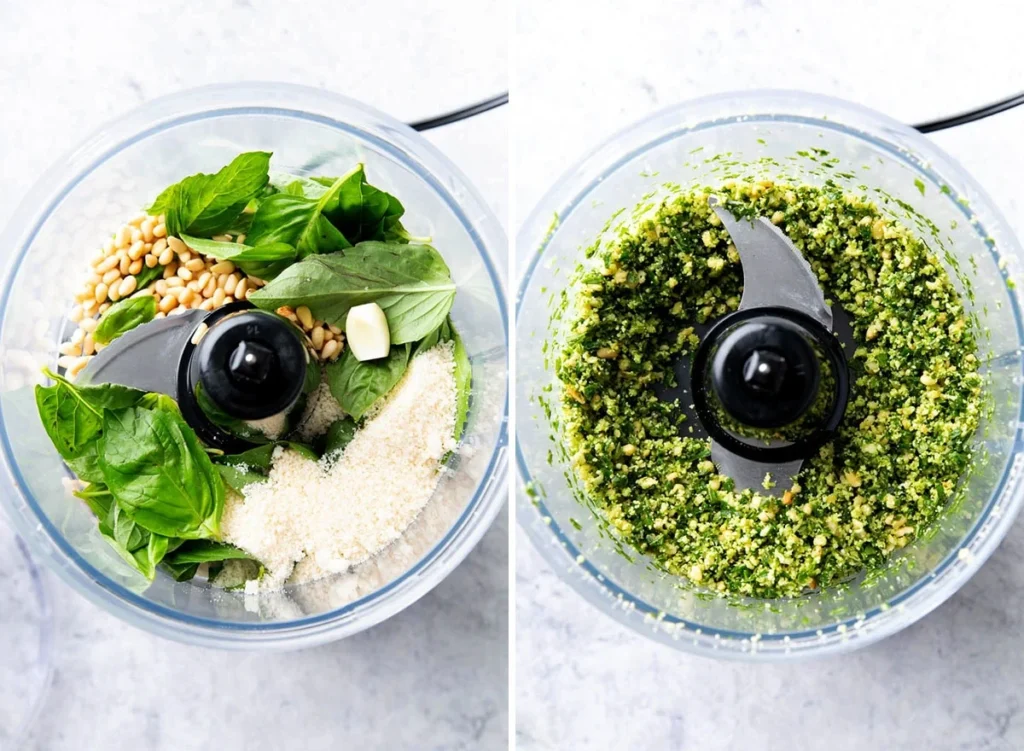
Yes. Most people do. The texture will be different — slightly more uniform, sometimes a little more bitter from the speed of the blade oxidizing the basil — but it produces a perfectly good pesto. If you go this route, keep everything cold. Chill the bowl of your processor in the freezer for ten minutes before using. Add the oil last and pulse rather than run the machine continuously. The goal is to minimize heat from friction.
But if you’ve never made it with a mortar and pestle, do it at least once. The difference in flavor is real, and understanding why it’s different makes you a better cook regardless of which method you choose going forward.
How to Buy the Right Ingredients
Basil
The basil matters more than anything else. Large supermarket basil with oversized leaves and thick stems tends toward bitterness. Find a farmers market grower or an Italian market that carries Genovese or Italian basil specifically. At the Sacramento Italian market, I’ve compared several brands and bunches of fresh basil side by side, and the difference between imported Genovese basil plants and standard American grocery store basil is significant enough to affect the entire sauce.
Grow your own if you can. A pot on a sunny windowsill produces more than enough for a summer’s worth of pesto.
Olive Oil
Use a light, fruity extra virgin olive oil. Ligurian olive oil is the traditional choice — it’s mild and buttery with very little bitterness, which lets the basil lead. After testing several brands side by side, I’ve found that heavy, peppery Sicilian or Tuscan oils, as good as they are in other applications, can overpower the delicate basil in pesto. The one I keep in my kitchen for pesto specifically is a Ligurian DOP oil I source through the Sacramento Italian market.
Cheese
Always buy Parmigiano-Reggiano in a wedge and grate it yourself. Pre-grated cheese is drier and won’t incorporate into the sauce the same way. For Pecorino, Pecorino Sardo is the traditional choice — it’s milder and nuttier than Pecorino Romano. If you can’t find it, Pecorino Romano works but use a slightly smaller amount.
Pine Nuts
Buy pine nuts from a reputable source and store them in the freezer. They go rancid quickly at room temperature, and rancid pine nuts will ruin your pesto completely. When I visited Liguria, the pine nuts I tasted freshly shelled from a market stall had a sweetness and creaminess I’d never gotten from bagged pine nuts sitting on a shelf for months. Freshness matters here.
How to Use Basil Pesto
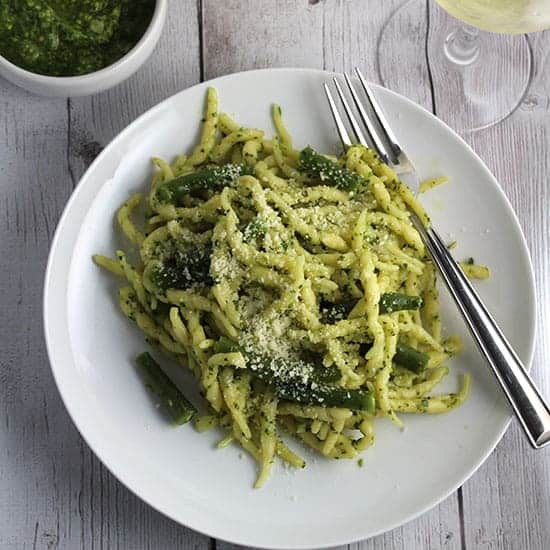
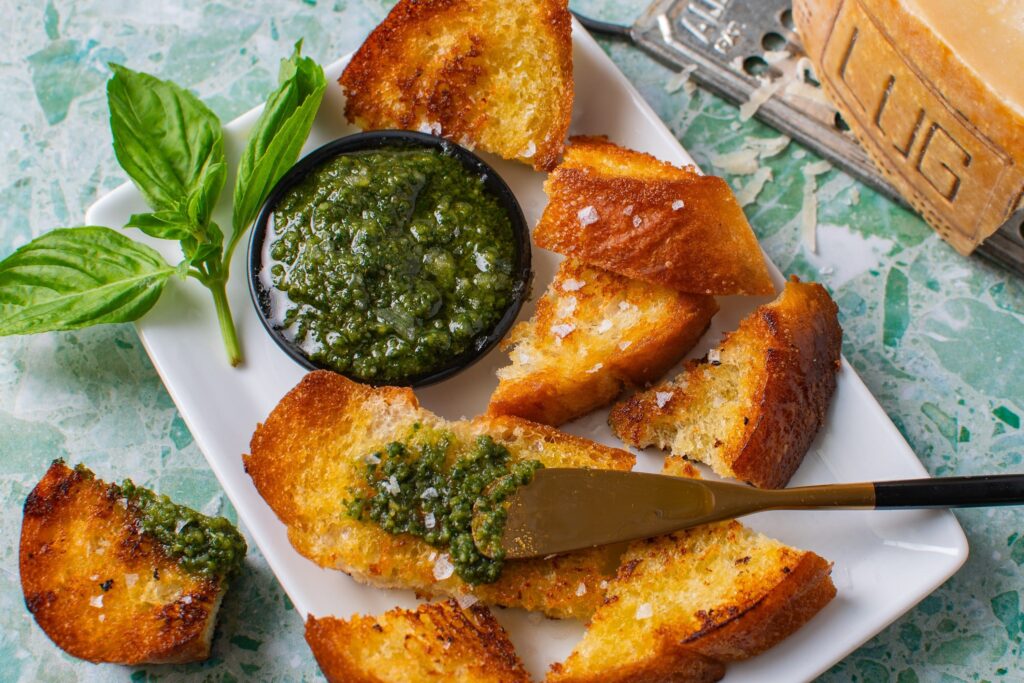
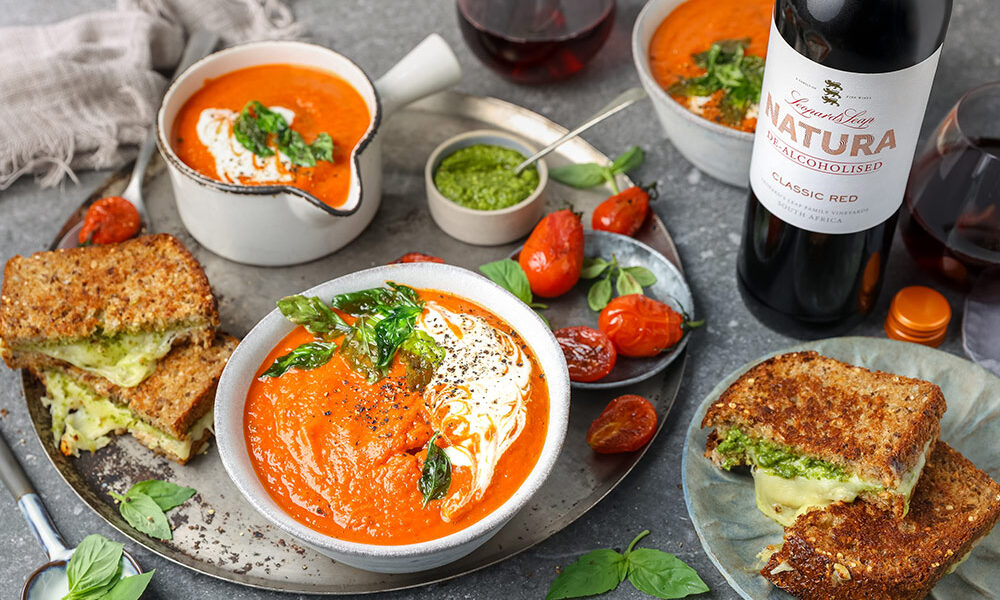
The classic pairing is trofie pasta — short, twisted Ligurian pasta that grips the sauce. Trenette (a flat, ribbon pasta) is equally traditional. Linguine works beautifully. Avoid large tubular pastas like rigatoni, which tend to swallow the sauce rather than carry it.
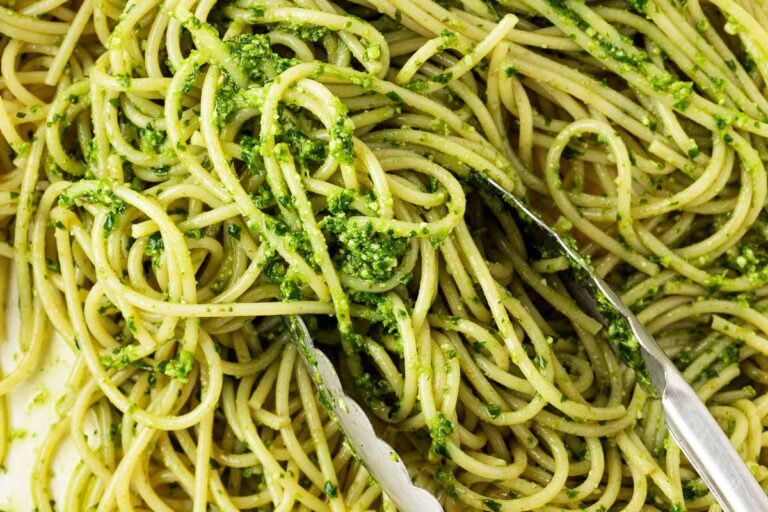
The essential rule for pesto pasta: never cook the pesto. Add a spoonful of starchy pasta water to the pesto in a bowl, then toss the cooked, drained pasta through it. The pasta’s residual heat is all you need. Putting pesto in a hot pan turns it brown and strips out the bright, fresh flavor entirely.
Beyond pasta, pesto belongs on bruschetta, stirred into minestrone (the Ligurian way), spooned over grilled fish or chicken, spread inside a sandwich, or dolloped on fresh burrata. My grandmother Julia put it on boiled potatoes and green beans, which sounds odd until you realize it’s actually the traditional Ligurian accompaniment to trofie pesto.
How to Store Basil Pesto
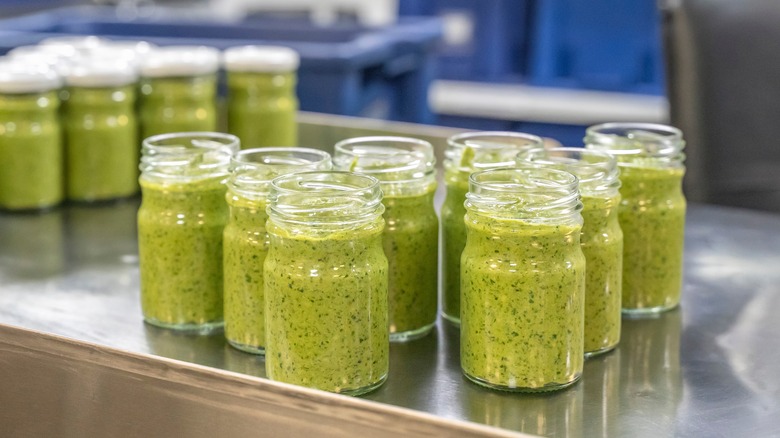
Freshly made pesto oxidizes quickly — that’s the brown color you get when it sits out. To slow oxidation, press a layer of plastic wrap directly against the surface of the pesto before refrigerating, or pour a thin layer of olive oil over the top. It will keep in the refrigerator for up to five days this way.
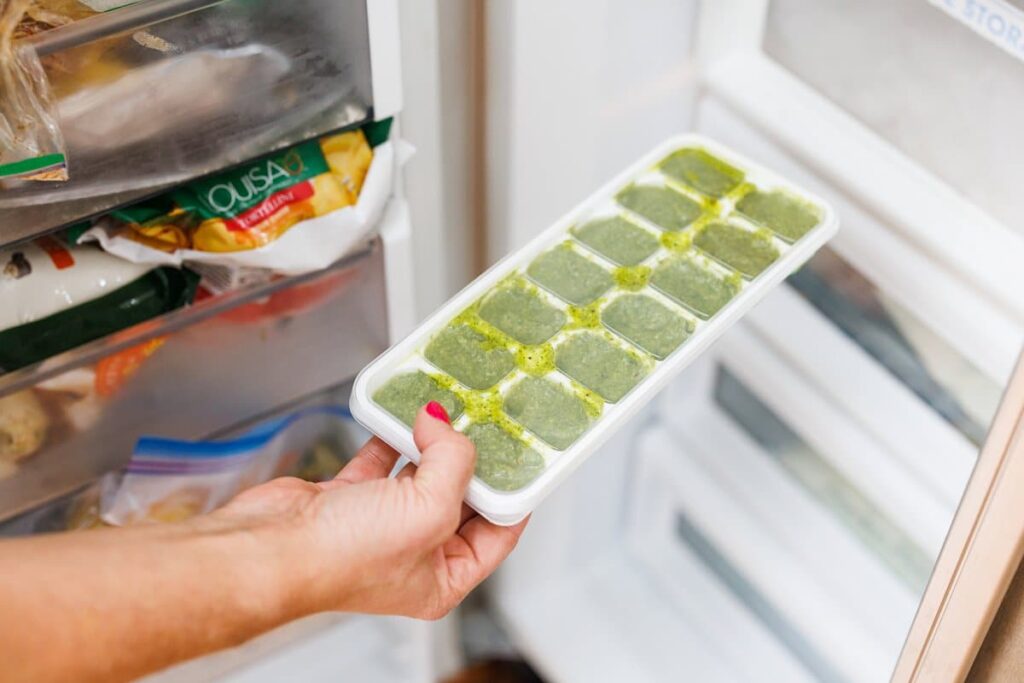
For longer storage, freeze it. Spoon pesto into an ice cube tray, freeze until solid, then transfer the cubes to a zip-lock bag. Each cube is roughly one portion. Freeze without cheese if possible — add freshly grated cheese after thawing. Pesto frozen this way keeps well for three months.
Common Mistakes When Making Basil Pesto
Using Too Much Garlic
The garlic should be a background note, not the headline. One small clove for a standard batch. The Genovese tradition actually calls for young, mild garlic specifically. If your pesto is overwhelmingly garlicky, this is almost always why.
Overworking in a Blender
Running a food processor continuously generates heat from friction, which oxidizes the basil and gives you brown, bitter pesto. Pulse in short bursts. Keep everything cold.
Skipping the Pasta Water
Starchy pasta water is the emulsifier that makes pesto coat pasta evenly instead of clumping in pools at the bottom of the bowl. Never skip it.
Heating the Sauce
Worth saying again because people keep doing it: pesto is not meant to be cooked. It is a raw sauce. Heat destroys the freshness that makes it worth making in the first place.
Using Inferior Basil
If your basil smells faintly of anise and the leaves are huge and slightly tough, the pesto will be bitter no matter what else you do. The ingredient quality ceiling is low with this sauce. You cannot compensate with technique for bad basil.
One Last Thing
Making basil pesto properly takes maybe twenty minutes with a mortar and pestle and five with a food processor. It produces something that tastes completely different from anything in a jar, and once you’ve made it yourself, you’ll understand exactly why the Genovese have been protecting this recipe with a DOP designation since 2005.
My grandmother Julia made a version of this in a rented kitchen in Valparaíso with whatever she could find. She didn’t have Pecorino Sardo or Ligurian olive oil. She had parsley when there was no basil and walnuts when there were no pine nuts. And it was still, without question, the spirit of the thing — fragrant, green, honest, alive. That’s what you’re making when you make pesto. Not a product. A living sauce.
José Villalobos tested every variation in this guide personally, including multiple mortar-and-pestle batches, food processor comparisons, and freezing trials over the past two years.
Back to the full Italian pasta sauces guide
Frequently Asked Questions
Can I use regular supermarket basil instead of Genovese basil?
You can, but the result won’t be authentic pesto. Regular basil has larger leaves and a stronger anise flavor that overpowers the sauce. Genovese basil is sweeter and more delicate. If you can’t find it, grow your own—it’s easier than hunting it down at most grocery stores.
How long does homemade pesto keep in the refrigerator?
Fresh pesto lasts about three to five days in an airtight container. The basil continues to oxidize slowly, so the color fades and flavors shift. I freeze mine in ice cube trays for longer storage—it holds up better than you’d expect, though the texture changes slightly when thawed.
What size mortar and pestle do I actually need?
Start with at least an 8-inch diameter bowl. Anything smaller forces you to work in batches and makes the whole process frustrating. The woman in Liguria gave me hers—it was massive. A 2-3 cup capacity is realistic for most home cooks making single batches.
Should I toast the pine nuts before grinding them into pesto?
Light toasting (two to three minutes) brings out their flavor without making them bitter. But don’t overdo it. I toast them in a dry pan, let them cool completely, then add them mid-way through grinding. Raw pine nuts work too—it’s a matter of preference.
Why does my mortar-and-pestle pesto taste different every time I make it?
Basil varies by season, soil, and harvest time. Summer basil tastes different from early spring basil. Oil quality, garlic potency, and even how hard you grind all shift the flavor. That’s not a flaw—it’s actually how real food works when you stop relying on consistent manufacturing.
Written by José Villalobos
José Villalobos is a food writer and the founder of Calitalia Food. He grew up in Valparaíso, Chile, where his grandmother Julia cooked Italian food daily from memory and instinct. Based in Sacramento, California, he visits local Italian markets weekly and writes about ingredients, sauces, and regional food culture with the kind of detail that comes from years of sourcing, testing, and eating. Every product he recommends, he has personally bought and tested.