If you’ve ever tasted a dish that made you stop mid-bite and wonder what on earth made it taste so impossibly deep and savory, there’s a good chance colatura di alici was somewhere in the picture. This amber-colored Italian fish sauce — made from slowly fermented, salt-cured anchovies — is one of those ingredients that works almost invisibly, pulling every other flavor in the dish into sharper focus. A few drops and a plate of simple spaghetti becomes something you’ll think about for days.
I’m José Villalobos, and I’ve been chasing this bottle for years. My grandmother Julia cooked Italian food in Valparaíso, Chile, and she had an instinct for ingredients that added depth without announcing themselves. She’d have understood colatura immediately. I didn’t discover it until I was an adult, but the moment I did, I understood why it’s been made in the same coastal village for centuries. Let me walk you through everything you need to know.
What Is Colatura di Alici?
Colatura di alici is a traditional Italian fish sauce produced in Cetara, a small fishing village on the Amalfi Coast in Campania. The name comes from the Italian verb colare, meaning “to drip” or “to strain” — which describes exactly how the sauce is made. It’s the amber liquid that slowly drips from barrels of salted, pressed anchovies over months of patient fermentation. The result is intensely savory, deeply oceanic, and nowhere near as fishy as you might expect.
The anchovy species used is Engraulis encrasicolus, the European anchovy, caught seasonally in the waters off the Amalfi Coast. The sauce has DOP (Denominazione di Origine Protetta) status, meaning authentic colatura di alici must be produced in Cetara following traditional methods. This isn’t just a regulatory formality — it’s a recognition that the specific place, the specific fish, and the specific techniques are inseparable from what makes this product what it is.
Think of it as the Italian answer to Southeast Asian fish sauce, but with its own distinct character — more nuanced, less pungent, and with a saline elegance that reflects the Mediterranean rather than the tropics.
The History Behind the Bottle

An Ancient Roman Legacy
Colatura di alici is a direct descendant of garum, the fermented fish sauce that Romans were absolutely obsessed with. Garum showed up in everything — pasta-precursor dishes, meat preparations, sauces, even drinks. Evidence of its production has been found in the ruins of Pompeii, and ancient texts reference it constantly. It was made from fish viscera, salt, and sometimes spices, fermented in large vessels under the Mediterranean sun.
When the Roman Empire collapsed, so did much of the organized garum trade. But the knowledge didn’t disappear entirely — it retreated into local communities and, critically, into monasteries.
The Monks of the Amalfi Coast
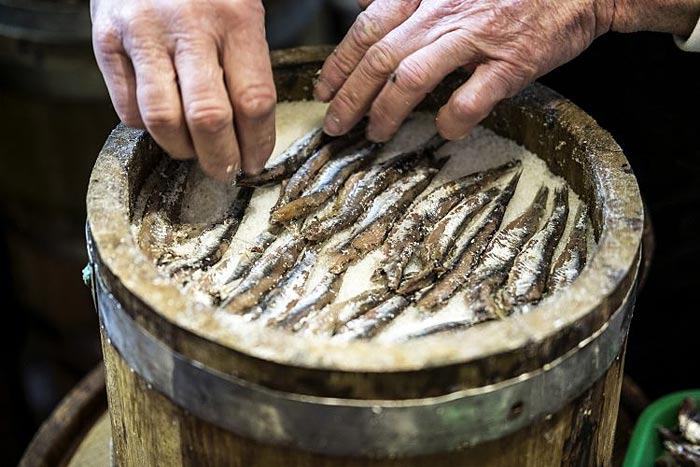
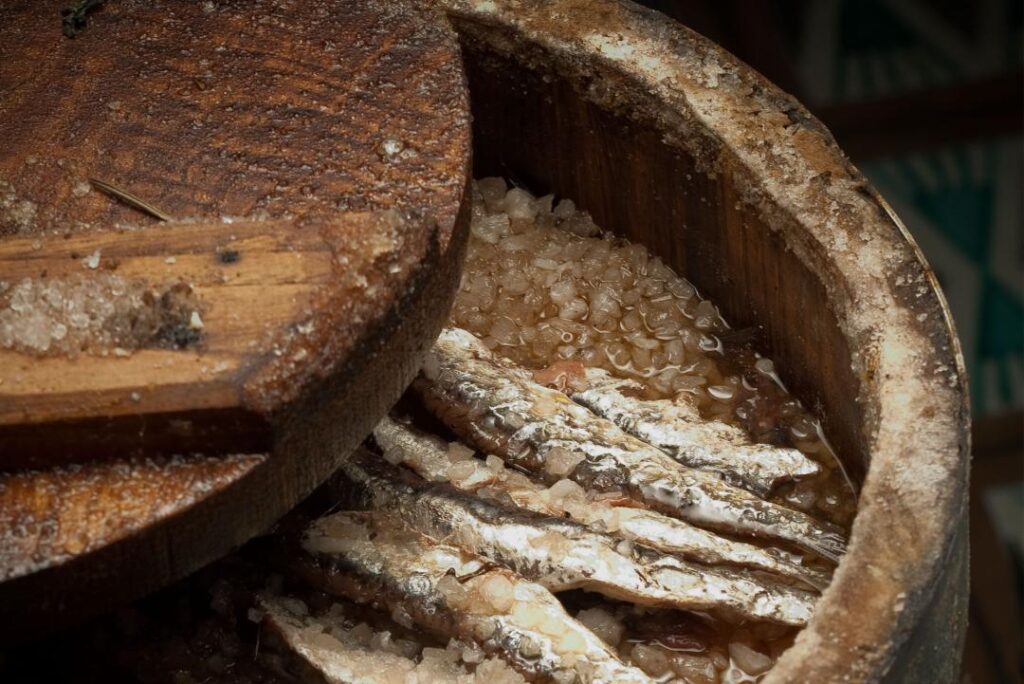
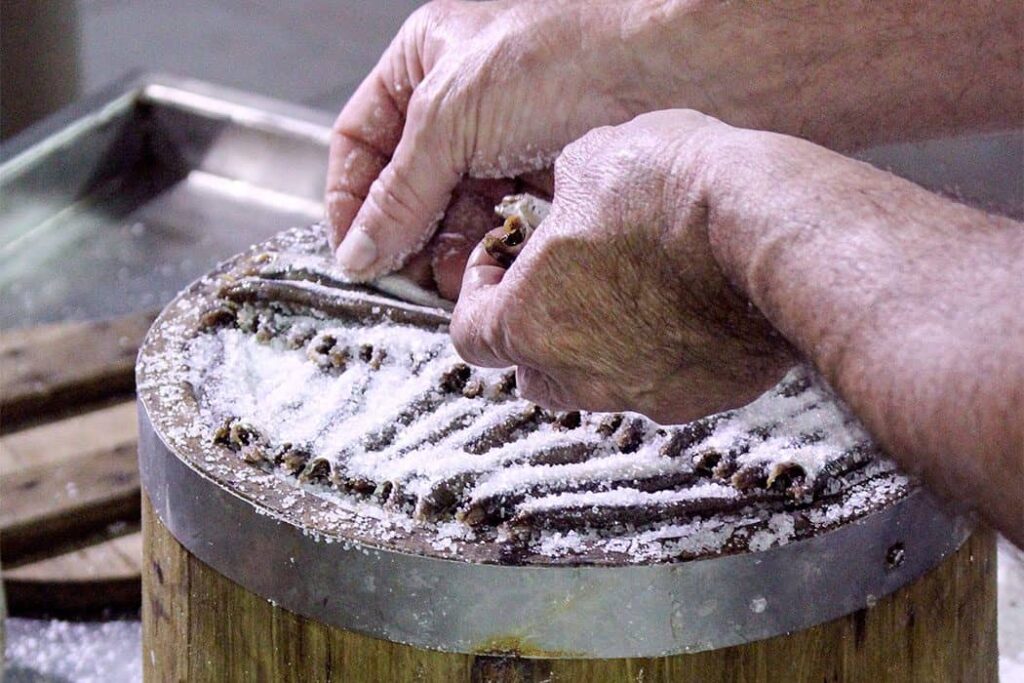
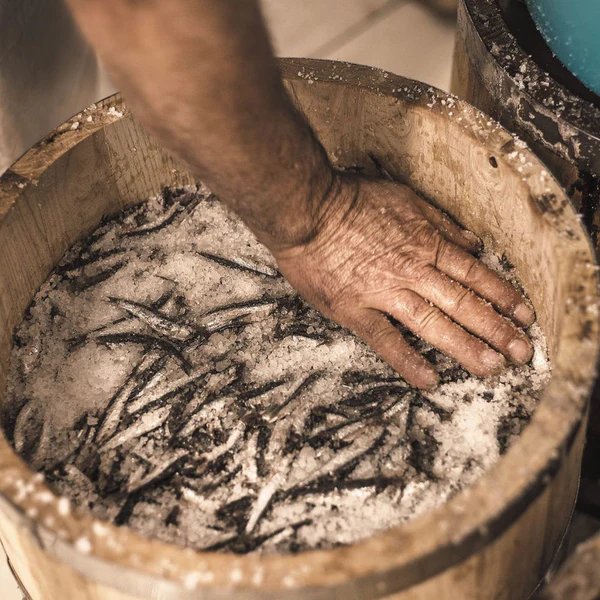
The medieval revival of what would become colatura di alici is often credited to Cistercian or Benedictine monks working in the Amalfi area. Monastic communities had both the discipline and the storage infrastructure to preserve anchovies in wooden barrels — called terzigni or mbuosti — under layers of coarse sea salt. These barrels, made with deliberately loose staves, allowed liquid to seep out naturally as the anchovies compressed under the weight of salt and stones placed on top.
A well-loved legend from the 13th century tells of Cetara fishermen donating their anchovy catch to local Capuchin monks. A barrel was set aside and, apparently, forgotten. Eighteen months later, it was discovered — and the amber liquid that had collected inside turned out to be extraordinary. Whether or not you take the story literally, it captures something true about how colatura came to be: accidentally, slowly, and through the particular alchemy of salt, time, and fish.
The First Written Recipes
By the early 1800s, colatura di alici was being documented in recipes that specified proportions in the old Italian measurement system: roughly 80 kilograms of fresh anchovies to 18 kilograms of coarse sea salt, packed into barrels of a specific size and pressed for hours to extract the liquid. The ratios and methods described then aren’t dramatically different from what artisan producers in Cetara do today.
How Colatura di Alici Is Made
The Fishing Season
Tradition dictates that anchovies for colatura are fished between March 25 — the Feast of the Annunciation — and July 22, the feast day of St. Mary Magdalene. This isn’t arbitrary. The anchovies caught during this window are at their fattest and most flavorful, and the spring and early summer timing ensures the fish have the right enzyme activity for proper fermentation. Traditional fishing methods include the menaide net for larger specimens, though lampara (light-attracted) and cianciolo techniques are also used.
Salt, Barrels, and Time
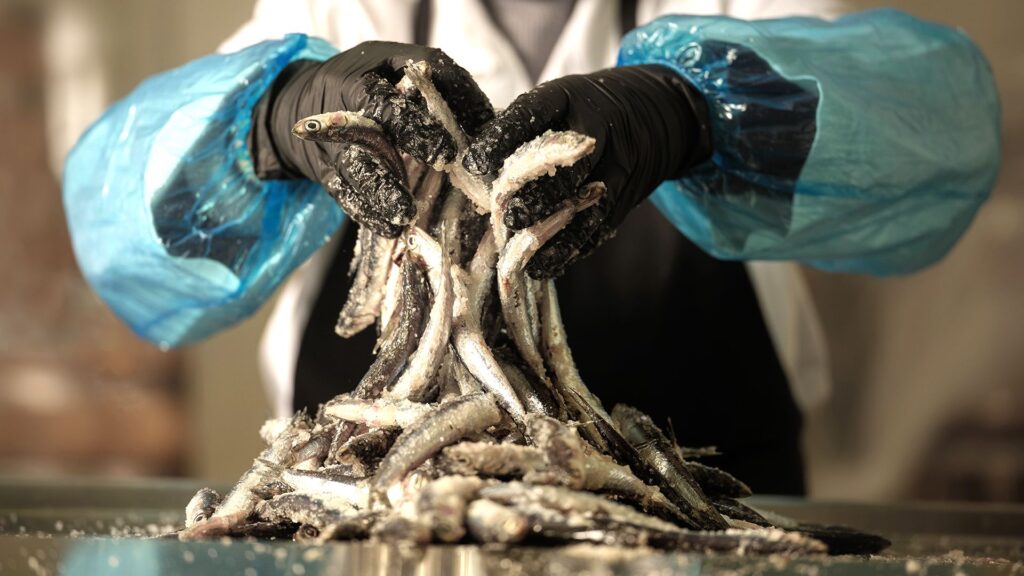
Once caught, the anchovies are headed, gutted, and rinsed in seawater — never fresh water, which would dilute the flavor profile. They’re then layered alternately with coarse sea salt in those traditional chestnut wood barrels. The salt ratio runs roughly 20 to 30 percent of the fish’s weight. A wooden lid is placed on top, weighted down with stones, and the barrels are moved to cool, ventilated spaces where they’ll sit for anywhere from 6 to 18 months.
During this time, natural enzymes in the fish break down the proteins, and the combined pressure and salinity push liquid out through the gaps in the barrel staves or a small spigot. That liquid — the colatura — is then collected, sometimes filtered, and bottled. The yield is remarkably small: roughly one to two liters per 100 kilograms of anchovies. This explains, in part, why good colatura isn’t cheap.
As a byproduct of this process, the remaining anchovies become alici sott’olio — anchovies under oil — which are themselves a prized ingredient. Nothing is wasted in Cetara.
How to Buy Colatura di Alici
What to Look For
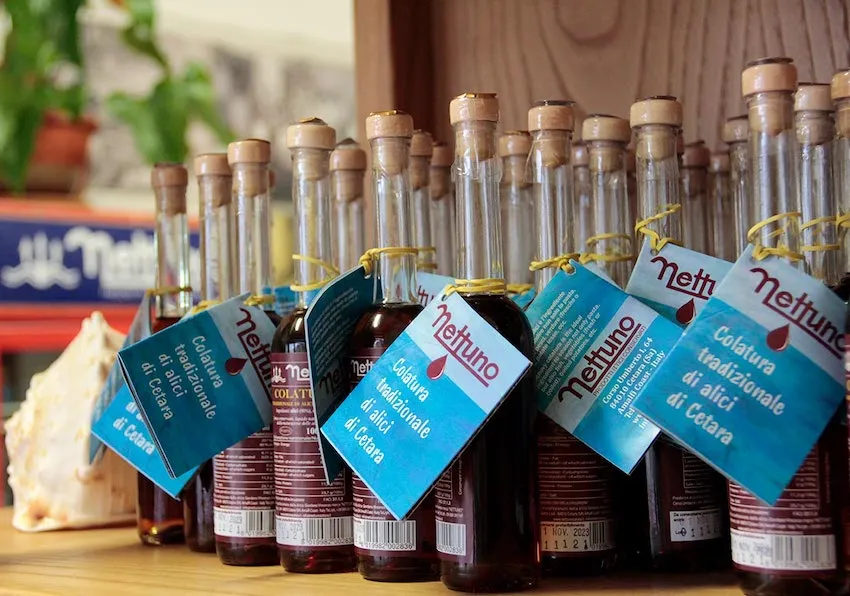
At the Sacramento Italian market, I’ve compared several brands side by side, and the differences are real. Look for bottles that are labeled with Cetara as the place of production. The color should be a clear, warm amber — think aged whiskey or strong tea. Avoid anything that looks muddy or has sediment swirling around, which can indicate poor filtration or improper storage.
The DOP designation matters here. Authentic colatura di alici di Cetara must meet specific production standards tied to that geographic area. If a label doesn’t mention Cetara or DOP status, you’re likely looking at an imitation product — which might still be decent fish sauce, but it isn’t the real thing.
Brands Worth Knowing
After testing multiple brands side by side in my Sacramento kitchen, a few names consistently stood out for depth of flavor and balance. Nettuno, Delfino Battista, and Acquapazza are among the producers with strong reputations for traditional methods. The one I keep in my kitchen is from a small Cetara producer I discovered on a trip through Campania — but for most home cooks in the U.S., Nettuno is an excellent, widely available choice that doesn’t cut corners.
Specialty Italian importers and online retailers are your best bet if you don’t have a dedicated Italian market nearby. Expect to pay between $15 and $35 for a small bottle — 100ml is the most common size — and know that that’s fair for what you’re getting.
How to Use Colatura di Alici in Your Kitchen
The Golden Rule: Less Is More
This is not an ingredient you glug. A few drops — literally three to five — is enough to change the character of an entire dish. Colatura is the kind of ingredient that doesn’t taste like itself once it’s in a dish; it just makes everything around it taste more like itself. More savory, more complete, more alive.
The Classic: Spaghetti alla Colatura
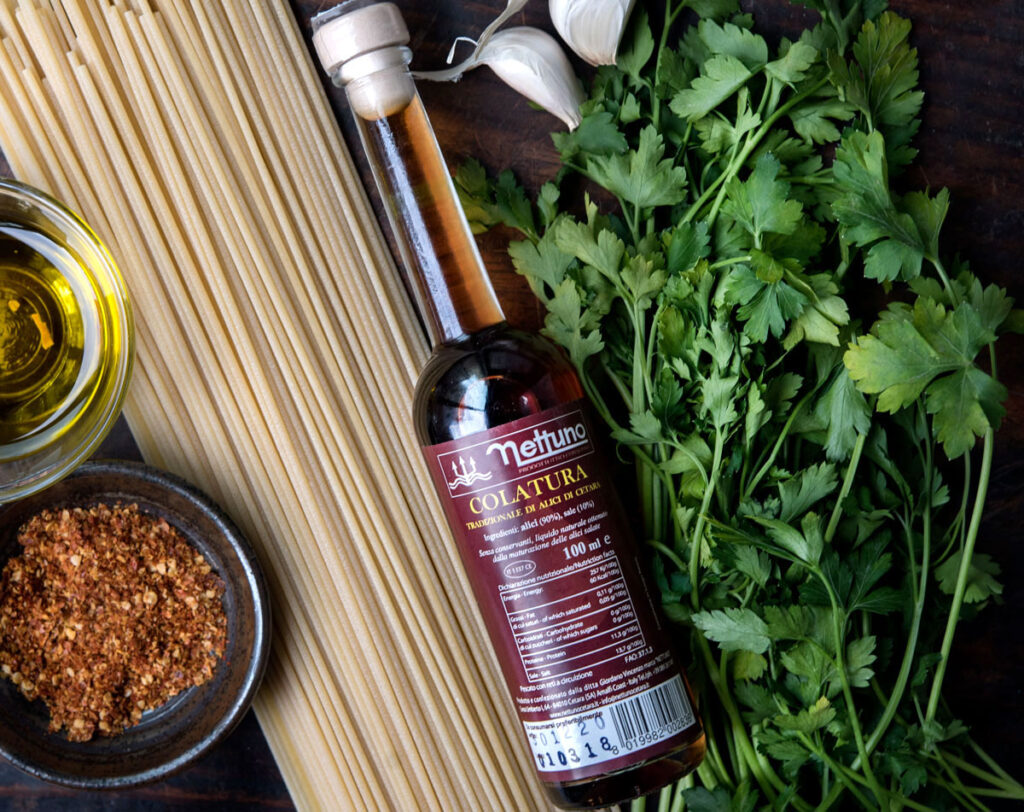
The most traditional preparation is shockingly simple. Cook spaghetti until just al dente. While it’s cooking, mix colatura with extra-virgin olive oil, minced garlic, a little finely chopped parsley, some dried chili, and a squeeze of lemon. No heat. Toss the hot pasta directly into this mixture, adding a splash of pasta water to bring everything together. That’s it. No salt added — the colatura handles it. My grandmother Julia would have loved this dish because she understood that the best Italian food trusts its ingredients to do the work.
Other Applications
- Vegetables: A few drops over roasted cauliflower, broccoli rabe, or grilled radicchio adds a savory undercurrent that makes people ask what you did differently.
- Seafood risotto: Stir in a small amount at the end instead of — or alongside — salt. The oceanic depth it adds is remarkable.
- Carpaccio and crudo: Colatura is traditionally used in raw fish preparations, drizzled alongside good olive oil and lemon.
- Salad dressings: Use it in place of anchovy paste or fish sauce in a Caesar-style dressing or any vinaigrette that needs more backbone.
- Braised meats: A few drops into a lamb or beef braise deepens the sauce in the same way that a splash of Worcestershire does — but with more elegance.
- Pizza and flatbreads: Drizzle a small amount over a finished pizza the way you’d use a finishing oil. Pairs beautifully with mozzarella and olives.
When I visited Cetara, the colatura I tasted straight from a local producer’s bottle was almost sweet in its complexity — not the sharp saltiness I’d expected. That experience convinced me that the ingredient is being underused in most American kitchens, where people treat it like an aggressive seasoning rather than a finishing tool.
How to Store Colatura di Alici
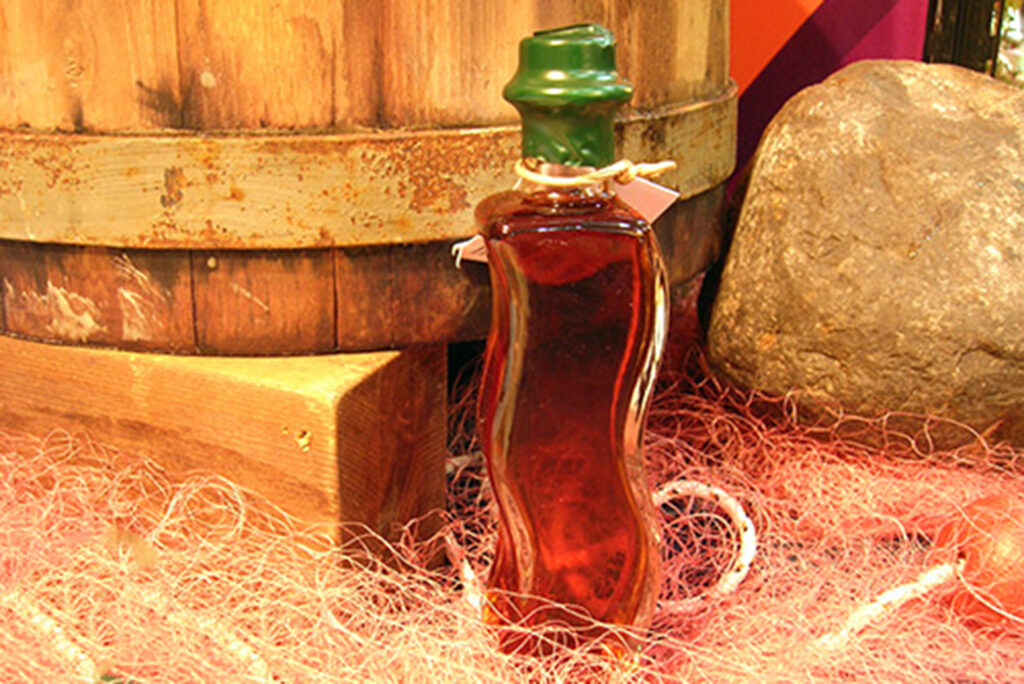
Once opened, colatura di alici should be refrigerated. It will keep for several months — some producers say up to a year — but the flavor is most vibrant in the first few weeks after opening. The cold won’t hurt it, and it’s worth keeping the bottle tightly sealed to prevent oxidation.
An unopened bottle can be stored in a cool, dark pantry. Avoid heat and direct sunlight, which can degrade both the flavor and the color over time. Given how concentrated the sauce is and how little you use per dish, a single small bottle will last most home cooks a long time regardless.
Common Mistakes to Avoid
Using Too Much
The most frequent mistake is overpouring. Because the bottle is small and the sauce looks similar in viscosity to soy sauce, people tend to treat it the same way. Don’t. Start with three drops, taste, and add from there. You can always add more; you can’t take it back.
Cooking It at High Heat
Colatura is best used raw or added at the very end of cooking. High, prolonged heat drives off the volatile aromatic compounds that make it interesting and can intensify the fishiness in an unpleasant way. In the classic spaghetti preparation, the sauce is never cooked — only warmed by the hot pasta.
Substituting It Carelessly
Colatura di alici and Southeast Asian fish sauce are related but not interchangeable. Thai fish sauce is sharper, more pungent, and fermented differently. If a recipe calls for colatura specifically, using fish sauce will give you a different result. The reverse is also true. They occupy different flavor registers.
Ignoring the Salt Factor
This is an extremely salty ingredient. When cooking with it, hold back on any additional salt until you’ve tasted the finished dish. Many recipes that include colatura need no added salt at all. Oversalting a dish because you forgot to account for the colatura is an easy mistake and a frustrating one.
Buying the Wrong Thing
Read the label carefully. The authentic product is colatura di alici di Cetara with DOP status. Generic “anchovy sauce” or non-DOP products made outside Cetara can vary wildly in quality. Given how little you use per dish, spending a bit more on the real thing is absolutely worth it.
Why This Ingredient Deserves a Place in Your Pantry
José Villalobos has spent years arguing that the Italian pantry is one of the most misunderstood in the world — not because people don’t respect it, but because they only scratch the surface. Colatura di alici is exactly the kind of ingredient that separates a pantry that looks Italian from one that cooks Italian. It’s patient, ancient, precise, and extraordinarily generous once you understand it.
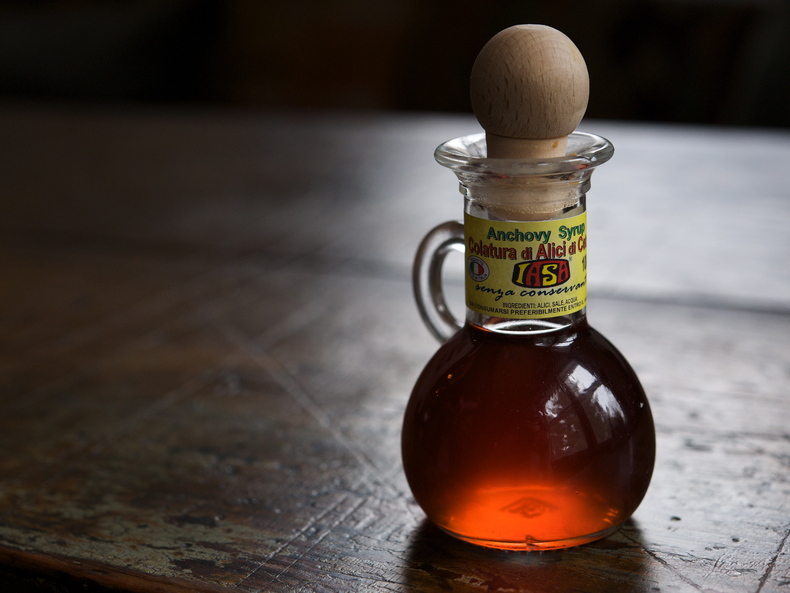
My grandmother Julia built flavor with instinct. I build it with her instinct and whatever I can learn on the road and in good markets. Colatura di alici connects both — a Roman legacy filtered through medieval monks, preserved by one small village on the Amalfi Coast, and now available to anyone willing to seek it out. That amber bottle in your refrigerator door is a direct line to something very old and very good.
Start with the spaghetti. You’ll understand everything else from there.
Back to the full Italian pantry guide
Frequently Asked Questions
How does colatura di alici compare to other fish sauces like Vietnamese or Thai versions?
Colatura is more refined and less pungent than Southeast Asian fish sauces. It has a saline elegance that reflects the Mediterranean—think nuanced rather than aggressive. The European anchovy species and fermentation methods produce something subtler that enhances rather than overpowers dishes.
Can you substitute colatura di alici with regular anchovy paste or other ingredients?
Not really as a one-to-one swap. Anchovy paste is thicker and fishier, while colatura is liquid and delicate. You could use a tiny amount of quality fish sauce in a pinch, but you’d lose that elegant depth. Honestly, there’s no true substitute—a small bottle lasts months because you only need a few drops per dish.
Why does colatura di alici have DOP status and what does that actually mean?
DOP status protects the product’s origin and methods. Only colatura made in Cetara using traditional fermentation qualifies. It’s not just paperwork—it recognizes that the specific location, anchovy species, and techniques are inseparable from the final product’s quality and character.
How long does an opened bottle of colatura di alici last, and how should you store it?
A bottle lasts quite a while since you use it sparingly—weeks or months depending on cooking frequency. Store it in a cool, dark place or the refrigerator after opening. The salt content and fermentation process preserve it well, but like any condiment, keep it sealed between uses.
Is there a noticeable taste difference between expensive and budget colatura brands?
Yes. Higher-quality versions from established Cetara producers tend to be more balanced and elegant, while cheaper imitations can taste one-dimensional or overly salty. Since you’re using such small amounts, investing in a good bottle makes a real difference in your finished dishes.
Written by José Villalobos
José Villalobos is a food writer and the founder of Calitalia Food. He grew up in Valparaíso, Chile, where his grandmother Julia cooked Italian food daily from memory and instinct. Based in Sacramento, California, he visits local Italian markets weekly and writes about ingredients, sauces, and regional food culture with the kind of detail that comes from years of sourcing, testing, and eating. Every product he recommends, he has personally bought and tested.