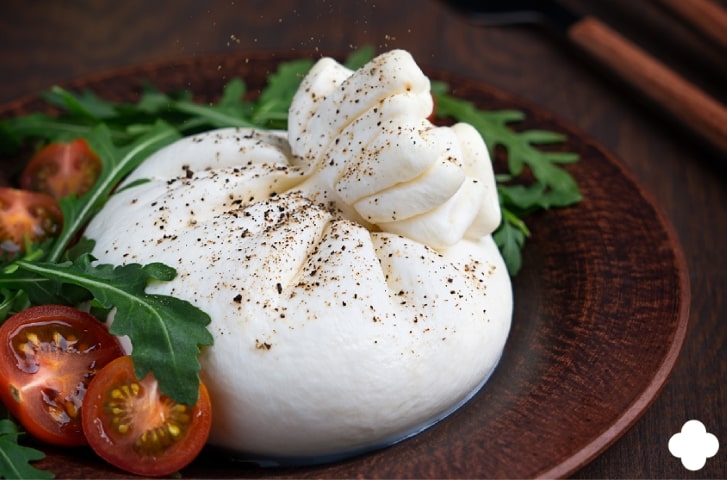
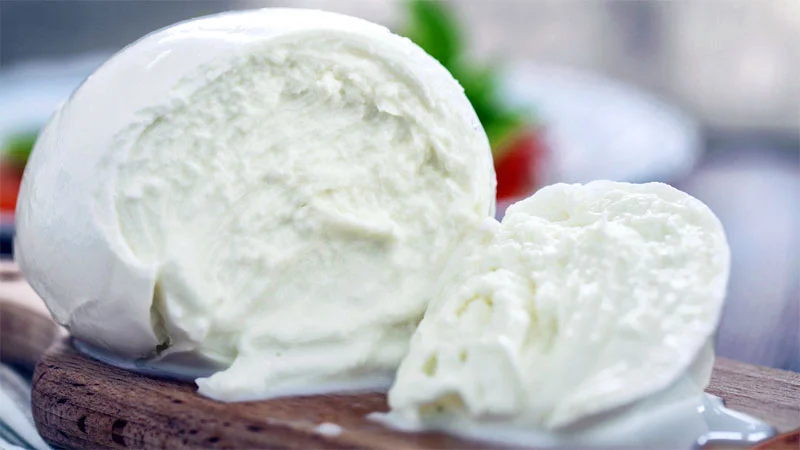
The first time I tasted real mozzarella di bufala — not the rubbery block from the supermarket dairy aisle, but an actual fresh ball packed in its own whey — I understood immediately why Italians treat this cheese as something almost sacred. I sourced it from a small importer in Sacramento who brings it in directly from Campania, and the moment I tore it open over a plate, a thin stream of milky liquid ran across the ceramic.
The smell was faintly tangy, almost grassy. Nothing in my California kitchen had prepared me for it. My grandmother Julia, who cooked Italian food in Valparaíso from recipes she’d collected over decades, always said that the difference between good ingredients and great ones wasn’t subtle — it hit you immediately. She was right about this one.
This article covers everything you need to know about mozzarella di bufala: what it actually is, where it comes from, how it’s made, how to find the real thing, and how to use and store it properly. If you’ve only ever eaten the cow ‘s-milk version, what follows will reframe everything you think you know about fresh mozzarella.
What Is Mozzarella di Bufala?
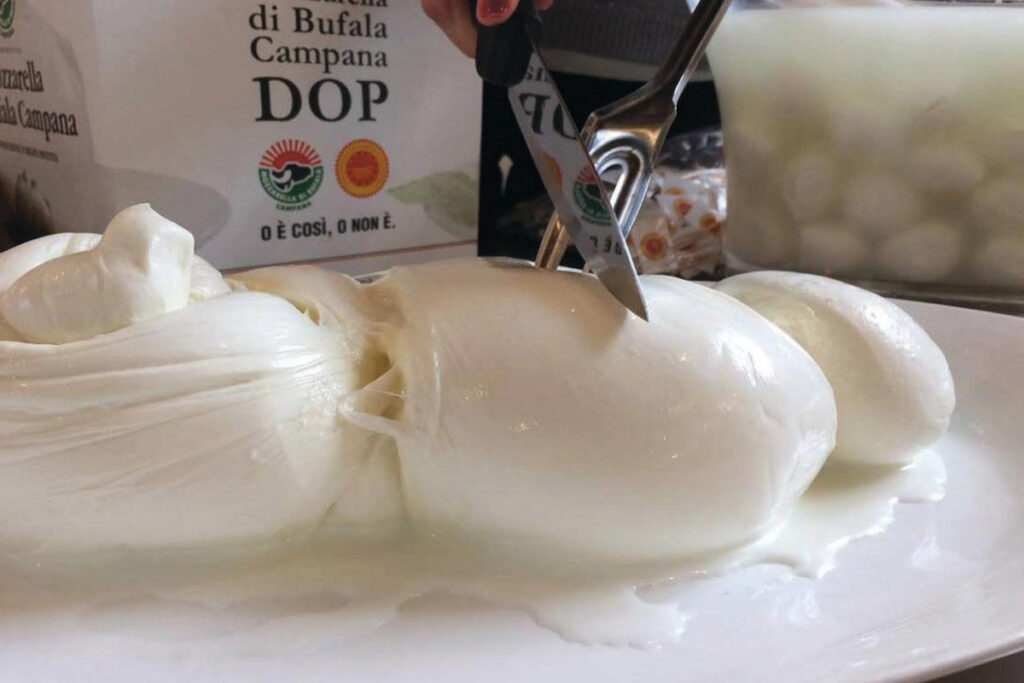
Mozzarella di bufala is a fresh, soft cheese made exclusively from whole buffalo milk. Its full protected name is Mozzarella di Bufala Campana DOP, and that last word matters enormously. DOP stands for Denominazione di Origine Protetta — Protected Designation of Origin — which means the cheese can only be produced in a legally defined geographic area using traditional methods and local buffalo milk. No shortcuts. No substitutions. No production in Wisconsin or Argentina, and calling it the same thing.
The production zone centers on the Campania region of southern Italy, specifically the provinces of Caserta and Salerno, with smaller zones extending into parts of Lazio, Apulia, and Molise. The buffalo involved is the Bufalo Mediterraneo Italiano, a breed shaped over centuries by the marshy plains of the Volturno River basin. Their milk is richer in fat and protein than cow’s milk — roughly double the fat content — which gives the finished cheese its characteristic creaminess, its slight tang, and that unmistakable porcelain-white color.
What separates mozzarella di bufala from fior di latte (the cow ‘s-milk fresh mozzarella most of us grew up with) isn’t just the animal. It’s the texture — softer, more yielding, almost pillowy — and the flavor, which carries a clean lactic acidity that fior di latte simply cannot replicate.
When I tested this in my Sacramento kitchen, setting both side by side on the same plate with the same olive oil and the same tomatoes, the difference was clear within one bite. The buffalo version had depth. The cow’s-milk version tasted like a polite approximation.
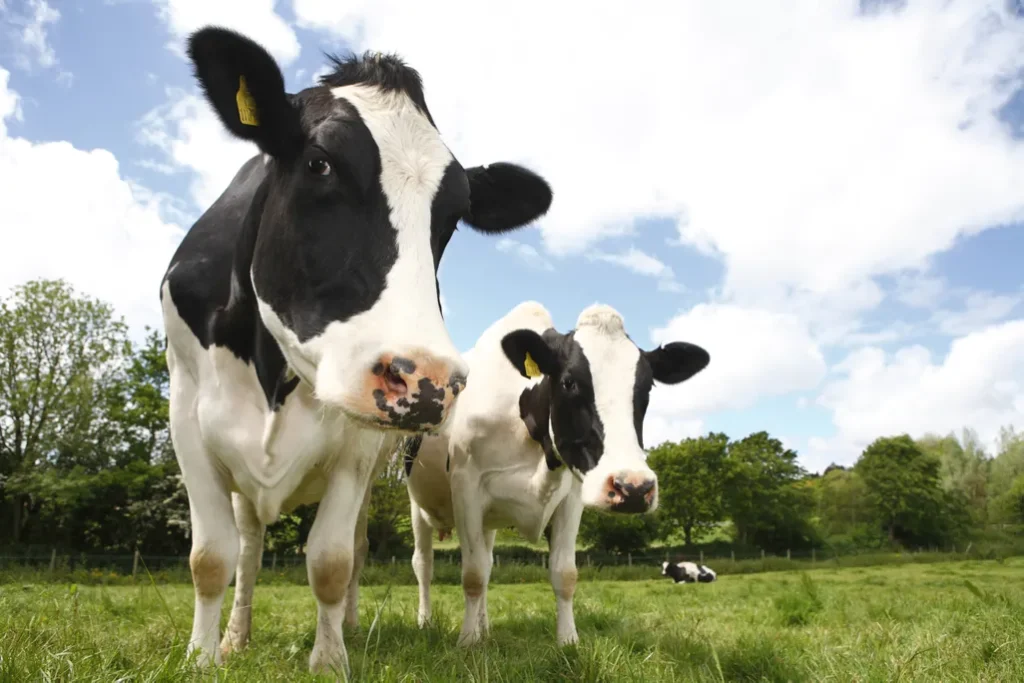
A History Rooted in Southern Italy’s Marshlands
The Buffalo Arrives in Italy

Water buffalo didn’t originate in Italy. The leading historical theory holds that they arrived via Arab-Sicilian trade routes around the 9th and 10th centuries, gradually spreading northward into Campania’s low-lying wetlands during the Norman period of the 11th century. In those early centuries, buffalo were work animals — strong enough to plow the waterlogged plains that oxen struggled with. The idea of milking them came later, a practical adaptation driven by the sheer number of animals the region had accumulated.
The earliest written reference connecting buffalo milk to cheese production traces to the 12th century, when monks at the monastery of San Lorenzo in Capua reportedly offered pilgrims a cheese called “mozza” — or its smoked variant, “provatura.” That word, mozza, is the root of everything that follows.
The Word “Mozzarella” and Its Origins
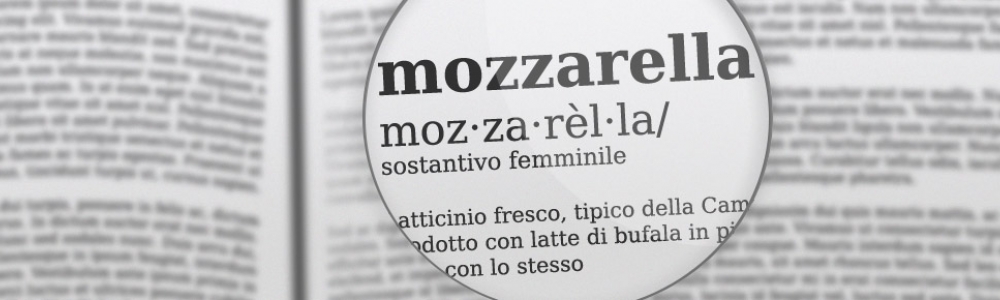
The term mozzarella appears in print for the first time in 1570, in Opera, the culinary treatise written by Bartolomeo Scappi, personal cook to Pope Pius V. Scappi’s book is one of the great documents of Renaissance cooking, and his mention of mozzarella places the cheese firmly in the world of Italian court cuisine by the sixteenth century — not a peasant food, but something served at serious tables.
The name derives from the verb mozzare, meaning to cut off or break off, referring to the specific hand motion artisans use to separate individual balls from a stretched mass of curd. The cheesemaker pinches between thumb and forefinger, severing each piece cleanly. That gesture — ancient, precise, still performed the same way today — is encoded in the name of the cheese itself.
Bourbon Dairies and Commercial Expansion
Commercialization accelerated during the 16th century in Capua, and by the 18th century, the Bourbon kings of Naples had institutionalized buffalo cheese production at a royal level. They established purpose-built stone dairies called bufalare — circular structures with central chimneys for processing — including the famous Real Pagliara di Carditello near Aversa and Caserta. These royal operations helped standardize the product and pushed its reputation across the Italian peninsula. What had been a regional specialty became a nationally recognized cheese.
How Mozzarella di Bufala Is Made
The Milk
Everything starts with fresh, whole buffalo milk, collected from herds within the DOP zone. The milk is richer and heavier than cow’s milk — higher in protein, fat, and dry matter — which makes it an ideal raw material for pasta filata cheeses. The composition directly influences yield, texture, and flavor. Buffalo milk from the Campanian plains carries the character of the land: the grass, the water, the mineral quality of the soil.
Coagulation and Cutting
The milk is warmed to 35–38°C and inoculated with natural whey cultures or starter cultures to begin acidification. Once the correct acidity is reached, rennet is added and the milk coagulates into a firm curd. That curd is then cut down to roughly rice-grain size — small enough to release whey efficiently, large enough to retain the fat that will give the finished cheese its body.
Pasta Filata: The Stretch That Defines the Cheese
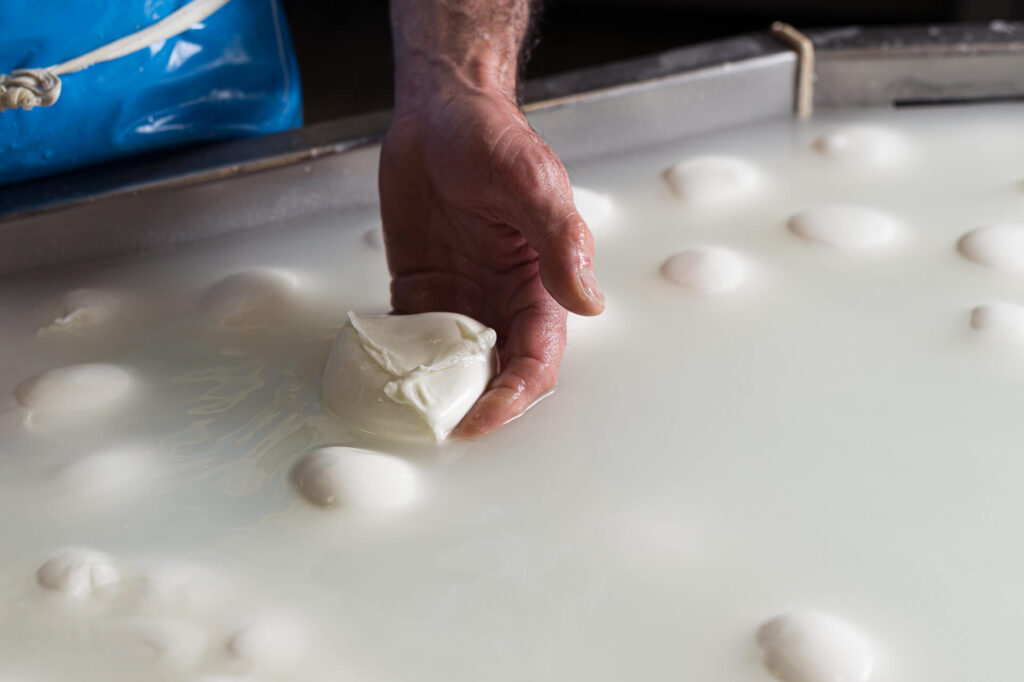
The defining step is pasta filata — stretched curd. The cut curd is heated and then submerged in hot water at temperatures between 80 and 90°C. Under that heat, the curd becomes plastic, elastic, and stretchable. Artisans work it by hand (or with tools that replicate the hand motion), pulling and folding until the texture transforms: fibrous, smooth, shiny. This is the step that creates mozzarella’s characteristic layered interior and that satisfying resistance when you tear into it.
Mozzatura and Cooling
Once the mass is properly stretched, individual pieces are formed by mozzatura — that pinching gesture encoded in the name. Rounded balls are shaped quickly, then cooled in chilled brine or whey, which firms the exterior and arrests the cooking. Mozzarella di bufala is sold and shipped in this liquid, which is not just packaging — it’s preservation. The whey or brine keeps the cheese hydrated and maintains its flavor during transit.
DOP Certification: Why the Label Matters
The DOP certification for Mozzarella di Bufala Campana was granted in 1996 and is overseen by the Consorzio di Tutela Mozzarella di Bufala Campana DOP. This body monitors everything from the breed of buffalo and the composition of their feed to the geographic origin of the milk and the production methods used by certified dairies. Only cheese that meets every standard can carry the DOP mark.
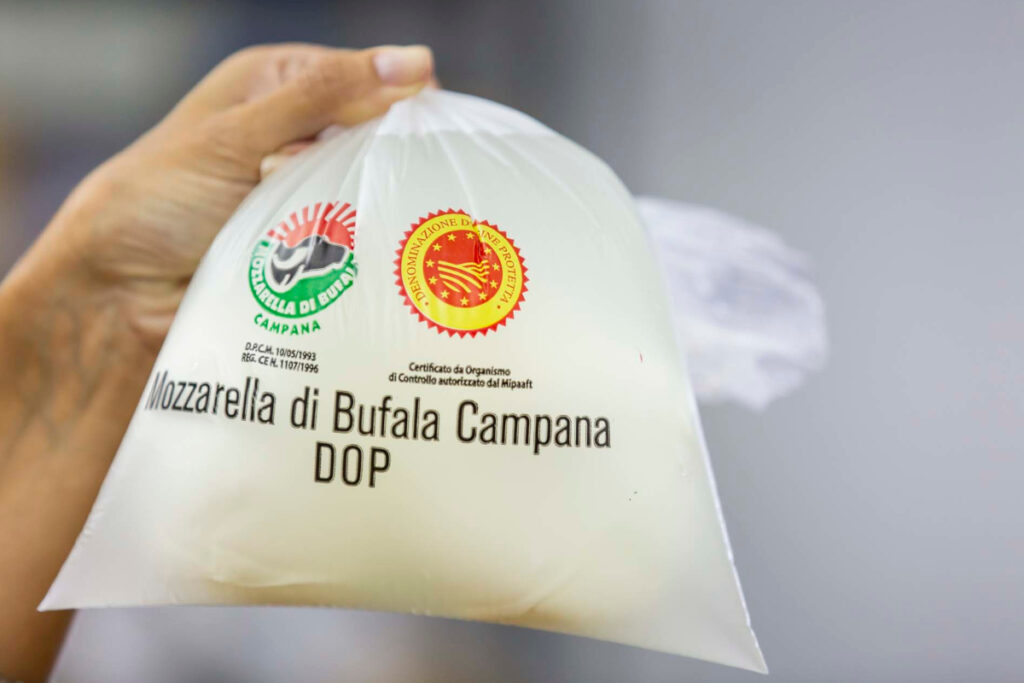
What this means practically: when you buy a product bearing the Mozzarella di Bufala Campana DOP seal, you are buying something traceable, regulated, and verified. When you buy something simply labeled “buffalo mozzarella” without that seal, you have no legal guarantee of origin, animal breed, milk composition, or method. That distinction is the whole ballgame.
How to Buy Mozzarella di Bufala
Where to Find the Real Thing
Genuine Mozzarella di Bufala Campana DOP is more available in the United States than it was ten years ago, but you still need to look in the right places. Specialty Italian importers, high-end cheese shops, and some Italian delis carry it. I sourced this from a small importer in Sacramento who brings it in directly from Campania, bypassing the large distribution networks that tend to stock shelf-stable versions that have already lost much of their character in transit.
Look for cheese packed in whey or lightly salted liquid — not sealed in a dry plastic pouch. The liquid isn’t incidental. It keeps the interior moist and the flavor intact during the days between production and your plate.
What to Look For on the Label
- DOP seal: The blue and yellow DOP mark is non-negotiable for authenticity.
- Consorzio marking: Many certified producers include the Consorzio di Tutela logo as additional verification.
- “Bufala” in the name: Not just “mozzarella” — the word bufala must appear to indicate buffalo milk.
- Production date: Mozzarella di bufala is at its best within 24–48 hours of production. Fresher is always better. Check the date on the packaging.
- Country of origin: Must say Italy, with Campania indicated as the production region.
Size and Format
Certified mozzarella di bufala comes in several formats: the classic round ball (the most common, typically 80g to 250g), smaller ciliegine (cherry-sized pieces), the elongated treccia (braid), and the large format maxi that can reach a kilogram. For most home uses, the standard 125g to 250g ball is the right call — enough for a plate of Caprese for two, appropriately sized for a single pizza.
How to Use Mozzarella di Bufala
Eat It Fresh, Eat It Simple
The single most important thing to understand about mozzarella di bufala is that it does not need heat to be extraordinary. In fact, heat can work against it. The water content is high enough that cooking often turns the cheese rubbery and bland, diluting exactly the qualities that make it worth buying in the first place. A classic Caprese — sliced buffalo mozzarella, ripe tomatoes, fresh basil, good olive oil, a pinch of sea salt — lets the cheese speak entirely for itself.
My grandmother Julia served something similar in Valparaíso, though she used what was available to her — never quite the same cheese, but the same instinct: let quality ingredients stand without interference.
When You Do Cook With It
If you’re using mozzarella di bufala on pizza or in a baked dish, add it at the end of cooking rather than the beginning. A Neapolitan pizza purist will tell you to tear the buffalo mozzarella over the pie in the last minute of baking, or even after it comes out of the oven. This preserves the flavor and texture rather than boiling it down to a watery pool. On a charcuterie spread, folded into a warm grain bowl, or simply torn over bruschetta — the cheese performs at its best when treated gently.
How to Store Mozzarella di Bufala
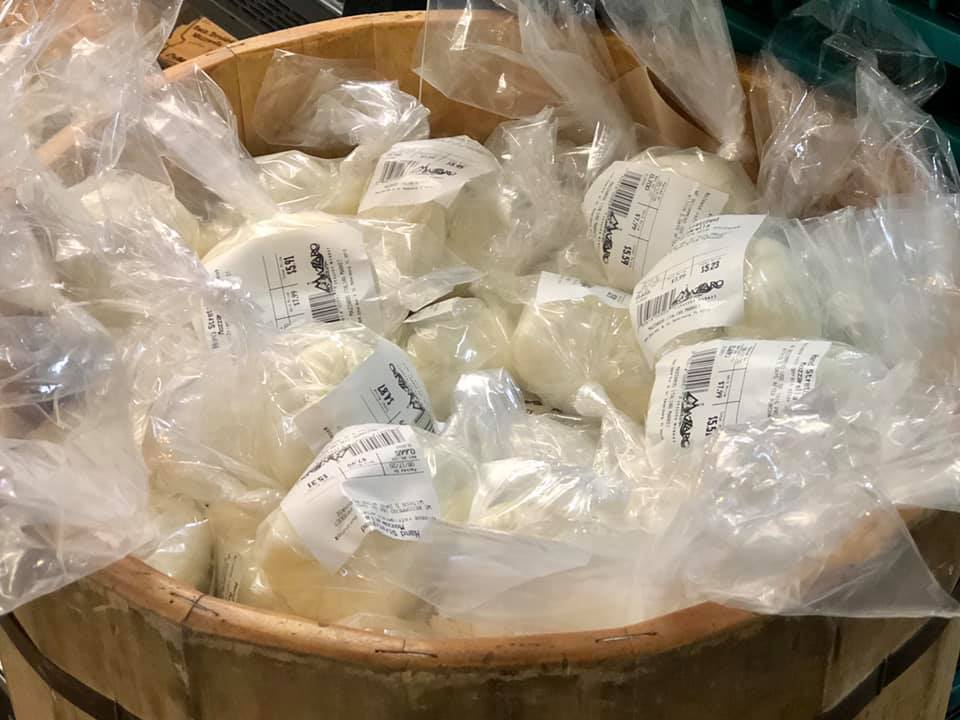
Store mozzarella di bufala in its original liquid until the moment you serve it. If you’ve opened the package and have leftovers, submerge the remaining cheese in lightly salted water and refrigerate it. Use it within one to two days. Do not freeze it — freezing destroys the texture irreparably, and there is no coming back from that.
One crucial detail: take the cheese out of the refrigerator at least 30 minutes before serving. Cold muffles the flavor. Room temperature is where mozzarella di bufala becomes fully itself — the fat loosens, the whey weeps slightly, the aroma opens up. That milk-and-grass smell that makes it worth the price only emerges when the cheese has had time to warm.
Common Mistakes to Avoid
- Buying without checking the DOP seal. Any “buffalo mozzarella” without that certification could be made anywhere, from anything. The label protects you.
- Refrigerating it dry. Without liquid, the cheese dries out and toughens within hours. Keep it submerged at all times.
- Serving it cold. This is the most common mistake. Cold mozzarella di bufala tastes like almost nothing. Give it time to come to temperature.
- Overcooking it. Buffalo mozzarella is not a melting cheese the way low-moisture mozzarella is. High heat for extended periods ruins it.
- Pairing it with strong flavors. The cheese is delicate. Heavy vinaigrettes, overpowering herbs, or aggressively spiced ingredients will bury the very thing you paid for.
- Waiting too long to use it. Unlike aged cheeses, mozzarella di bufala does not improve with time. Buy it fresh, use it within a day or two, and don’t save it for a special occasion that never comes.
A Final Word
Mozzarella di bufala is not a luxury ingredient in the sense of being inaccessible or impractical. It’s a luxury in the original sense: something that rewards attention, that requires the right context, that repays the effort of finding the real version. When I tested this in my Sacramento kitchen — the genuine DOP article next to a domestic cow ‘s-milk substitute — the difference was clear not just in taste but in the entire experience of eating it. The buffalo version had presence. It demanded you slow down.
My grandmother Julia understood that Italian food, at its core, is not about technique or complexity. It’s about starting with something true and not ruining it. Mozzarella di bufala Campana DOP is exactly that kind of ingredient: honest, specific, irreplaceable.
For more on the essential building blocks of Italian cooking — the cheeses, cured meats, oils, and pantry staples that make Italian food what it is — visit the Italian Pantry guide at Calitalia Food.
Frequently Asked Questions
Can I make mozzarella di bufala at home with regular buffalo milk from the store?
Most store-bought buffalo milk won’t work because it’s typically pasteurized and sometimes homogenized, which changes how the curds form during cheesemaking. Authentic production requires raw or minimally heat-treated milk from specific buffalo breeds. You’d also need specialized equipment and knowledge of the traditional stretching technique to get the right texture.
How long does real mozzarella di bufala stay fresh once you open it?
I use mine within 2-3 days of opening. It comes packed in whey to maintain moisture, so keep it submerged in that liquid in the coldest part of your fridge. Once the whey gets cloudy or sour-smelling, it’s time to use the cheese quickly or discard it. Temperature swings degrade it fast, so avoid leaving it on the counter.
Why is authentic mozzarella di bufala so much more expensive than regular fresh mozzarella?
Buffalo milk itself is more expensive to produce—these animals require specific marshy conditions and yield less milk than cows. Add DOP certification, which requires traditional methods and geographic restrictions, plus shorter shelf life and smaller production volumes, and the cost compounds. You’re paying for scarcity and authenticity, not marketing.
Is there a meaningful difference between mozzarella di bufala from different Italian regions within the DOP zone?
Yes. Producers in Caserta and Salerno often have slightly different flavor profiles based on local buffalo breeds, pasture composition, and water sources. Some make it tangier, others creamier. I recommend trying a few different brands to find what matches your palate—the terroir matters just like it does in wine.
What happens if you heat or cook real mozzarella di bufala instead of eating it fresh?
Heating it destroys most of what makes it special—the delicate texture becomes grainy, and the subtle tangy flavor gets muted. The high water content means it weeps liquid instead of melting smoothly like Fior di Latte. Save it for salads, simple preparations, and fresh applications where you can taste what you’re paying for.
Written by José Villalobos
José Villalobos is a food writer and the founder of Calitalia Food. He grew up in Valparaíso, Chile, where his grandmother Julia cooked Italian food daily from memory and instinct. Based in Sacramento, California, he visits local Italian markets weekly and writes about ingredients, sauces, and regional food culture with the kind of detail that comes from years of sourcing, testing, and eating. Every product he recommends, he has personally bought and tested.