If you’ve ever stood in an Italian specialty shop staring at two wheels of cheese — one labeled DOP, one not — and wondered whether the price difference was actually worth it, you’re asking exactly the right question. What is DOP certification Italy has built its entire food identity around? The short answer: it’s the European Union’s highest standard for protecting the authenticity of traditional Italian foods, guaranteeing that every stage of production — from the pasture to the packaging — happens within a specific geographic region using time-honored methods. The longer answer is a story about history, place, pride, and why that extra label on your prosciutto actually matters.
I’m José Villalobos, and I’ve been chasing this story across Italian delis in Sacramento and across the regions of Italy itself. My grandmother Julia cooked Italian food in Valparaíso, Chile — she had an instinct for quality that had nothing to do with labels and everything to do with taste. Learning what DOP actually means has helped me understand, retroactively, why she always reached for certain products and not others.
What Is DOP Certification in Italy?
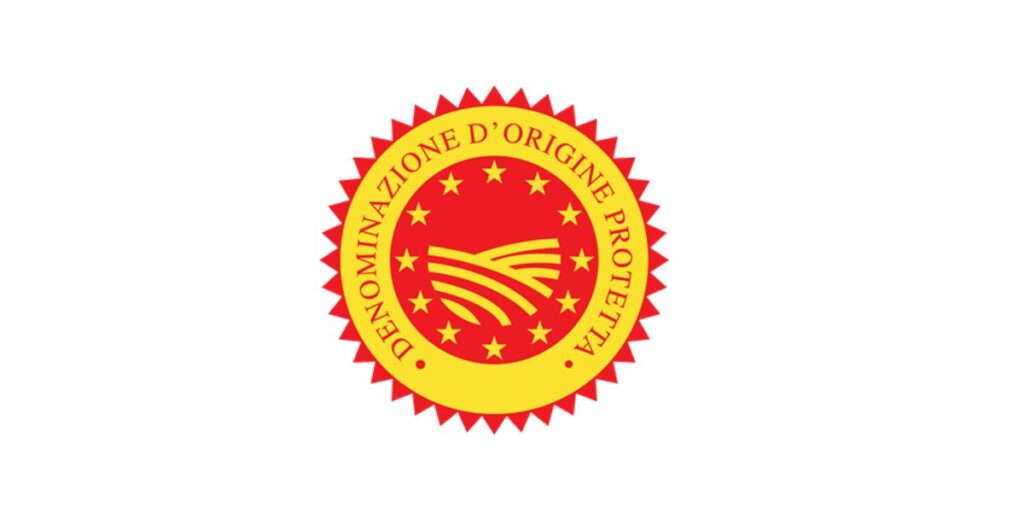
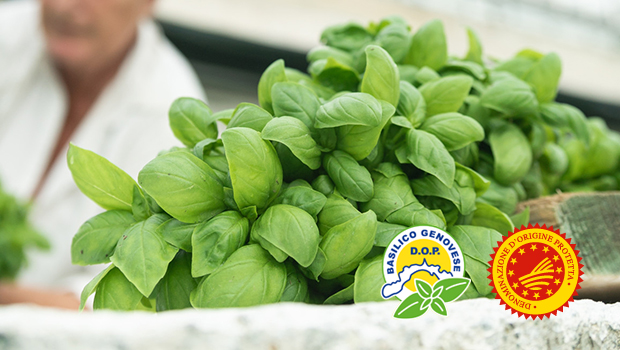
DOP stands for Denominazione di Origine Protetta, which translates to Protected Designation of Origin. It is a certification issued under European Union regulations that guarantees a food product’s authenticity, geographic origin, and production method all at once. Think of it as a triple promise: where it comes from, how it was made, and by whom.
Under DOP rules, every production phase — raising the animals, sourcing the raw materials, processing, aging, and even packaging — must occur within a precisely defined geographic zone. No shortcuts, no outsourcing a single step across the border. If even one stage happens outside the protected area, the product cannot carry the DOP label.
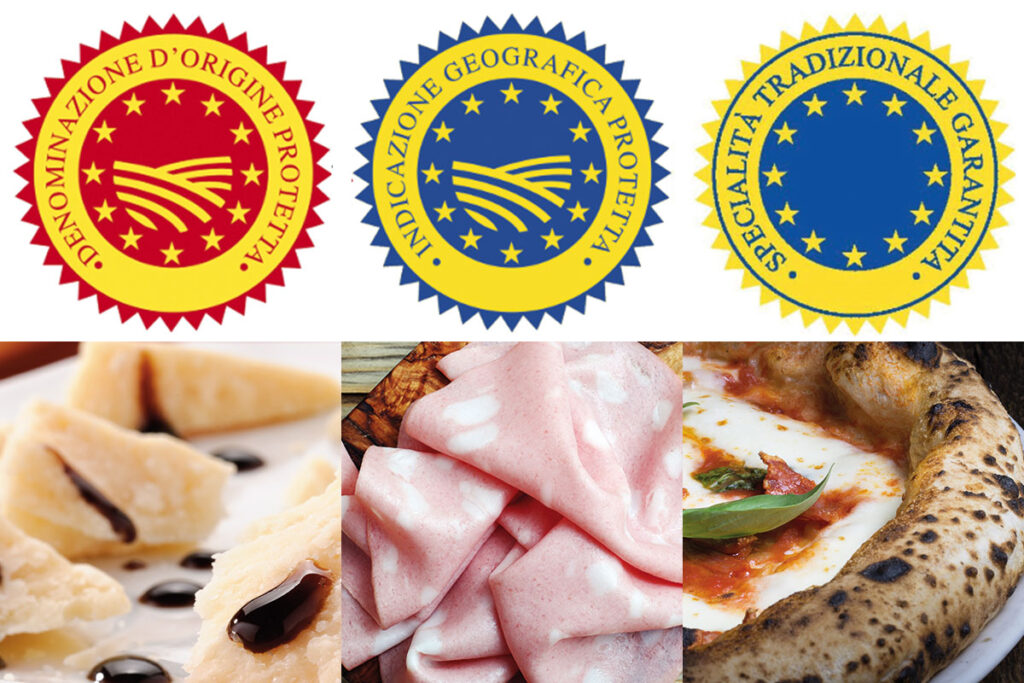
This distinguishes DOP sharply from IGP, its cousin certification. IGP stands for Indicazione Geografica Protetta (Protected Geographic Indication), and it only requires that at least one phase of production takes place in the designated region. IGP is meaningful — don’t dismiss it — but it’s a notably looser standard. A product can be IGP-certified while most of its production happens elsewhere, as long as one critical step ties it to the named region.
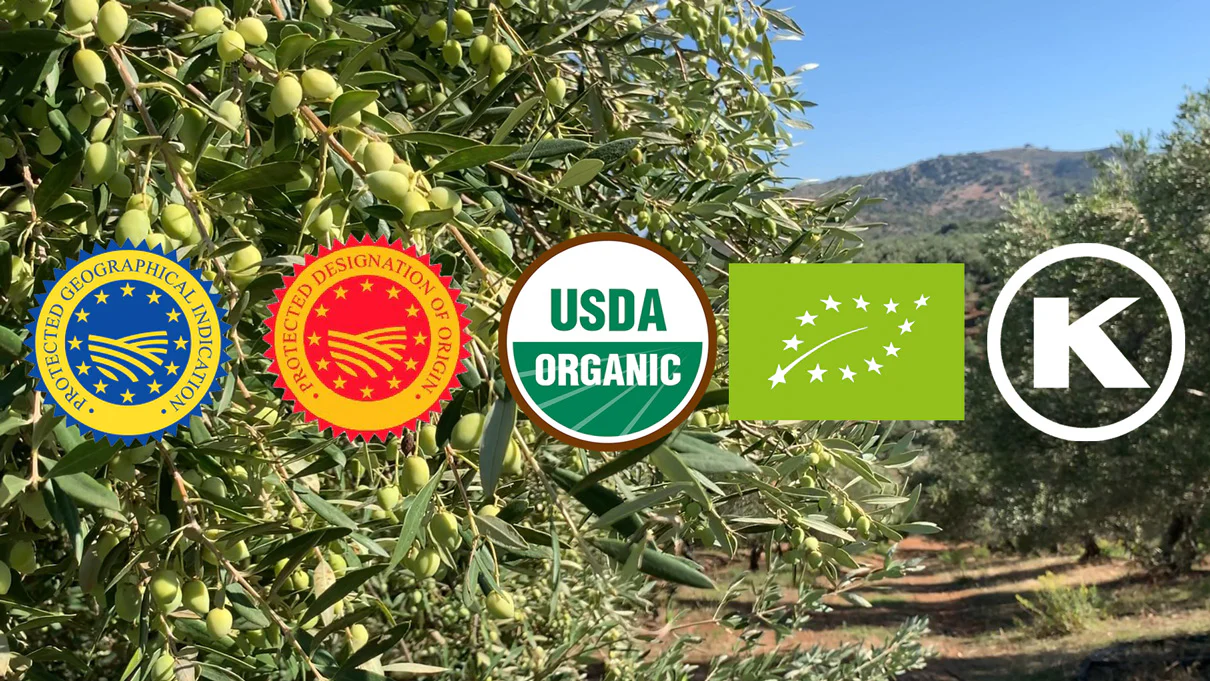
DOP sits at the very top of Italy’s food quality pyramid. Below it, in descending order of strictness, you’ll find IGP, then DOC (used primarily for wines), then DOCG. When you see that red-and-yellow European Union logo stamped on a product, you’re looking at the highest level of guarantee that Italian food regulation can offer.
The History Behind the Label
DOP protections didn’t appear out of nowhere in the 1990s. Italy had been wrestling with geographic food certifications for decades before the European Union standardized the system. In the mid-twentieth century, Italy developed its own domestic schemes — most notably the denominazione di origine controllata, or DOC — using official stamps to signal certified origin. Taleggio cheese was among the earliest Italian cheeses to receive DOC status, a designation that later folded into the EU’s DOP framework in the 1990s.
The urgency behind these protections was real and economic. As Italian cuisine spread globally through the mid-1900s, cheap imitations followed. Products labeled “parmesan” were being made in Wisconsin. “Prosciutto” appeared on shelves in places where no one had ever cured a ham the way Parma had for centuries. Balsamic vinegar, which requires years of patient aging in specific wood barrels in Modena or Reggio Emilia, was being replicated with caramel coloring and vinegar in factories far removed from Emilia-Romagna.
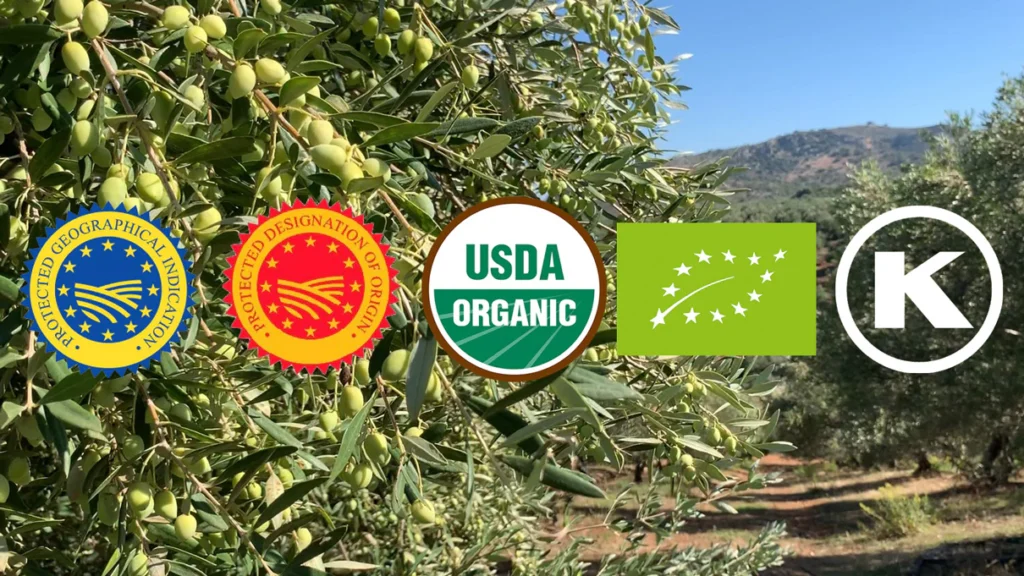
The European Union formalized the PDO (Protected Designation of Origin) regulatory framework in 1992. Italy adopted and applied it eagerly — the first Italian olive oil DOPs were registered in 1996. Today, Italy holds more DOP and IGP certifications than any other EU country, with roughly 138 DOP products and 83 IGP products at last count.
That’s not a bureaucratic accident. It reflects how deeply Italian food culture is rooted in place.
How DOP Products Are Made and Certified
The Production Rules
Getting a product DOP-certified is not a fast process. Producers must document historical production practices going back generations, prove that those methods are still being used, and submit to regular third-party inspections. The specifications — called a disciplinare di produzione — lay out every detail: what breeds of animals can be used, what the animals eat, how long a cheese must age, what size a wheel must be, even what type of wood barrels can be used for aging.
Parmigiano-Reggiano is the classic example. Its production is locked to the provinces of Parma, Reggio Emilia, Modena, parts of Mantua, and Bologna. The milk must come from cows raised within that zone, and those cows must eat locally grown hay and fresh grass — no silage allowed. The cheese is made with only three ingredients: local milk, salt, and natural whey starter containing the native microbial flora of the region. No additives, no preservatives. It’s aged a minimum of twelve months, and wheels are individually inspected before they’re approved to carry the Parmigiano-Reggiano DOP mark. The system dates back to the twelfth century and hasn’t drifted far from its origins.
The Inspection and Approval Process
Each DOP product is overseen by a designated consortium — a consorzio — that manages quality control and grants certification. Independent certifying bodies carry out inspections at every stage of production. Wheels of cheese get physically tested and stamped. Bottles of olive oil are analyzed. Hams are probed and graded. Producers who cut corners lose the right to use the label. The system has real teeth.
When I visited Calabria and tasted the local ‘Nduja — a spreadable, fiery pork salume — I noticed immediately how different it was from versions I’d tried back home. The fat-to-spice ratio, the texture, the heat that builds slowly rather than hitting you all at once. That regional specificity is exactly what DOP protects. It’s not nostalgia; it’s flavor rooted in a particular combination of climate, animal husbandry, and technique that cannot be replicated elsewhere.
How to Buy DOP-Certified Italian Products
What to Look For on the Label
The DOP logo is a red-and-yellow circular badge issued by the European Union. You’ll see it on the packaging of certified products, often alongside the specific product name and consortium seal. In the case of Prosciutto di Parma, for example, you’ll find the five-pointed Ducal Crown stamp burned directly into the ham’s rind. For Parmigiano-Reggiano, the name itself is stenciled in a dotted pattern across the entire rind of every wheel.
Don’t be fooled by vague evocations of place. A label that says “Parmesan” without the DOP certification is not Parmigiano-Reggiano. A bottle labeled “balsamic vinegar of Modena” without DOP or IGP certification is just flavored vinegar. The label matters precisely because it closes off those loopholes.
Where to Shop
At the Sacramento Italian market, I’ve compared several brands of DOP olive oil side by side — the color, the aroma before opening, the way the oil moves in the bottle. Specialty Italian markets and well-stocked cheese shops are your best sources for genuine DOP products. Staff who know their inventory can often tell you which region a product comes from and how it was aged. That conversation is worth having.
Online retailers have expanded access significantly. Reputable importers who work directly with Italian consortia are a reliable option when you’re not near a good Italian deli. When in doubt, buy the product with the most information on the label — country of origin, producer name, consortium mark — and the least amount of marketing language.
After testing four brands of Parmigiano-Reggiano side by side — ranging from a budget import to a thirty-month aged wheel from a small producer — the differences were immediate and significant. Texture, depth of flavor, the way the crystalline bits crunched against the back of my teeth: the older, smaller-producer wheel was in a different category entirely. The one I keep in my kitchen now is a twenty-four-month aged Parmigiano-Reggiano from a producer whose name I ask for specifically when I’m at the market.
How to Use DOP Products in Your Kitchen
DOP products are not just for show. They’re meant to be eaten, and the quality justifies using them simply so their character can come through. A few principles worth keeping in mind:
- Use fewer ingredients, not more. Prosciutto di Parma needs nothing but bread. Parmigiano-Reggiano needs nothing but a small knife to break off a chunk. The complexity is already there.
- Don’t bury DOP olive oil in cooking. A finishing drizzle over soup, pasta, or roasted vegetables preserves the grassy, peppery character that disappears at high heat. Use a less expensive oil for sautéing.
- Pair DOP cheeses with minimal accompaniments. Honey, walnuts, a slice of pear — these frame the cheese without competing with it.
- Taste before you season. A dish made with real Parmigiano-Reggiano or properly cured Prosciutto di Parma may need far less added salt than you expect.
My grandmother Julia would make a simple pasta with nothing but good olive oil, garlic, and cheese — no recipe, no measurements. I understand now that what she was actually doing was letting the quality of the ingredients carry the dish. That is the whole philosophy behind DOP, made concrete in a bowl of pasta.
How to Store DOP Products Properly
Hard Cheeses
Wrap Parmigiano-Reggiano and similar aged DOP cheeses in parchment or wax paper first, then loosely in plastic wrap. Airtight plastic suffocates the cheese and accelerates mold in the wrong places. Store in the warmest part of your refrigerator — the vegetable drawer works well — and use within two to three weeks of cutting.
Cured Meats
Whole legs and pre-sliced prosciutto should be kept refrigerated and used relatively quickly once opened. If you’ve bought sliced prosciutto from a deli counter, eat it within three to four days. The fat will oxidize and the flavor will flatten past that point.
Olive Oil
DOP olive oil should be stored away from heat, light, and air. A dark glass bottle in a cool cabinet is ideal. Don’t keep it next to the stove. Once opened, use it within six months. Olive oil does not improve with age once it’s been bottled and opened.
Common Mistakes to Avoid
- Confusing DOP and IGP. Both are legitimate certifications, but they are not interchangeable. IGP products are not inferior, but they operate under looser geographic requirements. Know which you’re buying and why.
- Buying based on price alone. DOP certification adds cost for good reasons. When a DOP product is priced like a generic product, ask questions. Something is off.
- Ignoring the rind markings. On real Parmigiano-Reggiano, the name is literally written on the rind. If it’s smooth and unmarked, you’re not holding the real thing.
- Grating cheese too far in advance. Parmigiano-Reggiano loses its aromatic compounds quickly once grated. Grate it fresh, right before using it.
- Using finishing olive oil for high-heat cooking. You’ll destroy the volatile compounds that make it worth paying for. Save it for the end.
- Treating DOP as purely aspirational. These are not luxury goods to be admired. They’re food. Cook with them, eat them, share them.
Why DOP Certification Still Matters Today
In an era when food labeling can be deliberately obscure and marketing language is designed to blur rather than clarify, DOP certification is a rare example of a system that actually works. It is regulated, audited, and enforced. It protects the people who produce traditional food in the regions where that food originated. It protects consumers who want to know what they’re actually eating. And it preserves flavor traditions that would otherwise be diluted into irrelevance by cheaper imitations.
When I visited Sicily and tasted blood oranges from the slopes of Etna — grown in volcanic soil that stains the fruit a deep burgundy — I understood something about DOP that no amount of label-reading had taught me. The place is not incidental to the flavor. The place is the flavor. That’s the entire argument for DOP in a single mouthful of orange.
José Villalobos has tested DOP products across Italy and at specialty markets in Sacramento for years. The certification is worth understanding, worth seeking out, and worth paying for when you find it. My grandmother Julia never needed a label to tell her which olive oil was worth buying. Most of us do. That’s exactly what DOP is for.
Back to the full Italian pantry guide
Frequently Asked Questions
Can a product lose its DOP certification if production standards slip?
Yes. If a producer begins cutting corners—using ingredients from outside the region or changing traditional methods—regulatory bodies can revoke the certification. I’ve seen this happen with smaller producers who couldn’t maintain compliance costs. The label is only as good as the enforcement behind it.
How do I actually verify a DOP label is authentic and not counterfeit?
Check for the official EU logo (red and yellow) and look up the product on the European Commission’s DOOR database, which lists every legitimate DOP certification. Buy from reputable retailers, not street vendors or unmarked bottles. If the price seems impossibly cheap, it probably isn’t real DOP.
Why can’t DOP products be made outside Italy if the same methods and ingredients are used elsewhere?
DOP protections are specifically tied to terroir—the soil, climate, and water of a particular region actually affect flavor and quality. Italy’s regulations treat geography as non-negotiable because that environmental specificity is part of what you’re paying for, not just the production method.
Is DOP certification worth the premium price for everyday cooking, or just special occasions?
That depends on the product and your budget. For something like Parmigiano Reggiano that you grate over pasta weekly, I think the DOP version justifies the cost. For ingredients buried in a sauce, standard versions work fine. My grandmother would have spent on what matters most to the final dish.
What happens to DOP producers if someone in another country tries to use the same name without certification?
They can pursue legal action through EU courts, and have. Italy actively protects its DOP names internationally—there are ongoing cases against producers using “Parmigiano” or “Prosciutto” outside regulated regions. Trademark enforcement is expensive, but major consortiums fight hard for their protected status.
Written by José Villalobos
José Villalobos is a food writer and the founder of Calitalia Food. He grew up in Valparaíso, Chile, where his grandmother Julia cooked Italian food daily from memory and instinct. Based in Sacramento, California, he visits local Italian markets weekly and writes about ingredients, sauces, and regional food culture with the kind of detail that comes from years of sourcing, testing, and eating. Every product he recommends, he has personally bought and tested.