If you’ve ever stood in the Trader Joe’s aisle squinting at a jar of pasta sauce wondering whether it’s the real thing or a clever imitation, you’re not alone. The Trader Joe’s Italian products lineup is larger, more interesting, and more surprisingly legit than most people realize — and sorting through it takes a little knowledge of what you’re actually looking at. I’m José Villalobos, and I’ve spent years doing exactly that sorting, first out of curiosity, then out of something closer to obsession.
My grandmother Julia cooked Italian food in Valparaíso, Chile — a city where Italian immigrants landed in waves during the late 1800s and left their flavors permanently embedded in the local culture. She made sauces by smell and instinct, and she had opinions about every ingredient. Those opinions live in me now. So when I test a jarred pesto or a package of refrigerated ravioli from Trader Joe’s, I’m not just checking the label. I’m asking: would this hold up?
The answer, more often than you’d expect, is yes — with some caveats worth understanding.
What Are Trader Joe’s Italian Products, Really?
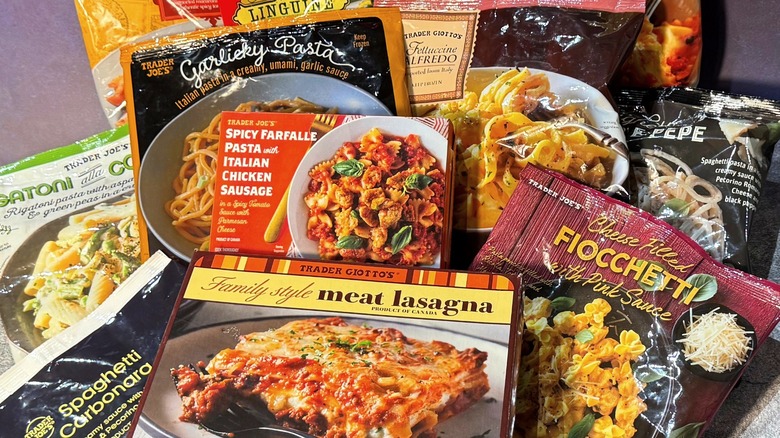
Most of the Italian items you see at Trader Joe’s fall under the private-label brand Trader Giotto’s, which the company introduced in 1977 as part of a broader strategy of international-themed labels — Trader José’s for Mexican, Trader Ming’s for Chinese, and so on. It’s a clever naming convention, and in the case of the Italian line, it masks something more substantive than you might expect from a grocery chain branding exercise.
Many of these products are made in Italy itself, produced by family-owned companies — particularly in northwestern Italy — that have been in the food business since the 1940s. One key supplier began by canning artichokes during Italy’s postwar economic boom in the 1960s, then evolved into sauces as export markets opened up. These aren’t giant anonymous factories.
They’re operations with generational roots, and they work directly with Trader Joe’s R&D teams to develop recipes. The jarred cacio e pepe sauce, for instance — something you’d almost never find in a jar in Italy itself, because Italians just make it fresh — was built through an ongoing back-and-forth between that supplier and Trader Joe’s, tested and reworked until it landed somewhere useful.
That said, let’s be honest about what this is. Most Trader Giotto’s items are private-label adaptations designed for American kitchens, not imports straight from someone’s nonna’s pantry. They’re affordable, often quite good, and occasionally excellent. But they’re not the same as what you’d find at a specialty importer or a regional Italian market. Knowing that distinction makes you a smarter shopper.
The History Behind Trader Giotto’s
The 1977 launch of Trader Giotto’s came at a moment when American interest in Italian food was growing but access to quality Italian ingredients was still limited outside of major cities. Trader Joe’s saw a gap: people wanted to cook with real flavors, and they wanted to do it affordably. The international private-label concept — give it a fun name, source it carefully, keep the price down — was their answer.
The Italian supplier relationship that developed from those early years is genuinely interesting. A family company in northwestern Italy that had started with canning local produce — artichokes, peppers, vegetables with oil and spices — eventually shifted toward sauces as the commercial market evolved. Notably, Italians didn’t really buy jarred pasta sauce at home until relatively recently; they made it themselves.
So this supplier was in some ways pioneering commercial pesto and pepperonata (peppers in tomato sauce) for export before those categories even existed in Italian supermarkets. That’s a strange and useful piece of context: the Trader Giotto’s sauce you’re buying may come from a company that helped invent the category.
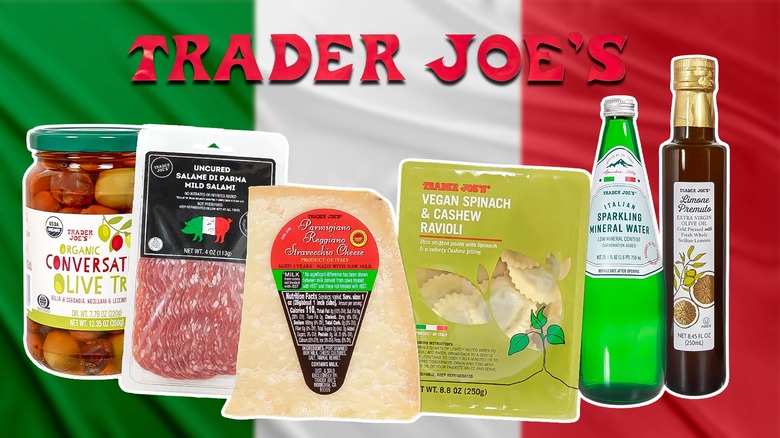
Over the decades, the line expanded to include refrigerated ravioli made in Italy, stuffed gnocchi, crackers, cold cuts, and pantry staples like Balsamic Vinegar of Modena PGI — that last one carrying a Protected Geographical Indication, which means it’s legally required to come from Modena and be produced according to specific methods. That’s a real certification, not a marketing label.
The best italian products Worth Knowing
Pasta Sauces — Trader Giotto’s Line
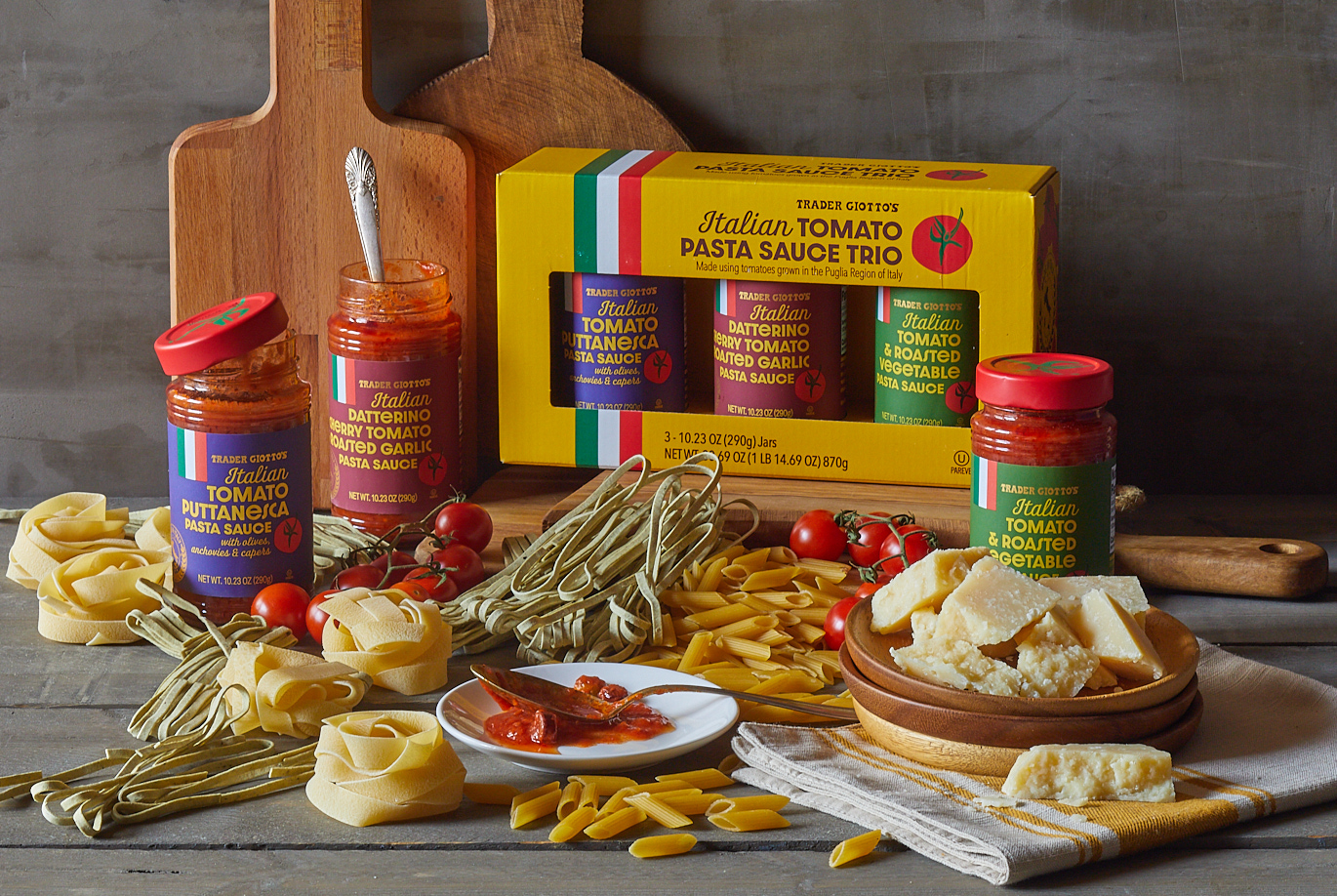
The jarred sauces are the heart of the Trader Giotto’s lineup, and they’re the category where I’ve done the most testing. At the Sacramento Italian market, I’ve compared several brands side by side with the Trader Joe’s versions — and the results are mixed in the best possible way. Some of the Trader Giotto’s sauces genuinely compete. Others are clearly grocery-store compromises. Here’s how I break it down:
- Rosatella Sauce — A tomato-cream hybrid that was developed collaboratively between Trader Joe’s and their Italian supplier. It’s richer than you’d expect at this price point, and it works well with penne or rigatoni. The one I keep in my kitchen for weeknight cooking when I want something done in fifteen minutes.
- Cacio e Pepe Jarred Sauce — Conceptually strange, practically useful. Cacio e pepe is a Roman pasta dish built on Pecorino Romano, black pepper, and pasta water — it’s almost entirely technique-dependent. A jarred version sounds like it shouldn’t work. But this one is decent as a base, especially if you add a bit of extra pepper and real Pecorino at the end. Think of it as a shortcut, not a substitute.
- Pesto — Serviceable. When I visited Liguria, the pesto I tasted there — made with small-leaf Genoese basil, young olive oil, and local pine nuts — was a completely different thing from any jarred product. That’s the honest truth. But the Trader Giotto’s pesto is better than most grocery-store versions and costs less. It works well mixed into pasta with a little pasta water to loosen it, or spread on toasted bread.
- Bolognese — Acceptable for a jar. Thin it with a splash of whole milk and simmer it for ten minutes with a pinch of nutmeg and it improves significantly. My grandmother Julia would have insisted on making it from scratch, but she’d understand using this on a Tuesday.
- Pepperonata — One of the underrated finds in the lineup. Peppers cooked down in tomato sauce, sharp and slightly sweet. Use it as a sauce for eggs, a condiment for grilled sausages, or straight from the jar on crusty bread. This is where the supplier’s roots in canning Italian vegetables show through most clearly.
Ravioli and Refrigerated Pasta
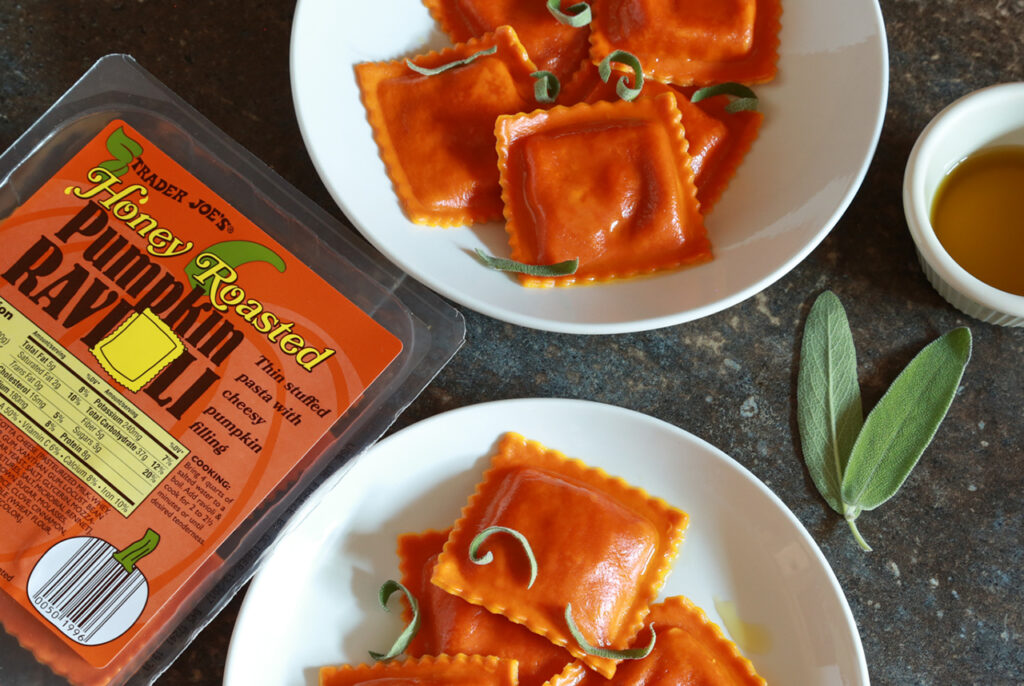
Look for the Italian flag on the packaging — Trader Joe’s ravioli made in Italy are genuinely different from the domestic alternatives. After testing four brands side by side, including two from specialty Italian importers, the Trader Joe’s Italian-made ravioli held up well on texture and filling quality. The pasta itself is thin enough to cook properly without going mushy, and the fillings — which rotate seasonally — tend to be straightforward and honest. No strange fillers, no aggressive preservatives.
Seasonal flavors are where this gets exciting. Trader Joe’s runs limited-run ravioli that show up around the holidays or in summer, and they’re worth grabbing when you see them. They disappear fast.
Outside-In Stuffed Gnocchi
This is one of the more creative items in the lineup. Traditional gnocchi — potato dumplings — get a twist here: the filling (either tomato or gorgonzola) is inside the gnocchi rather than on top as sauce. The gorgonzola version is particularly good, leaning into northern Italian flavors. Brown them in butter with fresh sage and you have something that tastes considerably more composed than a freezer product should.
Rosemary Sfogliette Crackers
The name nods to sfogliatelle, the layered pastry from Campania, though these are crackers rather than anything pastry-like. They’re thin, crisp, and aggressively rosemary-forward. They work well with cheese boards, with spreads, or just on their own. Worth keeping in the pantry if you entertain.
Balsamic Vinegar of Modena PGI
This is the one certified product in the lineup — Protected Geographical Indication means it comes from Modena and meets defined production standards. It’s not aged balsamic (which would be DOP and cost considerably more), but it’s legitimate Modena balsamic at a price that makes daily use reasonable. At the Sacramento Italian market, I’ve compared several brands at this price tier, and the Trader Joe’s version is competitive. Use it on salads, on strawberries, drizzled over burrata, or reduced into a glaze.
Citterio Cold Cuts
Citterio is an actual Italian brand, not a private label — it’s one of the larger Italian charcuterie producers, and finding it at Trader Joe’s is genuinely useful. The prosciutto and other cured meats under the Citterio name are reliable and considerably better than most deli-counter alternatives at similar price points.
How to Buy Trader Joe’s Italian Products Wisely
A few things to look for when you’re in the aisle:
- The Italian flag on refrigerated pasta means it was made in Italy. This matters for texture and ingredient quality.
- PGI or DOP labels indicate certified origin. The Balsamic Vinegar of Modena PGI is the clearest example in the Trader Joe’s Italian range.
- The Trader Giotto’s brand covers most sauces and pantry items. Not all are equally good — read the ingredient list. If the sauce leads with tomatoes and olive oil and has a short list after that, it’s a reasonable buy.
- Seasonal items don’t wait. If you see a ravioli or specialty item that looks interesting, buy it. They rotate without announcement and are often gone within weeks.
How to Use These Products Well
The biggest mistake people make with jarred Italian sauces — including the good ones — is using them straight from the jar without any intervention. Heat changes everything. Put a Trader Giotto’s sauce in a cold pan, add a glug of olive oil, let it come up to temperature slowly, and taste it. Then adjust. A pinch of chili flake, a few fresh basil leaves torn in at the end, a spoonful of butter — these are small moves that make a real difference.
For the gnocchi: don’t boil and sauce them. Pan-fry them in butter until the outside crisps slightly. The texture contrast is worth it.
For the pesto: thin it with pasta water, not extra olive oil. Pasta water is starchy and helps the sauce cling to the noodles in a way oil doesn’t.
For the balsamic vinegar: use restraint. A little goes a long way, and if you want more intensity without spending more money, reduce it in a small saucepan over low heat until it thickens slightly. It concentrates the flavor considerably.
How to Store Trader Joe’s Italian Products
- Jarred sauces: Unopened, they’re shelf-stable and will keep well past the printed date if stored in a cool, dark place. Once opened, refrigerate and use within five to seven days. Don’t leave them at room temperature after opening.
- Refrigerated ravioli and gnocchi: Use by the date on the package. These are not frozen items — they’re fresh pasta, and they don’t tolerate delays well. If you’re not using them within a day or two, freeze them immediately after purchase.
- Pesto: Opened jars oxidize quickly. Press a piece of plastic wrap directly onto the surface of the pesto before putting the lid back on — this slows browning significantly. Use within a week.
- Balsamic vinegar: Store at room temperature, away from heat and light. It doesn’t need refrigeration and will keep for years.
- Crackers: Once opened, seal them in an airtight container or bag. They go stale quickly in humid environments, especially in California summers.
Common Mistakes to Avoid
Assuming All Trader Giotto’s Products Are Equal
They’re not. Some items in the lineup are genuinely good and worth repeated buying. Others are fine but not particularly special. Treat each product on its own merits rather than assuming the brand name is a consistent indicator of quality across categories.
Skipping the Ingredient Check
Private-label products don’t always have consistent ingredients from year to year. Trader Joe’s reformulates things periodically. Check the ingredient list each time, especially if you have dietary concerns or if you’ve noticed a product tasting different than it used to.
Overcooking the Fresh Pasta
The Italian-made ravioli and gnocchi cook faster than you might expect. Follow the package time, but start tasting thirty seconds early. Overcooked fresh pasta loses its texture quickly and doesn’t recover.
Treating the Jar as a Finished Product
As I said above — and it bears repeating — these sauces are starting points. My grandmother Julia treated every sauce as something that needed her to finish it. That instinct is right. Give the jar a little help and it’ll give you something worth eating.
The Bottom Line
As José Villalobos, I’ll say this plainly: the Trader Joe’s Italian lineup is worth your attention, especially given what it costs. It’s not a substitute for a well-stocked Italian pantry sourced from specialty importers, and it’s definitely not the same as eating in Calabria or Sardinia or sitting at my grandmother Julia’s table in Valparaíso. But it’s honest food made with real suppliers, often in Italy, at prices that make regular cooking with decent ingredients actually possible.
The Rosatella sauce, the Italian-made ravioli, the Balsamic Vinegar of Modena PGI, the stuffed gnocchi — these are products I return to. They belong in a practical, flavor-forward kitchen.
Shop with some knowledge, cook with some intention, and the Trader Giotto’s label will rarely let you down.
Back to the full Italian pantry guide.
Frequently Asked Questions
Are Trader Giotto’s products actually made in Italy?
Many are, but not all. Some Trader Giotto’s items come from family-owned suppliers in northwestern Italy that have been operating since the 1940s. However, most products are private-label adaptations designed specifically for American kitchens rather than direct imports. It’s worth checking individual labels to see where each item is produced.
How do Trader Joe’s Italian products compare to specialty Italian markets?
They’re more affordable and convenient, but they’re not identical to what you’d find at specialty importers. Trader Giotto’s focuses on accessibility and developing recipes that work for American cooks. If you’re looking for authentic regional Italian products or hard-to-find ingredients, a specialty market will have more options, though you’ll pay more.
Should I trust jarred Italian sauces from Trader Joe’s over name brands?
It depends on the sauce and what you’re making. Some Trader Giotto’s sauces are solid—they’re developed through collaboration with Italian suppliers. Others might work better in specific dishes than straight from the jar. I’d recommend tasting a few to see which ones fit your cooking style before committing to them regularly.
Why does Trader Joe’s make cacio e pepe in a jar when Italians don’t?
Because American home cooks wanted the convenience, and it’s harder to source fresh guanciale and Pecorino Romano everywhere. Trader Joe’s partnered with suppliers to create a jarred version that works as a starting point or shortcut. It’s not traditional, but it solves a real problem for people who want that flavor without making it from scratch.
What’s the best way to know if a Trader Joe’s Italian product is worth buying?
Start by checking the origin on the label and the ingredient list—shorter and simpler is usually better. If it’s made in Italy by an established producer, that’s a good sign. Try one jar or package first rather than bulk buying. Trust your taste over packaging, and be honest about whether it fits how you actually cook.
Written by José Villalobos
José Villalobos is a food writer and the founder of Calitalia Food. He grew up in Valparaíso, Chile, where his grandmother Julia cooked Italian food daily from memory and instinct. Based in Sacramento, California, he visits local Italian markets weekly and writes about ingredients, sauces, and regional food culture with the kind of detail that comes from years of sourcing, testing, and eating. Every product he recommends, he has personally bought and tested.