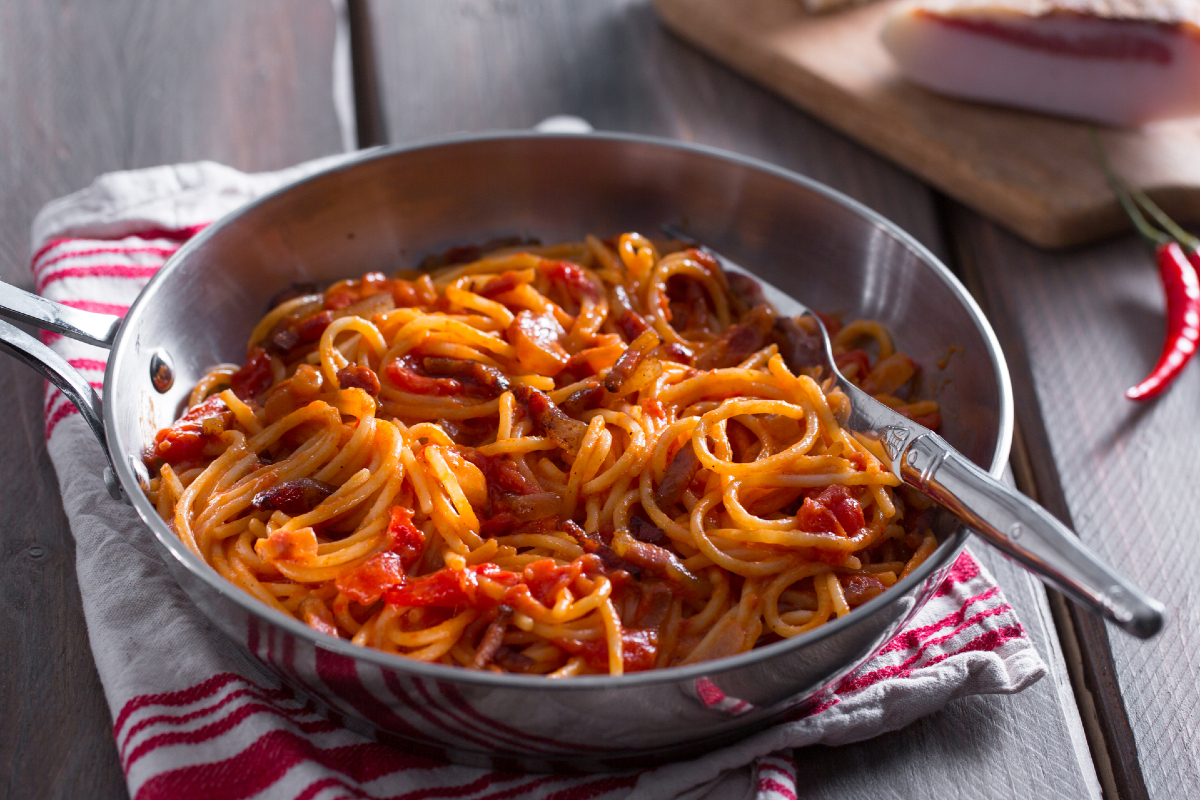
If you want to make a real amatriciana recipe, forget everything you’ve seen on food blogs with onions, garlic, pancetta, and a splash of heavy cream. That version doesn’t exist in Amatrice. It barely exists in Rome.
The original is simpler, older, and far more interesting — built on cured pork cheek, sheep’s milk cheese, crushed tomatoes, and a little heat from dried chili. That’s it. That’s the whole dish. And when you get it right, it’s one of the greatest pasta sauces ever made.
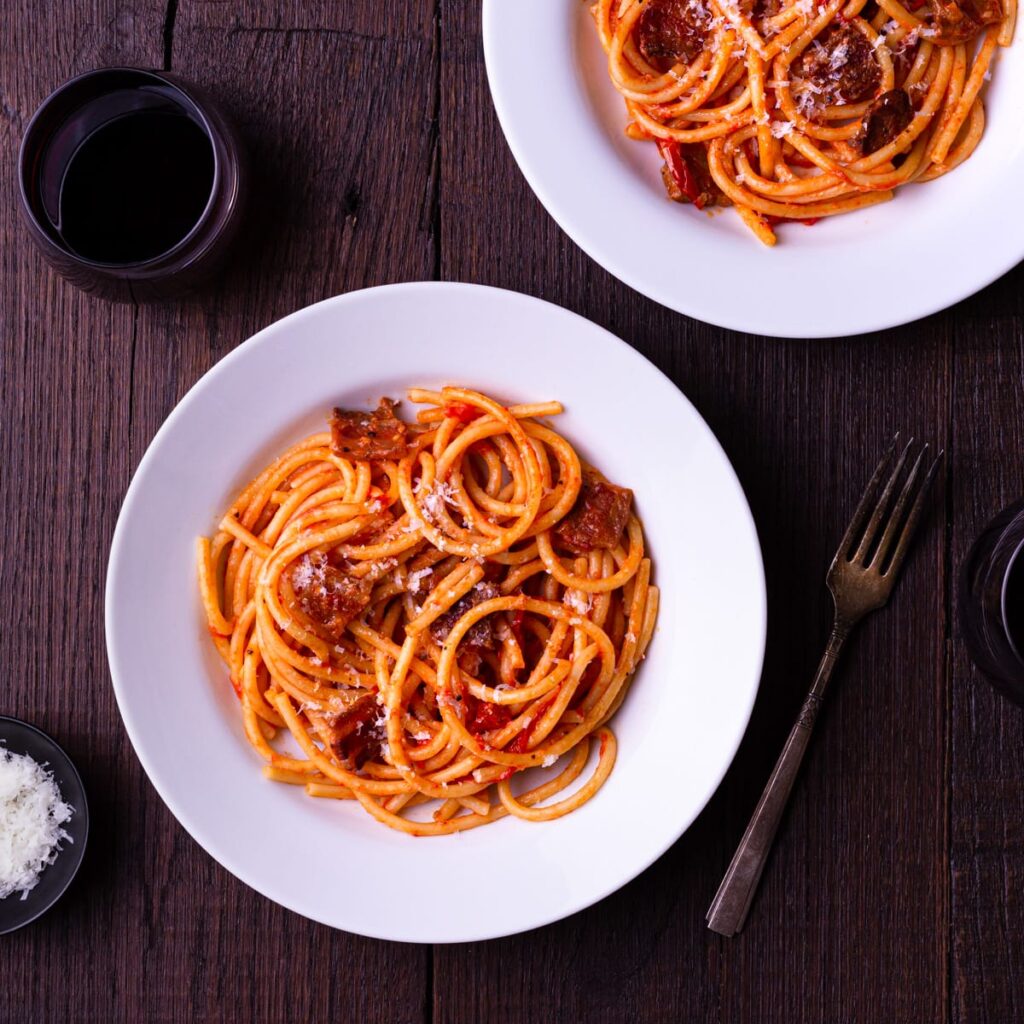
I’m José Villalobos, and I’ve been writing about Italian food from Sacramento for years, shaped by my grandmother Julia’s kitchen in Valparaíso, where she cooked Italian food the way her neighbors taught her — without shortcuts, without substitutions. This dish is one I keep coming back to, testing and refining. Let me show you what I’ve learned.
What Is Amatriciana?
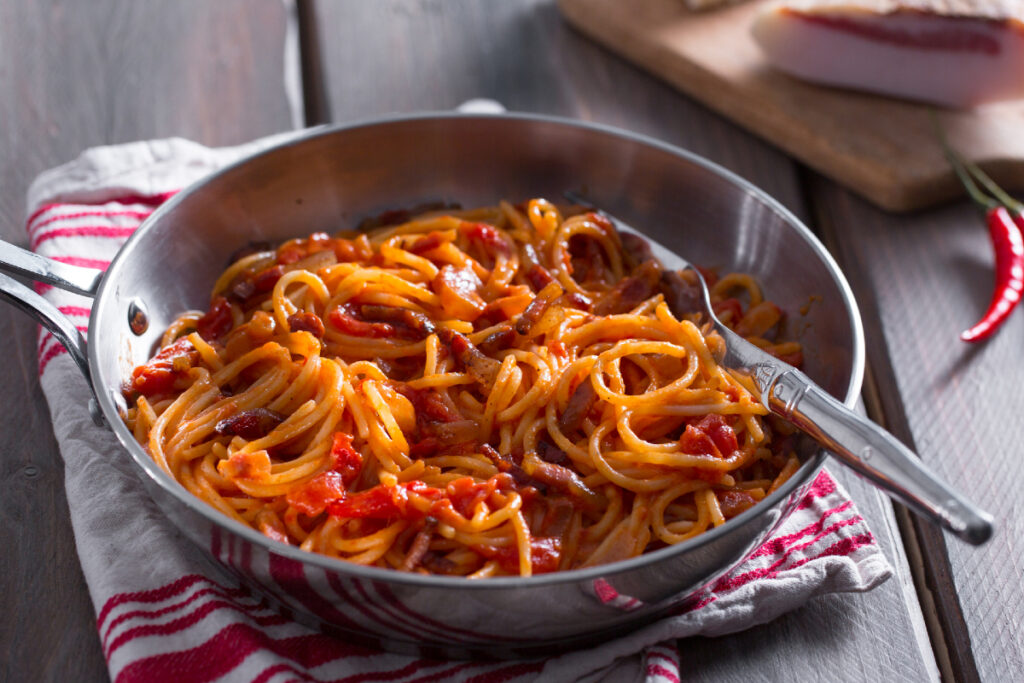
Pasta all’amatriciana is a cured pork and tomato pasta sauce that originated in Amatrice, a small mountain town in the province of Rieti, sitting right on the old border between Lazio and Abruzzo. Shepherds made it. They needed food that could survive days on the road without refrigeration — cured guanciale, dried pasta, aged pecorino romano, black pepper. That was the original formula, known as pasta alla gricia or amatriciana bianca (white amatriciana). No tomatoes yet. Just fat, cheese, and pepper.
The tomatoes came later, once New World ingredients made their way into Italian cooking in the 17th and 18th centuries. By the late 1700s, the red version was documented — some food historians point to Roman cook Francesco Leonardi’s 1790 cookbook L’Apicio Moderno as an early written record. Either way, the red sauce stuck, and the dish we know today was born.
You’ll also hear it called matriciana, particularly in Rome, where the dropped vowel reflects the Roman dialect. Both names refer to the same dish — though Romans and Amatriciani have been arguing about the correct version for at least two centuries, and neither side is planning to stop.
The History Behind the Amatriciana Recipe
Shepherds, Saddlebags, and Non-Perishables
This dish was never fancy. In the 15th and 16th centuries, shepherds from the Apennine mountains around Amatrice would travel for weeks at a time with their flocks. They needed food that wouldn’t rot. Guanciale — cured pork cheek — kept well. Dried pasta kept well. Aged pecorino romano kept well. Black pepper preserved things and added heat. These weren’t luxury ingredients. They were practical ones, assembled into a meal that could be cooked over an open fire at the end of a long day.
That original version, gricia, is still eaten today. It’s essentially amatriciana without the tomatoes — and honestly, it’s extraordinary. My grandmother Julia made something close to it, a white pasta with cured pork and cheese, which she learned from Italian immigrants who had settled in Valparaíso. She didn’t call it gricia. She just called it pasta con guanciale. But the bones were the same.
The Tomato Arrives
Tomatoes reached Italy from the Americas in the late 16th century, but it took another hundred years or so before anyone thought to put them in pasta. By the 1600s and 1700s, they had found their way into the amatriciana formula. The dish transformed. The fat from the guanciale gave the tomato sauce body and richness. The pecorino sharpened it. The chili cut through everything. It became the red sauce version that most people know today.
From the Mountains to Rome
By the early 19th century, people from Amatrice — amatriciani — had migrated to Rome in large numbers, and many of them opened inns and taverns in the Ponte district near the Vatican. That neighborhood was known informally as de’ Matriciani because of them. They brought the dish with them, and Romans adopted it as their own. Bucatini — the thick, hollow pasta that Rome loves — became the vehicle of choice in the city, better at holding sauce than the spaghetti alla chitarra traditional to Amatrice itself.
Today, amatriciana is claimed by both Rome and Amatrice. Rome eats more of it. Amatrice makes it better. That’s the honest answer, and anyone who’s been to both places knows it.
The Ingredients — No Compromises Here
Guanciale
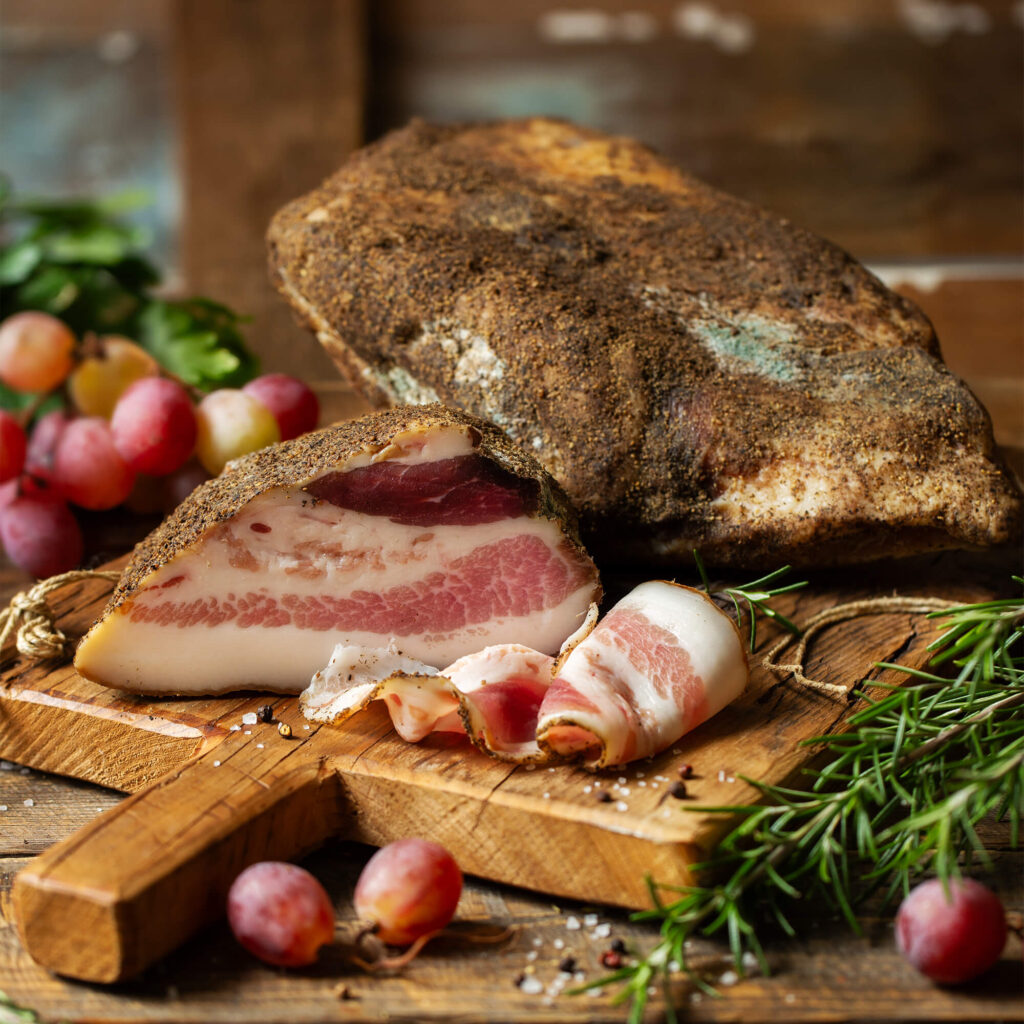
This is non-negotiable. Guanciale is cured pork cheek, not pancetta, not bacon, not prosciutto. The fat content is higher and differently distributed than in pancetta, and when it renders, it produces a soft, silky, slightly sweet fat that is unlike anything else. If you use pancetta, you’ll get a decent pasta. If you use bacon, you’ll get something that tastes like American breakfast. Neither is amatriciana.
At the Sacramento Italian market, I’ve compared several brands of guanciale side by side — domestic and imported. The imported Italian guanciale from Lazio or Abruzzo tends to be firmer, more intensely flavored, and better cured. Some domestic producers are getting close, but the real thing is still worth seeking out if you can find it. The one I keep in my kitchen is an Italian import from a Lazio producer — well-aged, with a thick layer of seasoned fat and a clean pork flavor that doesn’t turn acrid when rendered.
Pecorino Romano
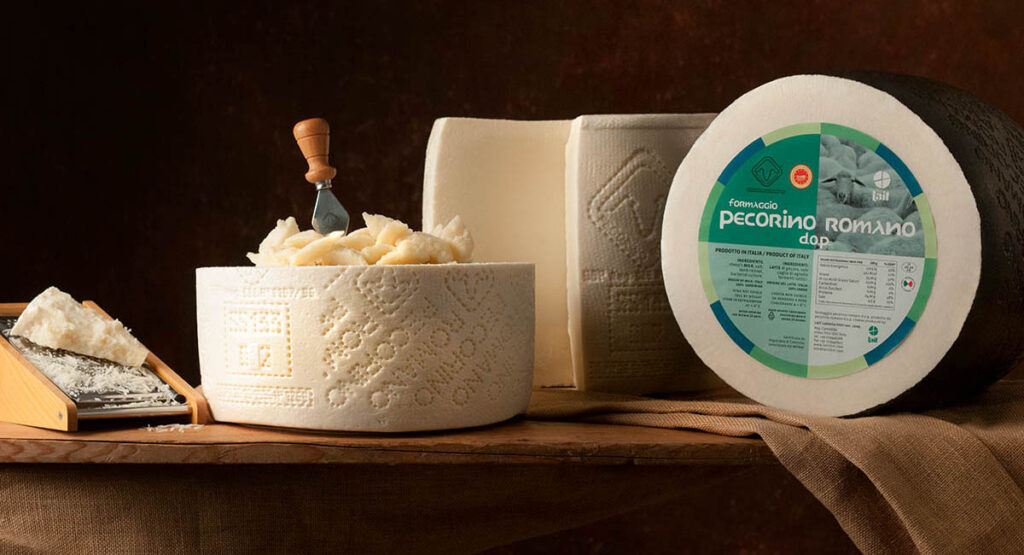
Sharp, salty, made from sheep’s milk. Pecorino romano is the correct cheese here, not parmigiano-reggiano. Some Roman versions blend the two, and that’s fine — but in Amatrice, it’s pecorino only. The saltiness of pecorino works with the guanciale and the acidity of the tomatoes in a way that parmigiano simply doesn’t replicate. Buy it in a block and grate it yourself. Pre-grated pecorino is almost always too dry and won’t melt into the sauce properly.
After testing four brands side by side, the difference between fresh-grated pecorino romano and the shelf-stable pre-grated variety is dramatic enough that I’d call them different ingredients. Fresh is mandatory.
Tomatoes
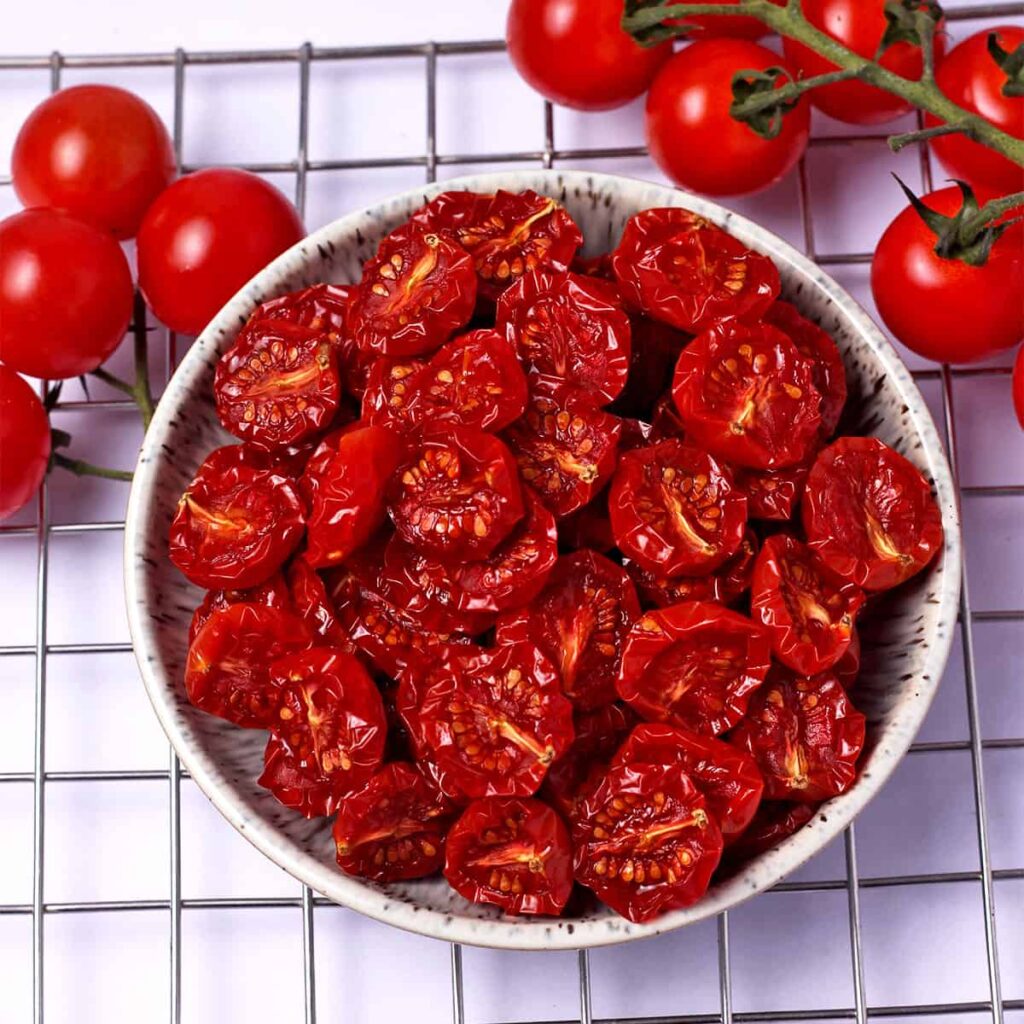
Use whole peeled tomatoes and crush them yourself. San Marzano tomatoes from Campania are the standard recommendation — they’re less acidic and meatier than most canned alternatives. When I visited Sicily, the canned tomatoes I tasted were extraordinary, local and bright, and they reminded me of how much the quality of tomatoes matters in a sauce this simple. There’s no hiding behind complexity here. Whatever tomato you use will be front and center.
Fresh tomatoes in season work too, but only if they’re genuinely ripe. Out-of-season fresh tomatoes are worse than good canned ones. Don’t be heroic about this.
Peperoncino

Dried red chili, whole or crushed. This is a key flavor in the Amatrice version — not optional, not an afterthought. It brings warmth that balances the fat of the guanciale. Use it with some restraint; the dish should have heat, not burn.
Pasta
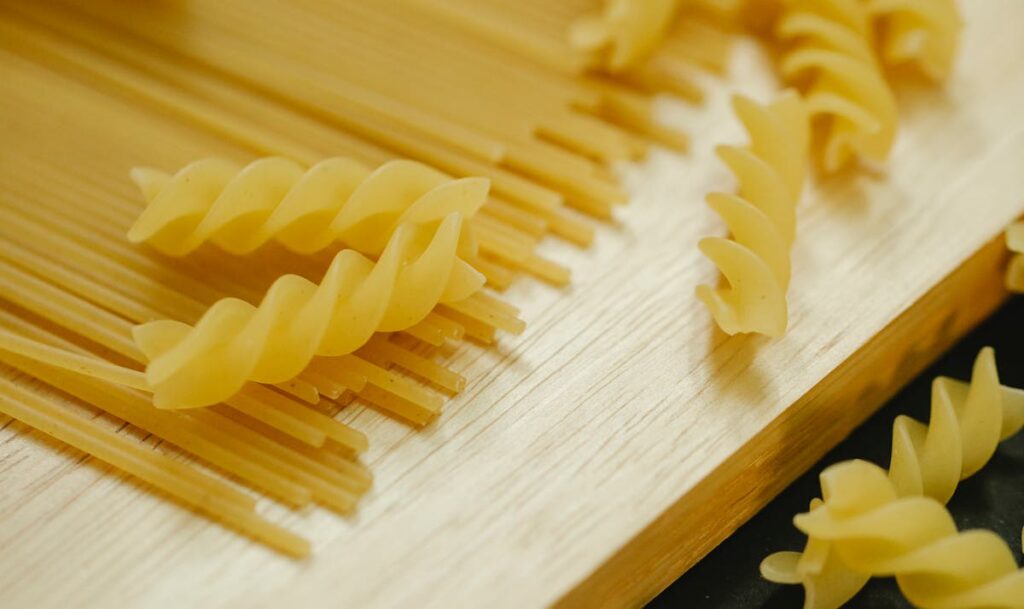
In Amatrice, the traditional choice is spaghetti alla chitarra — semolina pasta cut on a guitar-like tool strung with steel wires, which gives the pasta a slightly square cross-section and a rough surface that grips sauce beautifully. In Rome, bucatini is the default. Bucatini is thick and hollow, like a drinking straw, and it holds sauce in a way that regular spaghetti can’t quite manage.
Both are correct, depending on whose version you’re making. Avoid thin pasta like angel hair or linguine. This sauce needs something with structure.
White Wine (Optional)

The Amatrice version sometimes calls for a splash of dry white wine to deglaze the pan after rendering the guanciale. It lifts the fond, adds a little acidity, and rounds out the fat. Not everyone uses it, but I do. A simple dry white — nothing oaky, nothing sweet.
The Amatriciana Recipe, Step by Step
Ingredients (Serves 4)
- 400g (14 oz) bucatini or spaghetti alla chitarra
- 150g (5 oz) guanciale, cut into short strips or small cubes
- 400g (14 oz) whole peeled San Marzano tomatoes, crushed by hand
- 60g (2 oz) pecorino romano, freshly grated, plus more to finish
- 1–2 dried peperoncino chilies (or a pinch of crushed red pepper flakes)
- 60ml (¼ cup) dry white wine (optional)
- Freshly ground black pepper
- Salt for pasta water
Method
Step 1: Render the guanciale. Place the guanciale in a cold pan — no oil — and set it over medium-low heat. Let it render slowly. You want the fat to melt out gradually, the outside to turn golden and slightly crisp, while the inside stays a little soft. This takes 8 to 10 minutes. Don’t rush it with high heat; you’ll burn the exterior before the fat releases. Once the guanciale is done, remove the pieces with a slotted spoon and set aside. Leave the fat in the pan.
Step 2: Add the chili. Drop the peperoncino into the hot fat and let it sizzle for about 30 seconds. If you’re using wine, add it now and let it bubble and reduce for a minute, scraping up any browned bits from the pan.
Step 3: Build the sauce. Add the crushed tomatoes. Stir, season lightly with salt (remember that both the guanciale and the pecorino are very salty), and let the sauce simmer over medium heat for 15 to 20 minutes, until it thickens and the tomato loses its raw edge. The fat from the guanciale will emulsify into the sauce as it cooks, giving it a silky, cohesive texture.
Step 4: Cook the pasta. Meanwhile, bring a large pot of generously salted water to a boil. Cook the bucatini until it’s just under al dente — about a minute less than the package suggests. It’ll finish in the sauce.
Step 5: Bring it together. Add the cooked guanciale back to the sauce. Using tongs, transfer the pasta directly from the water to the pan — a little pasta water comes with it, which is good. Toss everything together over medium heat for a minute or two. The starch in the pasta water helps bind the sauce to the pasta.
Step 6: Finish with pecorino. Take the pan off the heat before adding the pecorino. This is important. If the pan is too hot when you add the cheese, it will seize and clump rather than melt smoothly into the sauce. Grate the pecorino over the pasta, toss well, and add a generous amount of freshly ground black pepper. Serve immediately in warm bowls with extra pecorino on the side.
How to Buy the Right Ingredients
Guanciale can be hard to find outside of cities with strong Italian food communities. Specialty Italian delis, good butcher shops, and imported food markets are your best bet. Ask specifically for guanciale from Lazio or Abruzzo if the shop carries imported products. Some American producers — particularly in the Northeast and California — are now making respectable guanciale. Avoid anything that looks like it’s been over-smoked or is suspiciously pale; proper guanciale should have a firm white fat cap with visible seasoning on the exterior.
For pecorino romano, buy it whole or in large wedges and grate it at home. Any Italian grocery with a decent cheese counter should carry it. If they only have the green shaker can, go somewhere else.
For pasta, look for bronze-die extruded bucatini from Italian producers — the rough surface catches sauce far better than the smooth, industrial versions. Brands like De Cecco, Rustichella d’Abruzzo, or Benedetto Cavalieri are reliable and widely available.
How to Store Leftovers
Amatriciana reheats reasonably well, though pasta is always best the moment it’s made. Store leftovers in an airtight container in the refrigerator for up to two days. Reheat gently in a pan with a splash of water to loosen the sauce — not in a microwave if you can help it, which tends to make the pasta rubbery and the sauce greasy. The sauce itself, without the pasta, keeps for three to four days refrigerated and freezes well for up to two months.
Common Mistakes to Avoid
Using Pancetta or Bacon
Already covered, but worth repeating. Pancetta is belly, not cheek. The fat renders differently and doesn’t produce the same sauce. Bacon is smoked, which introduces a completely foreign flavor. If you can’t find guanciale, make a different pasta. This one needs the right pork.
Adding Onion or Garlic
The traditional Amatrice recipe has neither. Onions and garlic are Roman additions that some cooks use, and they’re not offensive exactly, but they change the character of the dish significantly. The original is cleaner and more focused without them. Try it pure first.
Adding the Cheese While the Pan Is Hot
This is the most common technical mistake. Pecorino romano has less moisture than parmigiano, which makes it even more prone to clumping when it hits a hot surface. Always pull the pan off the heat, let it settle for 30 seconds, then add the cheese and toss quickly. If it clumps anyway, a tiny splash of pasta water and more tossing will usually bring it back.
Overcooking the Guanciale
You want crisp-edged guanciale that still has some chew to it, not burned pork crackling. Medium-low heat, patience, and paying attention. Once it starts to brown, it can go from perfect to overdone quickly.
Underseasoning the Pasta Water
Your pasta water should taste noticeably salty — like light seawater. The pasta absorbs salt as it cooks, which means properly seasoned pasta needs less salt in the final dish. Given how salty guanciale and pecorino already are, you want the pasta itself to be well-seasoned from the start so everything comes into balance.
Serving Amatriciana
This is a primo — a first course, not a main. In Italy, you’d follow it with something lighter. Serve it with extra grated pecorino and a grind of black pepper at the table. The wine pairing, if you want one, should be something with backbone — a Cesanese del Piglio from Lazio is the traditional regional match, earthy and tannic enough to stand up to the richness of the guanciale. A Montepulciano d’Abruzzo works beautifully too, given the dish’s connections to that region.
My grandmother Julia served pasta like this in silence, which meant she wanted everyone to focus on the food. It’s that kind of dish. Nothing competing with it on the plate, nothing elaborate on the side. Just the pasta, the sauce, the cheese, and the pepper. That’s the whole point.
José Villalobos writes about Italian food and cooking traditions at calitaliafood.com from Sacramento, California.
Back to the full Italian pasta sauces guide
Frequently Asked Questions
Why is guanciale so hard to find, and can I really not substitute it with pancetta or bacon?
Guanciale has a specific fat composition and flavor profile that pancetta and bacon simply don’t replicate. The pork cheek renders differently, creating a silkier sauce. I’ve tested substitutions countless times, and they always fall short. If you can’t find guanciale, I’d rather see you make pasta alla gricia first and understand the base before adding tomatoes.
Is pecorino romano really the only cheese that works, or can I use parmesan?
Pecorino romano has the sharpness and saltiness the dish needs. Parmesan is milder and won’t stand up to the guanciale’s richness. The sheep’s milk cheese also has a different texture when it melts into the hot pasta. They’re not interchangeable. If pecorino’s too strong for your taste, that’s a palate preference, not a recipe problem.
How do I know when my guanciale is rendered enough without overcooking it?
You want the fat to turn mostly translucent and the meat to crisp at the edges, but it should still have some give when you bite it. The whole process takes about 5-7 minutes over medium heat. If it’s hard and brittle, you’ve gone too far. Watch for the fat pooling in the pan — that’s your cue you’re close.
What’s the actual difference between amatriciana and gricia, and why should I care?
Gricia is the shepherd’s original — guanciale, cheese, black pepper, pasta. No tomatoes. It’s technically the parent dish. Amatriciana adds tomatoes, which came to Italy centuries later. Gricia teaches you how the core ingredients should taste together. Many Romans still prefer it. Try both and you’ll understand the evolution better.
Is dried red chili required, or can I use fresh chili or chili flakes instead?
Dried chili gives a different heat profile than fresh — more subtle, less sharp. Chili flakes work but can be grittier and sometimes overpowering. I prefer whole dried pepperoncini or peperoncini, crushed slightly. The heat should warm the sauce, not dominate it. Start with a small piece and adjust to your tolerance.
Written by José Villalobos
José Villalobos is a food writer and the founder of Calitalia Food. He grew up in Valparaíso, Chile, where his grandmother Julia cooked Italian food daily from memory and instinct. Based in Sacramento, California, he visits local Italian markets weekly and writes about ingredients, sauces, and regional food culture with the kind of detail that comes from years of sourcing, testing, and eating. Every product he recommends, he has personally bought and tested.