Why Al Dente Is Not Just a Preference
In Italian cooking, al dente is not a personal preference. It is a principle.
The phrase means “to the tooth,” describing pasta that is tender on the outside while still offering slight resistance when bitten. Properly cooked al dente pasta is never crunchy, chalky, or soft all the way through. It holds its structure, its texture, and its purpose on the plate.
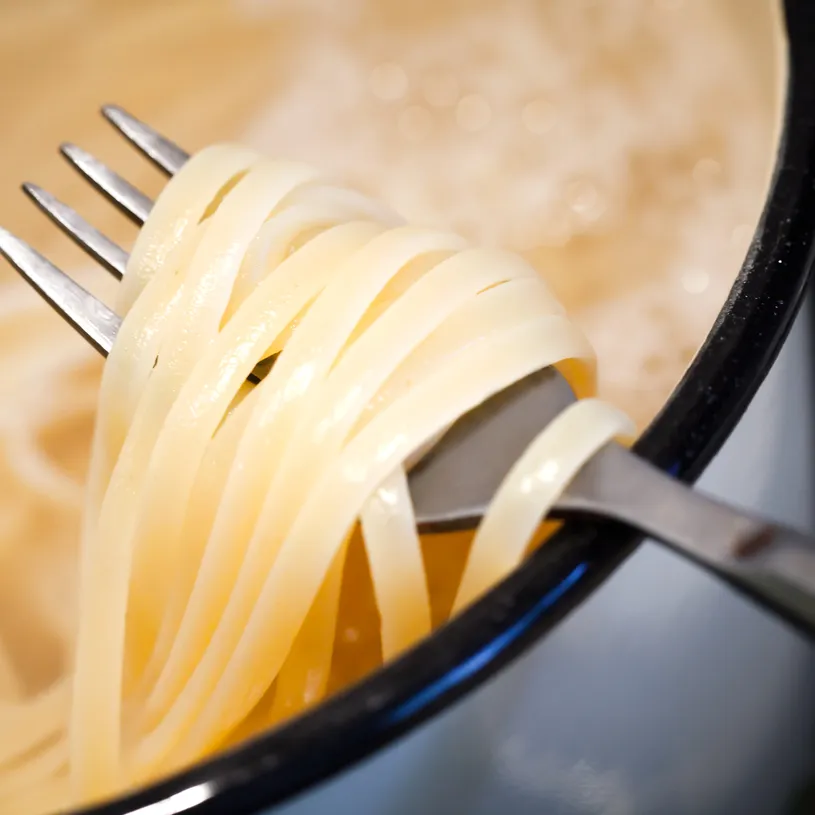
In places like Naples and Bologna, pasta texture is treated as seriously as sauce or ingredients. Cook it too long, and it turns lifeless. Cook it too little, and it is raw.
This guide explains al dente from a scientific and practical point of view, so you can cook pasta correctly every time.
What Does Al Dente Mean?
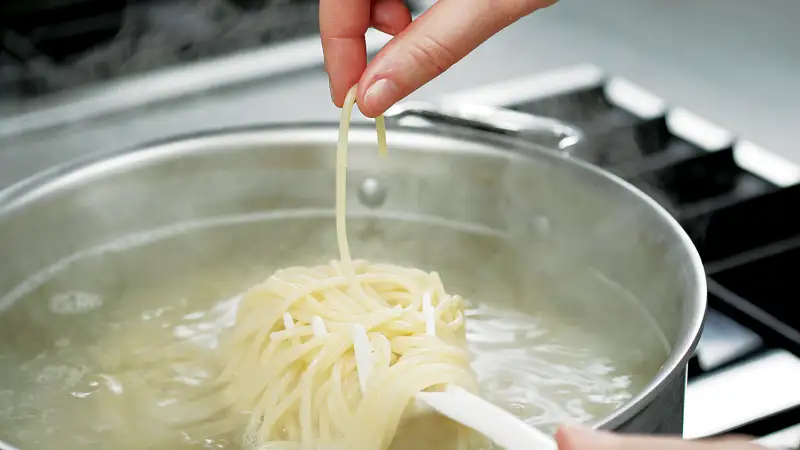
Al dente pasta is cooked until the outer layer is soft, but the center still offers slight resistance when bitten. This texture improves sauce adhesion, preserves pasta structure, and slows digestion compared to fully soft pasta.
Al dente pasta is:
At the Sacramento Italian market, I buy the ingredients that make these sauces authentic.
- Chewy, not mushy
- Structured, not soggy
- Fully cooked, not raw
A properly cooked noodle should bend easily but resist slightly at the center when bitten.
Why Italians Cook Pasta Al Dente
Al dente pasta is preferred because it:
- Holds sauce better
- Keeps its shape on the plate
- Does not break apart when mixed or reheated
- Digests more slowly
According to research published in the American Society for Nutrition, pasta cooked al dente produces a lower glycemic response than fully soft pasta, meaning it causes a slower rise in blood sugar. This is one reason pasta remains a staple in traditional Italian diets.
The Science Behind Al Dente Texture
When pasta boils, two things happen at different speeds.
- Starches on the outside absorb water and gelatinize first
- The inner core hydrates more slowly, depending on thickness and shape
Al dente occurs when:
- The exterior is fully hydrated and tender
- The core is just cooked enough to resist the bite
Overcooking causes excessive starch release and weakens the gluten network that gives pasta its structure. This is what turns pasta mushy.
How to Tell If Pasta Is Al Dente
The Bite Test
This is the most reliable method.
- Remove one piece of pasta from the pot
- Bite straight through the center
- Look for a faint white dot or line in the middle
A tiny white core means the pasta is al dente.
The Pinch Test for Short Pasta
- Press a piece of penne or rigatoni gently between your fingers
- It should give slightly without collapsing
Do Not Rely on Time Alone
Cooking time is a guideline, not a rule. Start testing pasta two minutes before the package time.
Boiling Time by Pasta Type
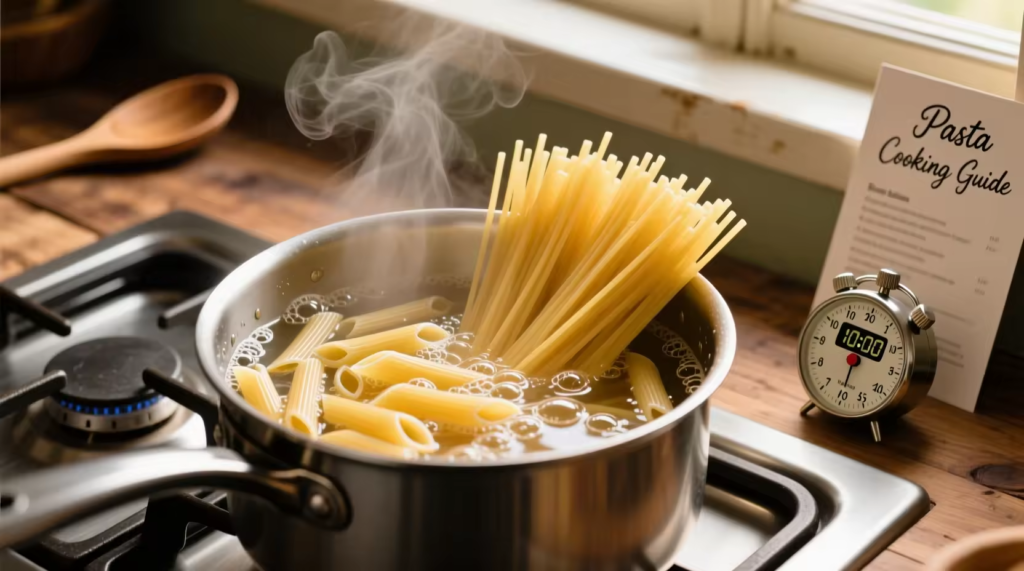
Cooking times vary widely by shape and format.
Dried Pasta Cooking Times
- Spaghetti: 8 to 10 minutes
- Penne: 10 to 12 minutes
- Rigatoni: 12 to 14 minutes
- Fusilli: 9 to 11 minutes
- Linguine: 8 to 10 minutes
Fresh Pasta Cooking Times
- Fresh egg pasta ribbons: 2 to 4 minutes
- Fresh stuffed pasta: 3 to 5 minutes
Stuffed Pasta Cooking Times
- Ravioli: 3 to 5 minutes
- Tortellini: 2 to 4 minutes
Always taste before draining.
Pasta Type and Cooking Style
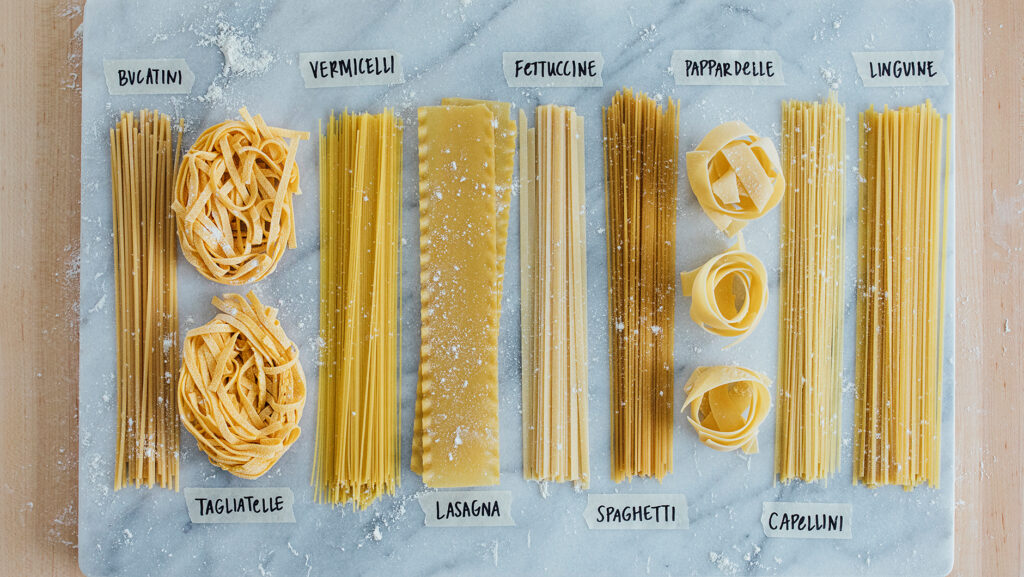
Different pasta types behave differently in boiling water.
- Fresh pasta cooks faster because it is already hydrated
- Stuffed pasta must be fully cooked without bursting
- Thick shapes require more time and frequent testing
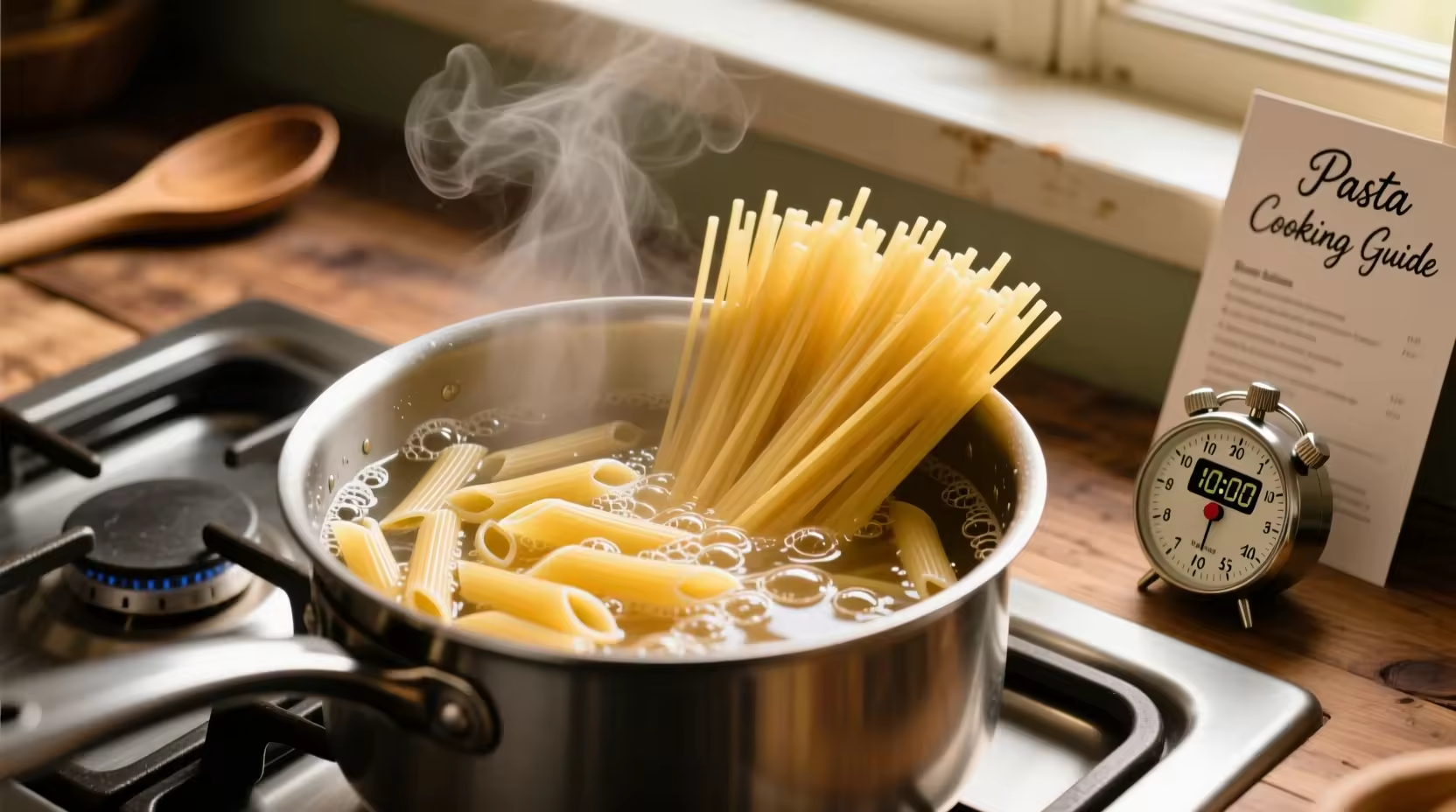
- Dried pasta requires a rolling boil for even cooking
Always remember:
- Use plenty of water
- Salt generously at about 10 grams per liter
- Do not add oil to the water
- Stir during the first minute
The Role of Starch and Gluten in Pasta Texture
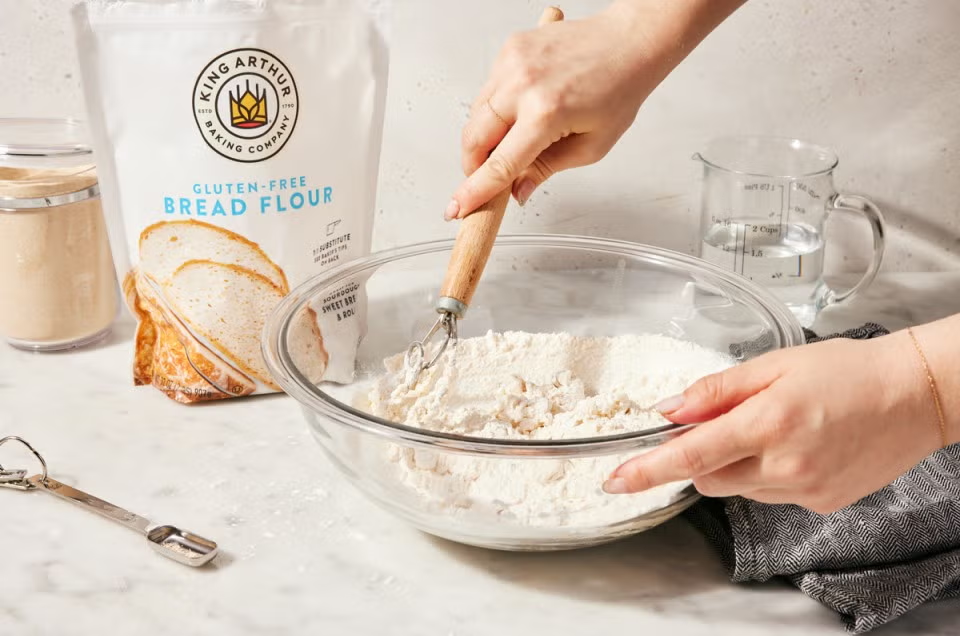
Pasta structure depends on starch and gluten working together.
- Starch swells and forms a soft outer layer
- Gluten provides elasticity and chew
When pasta overcooks, the gluten network weakens and starch leaks out. This causes pasta to lose its bite and fall apart.
Adjusting for Sauce Integration
For better sauce adhesion, remove pasta slightly early.
- Pull pasta about one minute before al dente
- Finish cooking it directly in the sauce
- Add a splash of starchy pasta water
This allows starch and fat to emulsify, creating a creamy and cohesive dish without cream.
Pasta Cooking Tips Used by Italian Chefs
Use a Large Pot
Pasta needs space to move so it cooks evenly and releases starch properly.
Stir Early
Stirring in the first minute prevents sticking and uneven hydration.
Salt After the Water Boils
Salt seasons the pasta itself and improves flavor from the inside out.
Never Rinse Pasta
Rinsing removes surface starch that helps the sauce cling to the noodles.
Why Al Dente Is a Cooking Philosophy
Al dente cooking respects the pasta, the sauce, and the people eating it. It is not about perfectionism. It is about intention.
Once you learn to taste for doneness instead of watching the clock, pasta becomes more consistent, more flavorful, and more satisfying.
The next time the pot is boiling, trust your senses. Taste early. Taste often. Let your teeth decide.
Written by José Villalobos — Food writer and founder of Calitalia Food. Based in Sacramento, CA. Read more →