If you’ve ever asked yourself what is gorgonzola, you’re not alone — and you’re in good company. It’s one of those cheeses that inspires loyalty bordering on obsession.

I’m José Villalobos, and I grew up watching my grandmother Julia fold strong, pungent cheeses into sauces in her kitchen in Valparaíso, Chile, where Italian immigrants had shaped the local food culture for generations. She never called it gorgonzola by name, but that funky, creamy blue cheese she crumbled over polenta? That was the spirit of it.
Now, living in Sacramento and writing about Italian food full time, I’ve made it my business to understand this cheese properly — from its 9th-century origins in Lombardy to the wheels sitting in the refrigerated case at my local Italian market right now.
Here’s everything you need to know.
What Is Gorgonzola, Exactly?
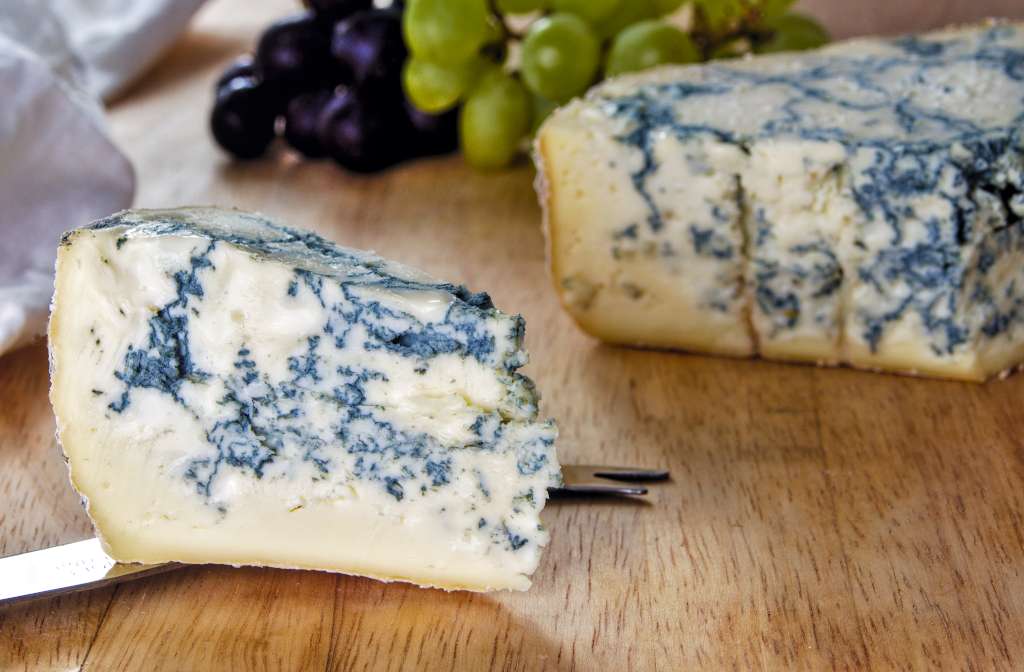
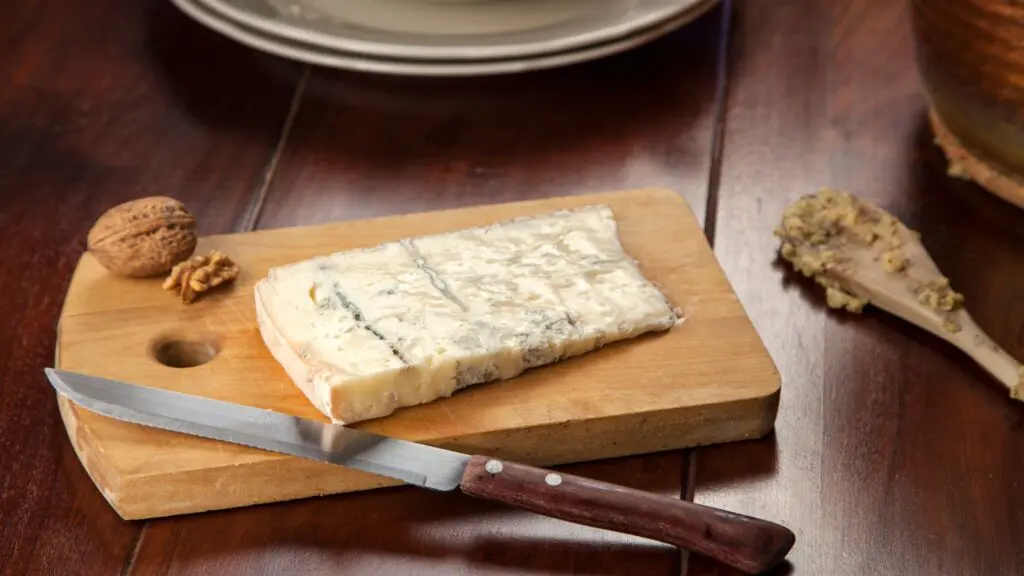
Gorgonzola is an Italian blue cheese — called formaggio erborinato in Italian, which loosely translates to “cheese with herbs,” though the “herbs” in question are actually the greenish-blue veins of Penicillium mold running through the paste. It’s made from unskimmed cow’s milk, which gives it a richness that sets it apart from other blue cheeses made with sheep’s or goat’s milk. That fat content is partly why it melts so beautifully and spreads so willingly.
What makes gorgonzola legally gorgonzola is its Protected Designation of Origin status — DOP in Italian, PDO in English. That means it can only be produced in specific zones of two northern Italian regions: Lombardy and Piedmont. Only 29 certified dairies in the world have the right to put that name on a wheel. Everything else is just blue cheese.
There are two main styles:
- Gorgonzola Dolce — aged 50 to 60 days, soft, creamy, spreadable, and relatively mild. Dolce means sweet or gentle here, not sugary.
- Gorgonzola Piccante — aged 80 to 90 days or longer, firmer, crumbly, and significantly more pungent. Piccante means sharp or spicy, and this version earns that name.
Both are extraordinary. They just serve different purposes at the table.
A History That Starts With a Distracted Cheesemaker
The Origin Story
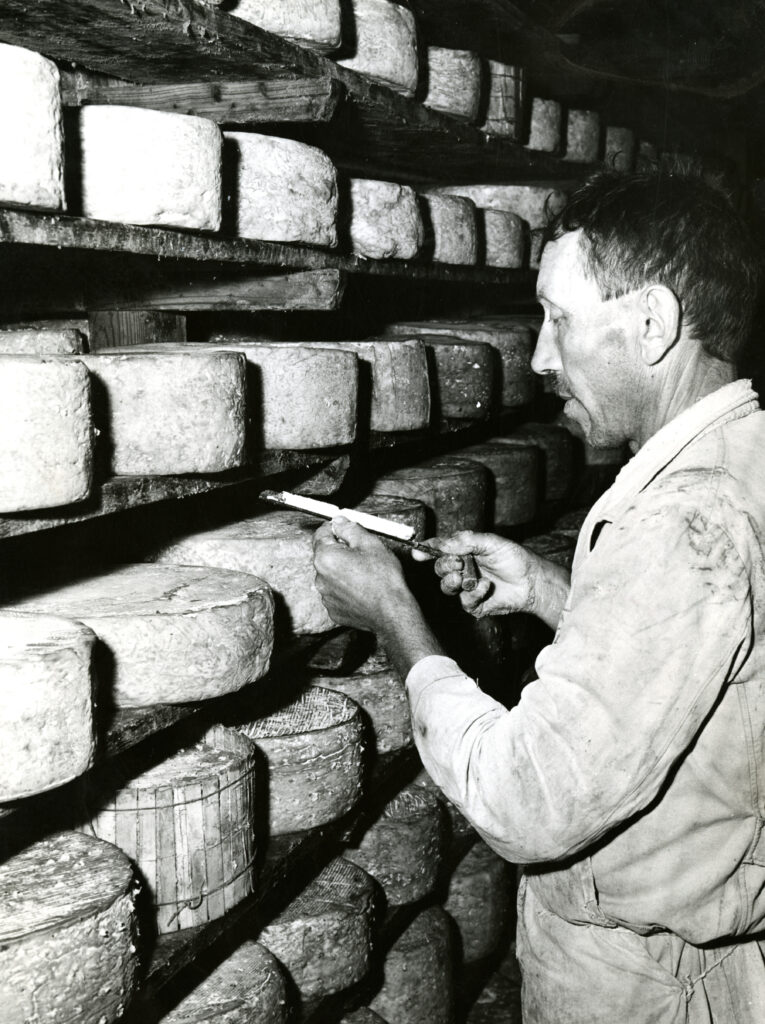
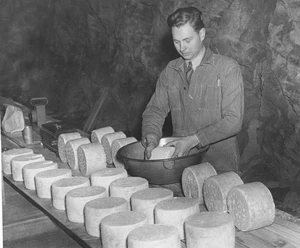
The first written mention of gorgonzola appears in 879 AD — we’re talking about a cheese with over a thousand years of documented history. The story of how it came to be is one of food history’s most charming accidents. According to Lombardy legend, a cheesemaker rushing off to meet a lover left his evening curds sitting overnight. The next morning, embarrassed and late, he simply mixed the old curds with fresh ones and hoped for the best. What resulted, after some time in the cool caves, was a cheese threaded with blue mold. Happy accident. The greenish-blue veining — what Italians call erborinatura — became the defining characteristic of what we now call gorgonzola.
The cheese takes its name from the town of Gorgonzola, just outside Milan. This is where production was exclusive until around 1840, tied specifically to what was called stracchino di Gorgonzola — cheese made from the milk of “tired” (stracco) cows descending from Alpine pastures in autumn. Those animals, having walked long distances and eaten well all summer, produced rich, fatty milk ideal for cheesemaking. The seasonal rhythm gave the cheese its character.
How Production Spread
By the 11th century, the distinctive blue veining was well established, and production had begun spreading to nearby areas like Pasturo in Valsassina — a valley with natural caves maintaining temperatures between 6 and 12°C, precisely the conditions needed for proper aging. From there it expanded into Piedmont, particularly around Novara. Today about 5 million wheels are produced annually, supporting an industry worth roughly $800 million. That’s a long way from one forgetful cheesemaker’s mistake.
How Gorgonzola Is Made
The Curdling and Mixing Process
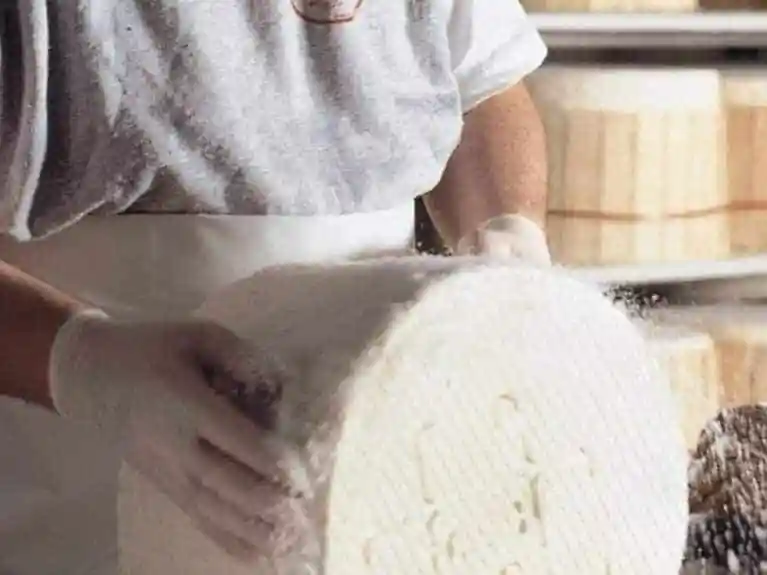
Traditional gorgonzola production begins with the evening milking. The curds are formed, then drained overnight — a deliberate pause that echoes that original accidental delay. Fresh morning curds are then mixed with the rested evening curds. This layering is what creates the irregular structure inside the wheel, the small gaps and channels where mold will eventually grow.
The wheels are formed at roughly 26 to 30 centimeters in diameter. At a place like Caseificio Si Invernizzi in Trecate, Piedmont, 450 to 500 wheels come out of production every single day. It’s an industrial scale operation that still follows the fundamental logic of that ancient method.
The Piercing and Aging
After the wheels are formed, they’re pierced with metal rods — sometimes thick copper needles — all the way through. This is the critical step. Those holes let oxygen into the interior of the cheese, and oxygen is what Penicillium roqueforti or Penicillium glaucum mold needs to bloom. Without the piercing, you’d have no veining. The mold isn’t injected — it’s already present in the environment and in the milk itself. The piercing simply gives it room to grow.
Aging happens in controlled conditions at 6 to 12°C, whether in purpose-built caves or climate-controlled aging rooms. Dolce gets pulled at around 50 to 60 days. Piccante stays longer — 80, 90, sometimes well over 100 days — developing a firmer texture and a far more assertive flavor profile as the mold continues its work.
DOP Certification: Why It Matters
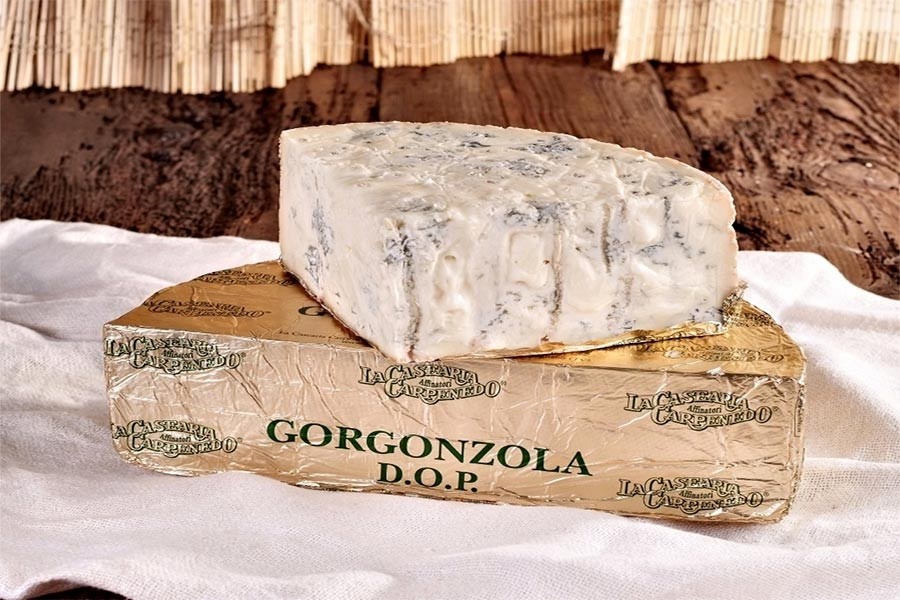
The DOP stamp on gorgonzola isn’t just a marketing badge. It’s a legal guarantee enforced across the European Union and recognized internationally. It mandates that the cheese be produced only in the designated Lombardy-Piedmont zones, using traditional methods, with local cow’s milk. The Consortium for the Protection of Gorgonzola Cheese monitors every step.
When you buy a wheel or wedge without that stamp, you might be getting good blue cheese — but it is not gorgonzola. The name belongs to a specific place, a specific process, and a specific tradition. That protection matters for the producers, and it matters for you as a consumer.
How to Buy Gorgonzola
What to Look For at the Counter
At the Sacramento Italian market, I’ve compared several brands side by side, and the difference between a well-made gorgonzola and a mediocre one is immediately visible. Look for vivid blue-green veining distributed throughout the paste — not concentrated in one corner, not absent from the center. The paste itself should look creamy and slightly moist for Dolce, or firmer and more compact for Piccante. Trust your nose. A good gorgonzola smells complex — earthy, a little tangy, maybe faintly mushroomy — not sharp or chemical or unpleasantly sour.
Always confirm the DOP stamp, either on the rind of the wheel or on the packaging. Reputable producers include Caseificio Si Invernizzi from Trecate in Piedmont, whose cheese I’ve found consistently excellent.
Dolce vs. Piccante: Which Should You Buy?
- Buy Dolce if you’re making pasta sauces, dips, spreading on bread, or serving guests who are new to blue cheese.
- Buy Piccante if you’re building a cheese board, pairing with bold red wine, crumbling over steak or roasted vegetables, or you simply want more intensity.
- Buy both if you’re serious about understanding the full range of what this cheese can do — after testing multiple brands side by side, I always keep at least one of each in my kitchen.
Vacuum-sealed wedges travel well and hold longer once opened. Pre-crumbled gorgonzola is convenient but loses quality quickly — buy it in a wedge whenever you can.
How to Use Gorgonzola in the Kitchen
Classic Italian Applications
My grandmother Julia would have melted Dolce into a simple cream sauce and called it dinner — and she wouldn’t have been wrong. Gorgonzola melts beautifully into warm pasta, risotto, and polenta. The classic northern Italian preparation is gnocchi al gorgonzola: pillowy potato dumplings draped in a gorgonzola cream sauce that comes together in about five minutes. It’s one of those dishes that feels like it requires far more effort than it actually does.
Beyond pasta, gorgonzola is exceptional:
- Crumbled over arugula with walnuts and a honey-lemon dressing
- Stuffed into a Medjool date with a walnut pressed on top — a northern Italian appetizer that’s three ingredients and pure genius
- Melted over a grilled bistecca or burger in the final minute of cooking
- Spread onto crostini with a drizzle of good honey and a few crushed black peppercorns
- Stirred into a risotto base at the end of cooking, off heat, so it emulsifies rather than breaks
- Paired with pears — the classic combination exists because it genuinely works, the fruit’s sweetness cutting the cheese’s intensity perfectly
Wine and Pairing Notes
Gorgonzola Piccante demands something with structure and sweetness. Passito di Pantelleria, late-harvest Riesling, or a good Sauternes work beautifully. Dolce is more flexible — try it with a lighter Barbera d’Asti or even a Prosecco if you’re building an aperitivo spread. Avoid aggressive tannic reds with either style; the tannins fight the fat in the cheese and nobody wins.
How to Store Gorgonzola
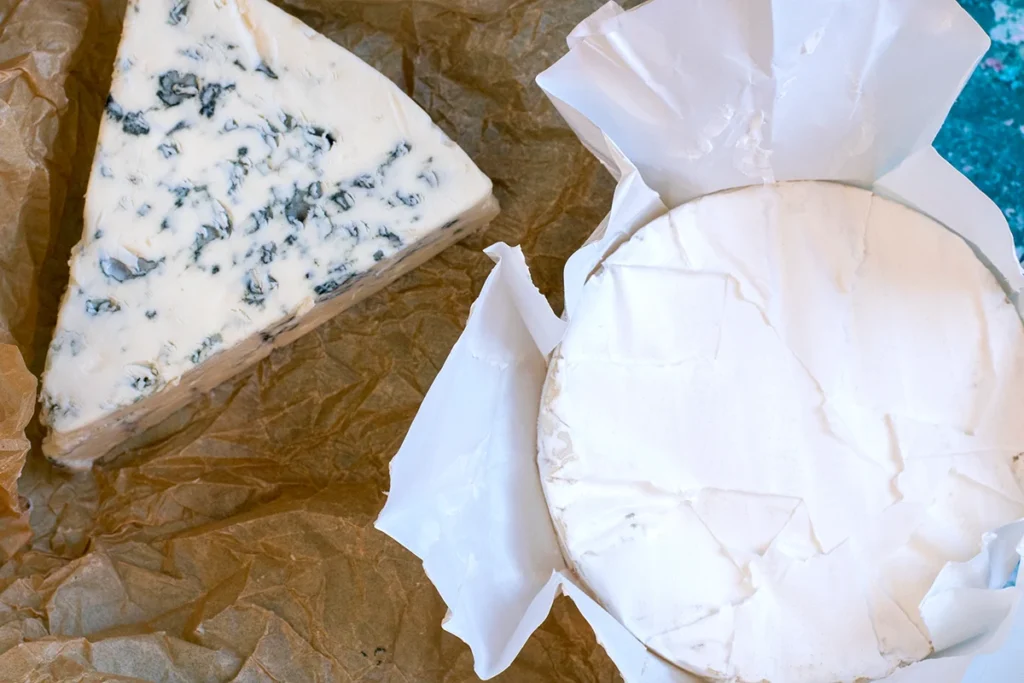
Wrap your gorgonzola in wax paper first, then loosely in plastic wrap or foil. The wax paper lets the cheese breathe just enough without drying out. Store it in the warmest part of your refrigerator — the vegetable drawer or the cheese drawer if you have one — rather than on the coldest shelf near the back wall.
Dolce will keep well for about a week to ten days after opening. Piccante, being firmer and lower in moisture, will hold for two to three weeks. If a thin gray-white surface mold appears on the cut face, scrape it off — it’s harmless and common with any living cheese. If the smell turns genuinely unpleasant rather than just assertive, trust that instinct and discard it.
Never freeze gorgonzola. The moisture content in Dolce especially, will crystallize and destroy the texture completely. The one I keep in my kitchen gets used within a week because I cook with it constantly, but if you’re a more occasional user, buy smaller wedges more frequently rather than a large piece that lingers.
Common Mistakes to Avoid
Serving It Straight from the Refrigerator
Cold cheese is muted cheese. Take gorgonzola out of the refrigerator 30 to 45 minutes before serving. At room temperature, the fats loosen, the aromatics open up, and the full complexity of the cheese becomes available. This is especially true for Piccante, which can taste almost harsh when cold.
Buying the Wrong Style for the Recipe
Piccante won’t melt smoothly into a cream sauce the way Dolce does — it tends to break and turn grainy under heat. Conversely, Dolce won’t give you the structural presence you want when crumbling over a salad or a steak. Know which style you need before you shop.
Using Too Much
Gorgonzola is intensely flavored. A little carries a lot. I see recipes calling for amounts that would overwhelm the rest of the dish. Start with less than you think you need, taste, then add more. You can always add — you can’t subtract.
Accepting Substitutes Without Understanding What You’re Losing
Roquefort, Stilton, and Danish blue are all fine cheeses in their own right. But they are not gorgonzola. They’re made in different countries, with different milks, using different mold strains and processes. The flavor profiles are genuinely distinct. If a recipe calls for gorgonzola, using a substitute will change the result. Know that going in.
The Cheese Worth Understanding
Gorgonzola rewards attention. It has over a thousand years of history behind it, a production system anchored to specific geography and traditional methods, and a flavor range wide enough to work in a simple weeknight pasta or at the center of an elaborate cheese board. When I visited market stalls in Liguria and northern Sardinia, the cheese culture I encountered always pointed back to a few foundational Italian cheeses, and gorgonzola was always among them, respected the way you respect something that has genuinely earned its place.
Start with a wedge of Dolce if you’re new to it. Build toward Piccante. Pay attention to what the DOP stamp means. And give the cheese twenty minutes on the counter before you eat it. Everything else follows from there.
Back to the full Italian pantry guide
Frequently Asked Questions
How long does gorgonzola last once opened, and how should I store it?
I keep opened gorgonzola wrapped tightly in parchment paper, then placed in an airtight container in the coldest part of my fridge. It’ll last about two to three weeks. The key is preventing it from drying out or absorbing other flavors. If mold develops on the surface that wasn’t there before, trim it off — the cheese itself stays good.
Can I cook with gorgonzola, or should it only be eaten fresh?
You can absolutely cook with it, though handle it carefully. I use dolce varieties in warm pasta dishes, risottos, and sauces because they melt smoothly. Add it at the end of cooking on low heat to avoid breaking the cream. Piccante works better crumbled over finished dishes where its punch can shine without heat breaking down those complex flavors.
What’s the actual difference between gorgonzola and other blue cheeses like Roquefort or Stilton?
The main difference is milk type and aging. Gorgonzola uses cow’s milk, which creates that rich, buttery base. Roquefort uses sheep’s milk and has a sharper tang, while Stilton is British cow’s milk but aged differently. I find gorgonzola melts more readily than the others, making it more versatile in cooking applications.
Why does real gorgonzola cost more than generic blue cheese at the supermarket?
Only 29 dairies worldwide can legally produce gorgonzola due to PDO protection — that’s a huge restriction compared to blue cheese made anywhere. Plus, those specific dairies follow centuries-old methods in particular Italian regions. You’re paying for authenticity, regulated quality standards, and a proven production tradition that generic blue cheese doesn’t have.
Is gorgonzola safe to eat during pregnancy, or should I avoid it like other soft cheeses?
That’s a question for your doctor, but gorgonzola is actually less risky than many soft cheeses because it contains mold that prevents Listeria growth. Still, pregnant women are often advised to avoid unpasteurized versions. Look for pasteurized gorgonzola if you’re concerned, though most commercial varieties in the US are pasteurized anyway.
Written by José Villalobos
José Villalobos is a food writer and the founder of Calitalia Food. He grew up in Valparaíso, Chile, where his grandmother Julia cooked Italian food daily from memory and instinct. Based in Sacramento, California, he visits local Italian markets weekly and writes about ingredients, sauces, and regional food culture with the kind of detail that comes from years of sourcing, testing, and eating. Every product he recommends, he has personally bought and tested.