If you’ve ever stood in a cheese aisle holding a green can of “Parmesan” in one hand and a genuine wedge of Parmigiano Reggiano in the other, wondering whether the price difference is really justified — this is the article I’ve been meaning to write for a long time. The short answer is yes. The longer answer involves 900 years of history, a consortium of dairy farmers who take their cheese extremely seriously, and a production process so labor-intensive that the price tag starts to feel like a bargain once you understand what’s behind it.
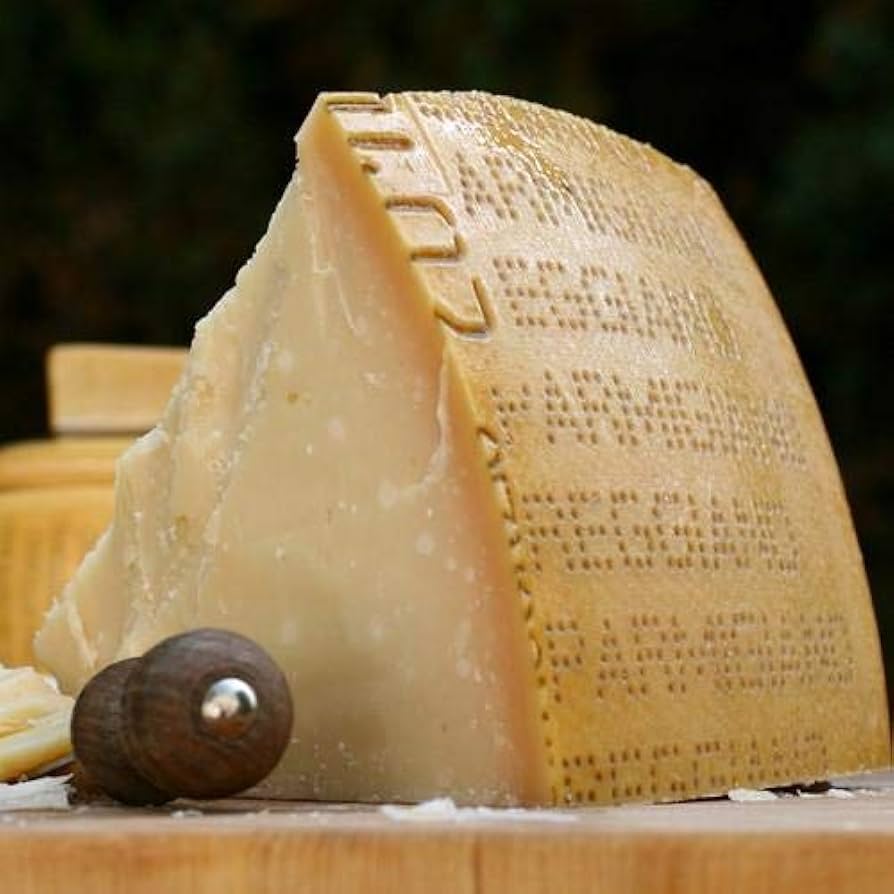
I’m José Villalobos, and I grew up eating food shaped by two culinary traditions that don’t always overlap on paper but make perfect sense together at the table. My grandmother Julia cooked Italian food in Valparaíso, Chile — she had a heavy hand with olive oil and an even heavier hand with aged cheeses. Parmigiano Reggiano was not a condiment in her kitchen. It was a presence. A wedge sat on her counter like a small monument, and she broke chunks off with a short knife the way you’d crack apart something precious. I’ve been chasing that memory ever since.
What Parmigiano Reggiano Actually Is

Let’s be precise here, because the word “Parmesan” has been stretched so far from its origins that it barely resembles the source anymore. Parmigiano Reggiano is a raw cow’s milk cheese produced exclusively in a defined zone of northern Italy — the provinces of Parma, Reggio Emilia, Modena, and parts of Mantua and Bologna, in the region of Emilia-Romagna. It is aged a minimum of 12 months, though most serious wheels go much longer. It is protected by a PDO designation, meaning the name is legally controlled under both Italian and European law.
The “Parmesan” sold in green cans, or even the pre-grated bags from generic brands, is a different product entirely. Some of it contains cellulose filler to prevent clumping. None of it carries the complexity you get from an aged, carefully made wheel of the real thing. That distinction matters whether you’re grating it over pasta or eating it in chunks with a glass of Lambrusco.
A History That Started With Monks
Parmigiano Reggiano is roughly 900 years old, and its origin story starts where a lot of great Italian food traditions begin — in a monastery. Benedictine and Cistercian monks in the fertile plains between Parma and Reggio Emilia developed the cheese in the Early Middle Ages. The goal was practical: they needed a way to preserve surplus cow’s milk in a form that could last through the year, travel across distances, and sustain the community. They combined local milk with salt from nearby Salsomaggiore, and what they developed over generations became one of the most enduring foods in European culinary history.
The first written record of the cheese appears in a notary deed from Genoa dated 1254, which references “caseus parmensis.” By the 14th century, Benedictine and Cistercian abbeys held something close to a production monopoly and were exporting the cheese throughout Italy and to Mediterranean ports. The cheese described in documents from that era was already remarkably similar to what’s made today — which says something profound about how well they figured it out the first time.
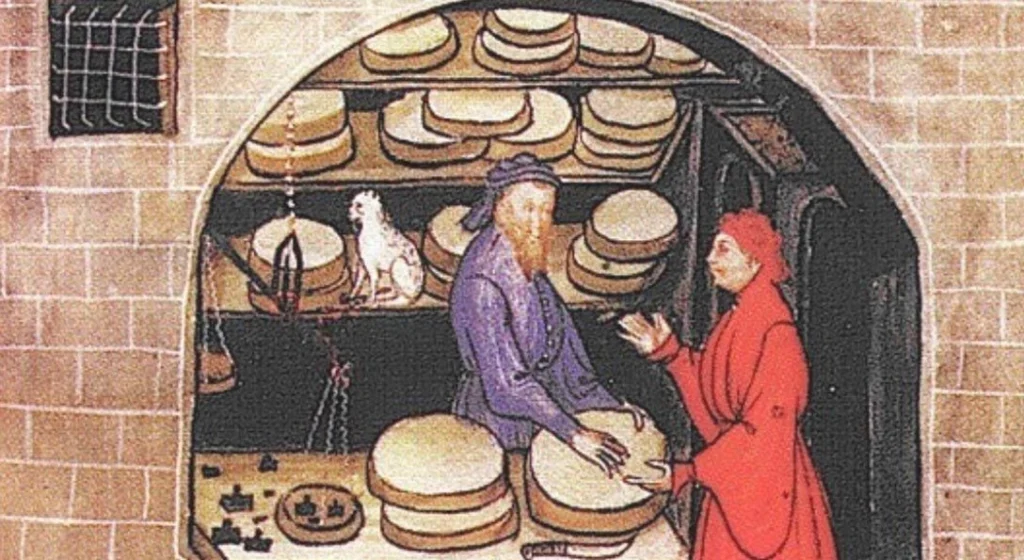
Giovanni Boccaccio name-dropped the cheese in his 1351 Decameron, describing a fantasy land where people lived on “a whole mountain of grated Parmesan cheese.” Samuel Pepys, the British diarist, famously buried his “Parmezan cheese” in 1666 to protect it from the Great Fire of London. When people are burying food to save it from disaster, that food has crossed a line from ingredient to treasure.
On August 7, 1612, the Duke of Parma formalized a denomination of origin — one of the earliest examples of geographic food protection in history. Then in 1934, dairy farmers formed the Consorzio del Formaggio Parmigiano-Reggiano to fight back against cheap imitations that were flooding the market. In 1996, the European Union granted official PDO status. The entire modern system of food protection in Europe owes something to the people who decided this cheese was worth defending.
How It’s Made — and Why That Drives the Price
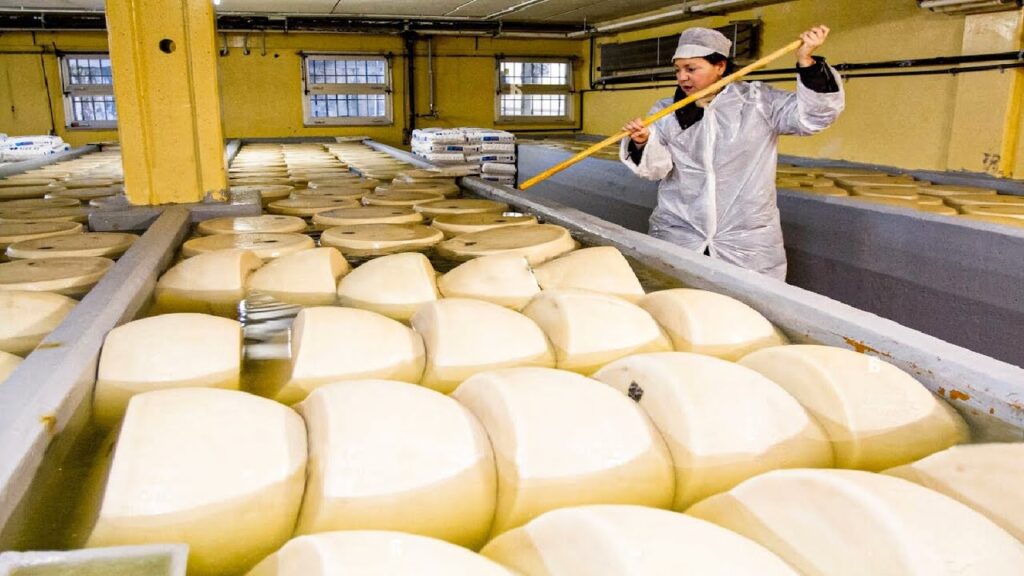
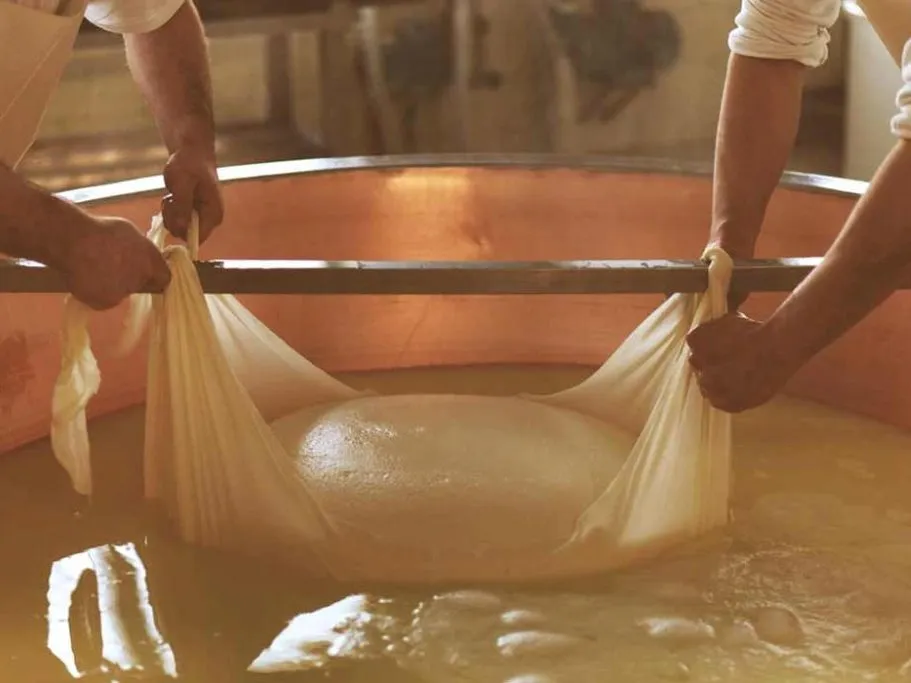
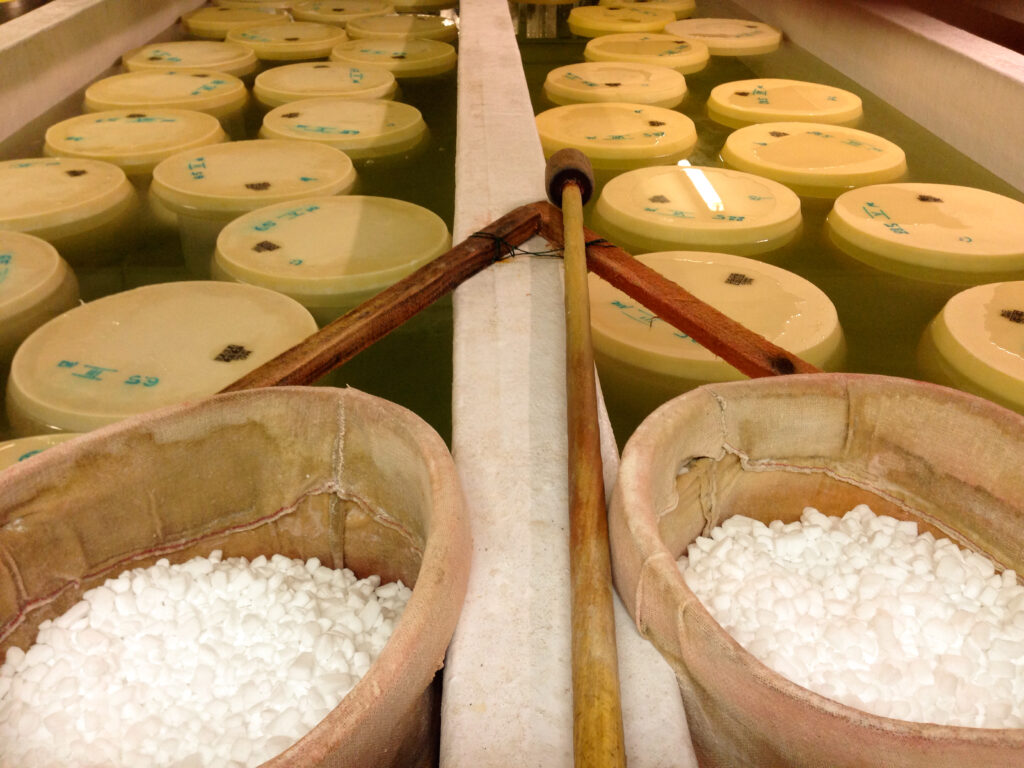
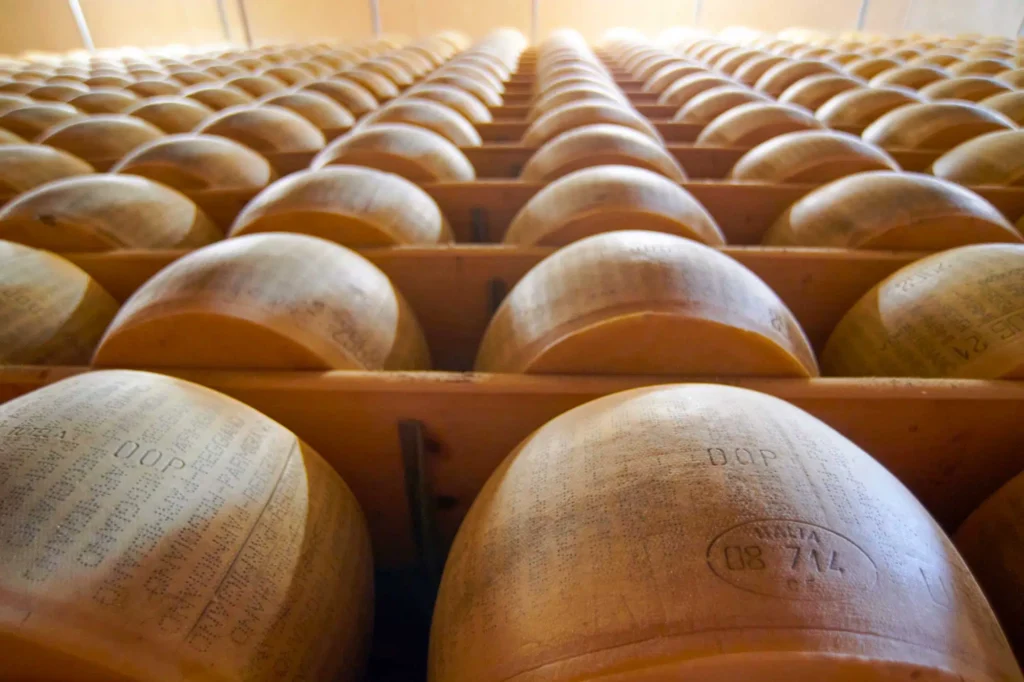
The production of Parmigiano Reggiano is one of the most rigidly defined food processes in the world, which is exactly why it costs what it costs. Here’s what goes into a single wheel.
The Milk
Only raw cow’s milk from the defined geographic region can be used. The pastures of Emilia-Romagna are considered as fundamental to the final flavor as any other ingredient. Cows must be fed locally grown hay and forage — no silage allowed, which distinguishes this milk from industrial dairy in a meaningful way. It takes roughly 550 liters of milk to produce a single wheel of Parmigiano Reggiano. That wheel weighs between 35 and 40 kilograms.
The Ingredients
There are four: water, salt, milk, and time. That’s it. No preservatives, no artificial aging accelerants, no shortcuts. The simplicity of the ingredient list makes the quality of each component — and the skill of the cheesemaker — entirely transparent.
The Process
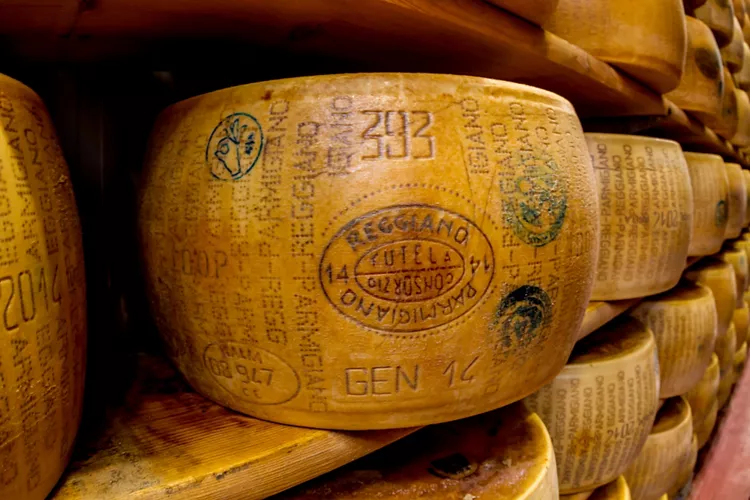
Every single wheel is made by hand. The milk is heated in traditional copper cauldrons, natural whey starter is added, and the curd is cut into tiny granules using a tool called a spino. The granules sink, are shaped into wheels, and then brined in salt water. After brining, the wheels go into aging rooms where they sit on wooden shelves, turned and inspected regularly by hand, for a minimum of 12 months.
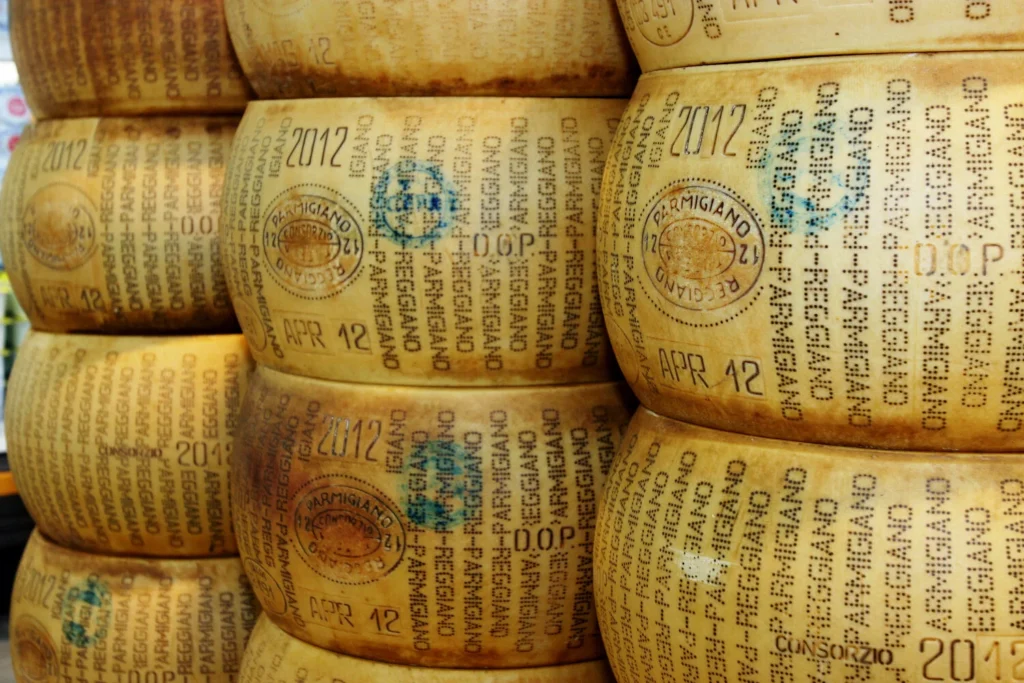
At 12 months, a master grader from the Consorzio inspects every single wheel by tapping it with a small hammer and listening to the sound. Wheels that don’t meet the standard get their rind marked to prevent them from being sold as Parmigiano Reggiano. Those that pass get branded with the dotted rind markings you’ll recognize on any authentic piece. It’s an auditory inspection of thousands of wheels performed by human experts — not machines. That alone tells you what kind of operation this is.
Aging Categories
Aging time dramatically changes the character of the cheese:
- 12–18 months (Fresco): Milder, creamier, slightly elastic. Good for melting and younger applications.
- 24 months (Vecchio): The sweet spot for most uses. Developed flavor, crumbly texture, those characteristic white crystals of tyrosine starting to appear. This is what I reach for most often.
- 36 months (Stravecchio): Deeply concentrated, almost caramel-like, intensely savory. Better eaten in chunks than grated. Reserve this for the cheese board.
- 40+ months: Rare, expensive, and extraordinary. More of a specialty item than a pantry staple, but worth seeking out at least once.
How to Buy the Real Thing
At the Sacramento Italian market, I’ve compared several brands and aging levels side by side, and the differences between authentic Parmigiano Reggiano and domestic imitations are not subtle. Once you know what to look for when buying, you won’t be fooled again.
Look for the Rind Markings
Every authentic wheel has the words “PARMIGIANO REGGIANO” stenciled in dotted letters across the entire rind. If you’re buying a pre-cut wedge, you should see part of this marking on the rind. If the rind is smooth and plain, put it back. Some retailers sell wedges with the rind removed — in that case, trust the label and the source, but whenever possible, buy with rind intact.
Buy a Wedge, Not Pre-Grated
Pre-grated cheese — even real Parmigiano Reggiano — loses volatile aromatic compounds quickly once it’s grated. The flavor you get from freshly grated cheese is not the same as what comes out of a bag. Buy a wedge and grate it yourself. A microplane does the job beautifully for pasta; a box grater gives you slightly coarser results that work well in sauces.
Know Your Source
Specialty Italian delis, good cheese shops, and markets with dedicated cheese counters are your best options. The Sacramento Italian market I visit weekly carries several aging levels from reputable importers — that’s the kind of shop where the staff can actually tell you which wheels came from which part of the region and when they were produced. Online cheese retailers that specialize in imported European cheeses are also reliable. Avoid anything that looks like it’s been sitting in a generic warehouse for an unspecified amount of time.
Price as a Signal
Genuine Parmigiano Reggiano aged 24 months typically runs between $18 and $25 per pound from a good source. Stravecchio at 36 months will be higher. If you’re seeing “Parmesan” at $6 a pound, it is not the same product. The economics of producing a real wheel — the milk volume, the hand labor, the aging time, the Consorzio oversight — make low prices structurally impossible for the authentic article.
How to Use It

My grandmother Julia would have found it slightly offensive that this cheese is used mainly as a powder shaken over pasta. She used it that way too, of course, but she also served chunks of it alongside cured meats before dinner, stirred slivers of it into risotto at the very end, and kept pieces of the rind to drop into soup stocks. That last habit is one I’ve carried into my own kitchen without interruption.
Grated Over Pasta
The classic use, and still the best. Cacio e pepe, carbonara, simple aglio e olio — freshly grated Parmigiano Reggiano at 24 months is the finishing element that pulls everything together. Grate it directly over the hot dish at the table, not into the pot, unless a recipe specifically requires it in the sauce.
In Risotto
Added at the mantecatura stage — that final off-heat stirring with butter and cheese — Parmigiano Reggiano creates the silky, emulsified finish that makes proper risotto what it is. Use a 24-month or older here; the flavor is strong enough to come through.
On the Cheese Board
Break it into irregular chunks using a short, thick-bladed knife rather than slicing cleanly. The fracture lines in the paste are natural and beautiful. Serve with honey, walnuts, a few slices of prosciutto, and something acidic — a few drops of traditional balsamic vinegar from Modena if you’re in a generous mood. After testing several brands side by side at home cheese tastings, I can tell you that a 36-month wheel on a cheese board makes everything else around it look like it’s trying harder than it needs to.
The Rind
Do not throw away the rind. Drop it into minestrone, bean soups, or tomato broth while it simmers. It will slowly release fat and protein and a low savory depth that you cannot replicate with any powder or shortcut. Store rinds in the freezer until you need them.
How to Store It
The one I keep in my kitchen lives wrapped in parchment paper, then loosely in plastic wrap, in the coldest part of the refrigerator — not the freezer. This two-layer approach lets the cheese breathe slightly while protecting it from drying out too fast or picking up refrigerator odors.
A properly stored wedge of Parmigiano Reggiano will keep for six weeks without any meaningful quality loss. If a small amount of surface mold appears on the cut face, trim it off generously — an inch beyond the visible mold — and the remaining cheese is fine. The dense, low-moisture structure of an aged Parmigiano makes it highly inhospitable to deep mold penetration.
Avoid plastic wrap alone with direct contact on the cut surface if possible. The cheese needs some minimal airflow or it develops an unpleasant ammonia smell. Parchment first, then a loose outer wrap, is the method that works consistently.
Common Mistakes People Make
- Buying pre-grated: Already addressed, but worth repeating. The flavor difference is real and it matters.
- Using it in everything regardless of age: A 12-month Parmigiano is not the right choice for a cheese board where you want bold flavor. A 36-month is overwhelming grated over a delicate white sauce. Match the age to the application.
- Storing it in the freezer: The texture suffers. Fine for rinds destined for soup. Not fine for cheese you’re going to eat or grate.
- Conflating it with Grana Padano: Grana Padano is a legitimate, excellent cheese. It’s produced in a broader geographic zone under slightly looser rules, costs less, and tastes different. Neither is a substitute for the other — they’re just different cheeses. Know which one you’re buying and why.
- Adding it too early to hot liquids: Parmigiano breaks and turns grainy if it hits temperatures above about 180°F directly. Pull the pan off heat before you stir it in.
- Throwing away the rind: Already mentioned. Still a crime.
Why the Price Is Justified
When I visited the Emilia-Romagna region and tasted Parmigiano Reggiano directly from a producer — broken off the wheel with a knife, no accompaniment — I understood the price not as a premium but as an honest accounting of what it costs to make something this carefully. The people producing it are maintaining a production method that has barely changed in nine centuries. They are subject to Consorzio oversight at every stage. They cannot use silage. They cannot rush the aging. They cannot cut the inspector out of the process.
José Villalobos has been paying a premium for real Parmigiano Reggiano his entire adult life and considers it one of the most rational food expenditures in his kitchen. A wedge that costs $20 lasts weeks in the refrigerator, improves every dish it touches, and contains no filler, no shortcuts, and no compromise. The green can version genuinely cannot say the same.
My grandmother Julia understood this intuitively. She didn’t buy the cheap version because she didn’t think the cheap version was food in the same sense. That instinct, it turns out, was correct — and backed by 900 years of people agreeing with her.
Back to the full Italian pantry guide
Frequently Asked Questions
Can I use regular Parmesan from a green can as a substitute for Parmigiano Reggiano?
Not really if you want the same experience. The green can stuff often has cellulose filler and lacks the complexity of aged wheels. I use them for different purposes — one’s a condiment, the other is something you taste on its own or pair with wine. They’re not interchangeable.
How can I tell if what I’m buying is actually authentic Parmigiano Reggiano?
Look for the PDO stamp and the characteristic dots on the rind that identify the producer and production date. The label should specify it comes from the five provinces in Emilia-Romagna. If it doesn’t say where it’s from or just says “Parmesan,” it’s not the real thing.
Why does Parmigiano Reggiano taste different every time I buy it?
Because each wheel is unique. Factors like the specific dairy, the cows’ diet, the season it was made, and how long it aged all affect the flavor. A 12-month wheel tastes different from a 36-month one. That variation is part of what makes real cheese worth the price.
Is Parmigiano Reggiano worth buying if I’m just going to grate it over pizza?
For pizza, you probably don’t need the aged stuff — save it for when you’ll actually taste it. But if you’re finishing pasta, soups, or risotto where the cheese plays a starring role, spend the money. You’ll notice the difference in every bite.
How should I store Parmigiano Reggiano to keep it fresh?
Keep it in the coldest part of your fridge, wrapped in parchment paper rather than plastic — it needs air circulation. A wedge lasts longer than pre-grated. If it develops mold on the surface, just cut that part off. The cheese underneath is fine.
Written by José Villalobos
José Villalobos is a food writer and the founder of Calitalia Food. He grew up in Valparaíso, Chile, where his grandmother Julia cooked Italian food daily from memory and instinct. Based in Sacramento, California, he visits local Italian markets weekly and writes about ingredients, sauces, and regional food culture with the kind of detail that comes from years of sourcing, testing, and eating. Every product he recommends, he has personally bought and tested.