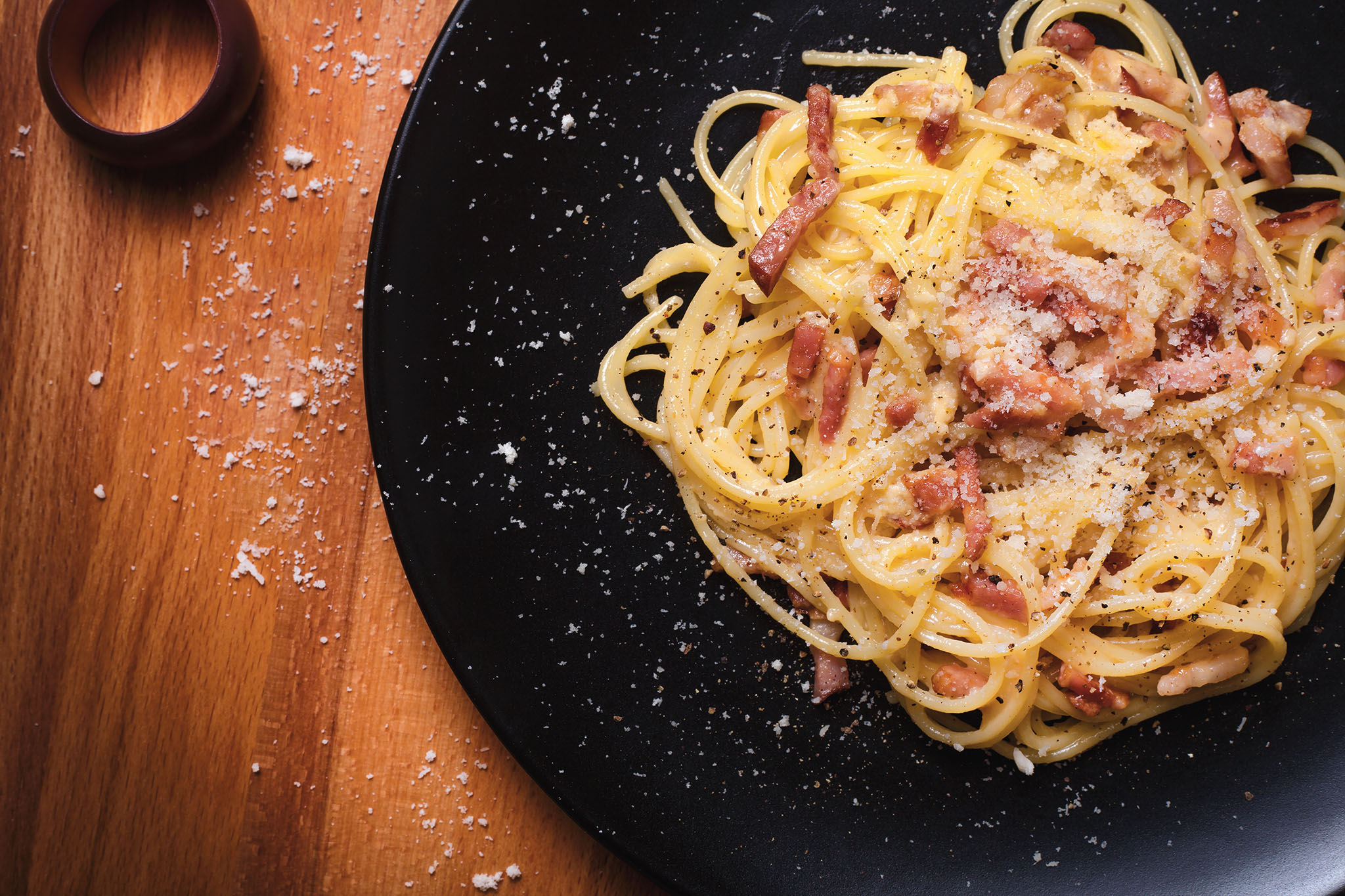
If there is one dish that gets butchered more consistently than any other in Italian cooking, it is carbonara. The authentic carbonara recipe is elegant, ancient in spirit, and built from maybe five ingredients — and yet somehow the internet has convinced an entire generation that it needs cream, garlic, onions, or some combination of all three. It does not. It never did. What makes this dish extraordinary is precisely its restraint: guanciale, eggs, Pecorino Romano, black pepper, and pasta. That is the whole story.
I am José Villalobos, and I have been chasing the perfect carbonara for most of my adult life. My grandmother Julia cooked Italian food in Valparaíso, Chile — a city with a surprising Italian immigrant tradition — and her version was rich, eggy, and made with whatever cured pork she could find at the market. It was magnificent. It was also not entirely Roman. Learning the difference between a loving interpretation and the real thing took me years, a trip to Italy, and more ruined pasta than I care to admit.
This is the authentic carbonara recipe, explained the way I wish someone had explained it to me.
What Is Carbonara?
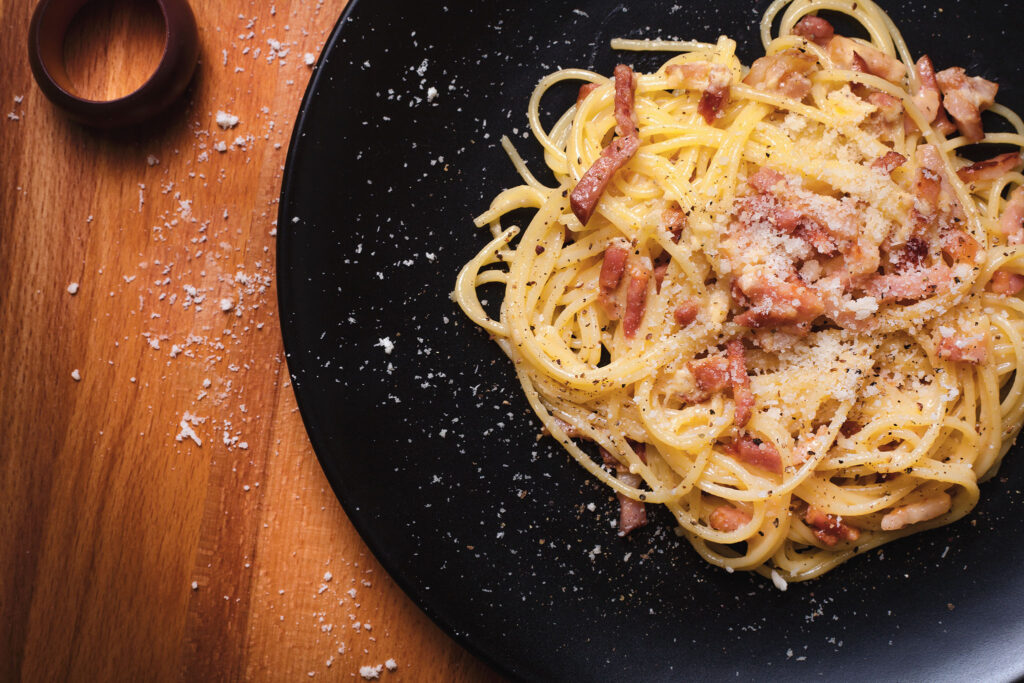
Carbonara is a Roman pasta dish — a primo piatto — built on a technique that is equal parts chemistry and confidence. Hot pasta, rendered guanciale fat, and a mixture of beaten eggs and grated Pecorino Romano come together off the heat to form a silky, coating sauce that is neither scrambled eggs nor cream. It is something in between: a warm emulsion that clings to every strand of spaghetti without breaking.
The name itself is debated. Carbonara comes from carbone, the Italian word for coal, and the black pepper ground over the finished dish is said to resemble coal dust — a nod, perhaps, to the carbonari, the charcoal burners who worked in the Apennine mountains and carried portable, non-perishable ingredients like eggs, aged cheese, and cured pork. Whether that story is history or myth, the pepper matters, it is not a garnish. It is structural.
The History and Origin of Carbonara
The documented history of carbonara is shorter than most people expect. While some food historians trace the dish’s spiritual ancestry to cacio e ova — a Neapolitan and Abruzzese pasta tradition of tossing noodles with eggs and cheese — the specific dish we call carbonara likely emerged in Rome around 1944, in the chaotic final years of World War II.
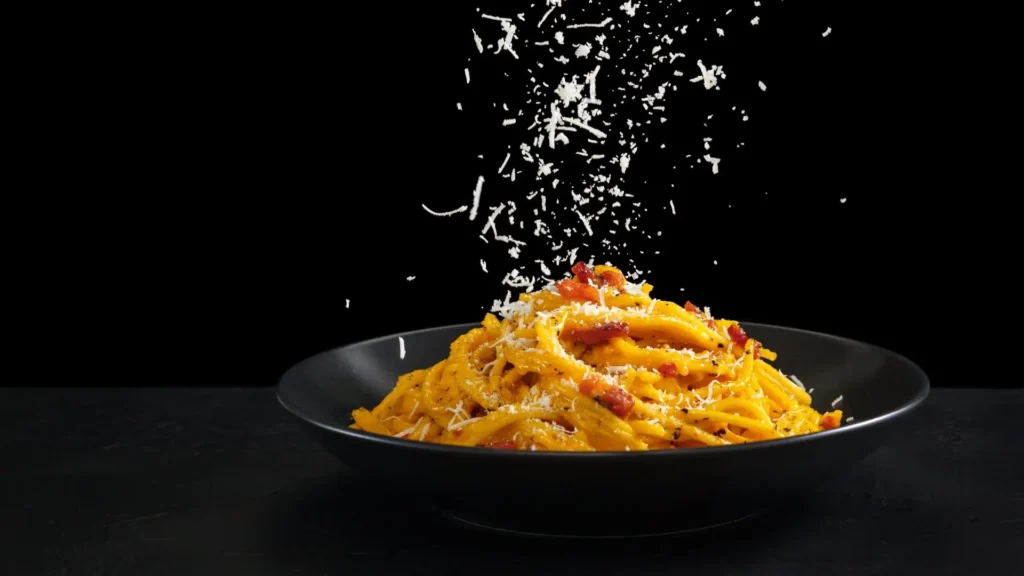
The most widely cited origin story connects carbonara to American soldiers stationed in Rome after the Allied liberation. Their rations included powdered eggs, bacon, and hard cheese — ingredients that Roman cooks, improvising brilliantly as Italians always do, combined with local pasta. The result was something new. The first documented recipe appeared in a 1952 Chicago cookbook by Patricia Bronté, which means the dish was already known in the United States before it was formally written down in Italy. The earliest Italian printed version appeared in 1954 in La Cucina Italiana, and it included pancetta, garlic, and Gruyère — ingredients that modern Roman purists would find alarming.
The competing carbonari theory holds that mountain charcoal workers in the Abruzzo-Apennine region developed the dish much earlier, using the shelf-stable ingredients they could carry into the forest: dried pasta, eggs, Pecorino Romano, and cured pork. This would also explain why the dish predates the arrival of tomatoes in Italian cooking — the carbonari had no tomatoes and needed none. Some accounts even trace an early version to a Rome restaurant called La Carbonara, supposedly run by a former charcoal burner in 1912, though this remains unverified.
What matters for the cook is this: however carbonara began, it became Roman. And in Rome, the rules are clear.
The Authentic Carbonara Recipe
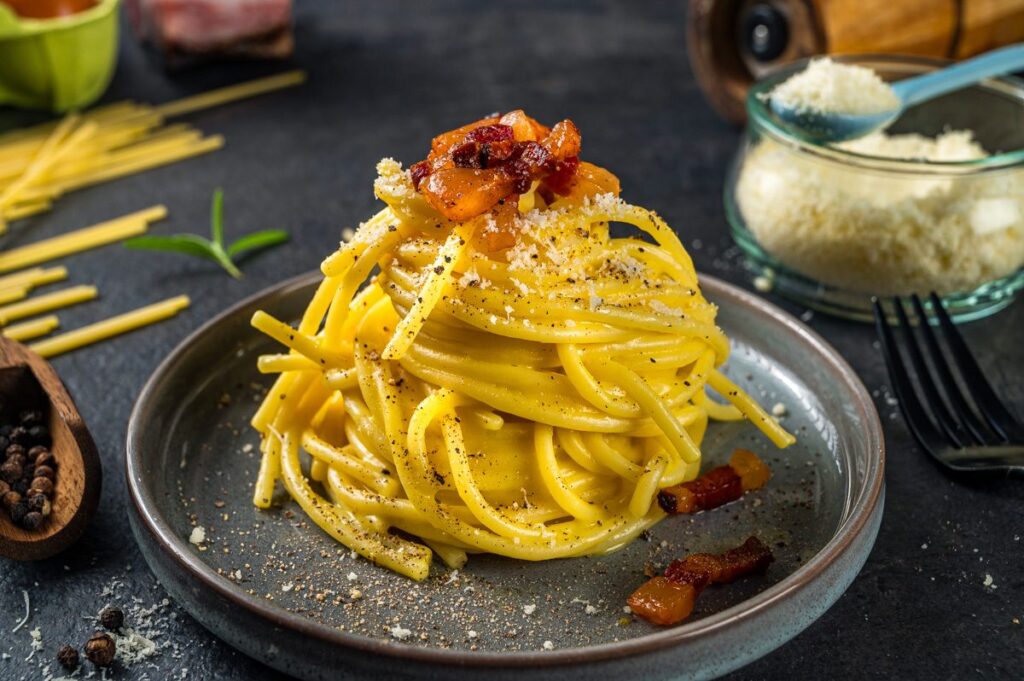
Ingredients (Serves 2)
- 200g spaghetti (ideally Spaghetti di Gragnano IGP)
- 150g guanciale, cut into small lardons or strips
- 3 large egg yolks plus 1 whole egg
- 60g Pecorino Romano DOP, finely grated (plus more to serve)
- Coarse black pepper, freshly and generously ground
- Salt for the pasta water only
Equipment You Will Need
- A large pot for boiling pasta
- A wide skillet or sauté pan
- A mixing bowl large enough to hold the finished pasta
- A fine grater (Microplane or similar)
- Tongs
Step-by-Step Method
Step 1 — Build your egg mixture. In a bowl, beat together the three egg yolks and one whole egg. Add the grated Pecorino Romano and a serious amount of freshly ground black pepper. Mix until you have a thick, pale yellow paste. Set aside at room temperature — cold eggs hitting hot pasta is one of the main causes of scrambled carbonara.
Step 2 — Render the guanciale. Place the guanciale pieces in a cold skillet with no oil, no butter, nothing. Turn the heat to medium-low and let the fat render slowly. The guanciale should become crisp at the edges while remaining slightly yielding inside — not burned, not soft. This takes about 8 to 10 minutes. Do not rush it. When done, remove the pan from the heat but do not drain the fat. That fat is the sauce.
Step 3 — Cook the pasta. Bring a large pot of salted water to a boil. Cook the spaghetti until genuinely al dente — a little firmer than you think is right, because it will continue cooking when you toss it. Before draining, reserve at least a full cup of the starchy pasta water. This is non-negotiable.
Step 4 — Combine pasta and guanciale. Drain the spaghetti and add it directly to the skillet with the guanciale and its rendered fat. Toss vigorously over low heat for about 30 seconds so the pasta absorbs the fat and finishes cooking. Then — and this is critical — remove the pan from the heat entirely.
Step 5 — Add the egg mixture. Pour the egg and Pecorino mixture over the pasta. Toss quickly and continuously, adding pasta water a splash at a time. The residual heat from the pasta and pan will gently cook the eggs into a glossy, flowing sauce. You are looking for the consistency of heavy cream that coats the pasta. If it looks too thick, add more water. If it looks too loose, keep tossing — it will come together.
Step 6 — Serve immediately. Plate and finish with more grated Pecorino and another aggressive turn of black pepper. Eat it now. Carbonara does not wait.
How to Buy the Right Ingredients
Guanciale
Guanciale is cured pork jowl, and it is not interchangeable with pancetta or bacon, regardless of what a recipe tells you. The fat content and flavor profile are entirely different. Guanciale melts into a silky, almost sweet pork fat that coats the pasta in a way that bacon — smoked, leaner, sharper — simply cannot replicate. At the Sacramento Italian market, I’ve compared several brands of cured pork side by side, and the difference between a good guanciale and a smoked bacon substitute in carbonara is not subtle. It is the difference between the dish and an approximation of the dish.
Look for guanciale at Italian salumerias, specialty butchers, or quality delicatessens. It should be ivory-white with a thin layer of darker cured meat running through it. If you can only find it whole, cut it yourself into strips or lardons about half a centimeter thick.
Pecorino Romano DOP
Pecorino Romano has held DOP (Protected Designation of Origin) status since 1996, meaning authentic production is restricted to Lazio, Sardinia, and a small part of Tuscany, using sheep’s milk from certified flocks. Buy it whole if possible and grate it yourself — pre-grated Pecorino loses its sharpness and tends to clump rather than melt. After testing several brands side by side at home, the ones that performed best in carbonara were aged longer and had a drier, more granular texture that dissolved beautifully into the egg mixture.
Some Roman recipes use a blend of Pecorino Romano and Parmigiano-Reggiano. This is a legitimate variation — the Parmigiano adds a nuttier, slightly milder note that balances the Pecorino’s sharpness. I generally use pure Pecorino, but I understand the argument for the blend.
Eggs
Since eggs are doing most of the structural work here, their quality matters more than in almost any other dish. Buy the best organic or free-range eggs you can find. The yolks should be deep orange — a sign of a chicken that has been eating well. Pale yellow yolks will give you a paler, less rich sauce.
Pasta
Spaghetti is traditional. Rigatoni has become increasingly common in Rome and works beautifully — the tubes trap the sauce. Avoid fresh pasta here; carbonara was built for dried pasta extruded through bronze dies, which gives the surface a roughness that holds the sauce. Spaghetti di Gragnano carries IGP certification and is worth seeking out for its texture and how it behaves in the water.
Black Pepper
Buy whole peppercorns and grind them coarsely yourself. Pre-ground pepper has lost most of its volatile oils by the time it reaches you. The pepper in carbonara is not background flavor — it is foreground. Treat it accordingly.
How to Store Carbonara Ingredients
Carbonara itself does not store well at all. It is a dish engineered for immediate consumption. If you refrigerate leftover carbonara, the sauce will seize, the pasta will absorb all remaining moisture, and reheating it risks scrambling what was once a perfect emulsion. Make only what you will eat.
The components, however, store excellently. Guanciale keeps in the refrigerator for up to three months, wrapped tightly in parchment and then plastic to prevent it from drying out. In the freezer, it will hold for up to six months — I often buy a larger piece and freeze it in portions. Pecorino Romano, wrapped in wax paper and then loosely in plastic, will keep in the refrigerator for several weeks. Eggs, obviously, go in the refrigerator and should be used fresh.
How to Use Carbonara (And What to Serve With It)
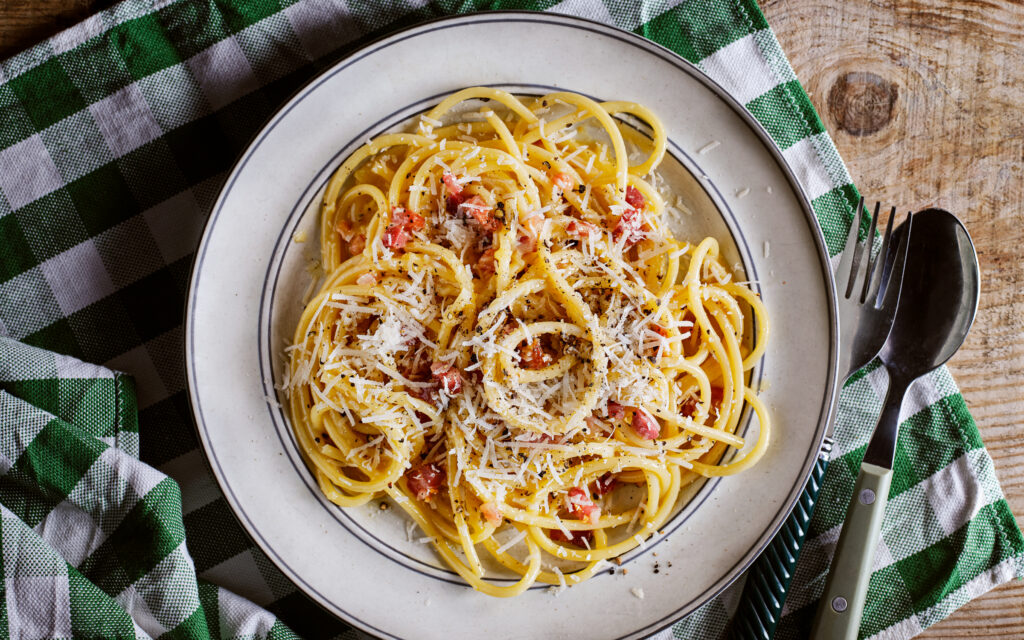
Carbonara is a primo piatto — a first course — in the Roman meal structure. It is not a side dish, not a base for protein additions, and not a vehicle for vegetables. Serve it on its own, in warmed bowls, followed perhaps by a simple roasted meat or braised vegetable.
The traditional wine pairing is a dry white from the Castelli Romani hills outside Rome — Frascati being the classic choice. Its mineral acidity cuts through the richness of the eggs and pork fat cleanly. A light, unoaked Trebbiano works similarly well.
Do not add cream. Do not add garlic. Do not add onions, mushrooms, peas, or anything else. I know these additions appear in countless recipes online and in cookbooks published in good faith. I know my grandmother Julia would occasionally add a splash of cream to stabilize her egg mixture — and honestly, it worked, and I loved her for it. But the authentic Roman carbonara recipe requires none of these things. The emulsion holds perfectly when the technique is right. The cream is a safety net for a technique problem, not an ingredient.
Common Mistakes and How to Fix Them
Scrambled Eggs Instead of Sauce
This is the most common failure and almost always happens because the pan was too hot when the egg mixture was added. Remove the pan from the heat completely before adding the eggs. The residual heat of the pasta is enough to cook the proteins gently. If you find yourself with scrambled-egg carbonara, it is not entirely unsalvageable — add more pasta water immediately and toss aggressively, but prevention is far easier than rescue.
Sauce That Is Too Thick or Gluey
Add pasta water. This is what the starchy, salted pasta water is for — it loosens the sauce and helps the emulsion stay fluid. Add it in small amounts and keep tossing between additions.
Sauce That Never Comes Together
Usually caused by pasta that was too cold when the egg mixture went in, or by eggs that were straight from the refrigerator. Both the pasta and the egg mixture should be at the right temperature when they meet. Let your egg and cheese paste sit at room temperature while the pasta cooks.
Using the Wrong Pork
Bacon adds smokiness that competes with the Pecorino and changes the dish’s character entirely. Pancetta is closer but still lacks the specific fat quality of guanciale. The one I keep in my kitchen is always guanciale — it is worth the effort of sourcing properly.
Underseasoning the Pasta Water
Pasta water should taste noticeably salty — not overwhelmingly so, but clearly seasoned. Under-salted pasta in carbonara leaves the dish tasting flat, because there is no sauce-level seasoning to compensate.
A Note on Variations
When I visited Sicily and Sardinia, the egg-and-cheese technique appeared in different forms across the local pasta traditions — a reminder that the logic behind carbonara is ancient even if the dish itself is young. In Sardinia, where much of Italy’s Pecorino Romano is actually produced, the cheese takes on a slightly different character depending on the season and the flock’s feed. These regional textures matter.
The Abruzzese cacio e ova — pasta tossed with eggs and Pecorino without any pork — is worth making as a dish in its own right. It is simpler, lighter, and traces the lineage of carbonara back to its probable roots. My grandmother Julia made something close to this when guanciale was unavailable in Valparaíso, and the results were always worth eating.
Rigatoni alla carbonara, which you will find in many Roman restaurants today, is not a deviation from tradition so much as a parallel tradition. The ridged tubes hold the sauce differently than spaghetti, and many Roman cooks prefer it. Both are legitimate.
Final Thoughts on the Authentic Carbonara Recipe
What makes carbonara difficult is not its ingredient list — five things is not a long list. What makes it difficult is that it demands full attention for about four minutes and punishes distraction. You cannot walk away, answer your phone, or let the pasta sit in the colander while you finish something else. The window between perfect carbonara and scrambled-egg pasta is measured in seconds.
But when it works — and it does work, consistently, once you understand the technique — it is one of the most satisfying things you can make in a kitchen. Rich without being heavy, complex without being complicated. A dish that has traveled from the mountains of Abruzzo or the mess halls of postwar Rome into kitchens across the world, and survived the journey mostly intact.
José Villalobos tests these dishes repeatedly and keeps notes. The authentic carbonara recipe in this post reflects what actually works in a home kitchen, informed by what I have tasted in Italy, learned from my grandmother Julia’s instincts, and refined through a lot of ruined batches. Trust the process, keep the heat low when it matters, and do not add the cream.
For more on Roman pasta traditions, regional sauce variations, and the Italian pasta canon, see back to the full guide.
Frequently Asked Questions
Can I use regular bacon or pancetta instead of guanciale?
You can, but you’ll lose something important. Guanciale has a specific fat composition and flavor that creates the right emulsion. Pancetta works better than bacon, but it’s smokier and leaner. I’ve tested both extensively—guanciale produces that silky coating nothing else does quite the same way.
Why does my carbonara break into scrambled eggs?
Temperature control is everything. If your pasta is too hot when you add the egg mixture, it scrambles. The trick is letting the pasta cool slightly off heat, then tempering the eggs by adding pasta water gradually while tossing. I learned this the hard way through dozens of failed attempts.
Is it really necessary to use only Pecorino Romano?
Yes. Pecorino’s saltiness and sharpness are essential to the dish’s balance. Parmesan is milder and won’t create the same sauce. I’ve tried substitutions out of curiosity—they don’t work. The cheese does more than just flavor; it’s a key structural ingredient in the emulsion.
How much black pepper should actually go in carbonara?
More than you think. Grind it fresh and generously—it’s not decoration. The pepper should be noticeable but not overwhelming. I use about a teaspoon for a standard four-person serving, ground both into the sauce and over top for texture.
What pasta shape is most authentic for carbonara?
Spaghetti or tonnarelli (square spaghetti) are traditional in Rome. The long strands let the sauce cling properly. I’ve made it with other shapes, and shorter pasta doesn’t coat as elegantly. The shape matters more than people realize when you’re working with such a delicate sauce.
Written by José Villalobos
José Villalobos is a food writer and the founder of Calitalia Food. He grew up in Valparaíso, Chile, where his grandmother Julia cooked Italian food daily from memory and instinct. Based in Sacramento, California, he visits local Italian markets weekly and writes about ingredients, sauces, and regional food culture with the kind of detail that comes from years of sourcing, testing, and eating. Every product he recommends, he has personally bought and tested.