
While Liguria may have gifted the world pesto, regions like Campania have taken the concept and made it entirely their own—bold, bitter, and beautifully rustic.
Enter the Arugula and Walnut Pesto, a traditional sauce born from Campania’s agricultural heartlands, where wild rucola (arugula) and native noci (walnuts) grow in abundance. This isn’t a Genovese knock-off—it’s a deeply Southern, earthy pesto that leans into bitterness, crunch, and robust flavor over sweetness and cream.
In this article, we’ll explore how this pesto captures Campania’s flavor DNA, walk you through the traditional ingredients and techniques, and show you all the ways it can enhance everything from pasta to vegetables to grilled meat.

The Origins – Arugula’s Southern Story
In Campania, arugula is more than a garnish—it’s a foraged staple. Known locally as rucola selvatica, the wild form is prized for its intense peppery flavor and resilient bite.
Historically, peasant families in the countryside used arugula in:
• Salads
• Savory pies (torte rustiche)
• Crushed raw sauces for pasta
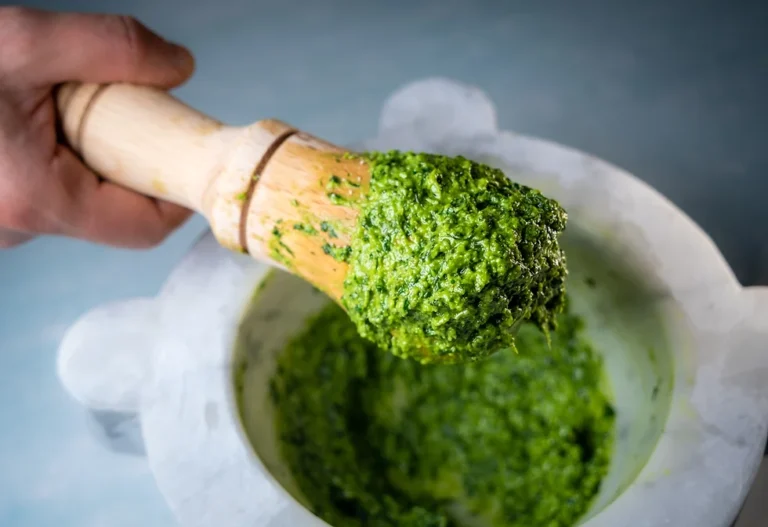
In my kitchen, I have tested both the mortar-and-pestle method and the food processor side by side.
When basil wasn’t available (or affordable), arugula became the green of choice for pestos. Walnuts, which grow plentifully in Irpinia and around Benevento, provided fat and texture in place of expensive pine nuts.

Thus, the arugula and walnut pesto was born—part necessity, part genius.
Traditional Ingredients in Campanian Arugula-Walnut Pesto
While every nonna has her own tweaks, this is the classic profile:
1. Arugula (Rucola)
- • Preferably wild or young cultivated arugula
- • Washed and thoroughly dried
- • Provides spicy, mustard-like bitterness

2. Walnuts
• Shelled and lightly toasted for depth
• Adds earthiness, richness, and creamy body
• Sometimes soaked briefly to soften

3. Garlic
• Raw and bold, or blanched for a gentler flavor
• Used more sparingly than in other Southern pestos

4. Cheese
• Pecorino Romano for sharpness
• Some versions use Parmigiano-Reggiano for balance
• Often mixed 1:1 to avoid overwhelming the arugula

5. Olive Oil
• Campanian extra virgin oil—often fruity and grassy
• Emulsifies and balances bitterness

6. Lemon Juice or Zest (Optional)
• Adds brightness and helps mellow the arugula

How to Make It – Step-by-Step
This pesto comes together in under 10 minutes and doesn’t require cooking—just good ingredients and a gentle touch.

Ingredients:
• 2 cups fresh arugula (packed)
• ½ cup shelled walnuts (lightly toasted)
• 1 small garlic clove
• ½ cup grated Pecorino Romano (or ¼ cup each Pecorino + Parmigiano)
• ½ cup extra virgin olive oil
• Juice of ½ lemon (optional)
• Salt to taste
Instructions:
1. Toast walnuts in a dry skillet until fragrant, then cool
2. In a food processor, combine walnuts, garlic, and cheese; pulse until crumbly
3. Add arugula and pulse until chopped
4. Drizzle in olive oil while blending until creamy
5. Stir in lemon juice, taste, and season with salt

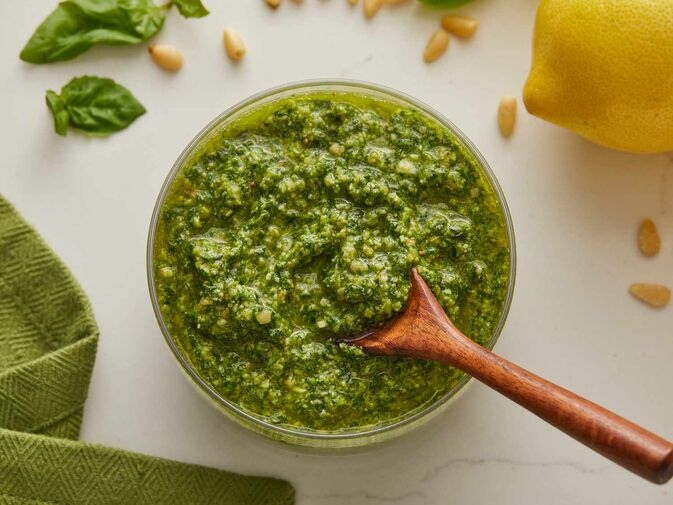
The texture should be spoonable, with visible flecks of arugula—not a puree.
Flavor Profile – What Makes It Stand Out
This pesto is all about contrast:
- Peppery heat from arugula
- Savory tang from Pecorino
- Bitterness and depth from walnuts
- Bright acidity from lemon (optional)
It’s less creamy than Genovese, and far more herbaceous and rustic—perfect for bold palates.

Best Pasta Pairings and More

Pasta Suggestions:
• Fusilli – the spirals catch the flecks of nut and arugula
• Casarecce – ideal for thick sauces
• Cavatelli – a Southern match made in heaven
• Whole wheat pasta – its nutty tones mirror the walnuts
Beyond Pasta:
• Spread on grilled bread with ricotta or burrata
• Dollop on grilled eggplant or squash
• Swirl into barley or farro salads
• Serve with roast lamb, pork, or sausage
• Use as a base for a green pizza
Regional Twists and Variations
In Irpinia:
• Some recipes add a handful of fresh mint or marjoram
• Toasted hazelnuts may replace walnuts
On the Amalfi Coast:
• Lemon zest is almost always included
• Locals might blend in anchovy for umami
Modern Takes:
• Add avocado for creaminess
• Use a mix of baby spinach and arugula for balance
• Sub in cashews if walnuts are unavailable


Storage Tips
• Keep refrigerated in a glass jar, with olive oil sealing the surface
• Lasts up to 5 days
• Freeze without cheese for up to 3 months, then add cheese after thawing
• Best served at room temperature
Bitterness as Beauty
Arugula and walnut pesto from Campania isn’t meant to be sweet, smooth, or polite—it’s meant to be real.

It speaks of stone terraces, wild herbs, and resourceful kitchens. It’s food that challenges your palate—and rewards it with every bite. If pesto alla Genovese is a romantic sonnet, this is a Southern folk ballad—loud, proud, and unforgettable.
Disclosure: Our blog contains affiliate links to products. We may receive a commission for purchases made through these links. However, this does not impact our reviews and comparisons. We try our best to keep things fair and balanced, in order to help you make the best choice for you.
Written by José Villalobos — Food writer and founder of Calitalia Food. Based in Sacramento, CA. Read more →