Calabrian chili peppers are one of the most distinctive ingredients in the Italian pantry — small, ferociously red, and carrying a heat that manages to be both fruity and smoky at the same time. If you have ever eaten a bowl of pasta that made your lips tingle in the most pleasurable way, or spread something glossy and orange-red onto a piece of grilled bread and immediately needed a second piece, there is a good chance a Calabrian chili pepper was responsible.
I have been cooking with these peppers weekly for years — here is what I have learned about where they come from, how to use them properly, and why they deserve a permanent spot in your kitchen.
What Are Calabrian Chili Peppers?
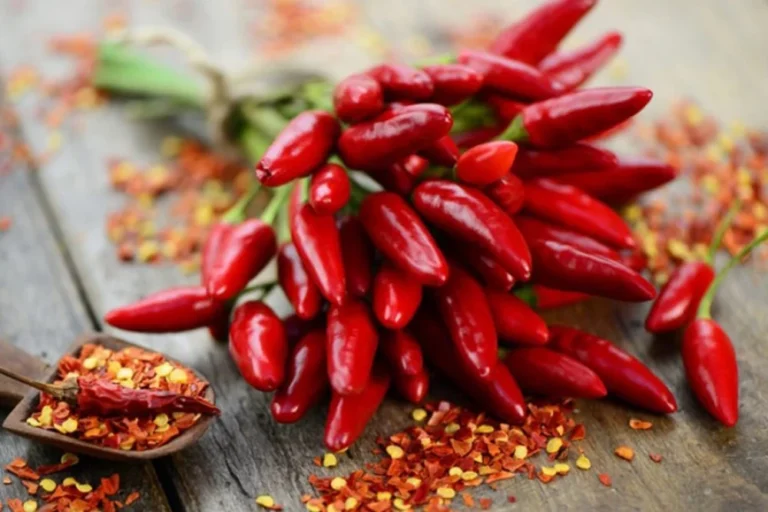
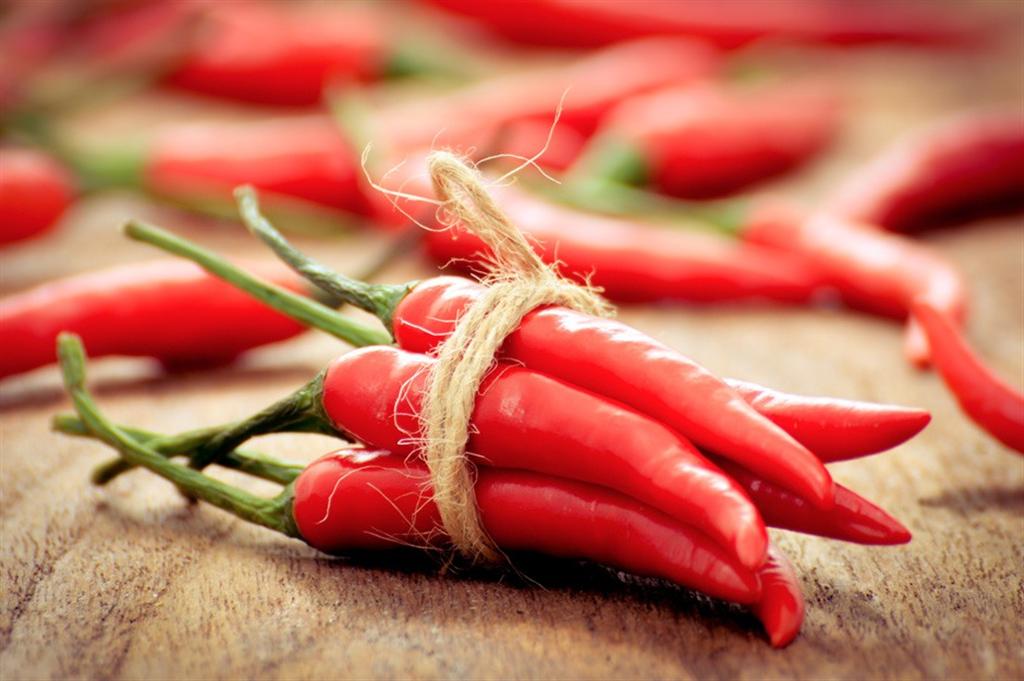
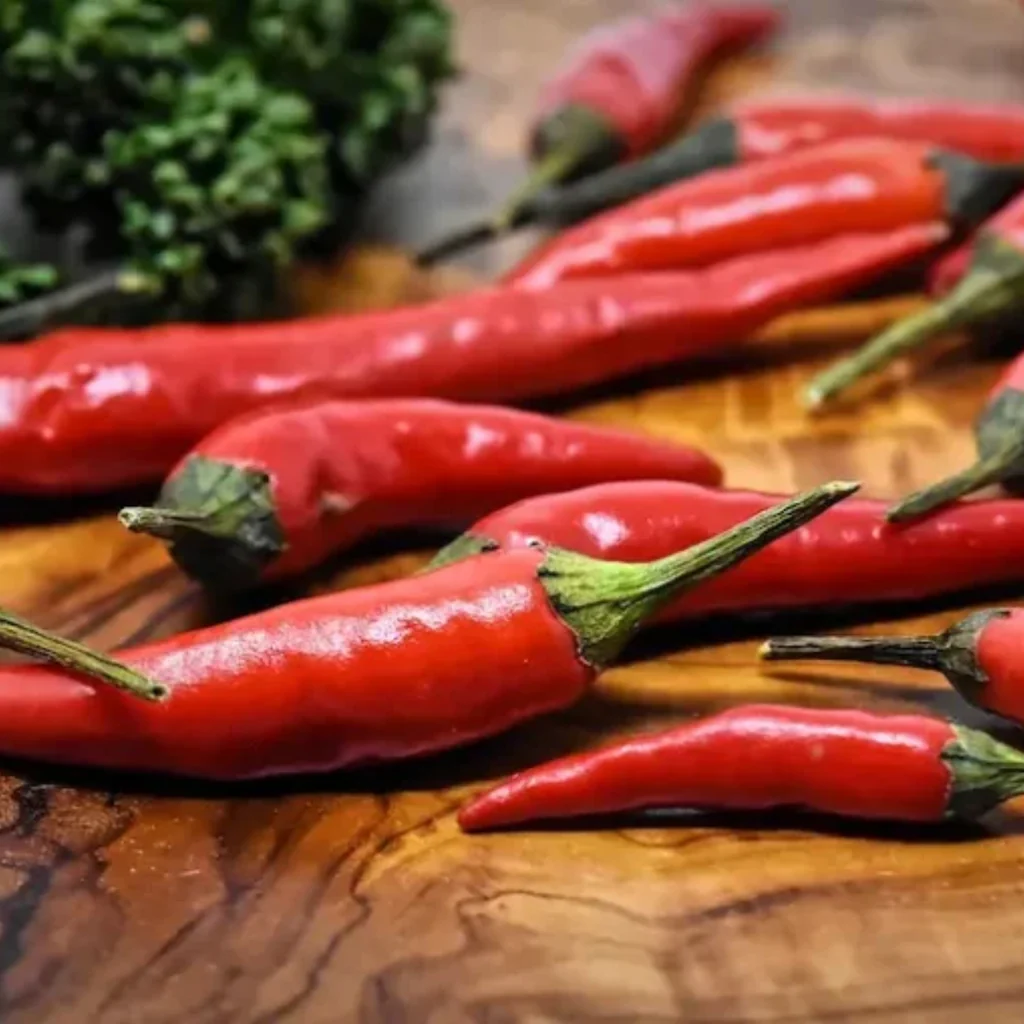
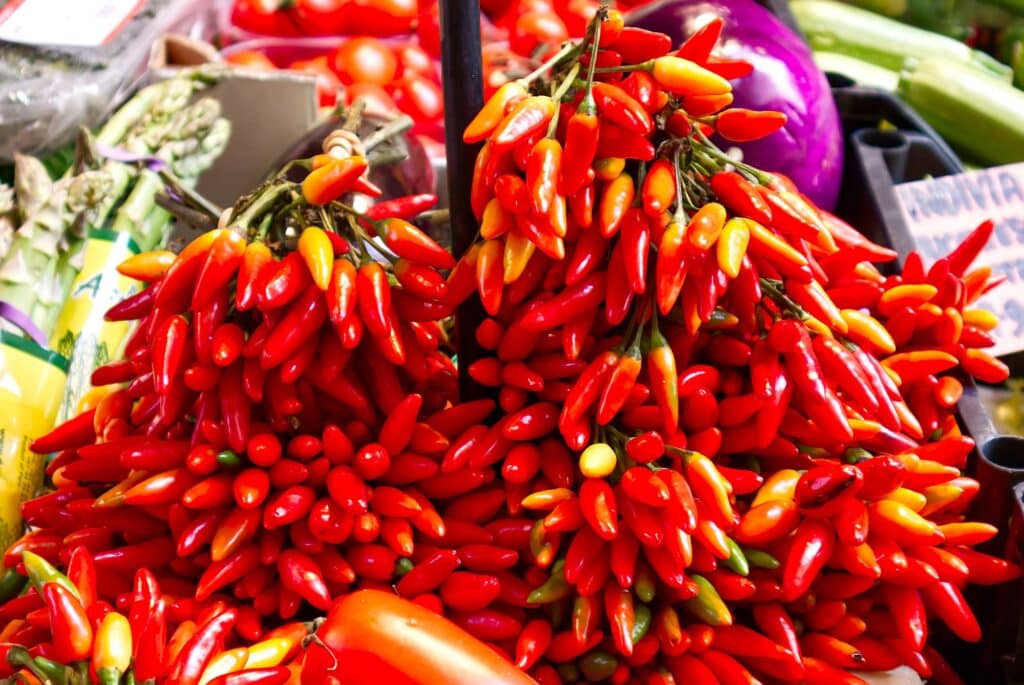
Calabrian chili peppers, known in Italian as peperoncino calabrese, are small varieties of Capsicum annuum native to Calabria, the rugged, sun-scorched region that forms the toe of Italy’s boot. They are not a single variety but rather a family of related peppers that share certain characteristics: a vivid red color at peak ripeness, a fruity and slightly smoky flavor profile, and a heat level that demands your attention without punishing you into silence.
PepperScale
Most Calabrian chili peppers fall between 25,000 and 40,000 Scoville Heat Units — firmly in the medium range, sitting above a jalapeño but well below a habanero. Certain varieties, like the Diavolicchio, can push up toward 150,000 SHU, but even then, the heat has personality. It is not the kind of aggressive, one-note burn that obliterates flavor. There is something underneath it — a brightness, almost a sweetness — that makes these peppers genuinely useful in cooking rather than simply a test of endurance.
You will find them in several forms at the market: whole dried, packed in oil, ground into powder, blended into a paste, or incorporated into products like the famous ‘nduja, the spreadable spiced sausage that Calabria has given the world. Each form has its ideal application, and knowing which to reach for makes a real difference in the finished dish.
The History of Calabrian Chili Peppers
How Chili Peppers Arrived in Calabria
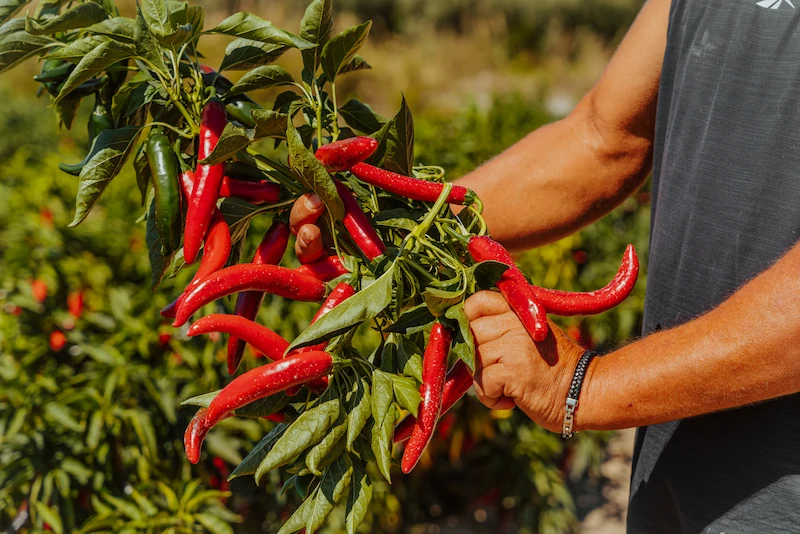
This is where the story gets genuinely interesting, and where my own background as a Chilean-American intersects with Italian food history in a way I find deeply satisfying. Chili peppers are not Italian in origin. They are entirely Latin American, cultivated for thousands of years in what is now Mexico, Peru, and Bolivia, before any European had ever seen them. They arrived in Europe via Christopher Columbus’s second voyage in the late fifteenth century, and then more broadly through Spanish trade routes in the sixteenth century.
My grandmother Julia used to prepare dishes in her Valparaíso kitchen that used chili peppers in ways she had learned from her own grandmother — and those techniques carried the memory of pre-Columbian cooking. It always moves me to think that the same fruit traveled from the Americas to Spain to southern Italy, where it found a second home so thorough and so passionate that today many people assume chili peppers are fundamentally Italian.
Calabria was particularly receptive. The region’s clayey soils, intense Mediterranean sun, and proximity to both the Ionian and Tyrrhenian seas created growing conditions that suited chili peppers extraordinarily well. The peppers adapted, local varieties developed, and within a century or two of their arrival, the peperoncino had become inseparable from Calabrian identity.
From Decoration to Necessity
Early adoption was cautious. Chili peppers were at first treated decoratively, hung on balconies for color, or used hesitantly as a curiosity. But Calabria is historically a poor region, and the peperoncino offered something that poor regions desperately need from their food: utility. Chili peppers acted as a preservative, extending the life of cheeses and cured meats in an era before refrigeration. They earned the nickname “poor man’s lard” — a way of adding depth, heat, and preservation to food that cost almost nothing to grow.
The philosopher Tommaso Campanella praised their medicinal properties as early as 1635, noting benefits for digestion and inflammation. By the late nineteenth century, strings of dried chili peppers — called allucci rosaries — draped across balconies throughout the region like red garlands. They were simultaneously practical food storage and a declaration of Calabrian character.
Today, the Italian Academy of Chili Pepper in Diamante, founded in 1994, exists specifically to preserve and promote this culture. The annual Diavolicchio festival draws visitors from across Italy and beyond. These are not the actions of a region that takes its peppers casually.
Varieties of Calabrian Chili Peppers
The Carasella
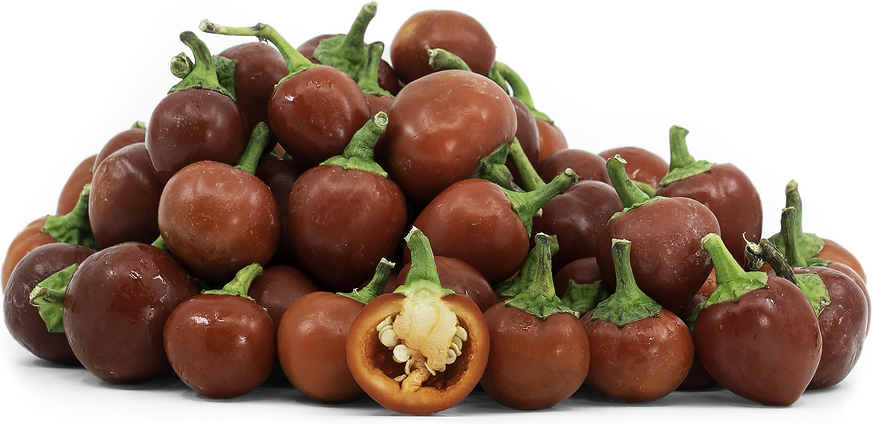
Small, round, and deeply red, the Carasella is one of the most common types you will encounter. Its heat is moderate with a noticeable fruity undertone — almost like a sweet pepper that decided to have an edge. It is excellent for pasta sauces, where that fruitiness can bloom in olive oil and marry with tomato or garlic without overwhelming the dish.
The Diavolicchio
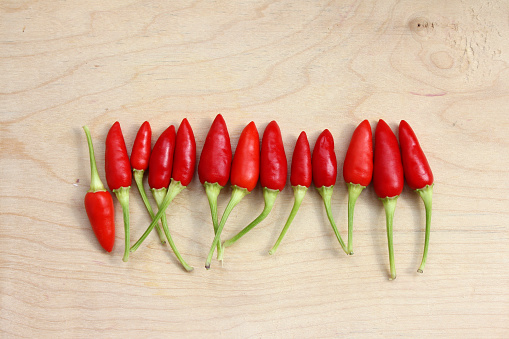
This is the variety that made Diamante famous. Croissant-shaped, roughly three centimeters long, and an aggressive bright red, the Diavolicchio can reach 150,000 Scoville units. The name means “little devil,” which is honest advertising. Use it with respect — a little goes a long way — but do not avoid it. The heat carries flavor, not just punishment.
Long Hot Calabrian
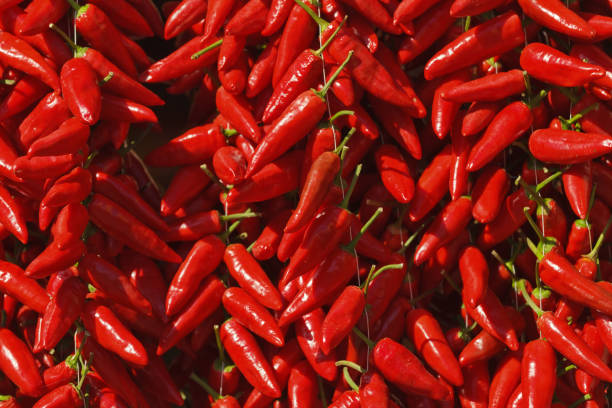
Conical and considerably larger than the others — up to sixteen or seventeen centimeters long and weighing around forty grams — the long hot Calabrian is milder by comparison. It is well suited to roasting or frying whole, or for stuffing and preserving. The plants are notably vigorous and productive, making them popular with home growers.
How Calabrian Chili Peppers Are Produced
Production remains largely artisanal. Small family farms in Calabria’s Ionian and Tyrrhenian coastal zones, as well as the fertile Piana di Sibari, grow these peppers using techniques passed down through generations. The soil is acidic, the sun is relentless, and the harvest is done by hand. There is no industrial shortcut that produces the same result, and most serious producers are not interested in finding one.
Peppers are harvested red — fully ripe — and then processed depending on the intended product. They might be dried in the open air, which concentrates both heat and flavor. They might be packed in olive oil, which preserves them and creates a condiment ready to use straight from the jar. They are ground into powder, blended into paste with salt and olive oil, or mixed with pork fat and spices to become ‘nduja. Traditional methods also include curing peppers alongside vegetables, creating pickled preparations that retain their brightness for months.
There is currently no DOP or IGP certification specifically for Calabrian chili peppers as a category. Their authenticity is protected instead through regional tradition, cultural institutions like the Academy in Diamante, and the integrity of small producers who have no interest in cutting corners. When you buy from a reputable Calabrian producer, you are buying into that chain of care.
How to Buy Calabrian Chili Peppers
The form you buy should match how you plan to use them. Here is how to think about it:
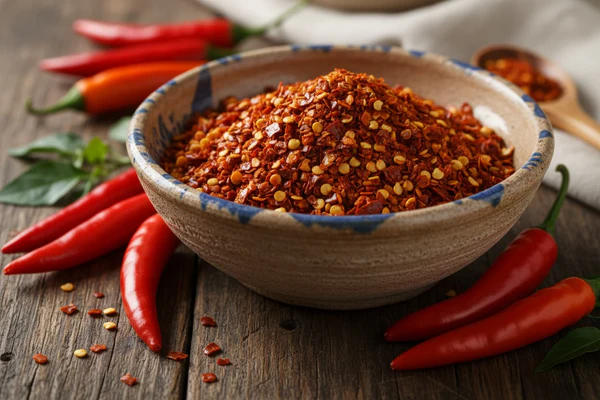
- Whole dried peppers are ideal when you want maximum flexibility. You can crumble them, toast them in oil, grind them yourself, or rehydrate them. Look for peppers with an even, deep red color and no signs of dustiness or fading, which indicate age or poor storage.
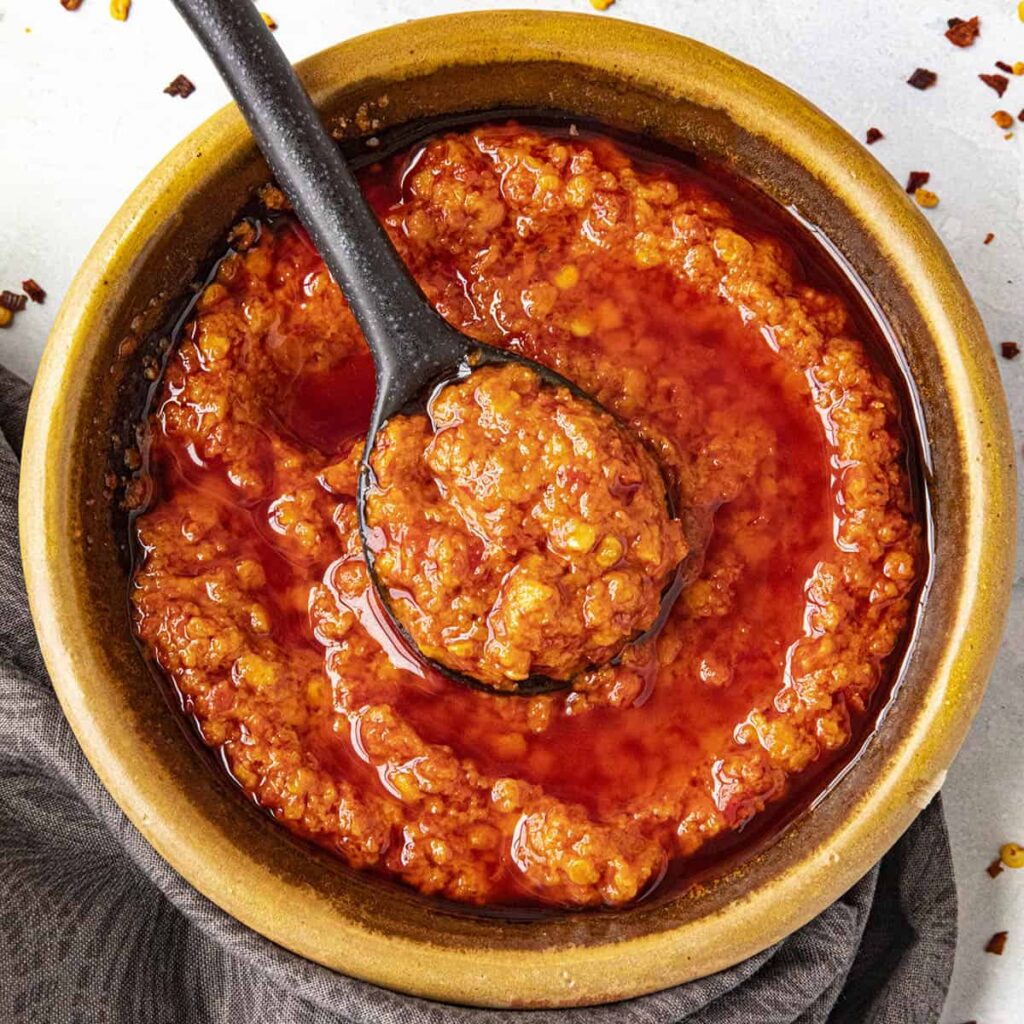
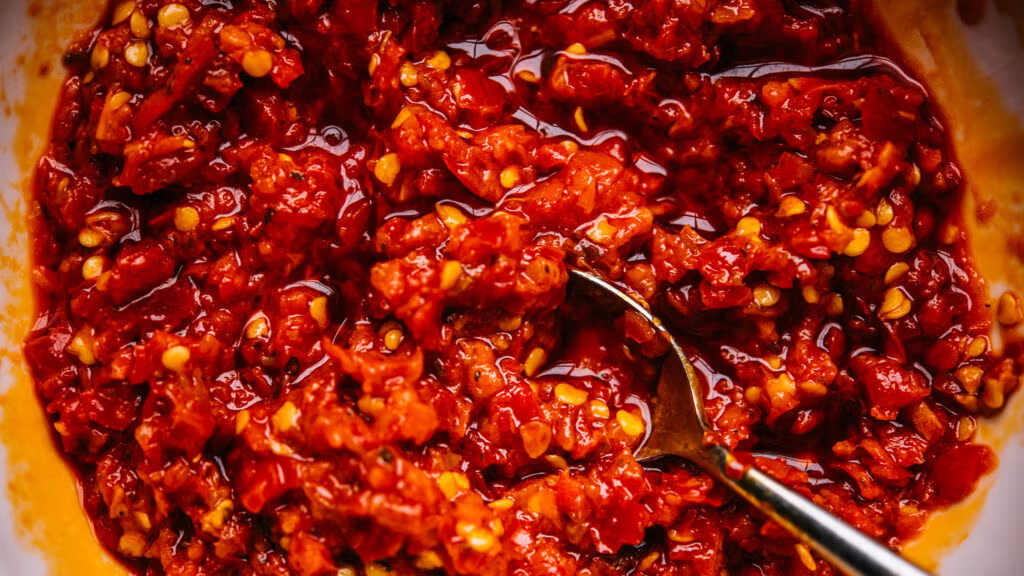
- Calabrian chili paste — often labeled pasta di peperoncino — is the form I reach for most often. It is already blended with olive oil and salt, it incorporates instantly into sauces and dressings, and it delivers consistent heat. This is what I use when I want the flavor of Calabrian chili without a lengthy preparation step.
- Peppers in oil come whole or chopped, submerged in olive oil. The oil itself becomes valuable — it absorbs the pepper’s heat and fruitiness and is worth drizzling on pizza, bread, or finished pasta.
- Ground chili powder (peperoncino in polvere) offers dry heat for spice rubs, dry brines, or situations where you do not want added moisture or oil.
For sourcing, specialty Italian importers are your best option online. Look for brands that name the specific region or variety — a label that simply says “Italian chili pepper” tells you very little. If you are near a city with a good Italian market, that is always my first stop. I make weekly visits to my local market in Sacramento and I can tell the difference between a well-sourced Calabrian paste and a generic product within a single taste.
How to Use Calabrian Chili Peppers in Cooking


In Pasta
This is their most natural home. A spoonful of chili paste stirred into pasta all’aglio e olio transforms a simple dish into something with real authority. It belongs in puttanesca, in any tomato sauce that feels flat, and stirred into butter with pasta water to create a quick sauce that needs nothing else. I have been making a version of this weekly for years — here is what I have learned: add the paste early, when the garlic is just starting to soften in oil, so the heat cooks out slightly and the fruity notes come forward. Added at the end, it is sharper and more aggressive, which is sometimes exactly right but requires intention.
On Pizza
Whole dried Calabrian chilies on a Margherita pizza are one of those combinations that make you wonder why you would ever eat it any other way. The chilies char slightly at the edges in a hot oven, which deepens their smokiness. Chili oil drizzled after the bake is another approach — cleaner heat, more immediate.
In Sauces and Stews
Calabrian chili paste dissolves into braises and tomato-based stews without a trace, leaving only heat and complexity behind. Add it to a slow-cooked lamb ragù, a pot of braised white beans, or a fish stew. My grandmother Julia’s approach to heat in stews was always to build it into the soffritto at the beginning — that same instinct applies perfectly here.
With Cheese, Charcuterie, and Bread
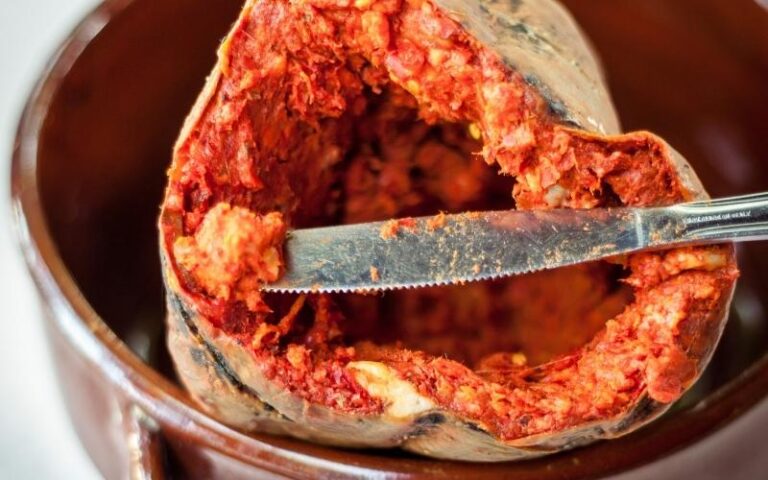
A jar of Calabrian chilies in oil on a cheese board is not a gimmick. It cuts through the fat of aged cheeses and gives the whole spread a reason to keep going. Spread ‘nduja — Calabria’s spiced spreadable sausage, which owes its heat entirely to these peppers — on grilled bread and you will understand immediately why this region’s food has devoted followers.
How to Store Calabrian Chili Peppers

Whole dried peppers keep well in a cool, dark pantry in an airtight container for up to a year. Once ground, use the powder within a few months before the volatile oils that carry flavor begin to fade.
Chili paste and peppers in oil should be refrigerated after opening. Always use a clean spoon to remove what you need — contaminating the jar with food particles shortens its life significantly. Kept properly, an opened jar of quality chili paste will hold for two to three months in the refrigerator. A thin layer of olive oil over the surface of the paste helps keep air away from the product and extends its quality.
Common Mistakes When Cooking with Calabrian Chili Peppers
- Using too much at once. The fruity heat of these peppers builds over a dish. Start with less than you think you need, taste, and adjust. It is much easier to add heat than to remove it.
- Skipping the bloom. Dried or paste forms benefit enormously from a moment in warm olive oil before other ingredients are added. That brief bloom releases fat-soluble compounds that change the character of the heat entirely.
- Treating all forms as interchangeable. Chili paste is already salted. Dried peppers are not. If you substitute one for the other without adjusting your seasoning, the dish will be either flat or over-salted.
- Storing paste at room temperature after opening. This is a real risk for spoilage. Refrigerate it, always.
- Buying generic “Italian chili.” The specific character of a Calabrian pepper — its fruitiness, its smokiness, the way it behaves in oil — is not replicated by a generic red pepper flake. Source the real thing; it is worth the extra effort.
A Final Word
Calabrian chili peppers carry the history of two continents. They began in the Americas, traveled across an ocean, and found a second identity in one of the most passionate food cultures in the world. Every time I open a jar of chili paste or crush a dried Diavolicchio into warm olive oil, I feel that history — the same thread that connected my grandmother Julia’s kitchen in Valparaíso to the balconies of Calabria draped in red pepper necklaces. That kind of continuity is what makes an ingredient worth knowing deeply.
Use them generously. Store them carefully. Buy them from producers who take their peppers as seriously as Calabria always has.
Calabrian chili peppers are part of the broader Italian Pantry guide on CalitaliaFood — your complete resource for understanding and cooking with the essential ingredients of Italian cuisine.
Frequently Asked Questions
Can I substitute Calabrian chili peppers with other red peppers in recipes?
Not really without trade-offs. While you can use jalapeños or serranos in a pinch, you’ll lose that distinctive fruity-smoky profile that makes Calabrian peppers special. The heat level also differs significantly, so your dish won’t have the same balanced kick and flavor complexity.
How long do Calabrian chili peppers in oil last once opened?
I keep mine in the refrigerator after opening and they stay fresh for about 2-3 months, sometimes longer if you’re careful about contamination. The oil acts as a preservative, but always use a clean utensil when scooping them out to avoid introducing bacteria.
What’s the difference between using fresh versus dried Calabrian peppers?
Fresh peppers give you bright, immediate heat, while dried ones develop deeper, more concentrated flavors during the drying process. I use dried when I want to build complex heat into long-cooked dishes, and fresh when I need that snappy punch at the end of cooking.
Is ‘nduja just Calabrian chili peppers mixed with meat?
Not quite. ‘nduja is a spreadable sausage made from pork fat and meat scraps mixed with Calabrian chili peppers and spices. The peppers are essential, but it’s the emulsified pork fat that gives it that luxurious, spreadable texture you can’t replicate with just peppers.
Why are some Calabrian peppers significantly hotter than others?
Growing conditions matter enormously — soil composition, water stress, and sunshine hours all affect capsaicin levels. Even within the same variety like Diavolicchio, peppers can vary wildly. I’ve learned to taste before committing to large quantities in important dishes.
Written by José Villalobos
José Villalobos is a food writer and the founder of Calitalia Food. He grew up in Valparaíso, Chile, where his grandmother Julia cooked Italian food daily from memory and instinct. Based in Sacramento, California, he visits local Italian markets weekly and writes about ingredients, sauces, and regional food culture with the kind of detail that comes from years of sourcing, testing, and eating. Every product he recommends, he has personally bought and tested.