If you’ve ever asked yourself what is nduja — that intensely red, aggressively spicy, almost molten salami showing up on pizza menus and cheese boards everywhere right now — you’re not alone. I get this question constantly from readers, and honestly, it deserves a real answer rather than a one-liner.
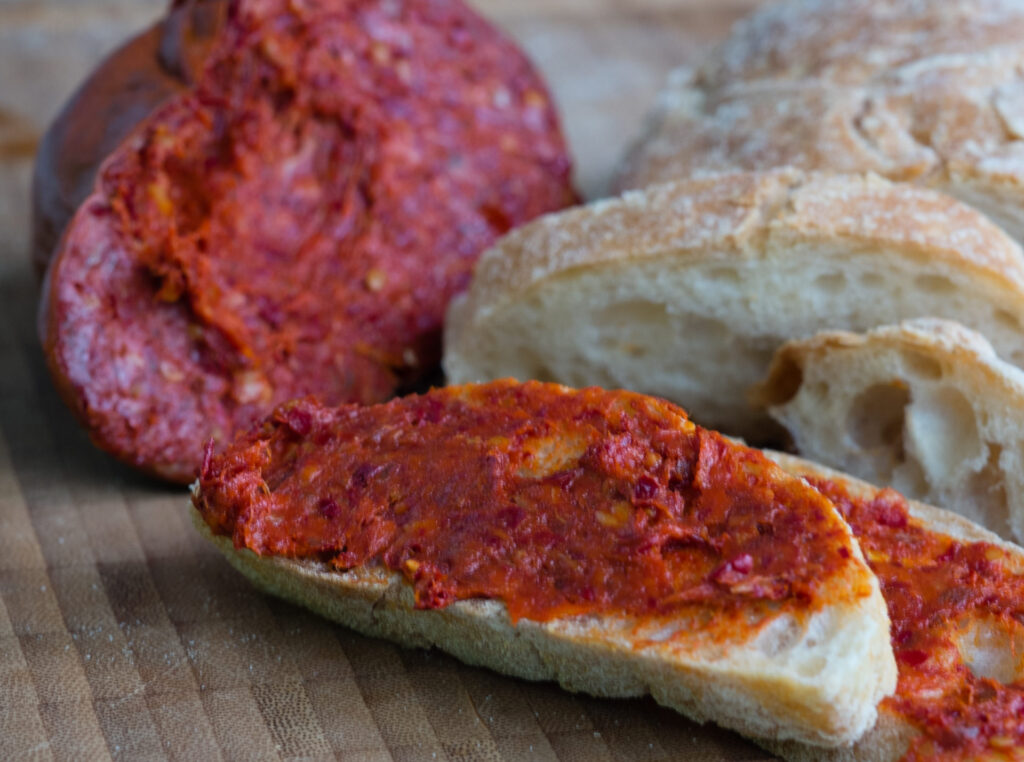
‘Nduja (pronounced en-DOO-ya) is a soft, spreadable cured pork salami from Spilinga, a small town in Calabria’s Vibo Valentia province in southern Italy.
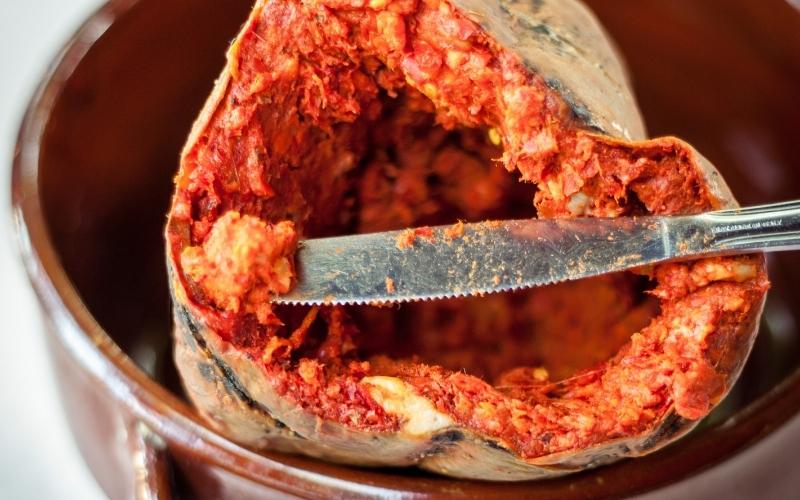
It’s loaded with Calabrian chili peppers, has a butter-like texture from its high fat content, and carries a smoky depth that makes it unlike anything else in the world of Italian cold cuts. It is, without question, one of the most exciting things you can put on bread.
I first encountered it properly when I visited Calabria several years ago. I’d seen the jars at the Italian cold cuts section of my local Sacramento Italian market, but nothing prepared me for tasting it fresh from a Spilinga producer — spread thick on a torn piece of crusty bread, still slightly warm from the shop counter. That experience ruined supermarket nduja for me permanently, in the best possible way. Let me walk you through everything you need to know about it.
The Origins of ‘Nduja: A Peasant Salami With a Complicated Family Tree
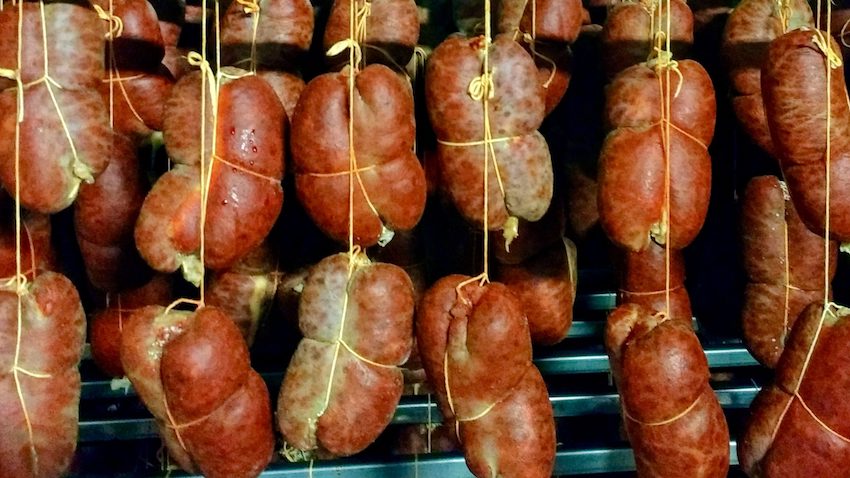
‘Nduja emerged in the 19th century in Spilinga, a village perched on the temperate Poro plateau near the Tyrrhenian Sea. The coastal conditions there — mild, humid, and breezy — turned out to be ideal for curing sausages. But the story of how nduja came to be is more layered than most people realize.
The name itself is a clue. It almost certainly derives from the French andouille, a smoked sausage, which arrived in southern Italy during Napoleon Bonaparte’s brief rule of the Kingdom of Naples in the early 1800s via his brother-in-law Joachim Murat. But the French connection is just one strand.
Centuries earlier, during the Spanish occupation of southern Italy in the 1500s, Aragonese rule brought another influence: sobrassada, the spreadable cured sausage from the Balearic Islands. The Spanish also introduced peperoncino — chili peppers — to Calabria after they arrived from the Americas. ‘Nduja is, in a very real sense, the product of conquest, trade, and poverty all colliding in a single Calabrian village.
And poverty is the right word. ‘Nduja is a quintessential cucina povera food. Peasant families who slaughtered a pig in winter couldn’t afford to waste any of it. So the parts nobody else wanted — the spleen, stomach, lungs, scraps of organ meat — were ground fine, packed with fat, salt, and roughly 30% sundried local chili peppers, and stuffed into casings. The chili wasn’t just for flavor. It acted as a natural antiseptic and antioxidant, which meant the sausage needed no additional preservatives. It was clever, resourceful, and it worked beautifully.
Today, Spilinga celebrates nduja every August 8th with an annual festival featuring tastings and production demonstrations. The sausage has traveled a long way from peasant kitchens to high-end restaurant menus across the world, but Spilinga remains its spiritual home. There are ongoing efforts to secure PGI (Protected Geographical Indication) status for “Nduja di Spilinga” to protect authentic producers against inferior imitations — though as of now, no formal DOP or IGP protection exists.
What Is Nduja Made Of — And How Is It Produced?
Modern nduja has evolved from its offal-heavy origins. Artisanal producers today typically use premium fatty pork cuts — neck fat, lard, pancetta, and guanciale (cured pork cheek) — rather than organs, though some traditional makers still incorporate offal for authenticity and depth. Whatever the cut, the fat content is always high, typically between 50 and 70 percent. That’s what gives nduja its signature spreadable, almost pâté-like consistency.
The Chili Peppers Are Everything
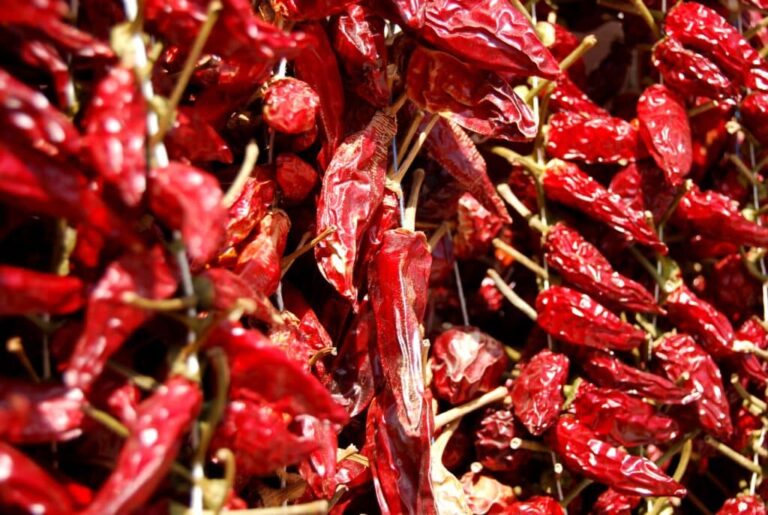
The Calabrian peperoncino used in nduja isn’t just any chili. The specific variety grown in the foothills of Mount Poro near Spilinga is sweet-spicy, vibrant red, and sun-dried before being ground into the mixture. These chilies account for that deep brick-red color you see when you slice open a good nduja. They bring heat, but also a fruity complexity and natural preservative power. When I visited Calabria, I watched a producer show me the sheer volume of dried chilies going into a batch — it’s a staggering proportion, and it explains why authentic nduja has that full-body heat that builds slowly rather than just slamming you upfront.
The Smoking and Curing Process
After the pork is finely ground and mixed with salt and chili, it’s stuffed into natural hog casings and tied off. The sausages are then air-dried for about 24 hours before going into a slow-smoking phase over local woods — typically oak or aromatic herbs — for more than ten days. That smoking step is critical and is often what separates a truly exceptional nduja from a mediocre one.
After smoking, the curing begins. Smaller pieces cure for around 2 to 4 months in cool, humid Calabrian stone basements or climate-controlled environments designed to mimic Spilinga’s conditions. Larger sausages — some weighing several kilograms — can cure for up to a year and develop a far deeper, more complex flavor. The environment needs to be cool (around 10-15°C) with specific humidity levels; too dry and the casing hardens prematurely, too warm and the fat breaks down incorrectly.
American producers, including some in Seattle, have started replicating these Spilinga techniques with real success. I’ve tried a few, and while they don’t perfectly match what I tasted fresh in Calabria, some come remarkably close.
How to Buy Nduja: What to Look For
This is where most people go wrong, and I say that from experience. At the Sacramento Italian market, I’ve compared several brands of nduja side by side, and the quality difference between authentic Calabrian nduja and mass-market versions is enormous. Here’s what actually matters when you’re buying it.
Look for Calabrian Origin and the Right Texture
The label should reference Calabria — ideally Spilinga or Vibo Valentia province. Genuine nduja comes in natural casings, not plastic, and should feel soft and squeezable even when cold. If it feels firm or stiff, that’s a red flag. The color should be a deep, vibrant red — not orange, not pale pink. When you spread it, it should smear red on the bread cleanly without grittiness. Gritty texture usually means inferior spice blends or poor-quality fat.
Whole vs. Pre-Sliced vs. Jarred
Always buy whole, unsliced nduja in its casing if you can find it. Pre-sliced versions dry out quickly and lose that essential soft texture. Vacuum-sealed jars of nduja paste are a practical alternative and hold up well, though the flavor profile is slightly different — more concentrated, less of that smoky casing character. In my experience buying this for years, the jarred versions from reputable importers are worth keeping in the pantry as a backup even when you have the real thing.
Brands and Producers Worth Knowing
For authentic Calabrian producers, look for names like Salumificio Fuoco and Salumi Artigianali del Poro, both of which have been consistently praised by testers for quality. For importing, Bottega di Calabria and Feast Italy are reputable sources that work with artisanal Calabrian producers. The brand I keep in my kitchen most reliably is sourced through a Calabrian importer my Sacramento market stocks, because I can verify its origin and the texture has never let me down. Expect to pay between €20 and €40 per kilogram for genuine product — if it’s significantly cheaper, ask questions.
How to Cook With ‘Nduja
One of the best things about nduja is its versatility. That high fat content means it melts almost instantly when it hits a warm pan, transforming into a rich, spicy, orange-red oil that coats pasta beautifully or forms the flavor base of a quick sauce. My grandmother Julia would use a version of spreadable spiced pork paste in her cooking in Valparaíso — she’d learned Italian techniques from neighbors and worked them into her own repertoire — and watching her melt fat into sauces as a flavor foundation gave me an early instinct for how nduja wants to be used.
Pasta and Sauces
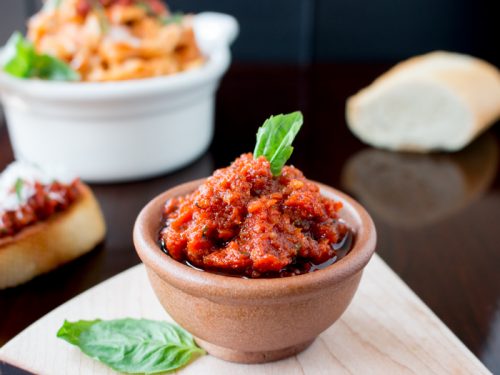
The simplest nduja pasta recipe is also one of the best: sauté about 100 grams of nduja in a dry pan over medium heat — no oil needed, it provides its own fat — until it starts to liquefy. Add halved cherry tomatoes and let everything simmer together for about 10 minutes until the sauce tightens. Toss with spaghetti, finish with a handful of grated pecorino, and that’s dinner. The fat from the nduja coats every strand of pasta, and the chili heat blooms through the tomato acidity in a way that’s genuinely addictive.
Pizza, Frittatas, and Beyond
Dollop nduja directly onto pizza before baking — it will pool into orange-red puddles across the cheese as it cooks. Stir it into risotto for a spicy, smoky backbone. Mix it into a frittata. Spread it onto burrata or fresh buffalo mozzarella and watch the fat from the nduja bleed into the cheese in the best possible way. It works beautifully with beans too — fagioli con nduja is a humble Calabrian classic that’s deeply satisfying on a cold day.
A few things to keep in mind: nduja is powerful, so start with less than you think you need — about one to two teaspoons per person in pasta is a reasonable starting point until you know your heat tolerance. And never overcook it at high heat; burning the fat makes it greasy and acrid, stripping out the nuance.
Cheese Board and Bread Pairings
Paired with creamy caciocavallo or mild scamorza, nduja on a cheese board is a revelation — the heat and fat of the salami play beautifully against stretchy, mild cheese. Buffalo mozzarella works for the same reason. Spread it on crusty bread with a drizzle of honey to soften the heat, or try it alongside polenta or roasted vegetables. Some Calabrian cooks even use it as a counterpoint to sweetness in desserts involving dark chocolate, though I’ll admit that one takes some getting used to.
Wine Pairings
For wine, crisp Calabrian whites like Cirò Bianco or a Savuto rosé do a nice job cutting through the fat and cooling the spice. If you prefer red, a bold Cirò Rosso can hold its own alongside nduja’s intensity. Avoid delicate or tannic wines — the heat will make tannins feel harsh.
How to Store ‘Nduja
A whole nduja in its casing can be kept in a cool, dry pantry — ideally between 10 and 15°C — for up to six months. Once you cut into it, wrap the exposed end tightly in cloth or wax paper (not plastic, which traps moisture and encourages the wrong kind of mold) and move it to the refrigerator. Use it within a few weeks of cutting.
If you need to freeze it, slice it into portions first, wrap well, and freeze for up to six to twelve months. Thaw slowly in the refrigerator rather than at room temperature. A white powdery bloom on the exterior of an uncut casing is a normal, safe mold similar to what you’d see on aged salumi — don’t panic, just wipe it off. What you want to avoid is soft, wet rind caused by excessive humidity or heat, which indicates improper storage conditions.
One more thing: always let nduja come to room temperature before serving. Cold nduja is stiffer, harder to spread, and loses some of its aromatic complexity. Give it twenty minutes out of the fridge and it’ll reward you.
The Biggest Mistakes People Make With ‘Nduja
- Buying non-Calabrian versions — Many products labeled “nduja-style” lack both authentic peperoncino heat and proper smoking, and often have a gritty texture that gives the game away immediately.
- Storing it in plastic wrap — This causes sweating and encourages bad mold growth on cut pieces. Use cloth or wax paper.
- Using too much — ‘Nduja is intensely flavored. A little goes further than you expect, and overdoing it can drown out everything else in a dish.
- Cooking it over high heat — The fat burns quickly and turns greasy. Medium heat is all you need, and the nduja will do the rest.
- Spreading it cold — Cold nduja doesn’t spread; it clumps. Bring it to room temperature first.
Where ‘Nduja Fits in Italian Cold Cuts
‘Nduja occupies a genuinely unique space in the world of Italian salumi. It doesn’t behave like any other cured meat — it’s not sliced thin on a board, it’s not layered into a sandwich the way mortadella or prosciutto would be. It’s a condiment as much as it is a cold cut, a cooking ingredient as much as it is something you eat on its own. If you want to understand where it sits alongside other Italian cured meats, my Italian cold cuts guide covers the full landscape of salumi, from the delicate to the ferociously bold.
My practical recommendation: start with a 500-gram piece from a reputable Calabrian importer. Spend the first portion just on bread — good, crusty bread, room temperature nduja, nothing else — so you can actually understand what you’re working with. Once you’ve tasted it that way, everything else will make sense. The pasta, the pizza, the cheese board — they’ll all fall into place. But bread first. Always bread first.
Written by José Villalobos
José Villalobos is a food writer and the founder of Calitalia Food. He grew up in Valparaíso, Chile, where his grandmother Julia cooked Italian food daily from memory and instinct. Based in Sacramento, California, he visits local Italian markets weekly and writes about ingredients, sauces, and regional food culture with the kind of detail that comes from years of sourcing, testing, and eating. Every product he recommends, he has personally bought and tested.