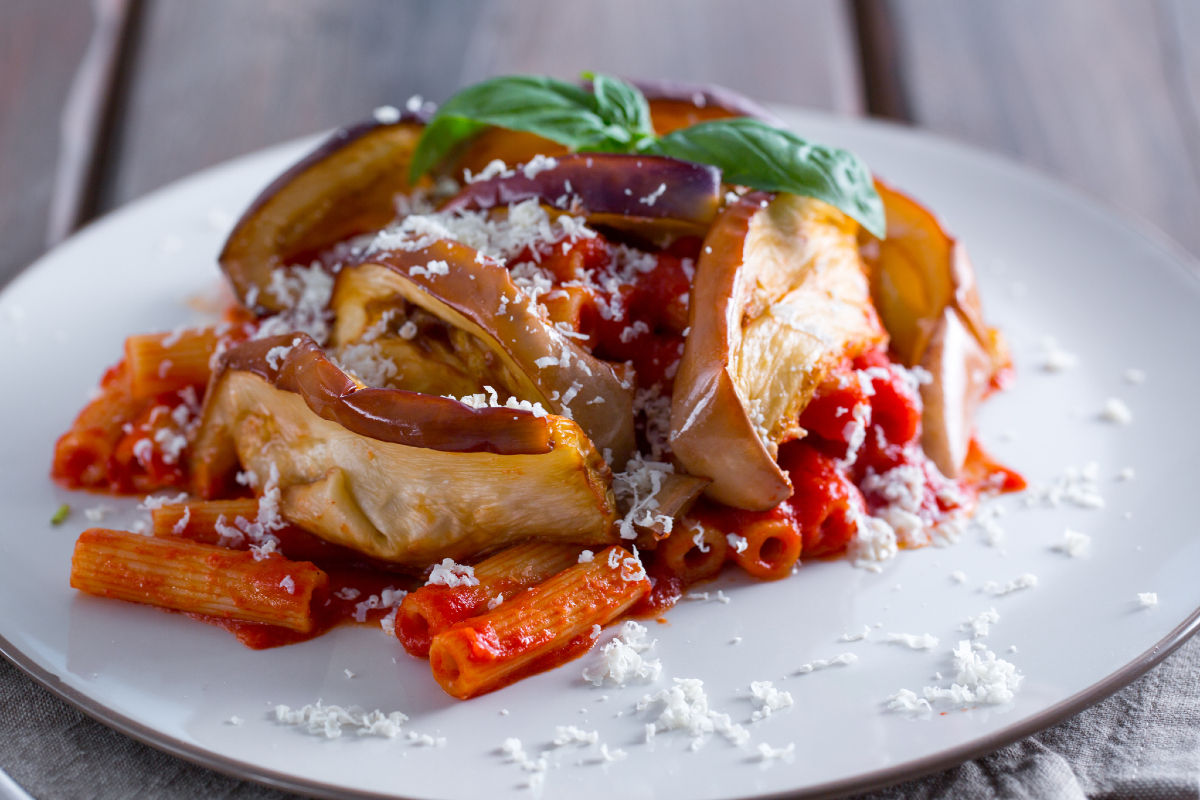
If you’ve spent any time exploring Italian regional cooking, you’ve probably come across pasta alla Norma — that deeply satisfying Sicilian combination of fried eggplant, tomato sauce, ricotta salata, and fresh basil tossed with short pasta.
It’s one of those dishes that sounds almost too simple to be extraordinary, and yet every time I make it, I’m reminded of why Sicily’s cucina povera tradition produced some of the most intelligent food in the Mediterranean world.
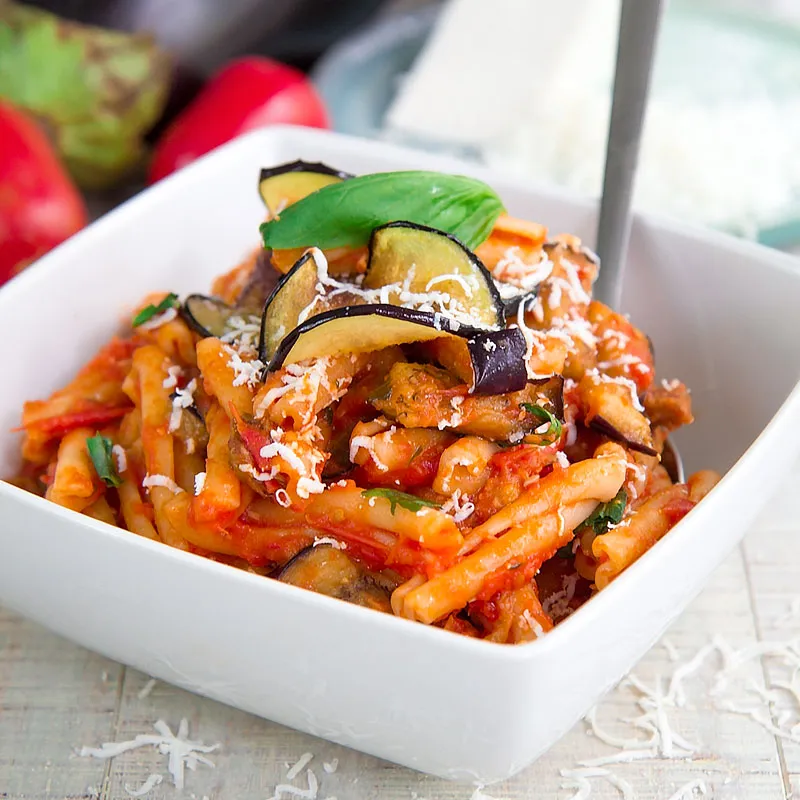
This is not a dish that hides behind complexity. It earns its place through quality, balance, and a kind of confident restraint that only the best Italian cooking has.
My grandmother Julia made a version of this in Valparaíso, Chile, where she’d learned Italian cooking from her neighbors — a community of Ligurian and Sicilian immigrants who had settled along the Chilean coast generations earlier. She called it simply “la pasta con le melanzane,” and she was particular about the eggplant. You had to fry it properly. Everything else followed from that.
What Is Pasta alla Norma?
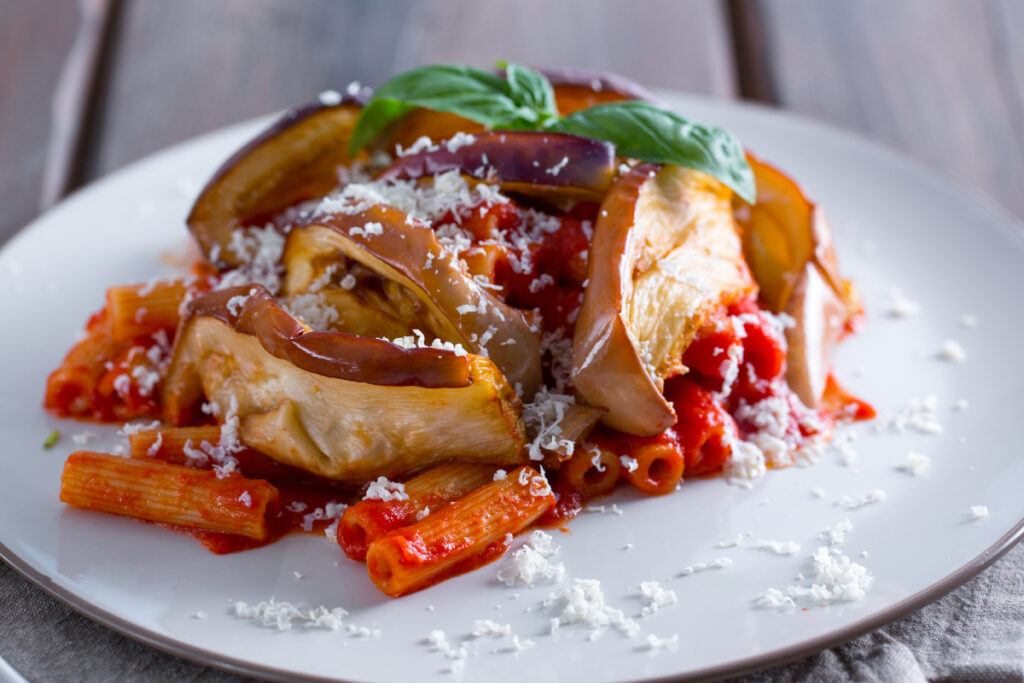
Pasta alla Norma is a traditional Sicilian pasta dish from the city of Catania, on the eastern coast of Sicily, in the shadow of Mount Etna. It is built from four core elements: short pasta cooked al dente, a simple tomato sauce, golden-fried eggplant slices, and freshly grated ricotta salata — a firm, lightly salty aged cheese made from sheep’s milk. A handful of fresh basil leaves finishes the dish at the table.
What makes it distinctly Sicilian — and distinctly Catanese — is how those four elements come together. The tomato sauce is not elaborate. The eggplant carries most of the weight, providing richness, texture, and that characteristic Mediterranean sweetness that comes from proper frying in olive oil. The ricotta salata adds a sharp, saline edge that lifts the whole plate. Basil does exactly what basil should do: it perfumes without overpowering.
It is traditionally served as a primo piatto — a first course — though outside Italy, most of us eat it as a full meal and feel no guilt about it whatsoever.
The History Behind the Name
Few Italian dishes carry a story as elegant as this one. Pasta alla Norma is named after Norma, the 1831 opera by Vincenzo Bellini, Catania’s most celebrated son. Bellini’s masterwork premiered at Milan’s Teatro alla Scala on December 26, 1831, and it has remained one of the most demanding and revered works in the soprano repertoire ever since.

The most widely repeated origin story credits a Catanese writer named Nino Martoglio — a playwright and intellectual of some note in early twentieth-century Sicily. According to the legend, Martoglio was served this pasta at a dinner, took one bite, and exclaimed in Sicilian dialect: “Chista è na vera ‘Norma’!” — “This is a real ‘Norma’!” The comparison was not offhand. In Sicilian usage, “Norma” had become shorthand for something perfect, for an achievement so complete it needed no further explanation. By invoking Bellini’s opera, Martoglio was saying: this pasta is a masterpiece.
Historians note, with appropriate caution, that documented evidence for this story appears only decades after Martoglio’s death. This is not unusual in Italian culinary history, where the best stories tend to outlive their sources. What is certain is that the dish exists, that it comes from Catania, and that its name has honored Bellini’s legacy for as long as anyone can reliably remember. In 2018, pasta alla Norma received additional contemporary recognition when it was named dish of the year by the BIT Tourism Award — a fitting acknowledgment of a recipe that had been quietly perfect for well over a century.
There is a secondary footnote to the naming that I find charming: some accounts suggest that Bellini himself may have been inspired in the composition of the opera by the soprano Giuditta Pasta, one of the most celebrated singers of the era. Whether the chef who first made this dish was similarly inspired is lost to history. But there is something appropriate about a dish named for an opera that was itself built around a demanding, extraordinary performance. Pasta alla Norma does not forgive careless cooking.
How to Make Pasta alla Norma the Right Way
Choose Your Ingredients Carefully
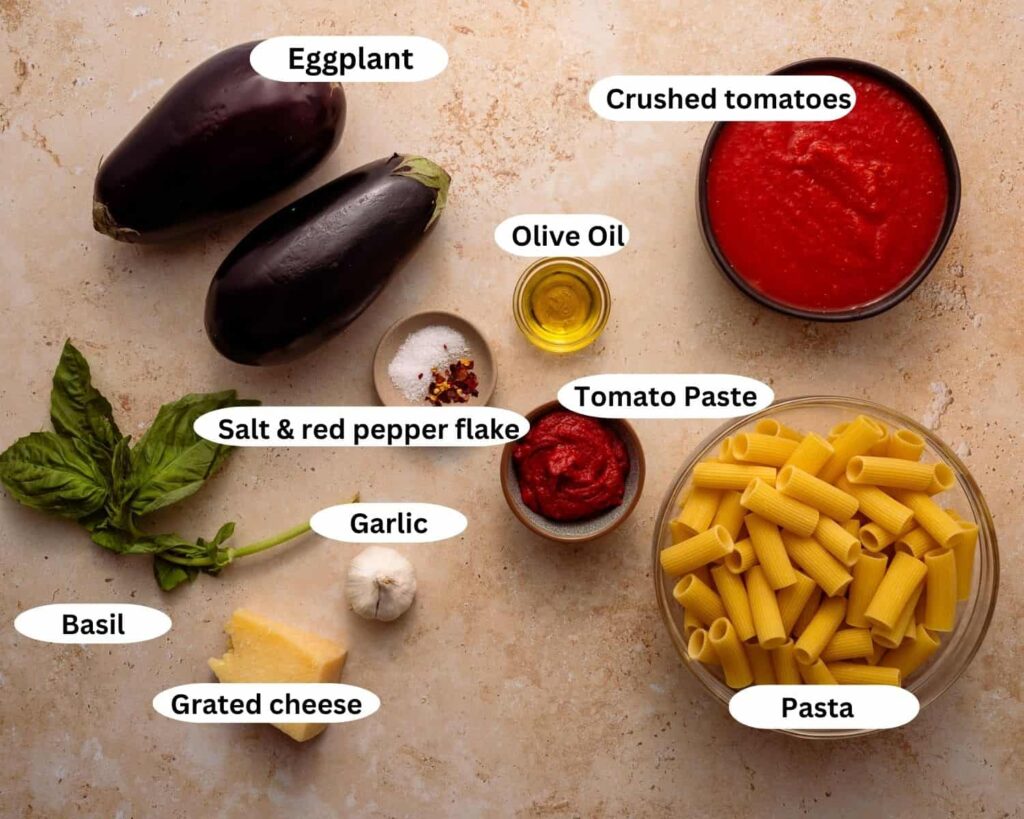
This dish has no sauce to hide behind and no long braise to smooth over inferior ingredients. Every component will be visible and tasted on its own. Start with the eggplant: you want firm, heavy specimens with tight, glossy skin and no soft spots. The ideal variety is the Sicilian violet eggplant — a rounder, slightly more compact shape with a sweeter, less bitter flesh than the long variety commonly found in American supermarkets. If you can find them at a farmers’ market in late summer, buy more than you think you need.
For the tomato sauce, use ripe, fresh plum tomatoes when they are in season. Out of season, good canned San Marzano tomatoes — ideally DOP certified — are the correct call. I keep a case of them in my Sacramento kitchen from October through June and use them without apology.
The pasta should be a short, ridged shape. Penne rigate is traditional and practical — the ridges catch sauce, and the tube holds up to the weight of the eggplant. Rigatoni, sedani, or even maccheroni work well. Whatever you use, buy it from a producer who uses bronze-die extrusion. The rough surface it creates on the pasta makes a real difference in how the sauce adheres. When I tested this side-by-side in my Sacramento kitchen, the difference was clear: bronze-die penne versus the smoother Teflon-extruded variety from the same sauce resulted in two entirely different eating experiences.
Ricotta salata is non-negotiable. Do not substitute fresh ricotta, feta, or Parmesan. Ricotta salata is a pressed, salted, aged sheep’s milk cheese with a firm texture that grates cleanly and a flavor that is simultaneously milky and briny. It is the element that defines the dish. I sourced this from a small importer in Sacramento who brings it in directly from a Sicilian producer, and it is noticeably more complex than the domestic versions — firmer, less rubbery, with a minerality that actually registers on the palate.
Preparing the Eggplant
Slice the eggplant into rounds about half a centimeter thick, or into batons if you prefer a different presentation. Salt them generously and lay them in a colander over the sink. Let them drain for at least thirty minutes. This step draws out moisture and any residual bitterness, and it also means your eggplant will fry rather than steam in the pan.
Pat the slices dry with a clean towel before frying. Use olive oil — not extra virgin for frying, as the smoke point is too low and the flavor too assertive at high heat. A refined olive oil or a light olive oil works well here. Heat it in a wide skillet until shimmering, then fry the eggplant in batches without crowding. You want deep golden color on both sides, with a slight crispness at the edges and a creamy interior. Transfer to a paper-lined plate and season lightly with salt while still hot.
Making the Tomato Sauce
The sauce for pasta alla Norma is intentionally restrained. Warm a few tablespoons of olive oil in a heavy pan over medium heat. Add one or two cloves of garlic — left whole if you prefer a gentle flavor, thinly sliced if you want more presence. Cook until fragrant but not colored, then add your tomatoes. If using fresh, crush them by hand into the pan. If using canned, do the same. Season with salt and a few basil leaves torn by hand. Simmer for twenty to twenty-five minutes, stirring occasionally, until the sauce is thick and the tomatoes have completely broken down. Remove the garlic if you left it whole. Taste for salt. That is your sauce. Do not add sugar. Do not add wine. Resist the urge to improve it.
Bringing the Dish Together
Cook your pasta in heavily salted water — it should taste like a mild sea — until it is just al dente. Reserve a cup of pasta water before draining. Toss the hot pasta with the tomato sauce in the pan, adding a splash of pasta water if needed to loosen things. The sauce should coat each piece without pooling at the bottom of the bowl.
Plate generously, lay several pieces of fried eggplant over the top, grate ricotta salata directly over the dish with a fine grater, and finish with fresh basil leaves torn at the last second. Serve immediately. This is not a dish that waits.
How to Buy the Key Ingredients
Eggplant is available in most supermarkets year-round, but peak season in North America runs from July through September. Shop at farmers markets during those months for the best quality. Look for eggplants that feel heavy for their size and have taut, shiny skin — softness or wrinkling indicates age.
Ricotta salata can be found at Italian specialty shops, good cheese counters, and some well-stocked grocery stores. If your local options are limited, look for online importers who source directly from Sicily or Sardinia. Avoid anything labeled simply “salted ricotta” that comes pre-crumbled in plastic — the texture and flavor are rarely right.
For pasta, seek out Sicilian or southern Italian brands like Setaro, Benedetto Cavalieri, or Rustichella d’Abruzzo. These producers use semolina from durum wheat and slow-dry their pasta at low temperatures, which preserves a nuttier, more complex flavor and a firmer texture when cooked.
The difference matters in a dish where the pasta is not buried under a heavy sauce.
How to Store Leftovers
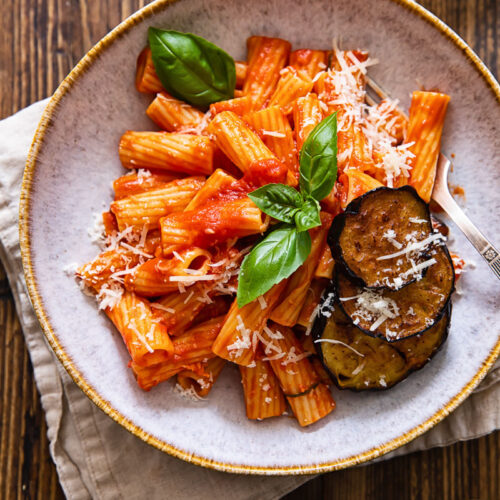
Pasta alla Norma is at its best the moment it comes off the stove, but leftovers are not a tragedy. Store them in an airtight container in the refrigerator for up to two days. The fried eggplant will soften as it sits — this is inevitable — but the flavor deepens overnight in a way that is actually quite pleasant.
To reheat, use a skillet over medium-low heat with a small splash of water or olive oil. Stir gently until warmed through. The microwave works in a pinch, though it does nothing for texture. Do not freeze pasta alla Norma — the eggplant becomes waterlogged and the pasta loses its structure entirely.
If you are planning ahead, you can prepare the tomato sauce and the fried eggplant separately up to two days in advance and refrigerate them. Cook fresh pasta when ready to serve and combine everything at the last moment. This is the smartest approach for a dinner party.
Common Mistakes to Avoid
Skipping the Salting Step for Eggplant
Modern eggplant varieties have been bred to be less bitter than their older counterparts, and some cooks argue that salting is no longer necessary. I disagree, at least for this dish. The salting step is primarily about moisture removal, not just bitterness, and that moisture control is what gives you golden, crisp-edged eggplant instead of greasy, soft pieces that fall apart in the sauce.
Using the Wrong Cheese
This is the most common mistake made outside of Sicily. Fresh ricotta is too wet and bland. Pecorino is too sharp and dry in the wrong way. Parmesan is fine on many things but it changes the flavor profile of this dish entirely. Ricotta salata is the cheese. Find it.
Overcooking the Tomato Sauce
The sauce for pasta alla Norma should taste bright and fresh, not long-cooked and jammy. Twenty-five minutes is enough. You are not making a ragù.
Crowding the Eggplant in the Pan
If you fry too many slices at once, the oil temperature drops, and the eggplant steams instead of fries. Work in batches. Take your time. The eggplant is the heart of this dish, and it deserves the attention.
Using Pre-grated Cheese
Grate the ricotta salata directly over the plate at the last moment. Pre-grated cheese dries out and loses the texture that makes it work here. A fine Microplane or the small holes on a box grater are both excellent.
A Final Word on This Dish
When I travel in Sicily — and I have spent time in Catania specifically, wandering the market at Piazza Carlo Alberto where the produce stalls spill into the street under the shadow of the Baroque cathedral — what strikes me about the food is its absolute refusal to perform. Pasta alla Norma is not trying to impress you with technique or novelty. It is confident in the way that only old, well-loved things can be confident. It trusts its ingredients. It trusts the person cooking it to pay attention.
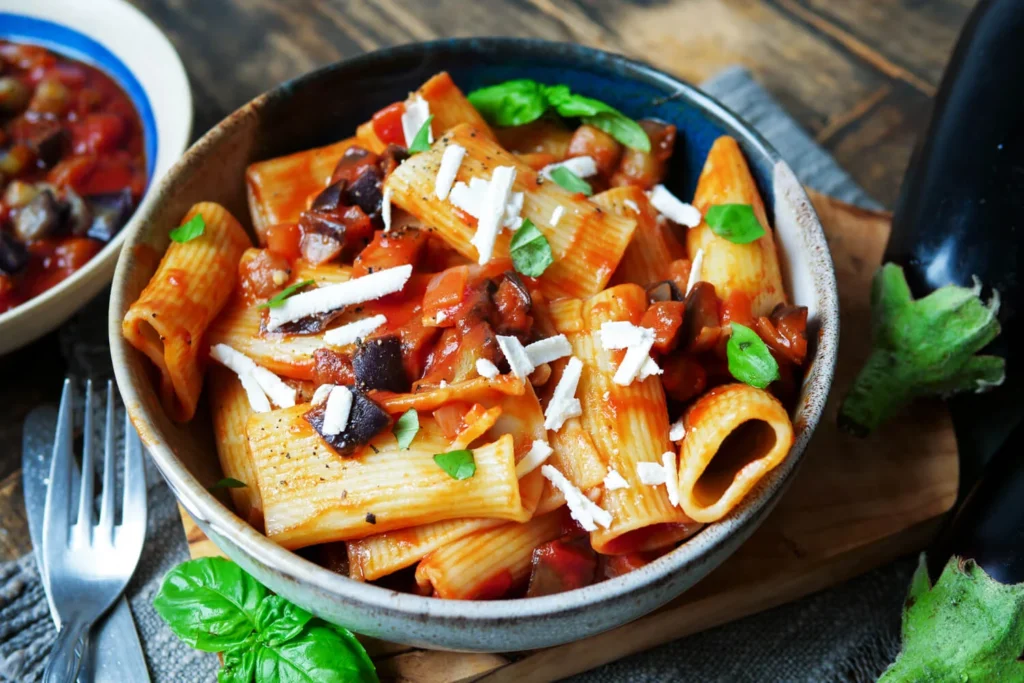
My grandmother Julia understood this before I did. She didn’t have access to Sicilian violet eggplants in Valparaíso. She used what she had, and she paid attention. The eggplant had to be golden. The cheese had to be real. The pasta had to be properly salted and properly drained. Everything else took care of itself. That is the lesson pasta alla Norma teaches, if you are willing to learn it.
For more on building a pantry that can support dishes like this — the right olive oil, the right canned tomatoes, the right pasta shapes — visit our guide to the Italian pantry essentials, where we cover the foundations that make Italian cooking work at home.
Frequently Asked Questions
Can I use regular ricotta instead of ricotta salata?
Not really. Regular ricotta is soft and creamy, while ricotta salata is aged, firm, and salty — it’s essential for the dish’s character. The sharpness and texture are what cut through the richness of the fried eggplant. If you can’t find ricotta salata, aged pecorino Romano works as a substitute.
How do I prevent my eggplant from absorbing too much oil when frying?
Salt your eggplant slices and let them sit for 30 minutes to release moisture. Pat them dry thoroughly before frying — this is crucial. Heat your oil to 350°F and fry in batches so you’re not crowding the pan. The faster they cook, the less oil they absorb.
Is there a reason Catania specifically claims this dish?
Mount Etna’s volcanic soil around Catania produces exceptional tomatoes and eggplants. The city’s location on the coast also meant access to the best ingredients. Catania’s cucina povera tradition transformed these local staples into refined dishes like this one using simple, intelligent cooking.
Should I make the tomato sauce a day ahead?
You can, but I’d keep it minimal — just crush good tomatoes with salt and let them sit for an hour. The sauce shouldn’t overpower the eggplant. Unlike heavier pasta dishes, Pasta alla Norma benefits from fresh, bright tomato flavor that comes from using the best fruit, not extended cooking time.
What pasta shape works best if I can’t find the traditional choice?
Look for short, tubular shapes like rigatoni, penne, or trofie. Avoid long pasta — the fried eggplant pieces need something to catch and hold onto. The pasta should have some heft to stand up to the rich fried eggplant without getting lost.
Written by José Villalobos
José Villalobos is a food writer and the founder of Calitalia Food. He grew up in Valparaíso, Chile, where his grandmother Julia cooked Italian food daily from memory and instinct. Based in Sacramento, California, he visits local Italian markets weekly and writes about ingredients, sauces, and regional food culture with the kind of detail that comes from years of sourcing, testing, and eating. Every product he recommends, he has personally bought and tested.