
Between Alps and Vineyards: Where Elegance Meets Earthiness
Tucked into the northwest corner of Italy, bordered by France and Switzerland, Piedmont (Piemonte) often lives in the culinary shadows of Tuscany or Emilia-Romagna. But make no mistake: this is Italy’s best-kept gastronomic secret.
With its majestic Alps, fertile river valleys, and fog-shrouded vineyards, Piedmont food reflects an incredible range of local ingredients and an even richer culture of cuisine and wine.
From white truffles and handmade pastas to luxurious cheeses and legendary wines, Piedmontese cuisine is refined, soulful, and quietly unforgettable.

In this blog, we’ll explore the dishes, traditions, ingredients, and stories that make Piedmont a true hidden treasure for food lovers and a must for anyone seeking deeper flavor in Italy.
At home in Sacramento, I make this for weekend dinners when I have the time to do it properly.
The Landscape That Shapes Piedmont Food

According to regional tourism data, in 2023, the Langhe-Monferrato-Roero area of Piedmont recorded a food & wine tourism sentiment score of 90.1 out of 100, surpassing many major European wine regions. (Source: Data Appeal Destination Analysis).
Alpine Peaks, Rolling Vineyards, and Foggy Forests
Piedmont’s name literally means “at the foot of the mountains,” and its landscape is a mix of:
- Snow-capped Alps to the north and west
- Vineyard-covered hills in Langhe and Monferrato
- Rice fields and fertile plains in the Po River Valley
- Misty forests, where pigs and dogs sniff out prized white truffles
This stunning variety gives Piedmont access to:
- Hearty meats (beef, veal, pork, game)
- World-class wines (Barolo, Barbaresco, Dolcetto)
- Cheeses, mushrooms, rice, hazelnuts, and more
Iconic Dishes of Piedmontese Cuisine
1. Vitello Tonnato

Thin slices of veal topped with a silky tuna, anchovy, and caper mayonnaise
Light, creamy, and elegant, this dish is served chilled and is a classic antipasto throughout the region.
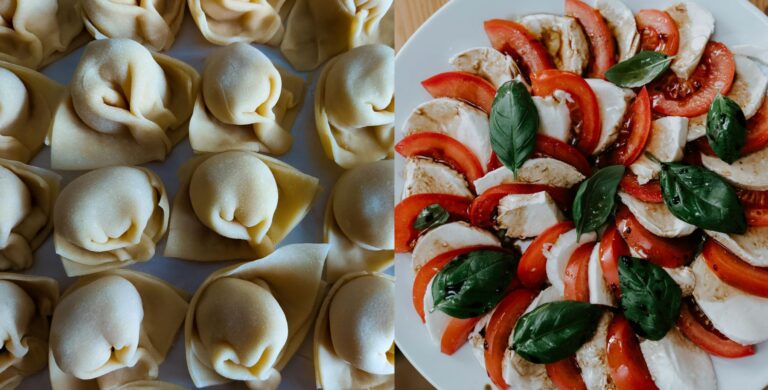
2. Agnolotti del Plin

Small, hand-pinched ravioli stuffed with roasted meat or vegetables
These delicate pasta pillows are usually served with melted butter, sage, or meat drippings. The word plin means “pinch” in dialect.
3. Bagna Cauda

Hot dip made from garlic, anchovies, olive oil, and butter
Served in a communal pot, guests dip raw and cooked vegetables into this warming, pungent sauce, especially in winter.
4. Brasato al Barolo

Beef braised for hours in Barolo wine with herbs, carrots, and onions
This rich, slow-cooked dish is the very essence of Piedmontese comfort food and a showcase for the region’s prized red wine.
5. Tajarin al Tartufo Bianco

Hand-cut egg yolk pasta, often served with shaved white truffle
Tajarin (tagliolini) are soft and rich, the perfect match for Alba’s world-famous white truffles.
Piedmont’s Crown Jewel: The White Truffle of Alba

Piedmont is the global capital of white truffles, particularly in the forests around Alba. These knobby, fragrant fungi fetch thousands of euros per kilo and are celebrated each fall during:
- The Alba International White Truffle Fair (Fiera del Tartufo Bianco)
- Truffle auctions, festivals, and degustazione events
They’re served sparingly but luxuriously:
- Over-buttered tajarin
- On creamy risottos
- Shaved onto raw veal or eggs
Piedmont’s Cheese Culture: A Creamy Wonderland

Piedmont has some of Italy’s most celebrated DOP cheeses.
Cheese plays a starring role in antipasti, polenta dishes, and even dessert boards.
Hazelnuts, Chocolate, and the Birth of Gianduja

When Napoleon Banned Cocoa, Piedmont Got Creative
In the early 1800s, cocoa was scarce, so Piedmontese chocolatiers began mixing it with ground hazelnuts from the Langhe—creating gianduja, a smooth, nutty chocolate paste.
This led to:
- The creation of gianduiotti (foil-wrapped chocolates)
- The eventual birth of Nutella, invented nearby in Alba
Hazelnuts also star in: - Torte di Nocciole (hazelnut cakes)
- Baci di Dama (lady’s kisses- shortbread sandwich cookies)
- Crumbled toppings for panna cotta
Wines of Piedmont – Where Royal Grapes Reign

Piedmont is a paradise for wine lovers, especially red wine. The most celebrated are:
Barolo & Barbaresco
Made from Nebbiolo grapes; powerful, structured, age-worthy
Barolo is called the “King of Wines”; Barbaresco is slightly more elegant and feminine.
Dolcetto & Barbera
Every day, reds that are juicy, food-friendly, and affordable
Moscato d’Asti
Slightly sparkling, low-alcohol white is perfect for dessert
Wines are often paired with slow braises, meat sauces, truffle dishes, and aged cheeses—creating a balance of elegance and intensity.
Alt text for image: Wine glass beside Barolo vineyards in the fall
Why Piedmont Is Still a Hidden Gem

Despite all this richness, Piedmont still flies under the radar. Why?
- It lacks the tourist volume of Tuscany or Rome
- Many traditional dishes are slow-cooked or unfamiliar
- It’s a locals’ region—you must dig a little deeper
But that is the magic: Piedmont rewards those who seek it out.
Whether you’re wandering Alba’s markets, sipping Barolo in the Langhe, or learning to pinch agnolotti from a nonna, you’ll discover food that’s deep, soulful, and completely unpretentious.
Discovering Piedmont Is Like Falling in Love Slowly
Piedmont is not flashy. It doesn’t shout. It simmers.
And that is the beauty. It is a place of quiet culinary excellence, where even a slice of veal and a spoonful of tuna sauce can taste like heaven.
Come for the truffles, stay for the wine, and leave forever changed by the subtle brilliance of Piedmontese cuisine.
Written by José Villalobos — Food writer and founder of Calitalia Food. Based in Sacramento, CA. Read more →
One Comment