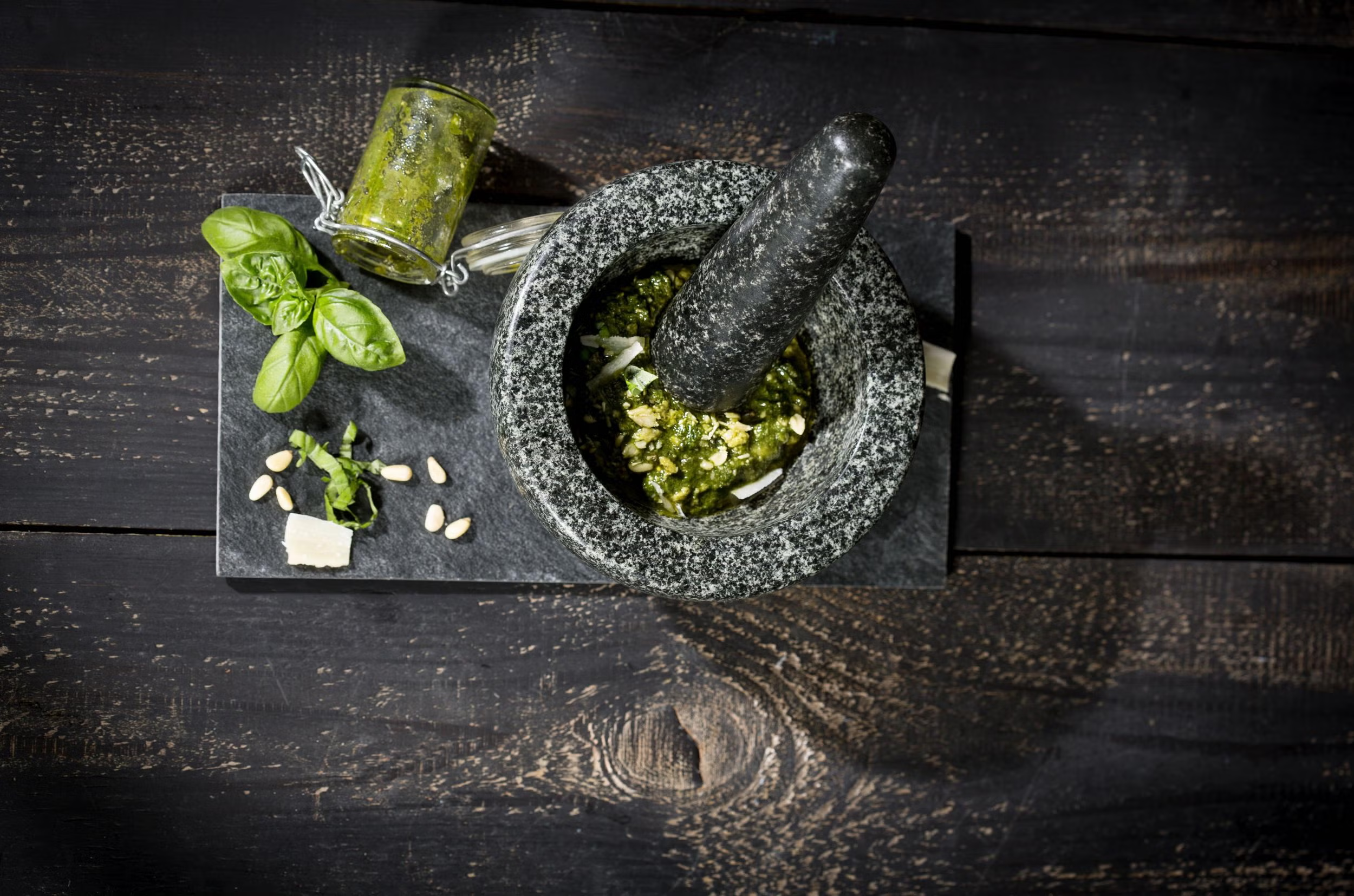
The Soul of Liguria in a Single Sauce
Pesto alla Genovese is not just a pasta condiment. It is a culinary love letter to Liguria, the narrow, sea-hugging region of northwestern Italy where cliffs meet the Mediterranean and basil grows in the salty breeze.
While pesto has been adapted around the world in countless ways, only one version is the original. It comes from the terraced hills surrounding Genoa, where simplicity, balance, and fresh ingredients define the local cuisine.
In this guide, you will learn:
- The true origins of pesto alla Genovese
- Traditional ingredients and preparation methods
- A step by step authentic recipe
- The best pasta shapes and dishes to pair with pesto
- Storage tips, cultural context, and modern adaptations
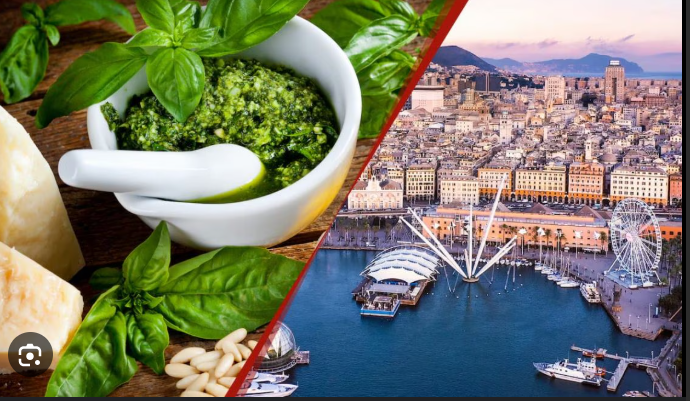
A Brief History of Pesto alla Genovese
Ancient Roots in the Mediterranean
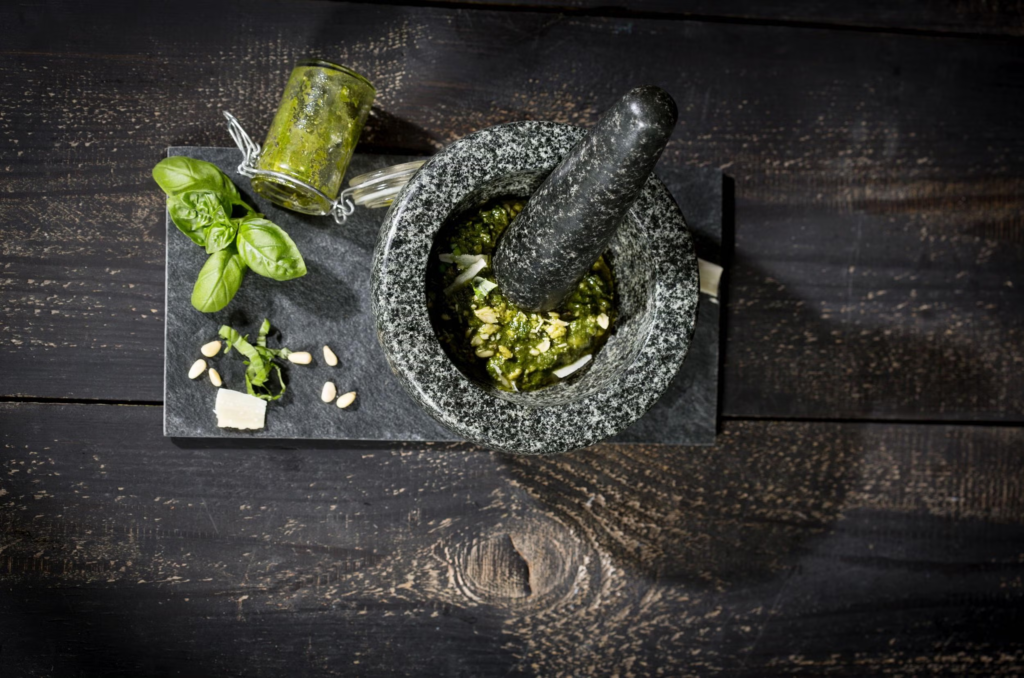
The idea of crushing herbs, garlic, and cheese into a paste dates back to Roman times. The Romans prepared a sauce called moretum, made with garlic, herbs, cheese, and olive oil, all ground using a mortar and pestle.
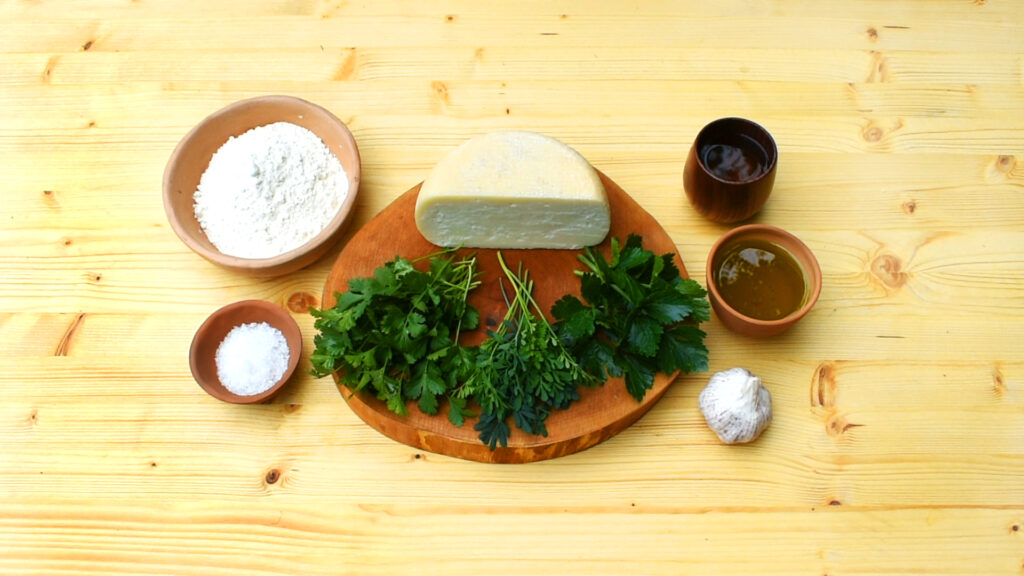
Modern pesto as we know it emerged in Genoa during the mid 1800s. It was designed as a cold sauce to preserve the aroma and freshness of basil rather than cooking it.
After making this version dozens of times, the technique that makes the biggest difference is
Ligurian Ingredients and Local Identity
Liguria’s geography directly shaped pesto:
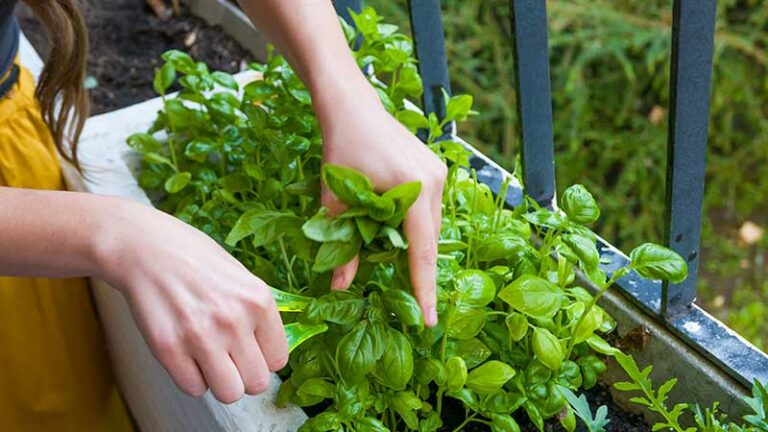
- Basil grown in Prà, a district of Genoa known for tender and aromatic leaves
- Pine nuts from Mediterranean stone pines
- Extra virgin olive oil produced from Taggiasca olives
- A blend of Parmigiano Reggiano and Pecorino Sardo
According to the European Union’s quality scheme system, Basilico Genovese has Protected Designation of Origin status, meaning only basil grown and processed in Liguria under strict rules can legally carry this name and be used for authentic pesto.

In short, pesto is Liguria in edible form.
Authentic Pesto alla Genovese Recipe
Ingredients (Serves 4)
- 50 g fresh Genovese basil leaves, stems removed
- 2 garlic cloves, preferably Italian variety
- 15 g pine nuts
- 60 g Parmigiano Reggiano, finely grated
- 20 g Pecorino Sardo, finely grated
- 100 ml extra virgin olive oil, Ligurian or Taggiasca if possible
- Coarse sea salt, to taste
Instructions: Mortar and Pestle Method
- Crush the garlic
Place garlic and a pinch of coarse salt into a marble mortar. Pound until smooth. - Add basil gradually
Add basil leaves a small handful at a time. Use a gentle circular motion so the leaves release oils while staying bright green. - Incorporate pine nuts
Crush until the nuts blend smoothly into the basil paste. - Add the cheeses
Gently mix in Parmigiano and Pecorino until fully combined. - Finish with olive oil
Slowly drizzle in olive oil while stirring to create a thick, glossy pesto.
Blender Method (If Necessary)
If you must use a blender:
- Chill the blades beforehand to reduce oxidation
- Use pulse mode rather than continuous blending
- Add olive oil at the end
Never allow pesto to heat up. Heat dulls flavor and darkens the color.
What Makes a Perfect Pesto alla Genovese

A well-made pesto should be:
- Bright green in color
- Thick but spoonable
- Fragrant with basil rather than dominated by garlic
- Balanced between cheese, oil, and herbs
Pesto should coat pasta lightly, not pool at the bottom of the bowl.
Pesto alla Genovese Best Pairings for Pasta
Trofie
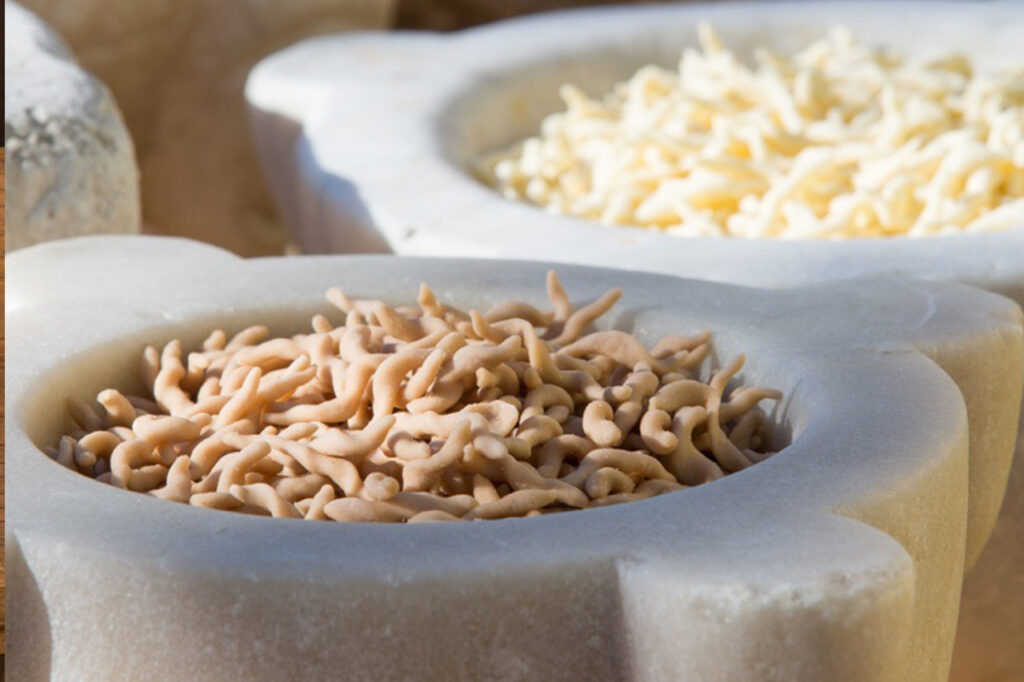
- Short twisted pasta native to Liguria
- Excellent at holding pesto in its curves
Traditional Genoese serving: Trofie with pesto, boiled potato cubes, and green beans.
Trenette
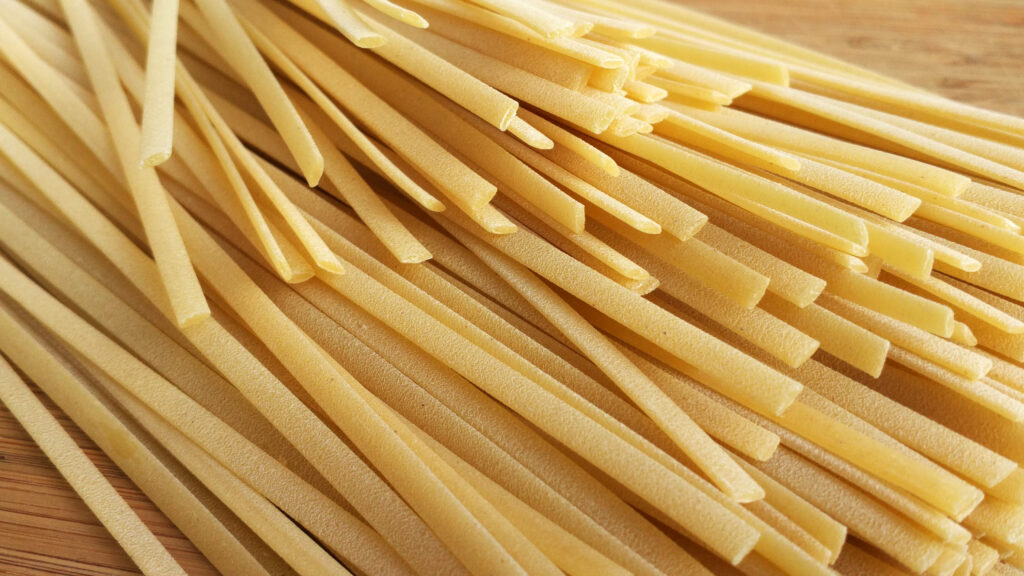
- Flat, thin pasta similar to linguine
- Common in classic Trenette al Pesto dishes
Gnocchi

- Potato gnocchi cling beautifully to pesto
- Avoid cream additions so the sauce remains fresh and herbal
Lasagna alla Portofino
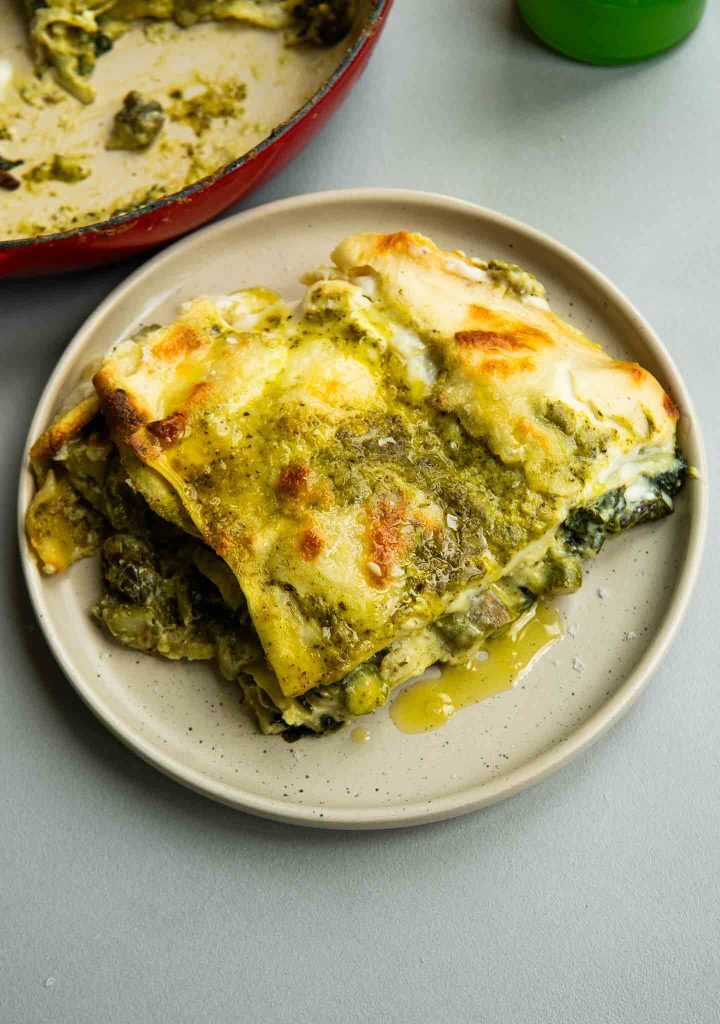
- Fresh lasagna sheets layered with béchamel and pesto
- A coastal Ligurian specialty with a creamy but balanced profile
Other Dishes That Pair Well with Pesto
- Pizza bianca with pesto and fresh mozzarella
- Pesto-stuffed chicken breast or white fish
- Genoese minestrone finished with a spoon of pesto
- Bruschetta topped with roasted peppers and pesto
Storage, Preservation, and Freezing Tips
- Refrigerator
Store in an airtight container with olive oil covering the surface. Keeps for 3 to 4 days. - Freezer
Freeze in ice cube trays for portion control. Keeps up to 6 months. - Avoid air exposure
Basil oxidizes quickly and becomes bitter. - Never reheat
Add pesto to warm pasta, never to a hot pan.
Cultural Notes and Traditions
Genovese Basil DOP

- Certified origin product grown mainly in Prà
- Smaller leaves with delicate aroma
- Used in professional pesto competitions
Genoa Pesto World Championship

- Held at Palazzo Ducale in Genoa
- Competitors must use mortar and pestle only
- Judged on technique, aroma, texture, and color
Italian Respect for Simplicity
In Italy, pesto alla Genovese is considered a protected culinary tradition. Commercial versions are accepted only when they follow traditional ingredients and proportions.
Modern Variations That Stay Respectful
Modern kitchens sometimes adapt pesto by:
- Adding ricotta for creaminess
- Using lemon zest for brightness
- Substituting walnuts or almonds
- Making vegan versions with nutritional yeast
These are not traditional Genovese pesto, but they can still be enjoyable when labeled honestly.
Respect the Sauce, Respect the Roots
Pesto alla Genovese is more than a recipe. It is a reminder that great food does not require complexity. It requires fresh ingredients, patience, and respect for tradition.
When you prepare pesto the Ligurian way, you are not just cooking dinner. You are preserving a culinary legacy shaped by land, sea, and centuries of care.
Written by José Villalobos — Food writer and founder of Calitalia Food. Based in Sacramento, CA. Read more →