What is bresaola? If you’ve ever spotted those deep ruby-red slices arranged on a plate at an Italian restaurant and wondered what you were looking at, you’re in the right place.
Bresaola is an air-dried, salted beef from northern Italy — lean, tender, and subtly sweet with a faint mineral edge that sets it apart from every other cured meat on the charcuterie board.
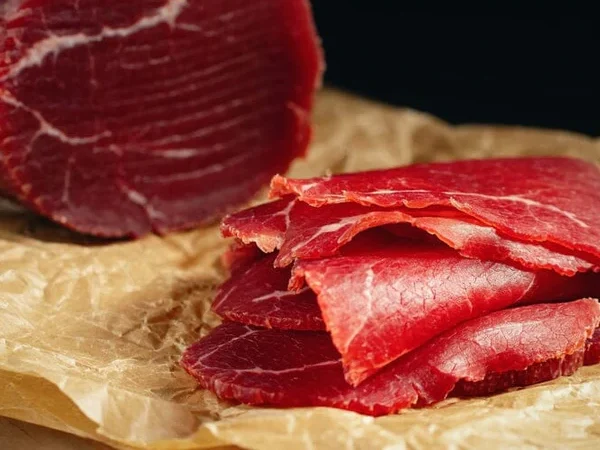
I’m José Villalobos, and I’ve been eating this stuff long before I knew what it was called. My grandmother Julia made her own version of air-dried beef in Valparaíso, Chile — a tradition she’d absorbed from the Italian families in her neighborhood — and that early exposure gave me a reverence for what patience and salt can do to a good piece of meat.
This guide covers everything: where bresaola comes from, how it’s made, how to buy it, how to eat it, and the mistakes that will ruin a perfectly good package of it. Let’s get into it.
What Is Bresaola, Exactly?
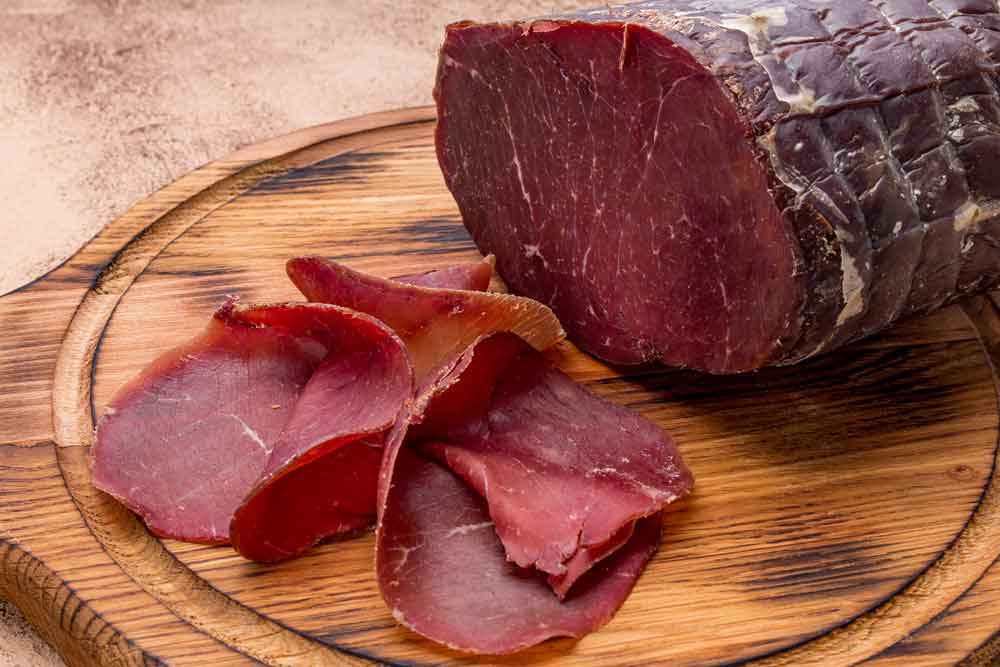
Bresaola is a whole-muscle cured beef, made from a single cut — typically the top round, also called the inside round — that has been salted, seasoned with spices and herbs, and then air-dried for anywhere from six weeks to three months. The result is a dense, dark red to almost purple slice of meat that’s firm to the touch but melts easily on the tongue. Unlike prosciutto or salami, there is no fat running through it and no pork involved whatsoever. It is one of the leanest cured meats you will find anywhere in Italy.
The flavor is surprisingly complex for something so simple. There’s a gentle sweetness, a mild brininess, and something almost floral — an aromatic quality that comes from the combination of the mountain air in which it dries and the blend of spices used in curing. Black pepper, juniper berries, cinnamon, and sometimes bay leaf are common additions, though every producer guards their exact recipe carefully.
At the Sacramento Italian market, I’ve compared several brands side by side, and the difference between a quality bresaola and a mediocre one is immediately obvious. The good ones have that deep color and a clean, slightly tangy smell. The lesser ones smell vaguely of the refrigerator and have a grayish tint around the edges — a sign of age or poor handling.
Where Does Bresaola Come From?
The Valtellina Valley
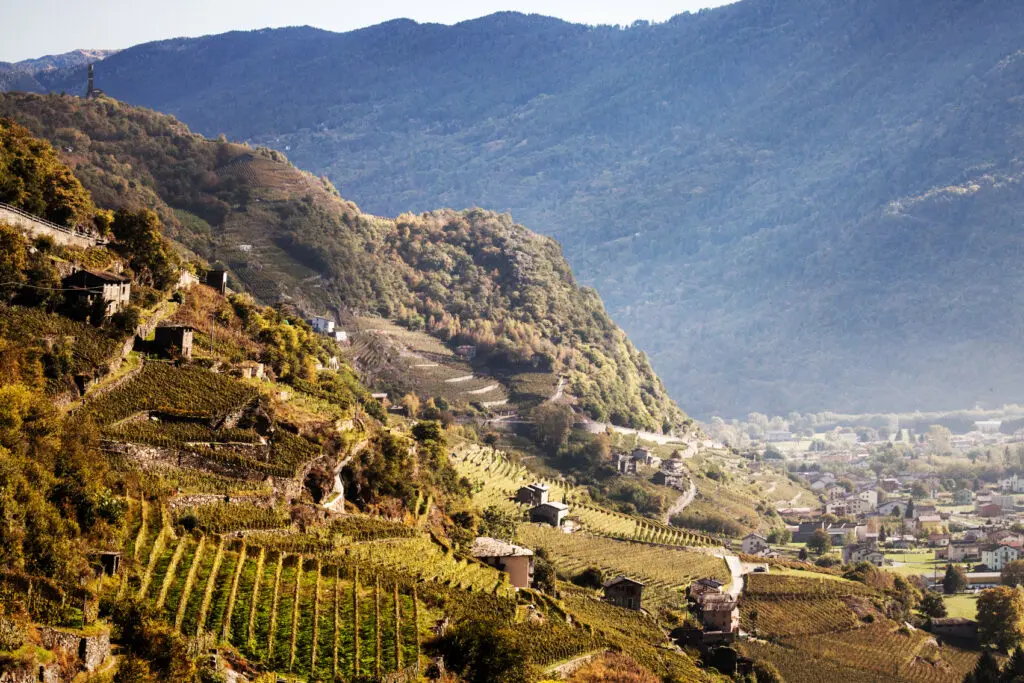
Bresaola is the product of one very specific place: Valtellina, a long Alpine valley in the Lombardy region of northern Italy, not far from the Swiss border. The valley runs east to west through the Alps, carved by the Adda River, and the combination of cold mountain air, low humidity, and elevation creates conditions that are almost impossible to replicate anywhere else. This is not marketing language — it’s geography doing real work.
The first written records of bresaola production date to the 15th century, though the practice of salting and drying meat in this region almost certainly predates those documents. Alpine communities had been preserving meat through the winter for centuries before anyone thought to write it down.
The Swiss Connection
Here’s a piece of history that surprises most people: Valtellina was actually a subject territory of the Swiss Free State of the Three Leagues from 1512 to 1798. During that long period of Swiss governance, the production methods from Grisons — the Swiss canton just across the border, home to Bündnerfleisch, a similar cured beef — almost certainly influenced what would become bresaola. The two products share obvious similarities in technique, and the cross-pollination of Alpine food traditions between these neighboring cultures makes complete sense, given the geography and the history.
Over time, the Valtellina producers adapted the method to their own terroir and traditions, and what emerged was distinctly Italian in character — more tender, more aromatic, and ultimately more celebrated internationally.
From Family Cellars to the World
For centuries, bresaola was made at home, by individual families, for their own consumption through the long Alpine winters. Commercial production didn’t really take hold until the early 19th century, when artisanal producers began crossing into Switzerland with their product. From there, word spread.
Today, bresaola della Valtellina holds a Protected Geographical Indication (IGP) designation from the European Union, which means that to carry that name, the product must be produced in the Valtellina using methods and standards defined by the consortium of producers.
The Name Itself
Even the etymology of the word is disputed, which I find endearing. The most commonly cited theory traces “bresaola” to the Italian word brasa, meaning embers — a reference to the braziers used to heat the drying chambers in traditional production. Another theory points to brisa, a local term for a heavily salted cattle gland, connecting the name to the salt-heavy curing process.
A third possibility links it to the Lombard dialect word bresada, meaning braised. And then there’s the theory that traces part of the word to an ancient Indo-European root for deer or wild ruminants, combined with sal for salt. Food historians have been arguing about this for decades, and I suspect they’ll continue to do so.
How Bresaola Is Made
The Cut of Meat
Everything starts with the cut. Bresaola is made from a single muscle — the top round of beef — which is naturally lean and relatively uniform in shape. The outer fat is trimmed away before curing begins. This is one reason bresaola is so different from prosciutto: there’s no fat cap protecting it, no marbling running through it. The meat stands entirely on its own.
The Curing Process
The trimmed muscle is packed in a dry cure of salt and spices. Each producer has their own blend, but the common thread runs through black pepper, juniper, cinnamon, cloves, and aromatic herbs. The meat sits in this cure for a period of days to weeks, absorbing the salt and flavors slowly and evenly. This is not a rushed process — it can’t be.
Drying and Aging
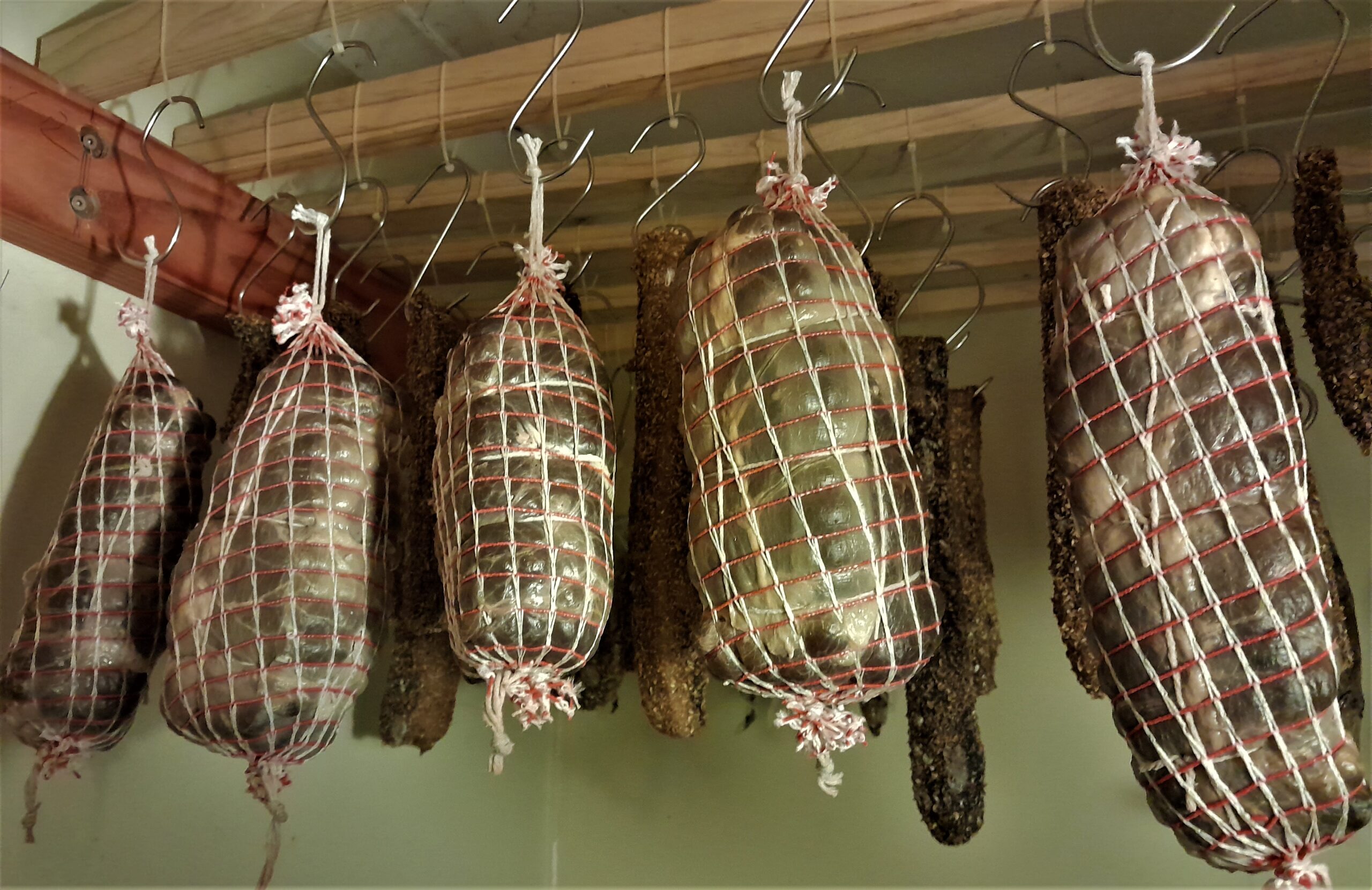
After salting, the bresaola is encased in a natural casing — typically beef bung — which protects the exterior and helps the meat maintain its cylindrical shape during the drying phase. It’s then hung in curing rooms where temperature and airflow are carefully managed. Traditional production relies heavily on the natural alpine air of Valtellina, and producers will tell you this is non-negotiable.
The aging process lasts from six weeks to about three months, during which the bresaola loses nearly half of its original weight as moisture evaporates. What’s left is dense, concentrated, and deeply flavored. The color deepens from bright red to a rich ruby or dark burgundy — almost purple in the thicker parts of the muscle — and the aroma becomes that characteristic sweet-musty complexity that announces bresaola before you even taste it.
How to Buy Good Bresaola
Look for the IGP Label
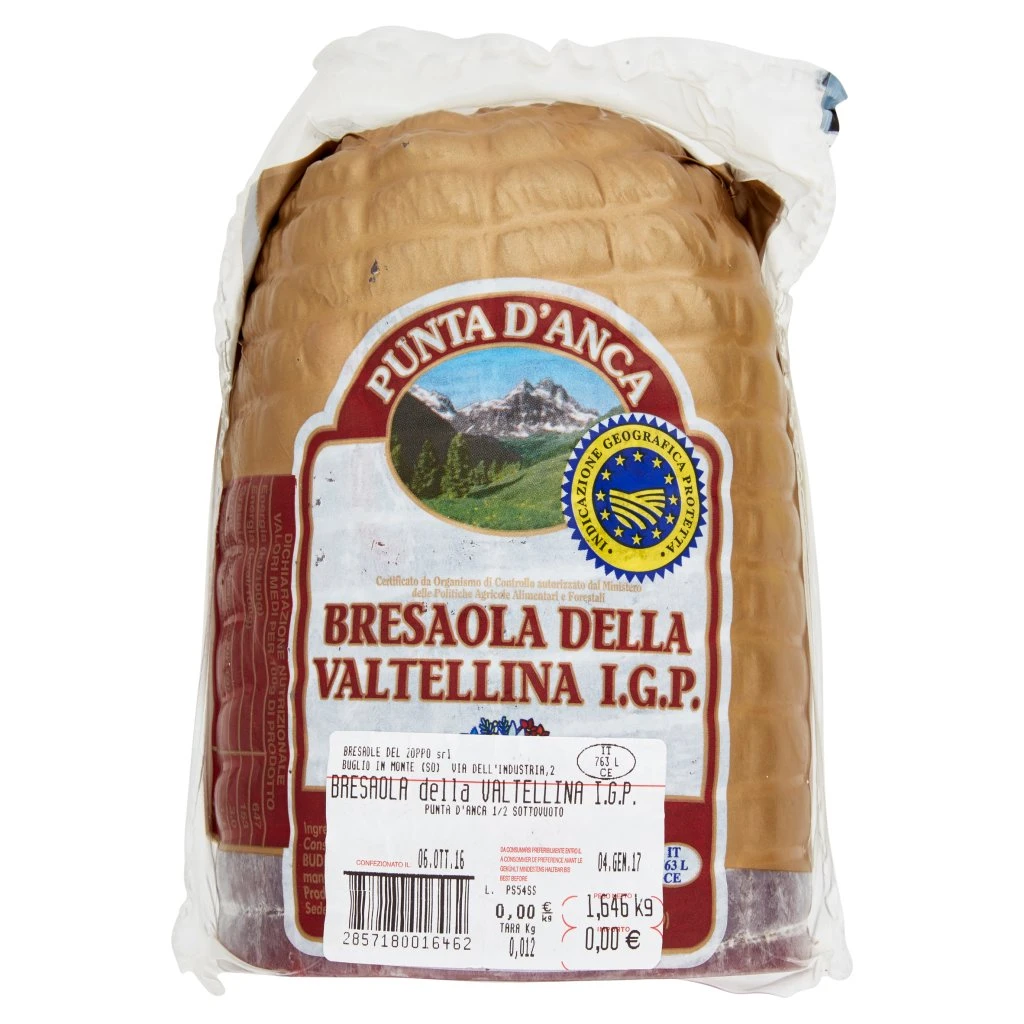
If you want the real thing, look for “Bresaola della Valtellina IGP” on the label. The IGP designation is your guarantee that the product was made in Valtellina under regulated standards. That said, there are also non-IGP bresaolas made in other parts of Italy and even imported from South America (where producers often use South American beef for the domestic Italian market), and some of these are genuinely good. The IGP label just removes the guesswork.
Fresh-Sliced vs. Pre-Packaged
Given the choice, always buy fresh-sliced bresaola from a deli counter rather than pre-packaged slices from a refrigerator case. After testing several brands side by side at home, the difference in texture and flavor is significant. Pre-sliced bresaola dries out quickly and often has that slightly grayish pallor I mentioned earlier. Fresh-sliced from the whole muscle, cut thin to order, has a completely different quality — supple, almost silky, with a clean shine to the surface.
The one I keep in my kitchen is a fresh-sliced bresaola I pick up weekly from the Sacramento Italian market — it comes off the muscle right in front of you, and the color is that exact shade of dark ruby that tells you it was handled properly from start to finish.
What Good Bresaola Looks Like
- Deep ruby red to dark burgundy color, consistent through the slice
- No gray edges or brown discoloration
- A slight sheen on the surface — not dry, not wet
- Uniform thickness when sliced (paper-thin is ideal)
- A clean, faintly sweet aroma with a mild tang
How to Eat Bresaola
The Classic Italian Way
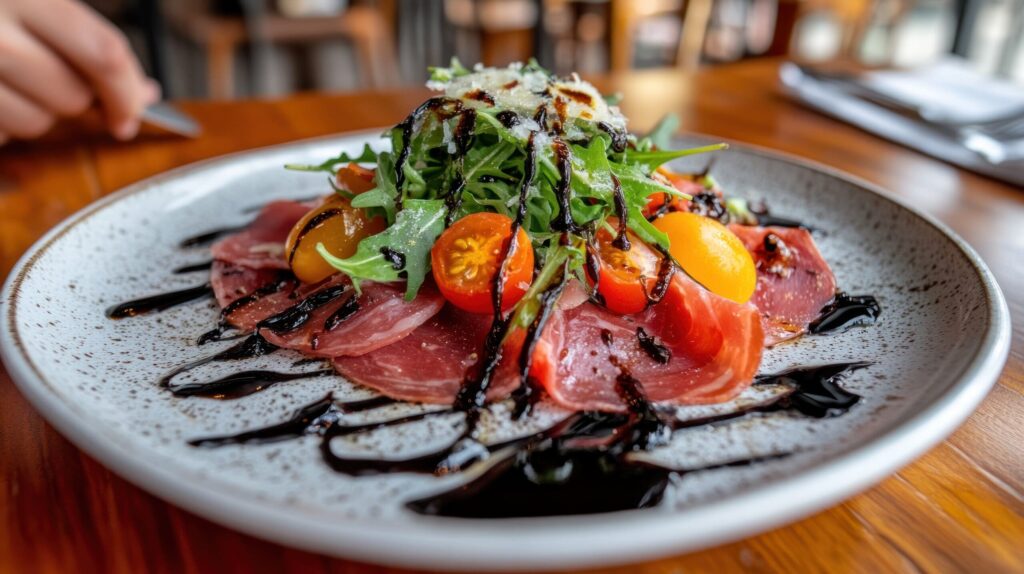
The most traditional way to serve bresaola is also the simplest: lay the slices flat on a plate, drizzle with good extra-virgin olive oil and fresh lemon juice, scatter over some shaved Parmigiano-Reggiano or grana padano, add a handful of arugula, crack some black pepper over the top, and eat it immediately. That’s it. My grandmother Julia served something close to this, though she called it by a different name and used Chilean lemon that hit slightly differently — more floral, a little rounder in acidity.
The lemon is not optional. The bright acidity cuts through the mineral richness of the meat and wakes everything up. Don’t skip it.
Other Ways to Use It
- With fresh figs or melon: The same sweet-savory logic that works with prosciutto works beautifully with bresaola — the lean meat and the fruit play off each other perfectly.
- On bruschetta: A layer of ricotta on toasted bread, a few slices of bresaola, a drizzle of honey and some crushed walnuts. Done.
- In salads: Tear the slices and fold them into grain salads with farro, roasted cherry tomatoes, and capers.
- Wrapped around breadsticks: Simple antipasto, always works.
- As a wrap: Lay slices flat, spread cream cheese or goat cheese, add herbs, roll tightly, and slice into rounds for an appetizer.
What Not to Do With It
Don’t cook bresaola. I know it’s tempting to throw it in a pan or use it like prosciutto in a pasta, but heat destroys everything that makes bresaola interesting. The texture turns rubbery, the subtle aromatics evaporate, and you’re left with something chewy and confused. Serve it cold or at room temperature, always.
How to Store Bresaola
A whole uncut bresaola can be kept wrapped in the refrigerator for several weeks. Once sliced, the clock moves much faster. Pre-sliced bresaola should be eaten within three to four days for best quality — the exposed surfaces oxidize quickly and the texture suffers.
If you buy sliced bresaola from a deli counter, ask them to separate the layers with wax paper and wrap it tightly. Store it in the coldest part of your refrigerator, not the door. Before serving, let it sit at room temperature for about fifteen minutes — cold bresaola is muted; room temperature bresaola is alive.
Freezing bresaola is possible but not recommended. The texture changes in a way that’s hard to reverse, and you’ll lose some of that delicate aromatic quality that makes it worth buying in the first place.
Common Mistakes People Make With Bresaola
- Buying pre-sliced from a grocery store without checking the date: Bresaola past its prime tastes like nothing. Check the sell-by date and look at the color before you buy.
- Slicing it too thick: Bresaola should be shaved thin — almost translucent. Thick slices are chewy in a way that obscures the flavor rather than showcasing it.
- Forgetting the acid: Without lemon or a good wine vinegar, bresaola can taste flat. The acid is structural, not decorative.
- Serving it straight from the refrigerator: Cold fat doesn’t taste like fat, and cold bresaola doesn’t taste like bresaola. Give it time to come up to room temperature.
- Pairing it with flavors that overwhelm it: Bresaola is subtle. Pungent blue cheese, heavily dressed salads, or anything aggressively spiced will bury it completely.
Bresaola vs. Other Cured Meats
People often ask how bresaola compares to prosciutto, which makes sense — both are Italian, both are served thinly sliced, both are eaten as antipasto. The differences are significant, though. Prosciutto is pork, bresaola is beef. Prosciutto has a fat cap that contributes enormous flavor and richness; bresaola has essentially no fat and tastes clean and lean. Prosciutto is buttery and melts almost immediately; bresaola has more chew and a more mineral, slightly tangy flavor profile.
Bresaola is also often compared to Bündnerfleisch, its Swiss cousin. They share a common heritage, but Bündnerfleisch is pressed into a rectangular shape during drying, which gives it a denser, firmer texture, and the flavor tends to be less aromatic and more straightforwardly beefy. José Villalobos has tried both in their home regions, and while Bündnerfleisch is excellent, bresaola has a gentler, more complex character that I find more versatile at the table.
A Final Word on Why Bresaola Matters
There’s something quietly remarkable about bresaola. It’s made from one piece of meat, salt, time, and mountain air — that’s the whole story. No smoking, no cooking, no complicated technology. Just the fundamental human knowledge that salt and cold and patience can transform raw beef into something elegant and lasting.
My grandmother Julia understood this instinctively. She didn’t have the Alps, but she had cold nights in Valparaíso, good sea salt, and a cellar that stayed at the right temperature. The bresaola I pull from the paper at the Sacramento Italian market every week is a more refined version of that same ancient idea.
If you haven’t tried it, start with the classic preparation — olive oil, lemon, arugula, a shaving of good hard cheese. You don’t need anything more complicated than that to understand why this cured beef has been made in the same valley for six hundred years.
Back to the full guide to Italian cold cuts
Frequently Asked Questions
Can you make bresaola at home, and is it safe?
Home production is possible but risky without proper temperature and humidity control. The curing process requires consistent conditions between 50-60°F with specific humidity levels. If conditions aren’t right, harmful bacteria can develop. I’d recommend buying from established producers rather than experimenting at home.
How long does bresaola last once you open the package?
Once opened, bresaola stays fresh for about 3-4 days in the refrigerator if wrapped tightly. The meat can dry out quickly after slicing, so I keep it in an airtight container or wrapped in parchment paper. Freezing works too, though it slightly affects texture.
What’s the difference between bresaola and speck?
Both are cured Italian meats, but speck comes from the hind leg and includes fat and bone, while bresaola is a whole muscle with no fat. Speck has a smokier flavor and comes mainly from Alto Adige. Bresaola is leaner and has that mineral, herbal quality specific to Valtellina.
Why is authentic bresaola so expensive compared to other cured meats?
The three-month curing time, specific geographic requirements, and the cut of beef used all drive up costs. You’re paying for time, altitude, and the skill of producers who’ve perfected the process over centuries. Mass-produced versions are cheaper but taste noticeably different.
Can you cook with bresaola, or is it only eaten raw?
Bresaola works best served raw and cold, but you can warm it gently in risotto or over pasta at the last second. High heat toughens it. Some Italian cooks add thin slices to soups just before serving. The key is avoiding prolonged cooking.
Written by José Villalobos
José Villalobos is a food writer and the founder of Calitalia Food. He grew up in Valparaíso, Chile, where his grandmother Julia cooked Italian food daily from memory and instinct. Based in Sacramento, California, he visits local Italian markets weekly and writes about ingredients, sauces, and regional food culture with the kind of detail that comes from years of sourcing, testing, and eating. Every product he recommends, he has personally bought and tested.