

You’ve got a garden full of basil, a blender full of fresh pesto, and no plans to waste a single spoonful. You’ve tried olive oil seals. You’ve filled ice cube trays. You’ve frozen jars. But what if you want to preserve your pesto at peak flavor for months, even up to a year?
That’s where vacuum sealing pesto comes in.
Used by chefs, food preservationists, and anyone who believes pesto is a year-round necessity, vacuum sealing allows you to lock out air, lock in freshness, and protect your pesto against freezer burn, oxidation, and nutrient loss.

This blog dives deep into why vacuum sealing is the gold standard for pesto storage, how to do it right, and how to revive sealed pesto like it just came out of the blender.
Why Vacuum Sealing Is Superior for Pesto Storage
1. Eliminates Oxidation
By removing nearly all oxygen, vacuum sealing halts the enzymatic browning of basil and other greens.
2. Prevents Freezer Burn
Air is what causes crystals and texture loss. No air = no problem.
After making this version dozens of times, the technique that makes the biggest difference is
3. Preserves Flavor & Color
Your pesto stays green, bold, and vibrant—without the murky color or stale taste you get from long-term exposure to air or light.
4. Long Shelf Life
Vacuum-sealed pesto can last:
• 6–9 months in the fridge (cheese-free)
• Up to 12 months in the freezer
• 2–3 weeks unopened in the fridge with cheese included
Tools You’ll Need
| Tool | Purpose |
|---|---|
| Vacuum sealer machine (e.g., FoodSaver) | Removes air and seals bags |
| Vacuum sealing bags (BPA-free) | Holds the pesto securely |
| Freezer-safe vacuum containers | Optional for easier portioning |
| Ladle or silicone spatula | Transfers pesto with minimal mess |
| Sharpie or label stickers | For writing date + pesto type |
Step-by-Step: How to Vacuum Seal Pesto

1. Prep Your Pesto
• You can seal it with or without cheese
• For best results, remove excess moisture and avoid overly runny pesto
2. Pre-Freeze (Optional but Recommended)
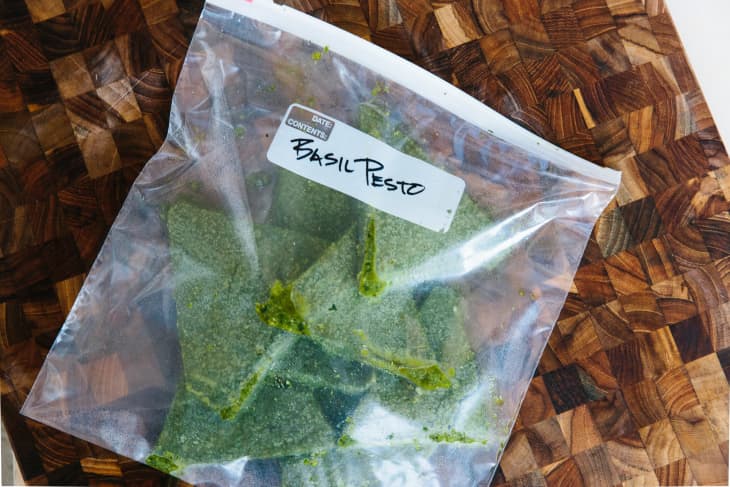
• Spoon pesto into small mounds on a parchment-lined tray or fill silicone molds
• Freeze until solid (2–4 hours)
• Why? Pre-frozen pesto doesn’t get sucked into the sealer, which could cause leaks or machine damage
3. Seal It
• Place frozen or firm pesto portions into the vacuum bag
• Leave a few inches of headspace
• Use the machine to remove air and seal tightly
• Label each bag with:
• Date
• Pesto variety
• Cheese? (Yes/No)
4. Freeze or Refrigerate
• Store sealed bags flat in the freezer (stackable!)
• For short-term use (under 2 weeks), you can refrigerate instead
How to Use Vacuum-Sealed Pesto

1. Thaw in the Fridge Overnight
• Best for maintaining texture
• Place bag in a bowl to catch condensation
2. Quick Thaw in Warm Water
• Submerge bag in a bowl of cool or lukewarm water
• Thaws in ~20 minutes
3. Direct-to-Pan Cooking
• If pesto was pre-frozen in cubes or pucks, you can:
• Cut open the bag
• Toss a frozen portion into your sauté or hot pasta
Batch Storage Tips & Tricks
Portion by Use Case
• 1 tbsp cubes for pasta or eggs
• ¼ cup for sauces, pizzas, or spreads
• Full-cup bags for meal preps, party dips, or gift jars
Use Cheese-Free Base
• Cheese shortens shelf life
• Freeze cheese-free base, then stir in Parmigiano or Pecorino after thawing
Freeze Flat for Easy Stacking
• Use wide-mouth bags and press pesto into a flat layer before sealing
• Saves freezer space and thaws faster
Create Mixed Packs
• Seal multiple pesto flavors (kale, Genovese, red pepper) in separate small bags for variety
Can I Vacuum Seal Store-Bought Pesto?
Yes—especially if it’s:
• Nearing expiration
• Opened and only partially used
• Purchased in bulk
Steps:
• Transfer to a vacuum-safe bag
• Optional: Pre-freeze or chill to firm it up
• Seal and store as usual
You’ll dramatically extend the life of an opened jar—and preserve the full flavor.
Safety & Storage Guidelines

| Pesto Type | Vacuum-Sealed in Fridge | Vacuum-Sealed in Freezer |
|---|---|---|
| Cheese-free | 2–3 weeks | 6–12 months |
| With cheese | 7–10 days | 3–6 months |
| Commercial pesto | 1–2 weeks after opening | 3–6 months |
Important: Once opened, use within 3–5 days. Don’t refreeze pesto once it’s been thawed and stored in the fridge.
Vacuum Sealing vs. Other Methods – A Comparison
| Method | Shelf Life | Color Retention | Flavor Quality | Effort Level |
|---|---|---|---|---|
| Ice cube tray | 3–4 months | Medium | Good | Low |
| Olive oil layering | 5–7 days | Medium | Great | Very Low |
| Jar freezing | 3–6 months | Medium | Good | Medium |
| Vacuum sealing | 6–12 months | High | Excellent | Medium–High |
Lock It In and Love It Later
If you want to enjoy pesto beyond the summer months—or if you’re making it in bulk for gifting, meal prepping, or just because you can—vacuum sealing is the smartest investment you can make.
It preserves everything we love about fresh pesto: the silky texture, that explosive herbal flavor, and the green so bright it practically glows.
So grab your vacuum sealer, get portioning, and stash away your pesto like a pro. Because when January hits and you’re pulling out a perfect pouch of basil heaven from the freezer, you’ll be glad you sealed the deal.
Disclosure: Our blog contains affiliate links to products. We may receive a commission for purchases made through these links. However, this does not impact our reviews and comparisons. We try our best to keep things fair and balanced, in order to help you make the best choice for you.
Written by José Villalobos — Food writer and founder of Calitalia Food. Based in Sacramento, CA. Read more →



2 Comments