
Ask most people what pesto is, and you’ll likely get a shrug and a vague mention of “that green pasta sauce with basil.” But pesto is more than a condiment—it’s a culinary tradition, a historical artifact, and a globally beloved flavor bomb. Whether dolloped onto steaming pasta, spooned over grilled vegetables, or stirred into a soup, pesto has an unmistakable identity.
In this deep dive, we’ll explore what is pesto, and its origin, transformation across centuries and cultures, and how it evolved from a local Ligurian preparation to a worldwide staple with endless variations. Get ready to discover why this humble “salsa verde” has held its place at the top of the flavor throne for over 2,000 years.

The Etymology of “Pesto”
Before we dive into mortar bowls and pine nuts, let’s break down the word itself.
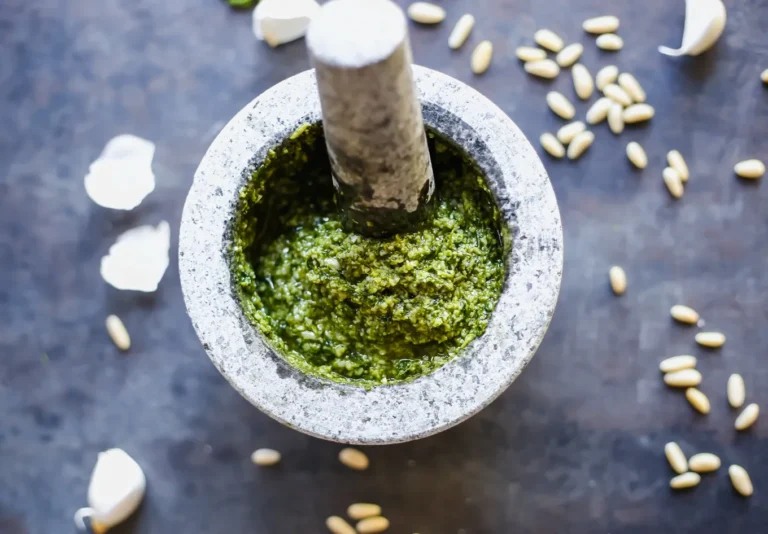
“Pesto” comes from the Italian verb pestare, meaning “to pound” or “to crush.” That’s right—pesto isn’t just a recipe. It’s a method.
After making this version dozens of times, the technique that makes the biggest difference is
This means pesto isn’t limited to just basil-based sauces. It refers to any sauce created by pounding ingredients together—usually with a mortar and pestle, the original food processor. In fact, many sauces that follow this method, even if they contain no basil at all, are technically pestos.

Ancient Roots – The Roman Connection
You might be surprised to learn that pesto’s roots stretch all the way back to Ancient Rome. Roman soldiers and citizens ate a sauce called moretum, made by crushing garlic, herbs, cheese, olive oil, and vinegar together. Sound familiar?
Moretum was typically served with bread and prepared by hand. It’s even mentioned in Latin poetry attributed to Virgil, describing the humble breakfast of a farmer mixing ingredients into a flavorful paste.
This early version lacked basil (which wasn’t yet common in the region), but it set the foundation for what pesto would become: a vibrant, crushed herb sauce made with whatever ingredients were locally available.

The Birth of Pesto alla Genovese
The pesto we know and love today—Pesto alla Genovese—originated in Genoa, the capital of the Liguria region in northwestern Italy. Surrounded by steep mountains and the Mediterranean Sea, Liguria had access to:
• Fragrant basil, thriving in the coastal microclimate
• Olive oil, rich and golden from nearby groves
• Pine nuts, gathered from local stone pines
• Sheep and cow’s milk cheeses
• The culinary tradition of hand-pounding ingredients into sauces

The first written reference to pesto as we recognize it today appeared in the mid-19th century in Giovanni Battista Ratto’s cookbook La Cuciniera Genovese. This version called for garlic, basil, cheese, and oil—already close to today’s standard.
As the dish spread throughout Italy and beyond, local variations emerged, but Pesto alla Genovese remained the archetype.
Pesto Spreads – Regional and Global Variations
The pesto method traveled—and evolved. Here’s how it morphed across regions:


Pesto Rosso (Red Pesto – Sicily)
This vibrant red version from Trapani, Sicily swaps basil for tomatoes, and pine nuts for almonds, blending in garlic, cheese, and olive oil. It’s sweeter, nuttier, and slightly spicy.
Pesto Trapanese
A close cousin to Pesto Rosso, this traditional Sicilian variant combines raw garlic, basil, tomatoes, almonds, and pecorino. Often served with busiati pasta.
Kale, Arugula, or Mint Pestos
Modern chefs and home cooks have experimented with everything from kale to carrot tops to mint, creating pestos for every season and dietary need.
Vegan, Nut-Free, and Dairy-Free Pestos
Today’s pestos adapt to dietary restrictions. Nutritional yeast replaces cheese, sunflower seeds or pumpkin seeds substitute for nuts, and avocado or white beans add creamy texture without oil overload.
What is Pesto and why it Became a Global Staple
Pesto’s popularity exploded in the late 20th century, thanks to:
• Italian emigration bringing recipes to the U.S., Argentina, and Australia
• The rise of Mediterranean diets
• Increased availability of fresh herbs and food processors
• The sauce’s incredible versatility

From fancy restaurants to supermarket jars, pesto became the emblem of casual elegance—rich, rustic, and just exotic enough to feel gourmet.
It’s now featured in:
• Pasta dishes in Japan
• Sandwiches in New York delis
• Vegetarian bowls in Brazil
• Pizza bases across Europe
• Fusion recipes on TikTok and Instagram
The Ritual of Making Pesto

While machines have made it faster, the traditional Ligurian method is still revered:
1. Garlic and pine nuts are pounded first.
2. Basil is added slowly, releasing aromatic oils.
3. Cheese is folded in.
4. Olive oil is added gradually, never rushed.
The result? A bright green, textured sauce full of nuance—never bitter, never watery, and with real depth of flavor.
It’s so important to Ligurian identity that there’s a World Pesto Championship held in Genoa every two years. Contestants must use a mortar and pestle, and judges evaluate technique, texture, and taste with religious fervor.
Pesto as Living History
Pesto is more than a recipe—it’s a link to the past. It connects us to Roman farmers, Ligurian grandmothers, and now, global food lovers in every corner of the world. It’s a sauce that adapts without losing its soul.
It started as a humble, local preparation. But because it’s rooted in flavor, simplicity, and technique, it resonates with anyone who’s ever smashed garlic into olive oil and sighed in satisfaction.

Whether you’re eating it on pasta, pizza, or roasted vegetables, remember: you’re not just enjoying a sauce. You’re tasting centuries of evolution, tradition, and ingenuity.
Disclosure: Our blog contains affiliate links to products. We may receive a commission for purchases made through these links. However, this does not impact our reviews and comparisons. We try our best to keep things fair and balanced, in order to help you make the best choice for you.
Written by José Villalobos — Food writer and founder of Calitalia Food. Based in Sacramento, CA. Read more →


One Comment