Pesto may have been born in Liguria, but it didn’t stay there for long. The story of pesto in non-Italian cuisines is all about creativity, culinary mashups, and local flair.
From New York kitchens to Tokyo izakayas and Parisian bistros, the iconic green sauce has been embraced, adapted, and reinvented by cooks across the globe. Whether it’s folded into soba noodles in Japan, blitzed with kale in California, or reimagined with hazelnuts and Comté in France, pesto has become a global citizen—shape-shifting across borders while keeping its herbaceous soul.

This blog explores how three non-Italian culinary powerhouses—Japan, the United States, and France—reinterpret pesto in their own culinary dialects, blending tradition with innovation, and creating new classics along the way.
Japan – Umami Meets Basil
A Culture of Respectful Reinvention
In Japan, pesto is appreciated not only for its flavor, but for its simplicity, technique, and balance—qualities that resonate with Japanese cooking philosophies.
Rather than outright fusion, Japanese chefs often “translate” pesto into their culinary language, resulting in refined, subtle reinterpretations.
Japanese-Inspired Pesto Dishes
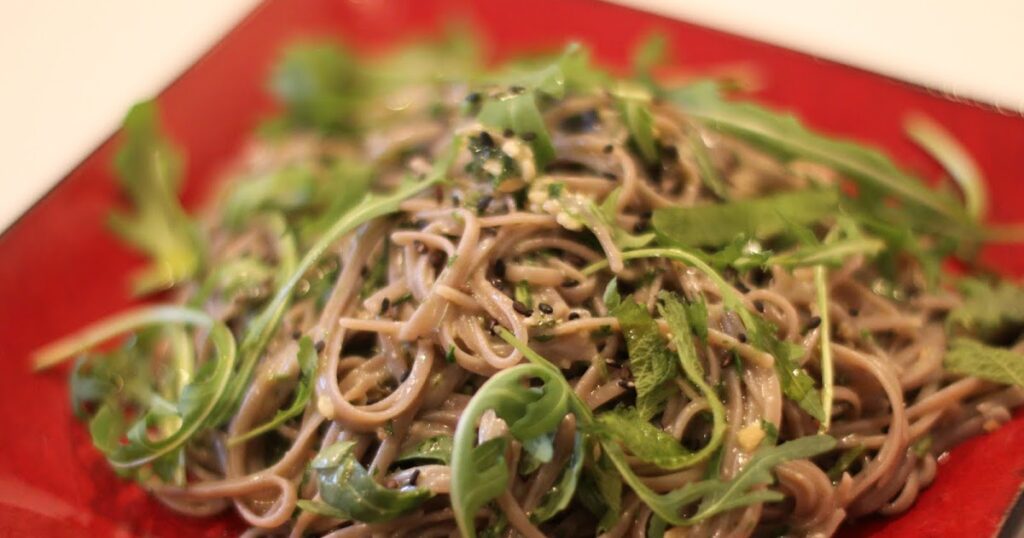
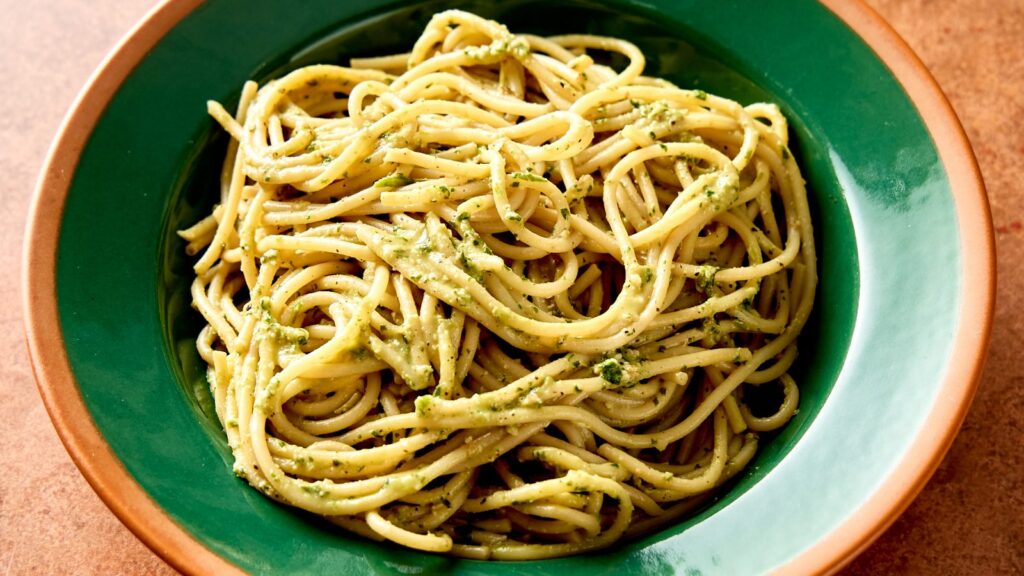
- Soba with Shiso Pesto
Instead of basil, chefs use shiso (perilla leaf)—a citrusy, minty herb commonly used in Japanese cuisine. Shiso pesto is served cold over soba noodles, topped with sesame seeds and grated daikon. - Miso Pesto Pasta
A blend of white miso, sesame oil, olive oil, and spinach or parsley, resulting in an earthy, umami-rich pesto tossed with spaghetti or udon. - Yuzu Basil Pesto
Combines fresh basil, yuzu juice, and toasted sesame, often used as a glaze for grilled fish or mixed into rice dishes.
Why It Works
• Japanese cuisine values balance—pesto’s richness pairs well with dashi, tofu, and grilled seafood.
• Shiso, sesame, and miso naturally echo the depth of garlic, cheese, and nuts.
Pesto in Japan is often lighter, nuttier, and less oily, but just as aromatic.
The United States – Bold, Diverse, and DIY
A Nation of Variations
In the U.S., pesto has exploded far beyond its Ligurian roots. American cooks are known for reinvention, health-conscious tweaks, and flavor maximalism, and pesto is no exception.
If there’s a leafy green or nut that exists, someone’s made a pesto out of it.
Popular Americanized Pesto Styles


- Kale and Walnut Pesto
Originated in California health food circles; earthy, bold, and vegan-friendly. - Avocado Pesto
Creamy, dairy-free, and often made with lime and cilantro—popular in Southwest and fusion cuisine. - Sun-Dried Tomato Pesto (Pesto Rosso)
Often enhanced with smoked paprika or chipotle for a bolder, BBQ-friendly spread. - Spinach-Artichoke Pesto
Found on pizza or in party dips, it merges pesto with the classic American creamy dip flavor profile.
Pesto in American Restaurants and Culture
• Used as a pizza base or burger spread
• Swirled into mac and cheese
• Stuffed into grilled cheese sandwiches
• Served with rotisserie chicken or salmon
• Sold in jars with countless flavor profiles: truffle, almond, spicy jalapeño
Why It Works
• American cuisine embraces pesto’s adaptability
• Home cooks love that it’s easy, quick, and batchable
• Chefs push boundaries, incorporating local ingredients and cultural mashups
France – Elegant, Herbal, and Provençal
Pistou – The French Cousin of Pesto
Before pesto ever crossed into France, the Provençal region already had its own version: pistou.
• Made with basil, garlic, and olive oil
• Typically no cheese or nuts
• Used in the classic dish Soupe au Pistou, a hearty vegetable soup
Modern French Pesto Twists
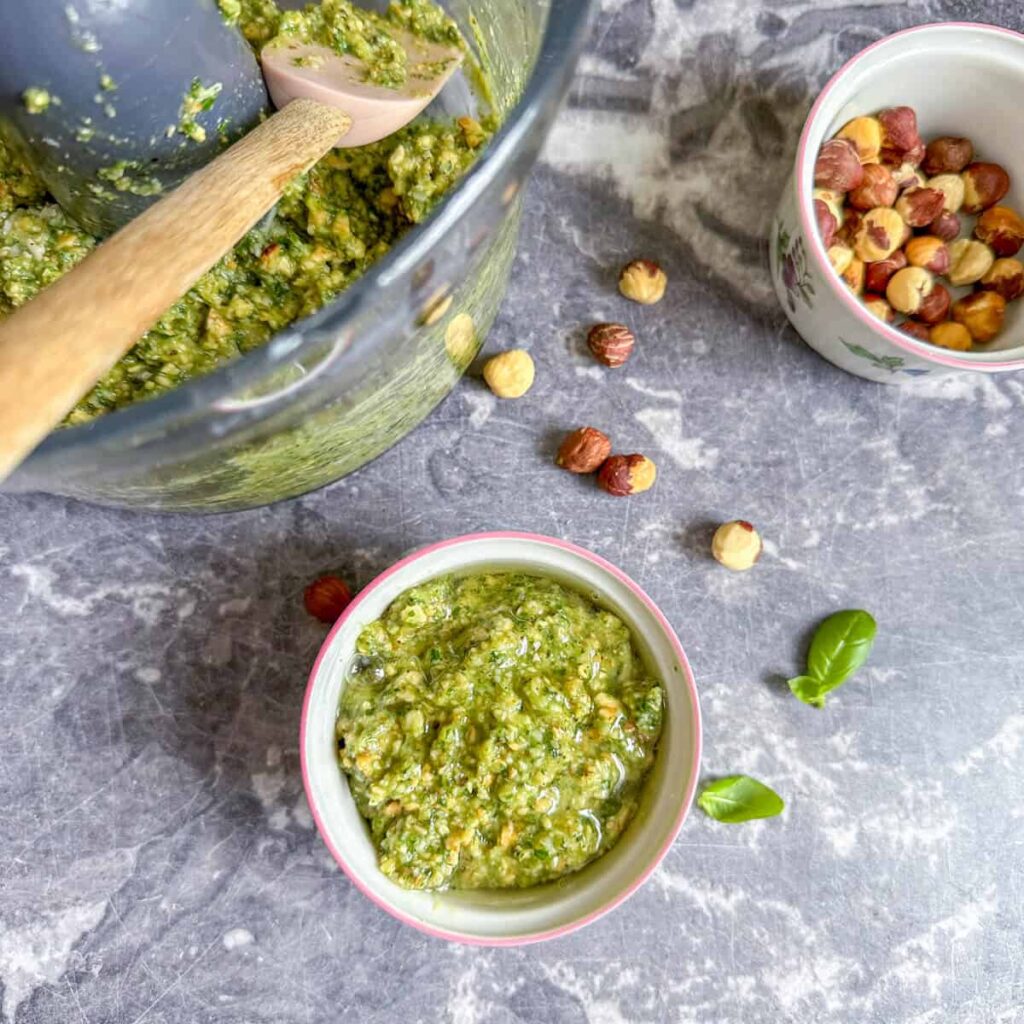
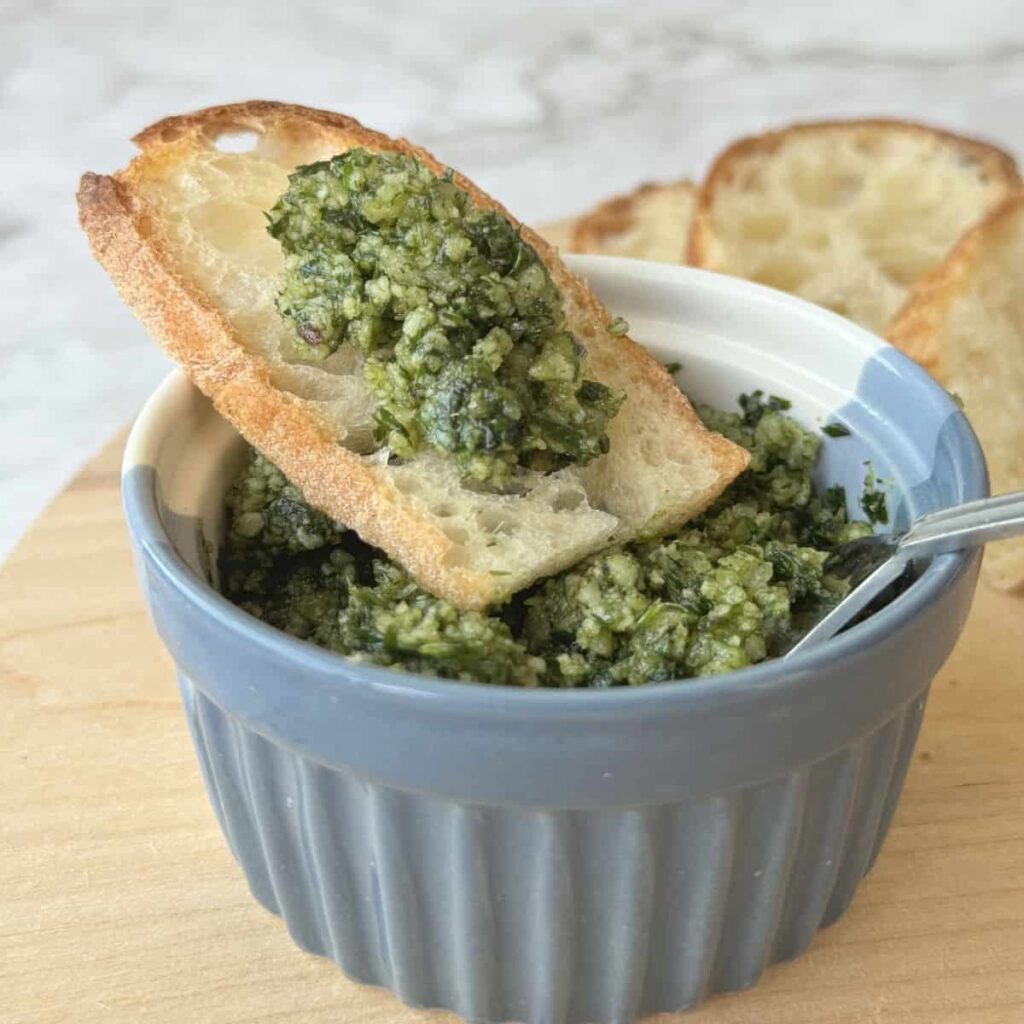
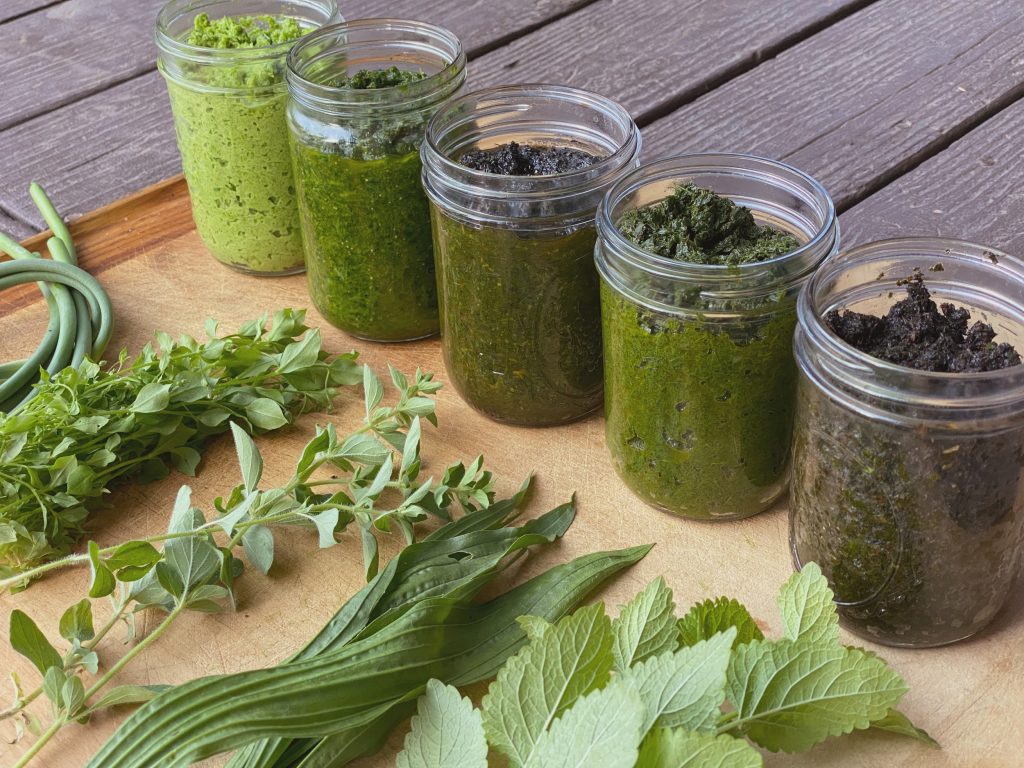
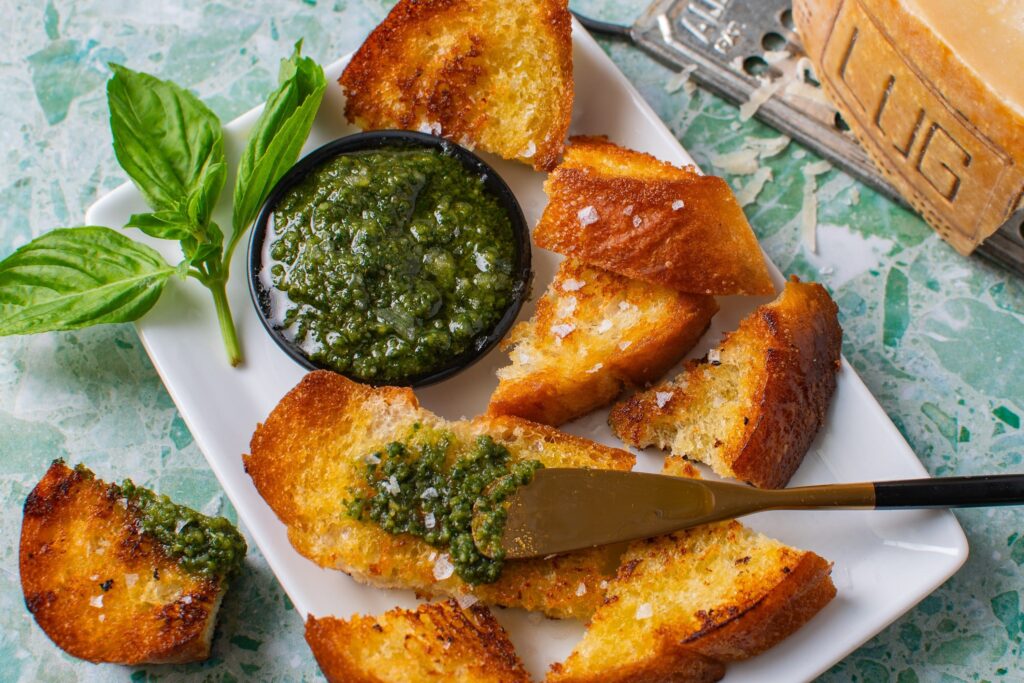
French chefs and home cooks have embraced Italian pesto, but with refinements based on French regional flavors:
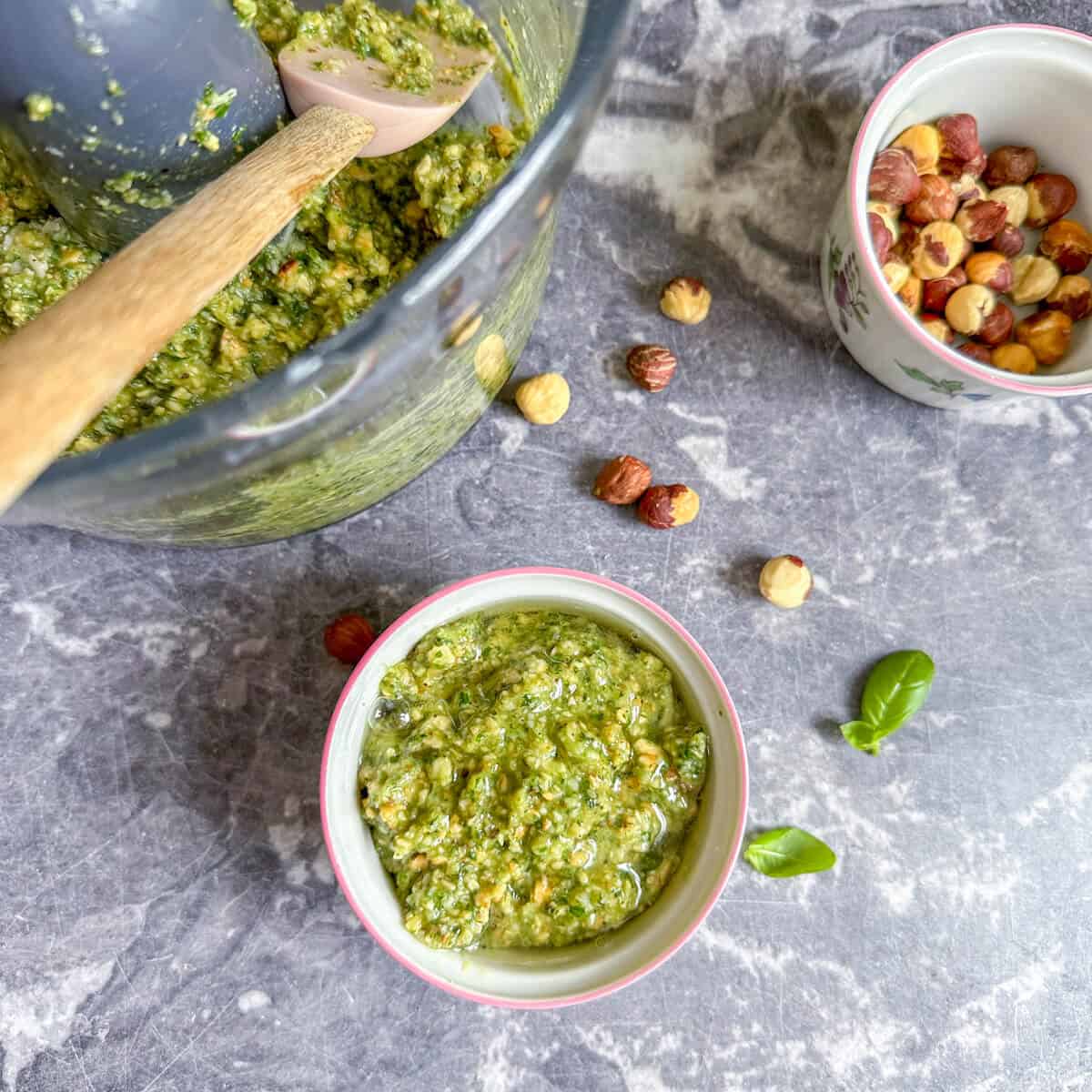
- Hazelnut and Comté Pesto
A rich, nutty spread that pairs beautifully with pork or is drizzled on quiche. - Tarragon and Almond Pesto
French tarragon gives an anise-forward twist; often used in fish dishes or chilled pasta salads. - Herbes de Provence Pesto
- A blend of lavender, thyme, rosemary, and basil with soft goat cheese—used as a tapenade-style spread.
- Truffle Pesto
A luxury variation often found in Parisian gourmet shops, merging basil, black truffle, and aged cheeses.
Pesto in French Cuisine Today
• Served alongside a baguette or focaccia at wine bars
• Used in savory tarts, galettes, and vegetable gratins
• Blended with crème fraîche as a ravioli filling or dipping sauce
Global Lessons from Pesto’s Evolution
Country Key Twist Cultural Values Reflected
Japan Shiso, miso, yuzu, light oils Balance, harmony, freshness
USA Kale, avocado, bolder flavors, Innovation, health focus, personalization
France: Elegant herbs, soft cheeses, hazelnuts. Refinement, terroir, traditional foundations
Across cultures, pesto has proven to be:
• Infinitely adaptable
• Emotionally resonant
• A canvas for culinary identity
Pesto as a Passport
Pesto has gone global not because it’s trendy—but because it’s fundamentally flexible and emotionally familiar. It’s a sauce of simplicity and soul, able to absorb the flavors of wherever it lands.
Whether it’s tossed with soba, blended with avocado, or folded into a Provençal tart, pesto continues to evolve without losing the essence that made it iconic.
So go ahead—try it with sesame oil, a different herb, or no cheese at all. Pesto isn’t just Italian anymore. It’s yours.