Welcome to Italy’s Heel, Where Simplicity Reigns Supreme
Puglia, known as Apulia in English, stretches across the heel of Italy’s boot. It is a land of olive groves, sunbaked stone, whitewashed villages, and some of the most honest, ingredient-driven food in the country.
Apulian cuisine is rooted in la cucina povera, or cooking shaped by necessity rather than luxury. Yet this simplicity is its greatest strength. The region’s dishes are earthy, generous, and deeply flavorful, built around what grows well in its fertile soil and along its long coastline.
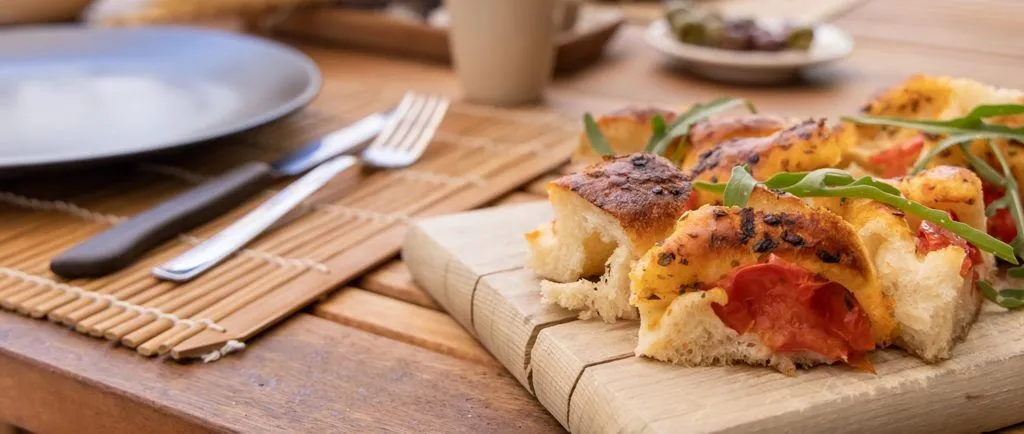
From the chewy bite of orecchiette pasta to the creamy heart of burrata and the legendary crust of Altamura bread, Apulian food is about tradition, texture, and seasonality.
What Makes Apulian Cuisine Different from Other Italian Regions
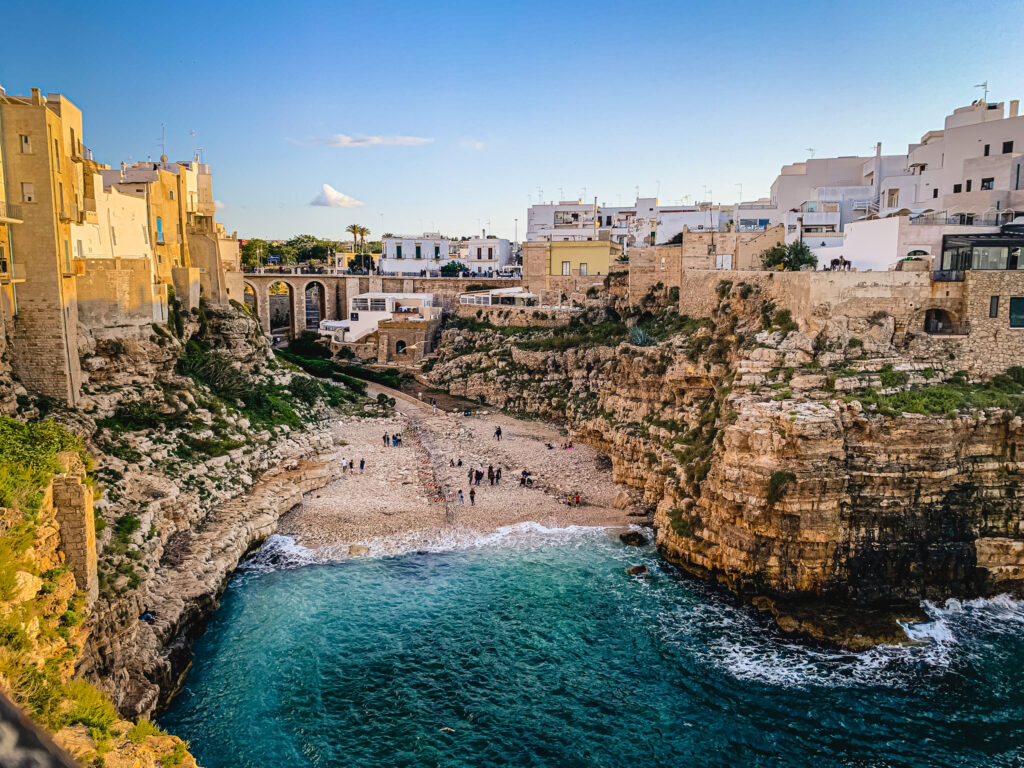
Apulian cuisine stands apart from many other Italian food traditions because it is rooted in agriculture rather than luxury ingredients. The region developed a cooking style based on what could be grown, preserved, and shared easily.
Key characteristics that define Apulian food include:
- Heavy use of durum wheat instead of soft wheat
- Olive oil as the primary fat, not butter
- Legumes and vegetables as everyday staples
- Cheese is used lightly as a finishing ingredient rather than the base of sauces
Compared to northern Italian regions, Apulian food is simpler, more plant-forward, and closely tied to seasonality and land.
Apulian Cuisine Compared to Other Italian Regions
| Feature | Puglia | Northern Italy |
|---|---|---|
| Primary cooking fat | Olive oil | Butter |
| Pasta base | Durum wheat | Egg based |
| Vegetable use | Very high | Moderate |
| Cheese usage | Light finishing | Heavy sauces |
Core Ingredients in Apulian Cooking
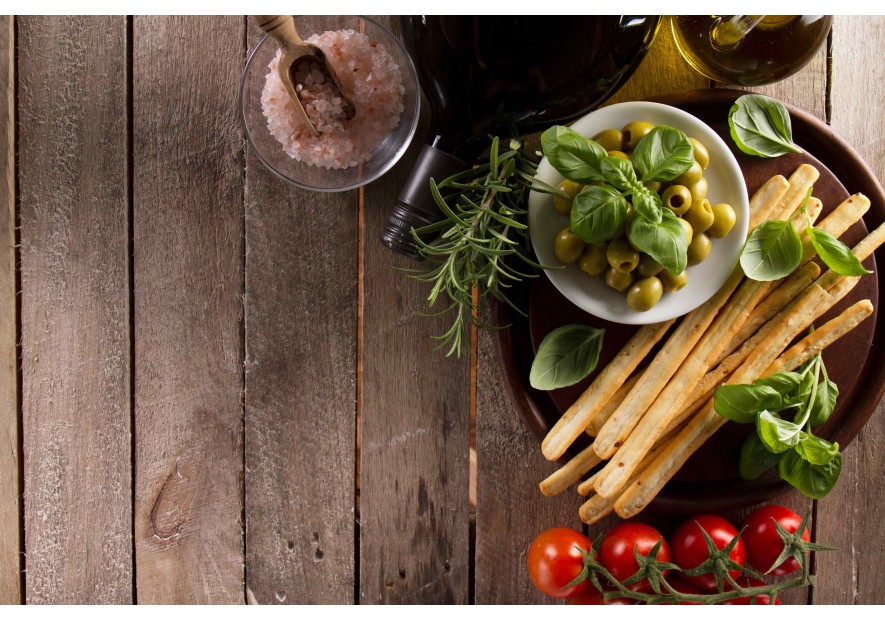
Most Apulian dishes are built from a small group of essential ingredients that appear repeatedly across the region.
- Durum wheat
- Extra virgin olive oil
- Bitter greens such as chicory and turnip tops
- Legumes, including fava beans and chickpeas
- Fresh cheeses like burrata and ricotta
- Tomatoes, often sun-ripened or preserved
What a Traditional Apulian Meal Looks Like
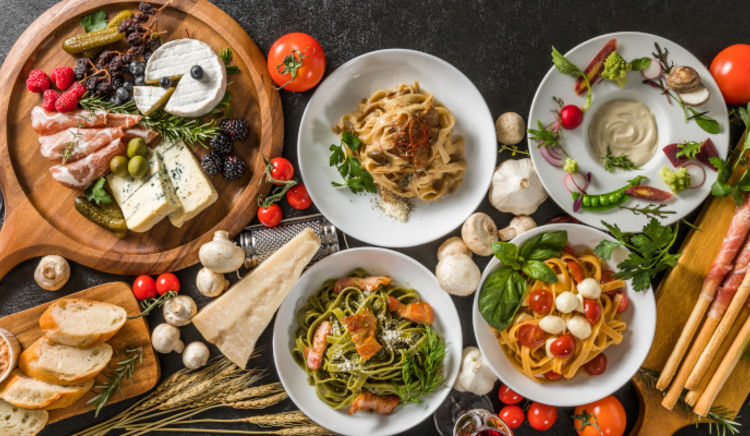
A typical Apulian meal follows a simple and communal structure.
- Antipasto with bread, olives, vegetables, and cheese
- Primo of pasta such as orecchiette with vegetables
- Secondo is based on seafood or legumes, with meat served less often
- Contorno of seasonal greens
- Dolce of fruit or simple pastries
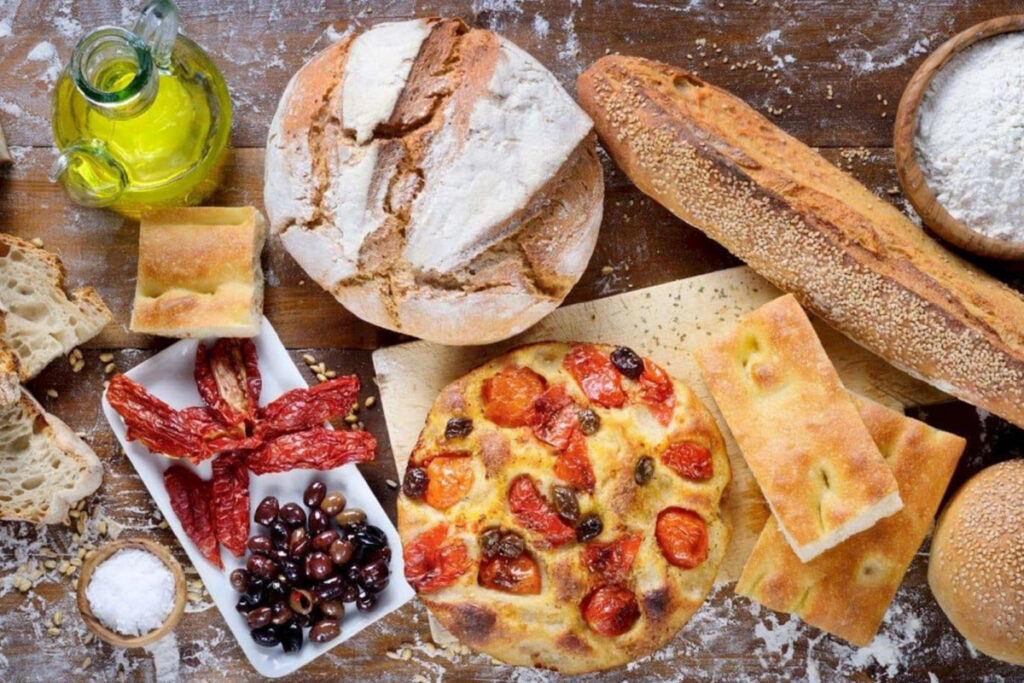
Meals are meant to be shared, seasonal, and unpretentious.
Orecchiette: The Pasta of the People
What Are Orecchiette
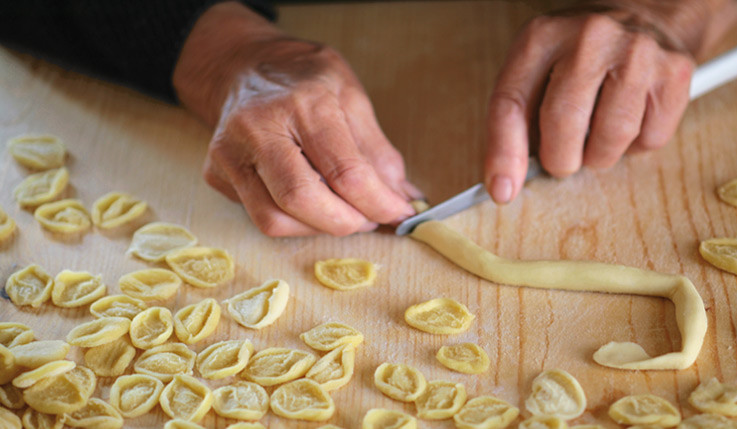
Orecchiette means “little ears,” a name inspired by their small, concave shape.
- Made with semolina flour and water
- Egg-free, ideal for the warm southern climate
- Rough on the outside and smooth inside
- Traditionally shaped by pressing and dragging dough with a thumb or knife
In Bari Vecchia, it is still common to see grandmothers shaping orecchiette by hand in the open air.
Iconic Orecchiette Dishes
Orecchiette alle Cime di Rapa
- The most famous Apulian pasta dish
- Made with turnip tops, garlic, chili, and anchovies
- Bitter, savory, and intensely flavorful
Orecchiette al Pomodoro
- Simple tomato sauce with basil
- Finished with grated ricotta salata
Orecchiette con le Braciole
- Served with beef rolls simmered in tomato sauce
- Traditionally cooked on Sundays or special occasions
Burrata: Cream-Filled Mozzarella from Puglia
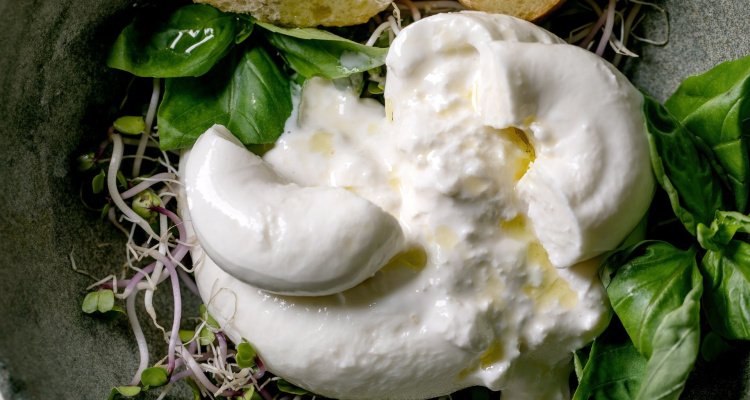
What Is Burrata
Burrata was created in Puglia as a way to use leftover mozzarella curds. A mozzarella shell is filled with stracciatella, which is shredded mozzarella mixed with fresh cream.
- Firm outer layer similar to mozzarella
- Soft, creamy interior
- Best eaten very fresh, ideally within one to two days
How Burrata Is Traditionally Served
- On its own with olive oil and sea salt
- With tomatoes, figs, or prosciutto
- Added to pasta or pizza after cooking, never baked
According to the Italian Ministry of Agricultural, Food, and Forestry Policies, Puglia produces the majority of Italy’s burrata and fresh stretched curd cheeses, making it the undisputed center of burrata production.
Bread Culture in Puglia: Sacred and Deeply Rooted
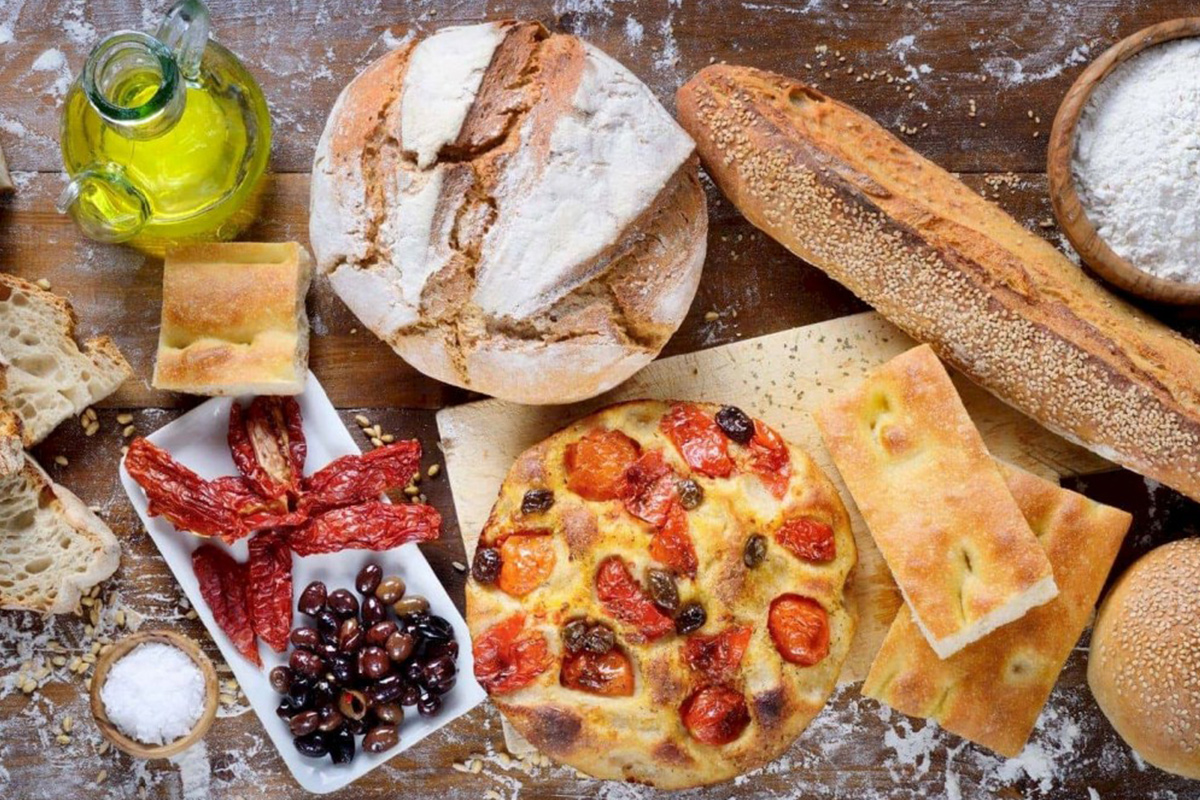
Pane di Altamura DOP
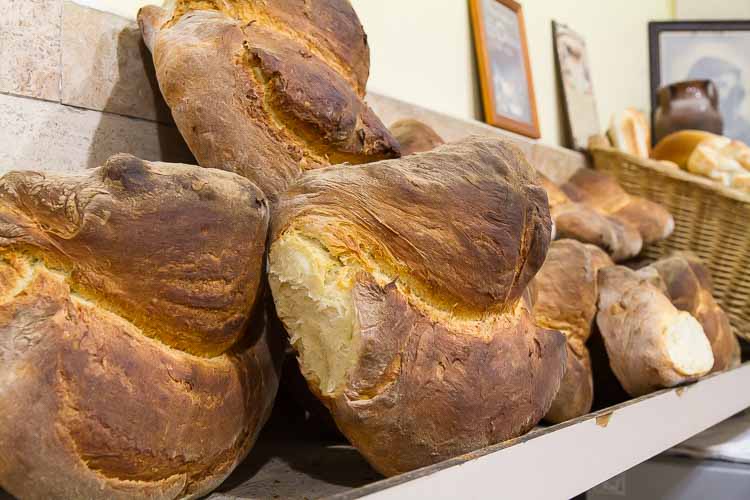
Pane di Altamura is one of Italy’s most protected and respected breads.
- Made with durum wheat flour, water, salt, and natural starter
- Baked in wood-fired stone ovens
- Thick crust with a chewy, golden interior
- Known to stay fresh for up to two weeks
It holds DOP status, meaning it must be produced in a specific geographic area following strict methods.
Focaccia Barese
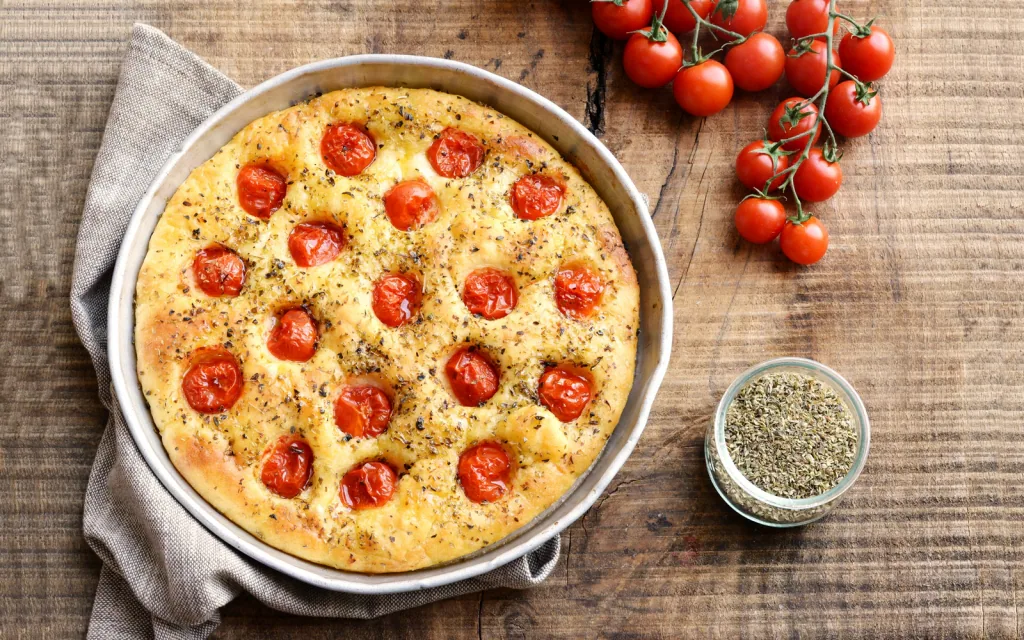
- Thick and soft focaccia made with semolina and potatoes
- Topped with cherry tomatoes, olives, and oregano
- Commonly eaten as street food in Bari
Taralli
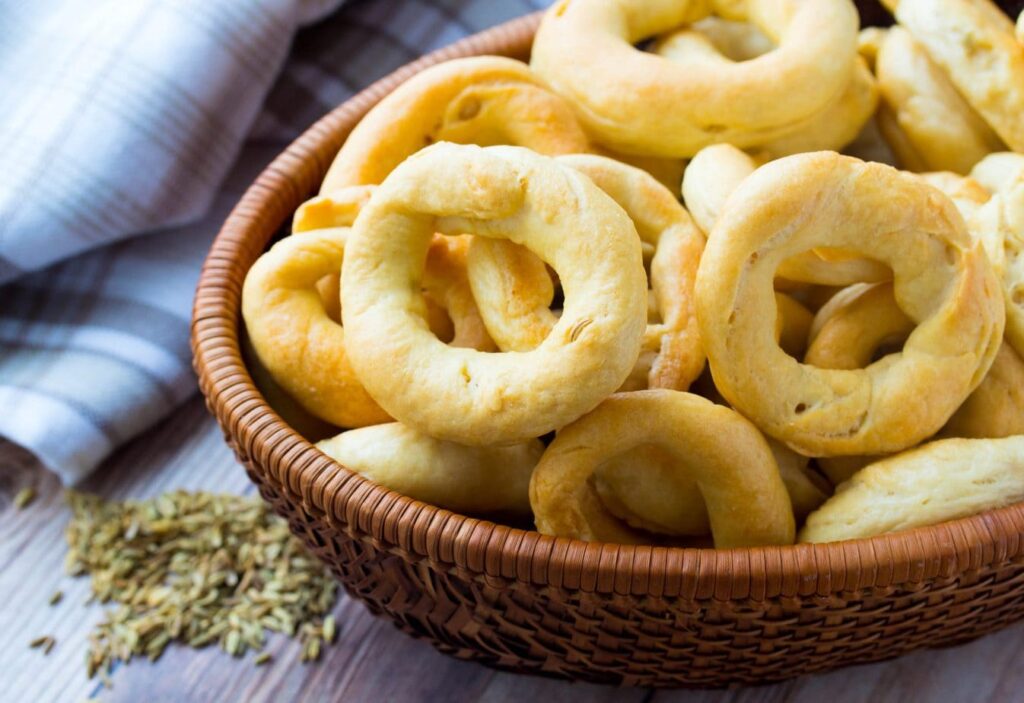
- Crunchy, ring-shaped baked snacks
- Made with flour, olive oil, white wine, and salt
- Often flavored with fennel seeds, black pepper, or chili
Taralli are a daily staple across Puglia, served with cheese, cured meats, or wine.
Vegetable-Centered Cooking in Puglia
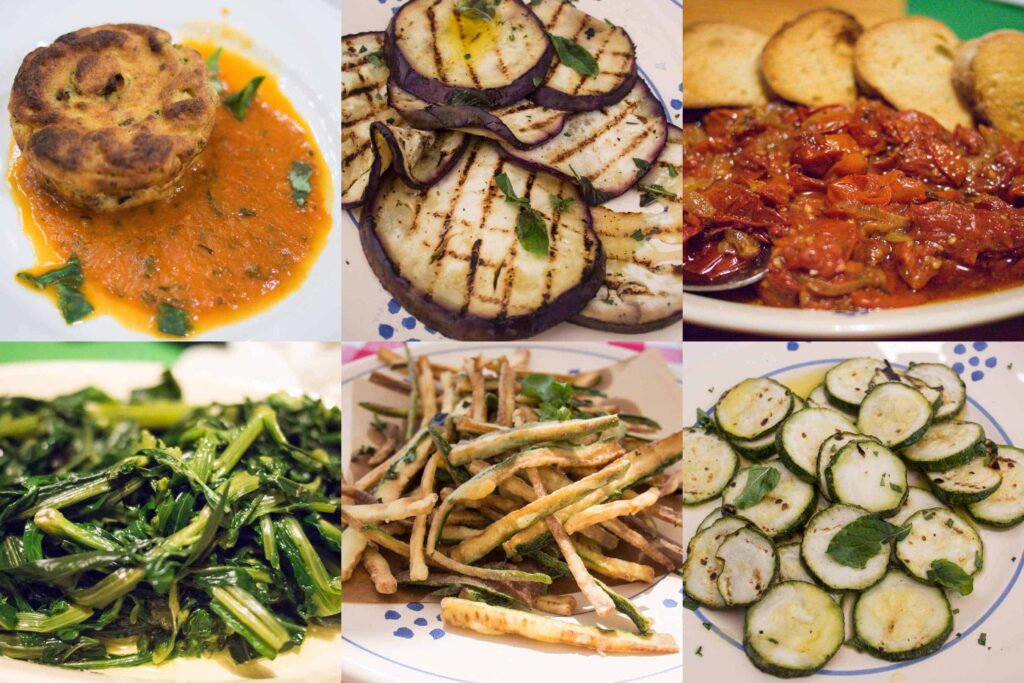
Why Vegetables Take Center Stage
- Long growing seasons
- Fertile agricultural land
- Historic scarcity of meat
Classic Vegetable Dishes
- Fave e Cicoria: Puréed fava beans with bitter chicory greens
- Pittule: Fried dough balls sometimes filled with vegetables or anchovies
- Zucchini alla Poverella: Sautéed zucchini finished with vinegar and mint
Seafood and Coastal Traditions
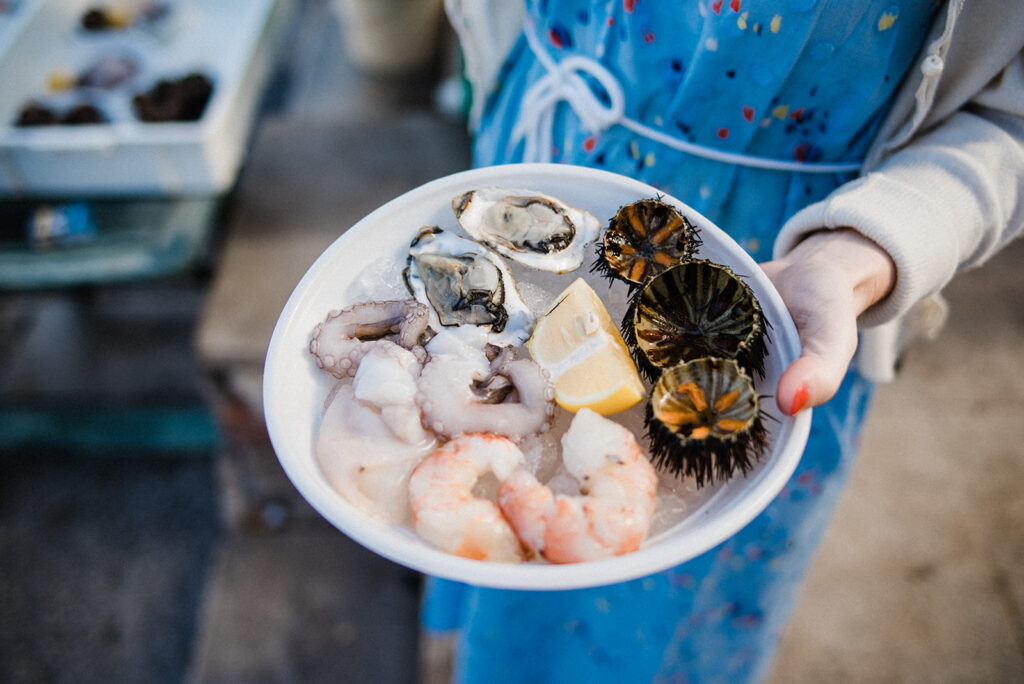
Raw Seafood Culture
In coastal cities like Bari and Taranto, raw seafood is a long-standing tradition.
- Raw mussels, shrimp, and clams
- Served with lemon and cold beer
- Often eaten near the port
Tiella Barese
- Layered dish of rice, potatoes, and mussels
- Baked with onion, tomato, breadcrumbs, and cheese
- Sometimes described as a local version of paella
Polpo alla Pignata
- Octopus slowly cooked in its own juices
- Prepared with tomato and herbs
- Traditionally cooked in clay pots called pignate
Cheeses Beyond Burrata
- Canestrato Pugliese DOP: Firm sheep’s milk cheese with a slightly spicy finish
- Caciocavallo Podolico: Aged cheese made from milk of Podolica cattle
- Ricotta Forte: Sharp, fermented ricotta used sparingly for seasoning
Pugliese Wine Pairings
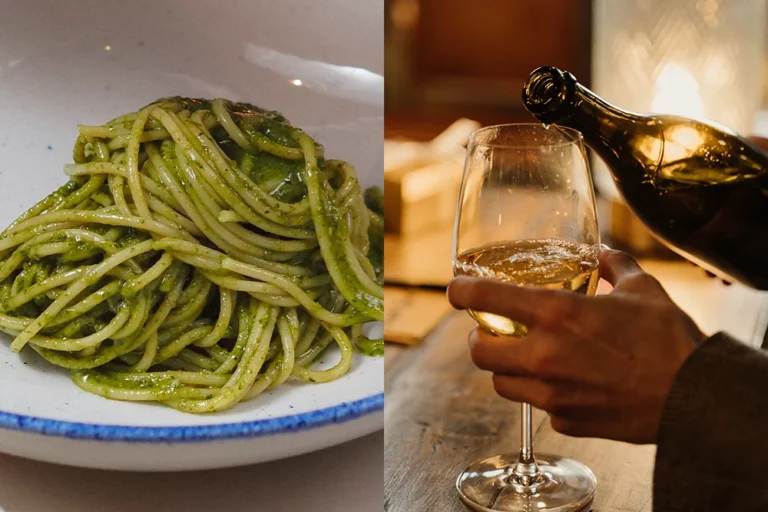
- Primitivo pairs well with rich pasta dishes and grilled meats
- Negroamaro complements tomato-based sauces and bitter greens
- Bombino Bianco works beautifully with seafood and fresh cheeses
Street Food and Festive Specialties
- Panzerotti: Fried dough pockets filled with mozzarella and tomato
- Sgagliozze: Fried polenta squares popular in Bari
- Zeppole: Sweet or savory fritters prepared during religious festivals
Food plays a central role in Apulian celebrations, where cooking and eating are shared community events.
FAQS
Is Apulian cuisine vegetarian-friendly?
Yes. Many traditional Apulian dishes are naturally vegetarian due to historic meat scarcity. Pasta, vegetables, legumes, bread, olive oil, and cheese form the backbone of daily meals.
Is Apulian food spicy?
No. Apulian cooking focuses on bitterness, acidity, and richness from olive oil rather than heat. Chili appears occasionally but is not dominant.
Why is Apulian bread so famous?
Pane di Altamura is made with durum wheat and baked in wood-fired ovens, producing a thick crust and long shelf life. Its DOP status protects both quality and method.
Is burrata meant to be eaten fresh?
Yes. Burrata is designed to be eaten very fresh. As it ages, the creamy center loses texture and flavor.
The Soul of Apulian Cuisine
Apulian food is built on generosity, community, and respect for the land. From pasta shaped on doorsteps to bread that lasts for days and cheese eaten at peak freshness, every dish reflects a culture of care and hospitality.
To eat in Puglia is to be welcomed like family. To cook Apulian food is to honor history, seasonality, and simplicity done right.