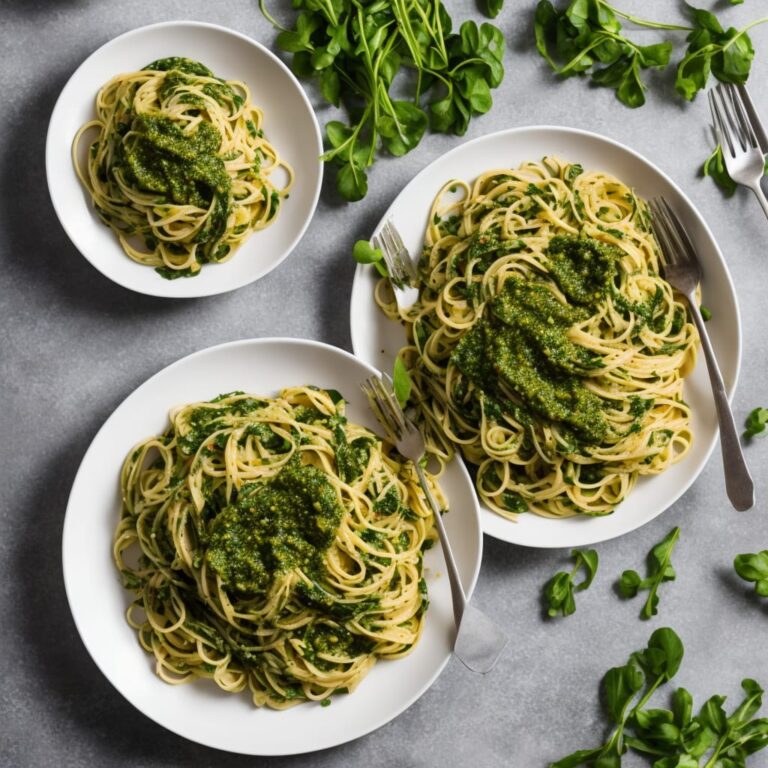

If basil pesto is a polite dinner guest, pesto di rucola is its rebel cousin—sharp, spicy, and full of Southern flair. Made from wild arugula (called rucola in Italian), this rustic pesto hails from the sun-scorched hills of Campania, Calabria, and Puglia, where families have long used foraged greens, olive oil, and cheese to build explosive flavors from simple, seasonal ingredients.
Pesto di rucola isn’t just a variation—it’s a statement. It captures the earthy, peppery punch of arugula and turns it into a bold, vibrant sauce that works beautifully with pasta, grilled meats, and vegetables.

In this article, we’ll explore what makes arugula pesto so special, how it differs from its Genovese cousin, how to make it traditionally, and how to pair it like a Southern Italian local.
The Origins – From Wild Greens to Southern Pesto
In many parts of Southern Italy, arugula grows wild, sprouting from cracks in stone walls and olive groves. Historically, rural communities made the most of these bitter greens by pounding them with local cheese and oil—especially when basil wasn’t in season.
This evolved into pesto di rucola, a no-nonsense, agrarian sauce that’s more fiery and herbaceous than sweet or floral.
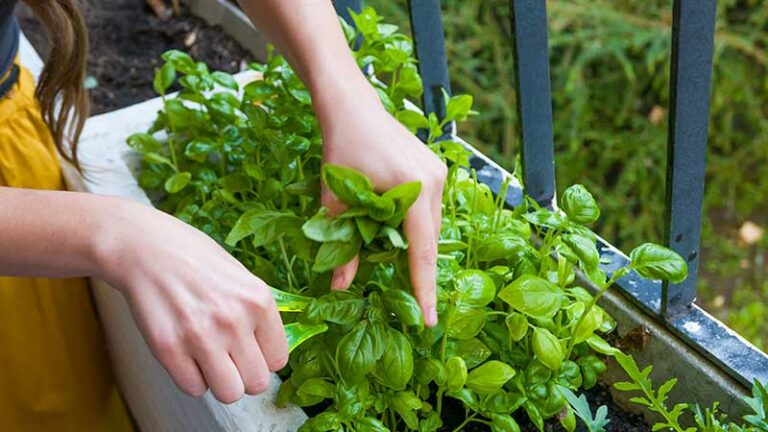
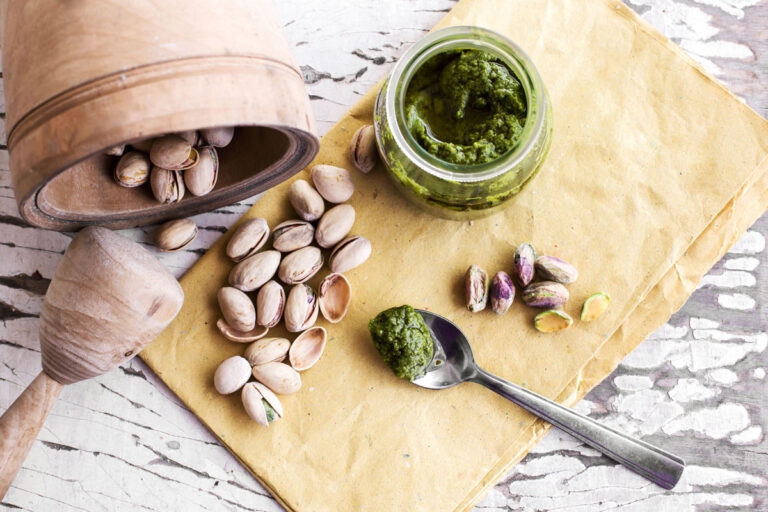
At the Italian market in Sacramento, I source the basil and pine nuts specifically for this.
Unlike pesto alla Genovese, it’s not bound to a single recipe or region. Instead, it’s a vernacular sauce, made with whatever the local cheese, nuts, and greens happen to be.

Key Ingredients in Traditional Pesto di Rucola
Every family has its own blend, but classic Southern-style arugula pesto includes:
1. Rucola (Arugula)
• Young arugula leaves are best (milder, less fibrous)
• Wild arugula (rucola selvatica) has the strongest flavor
• Gives the pesto its signature peppery, mustard-like heat

2. Olive Oil
• Southern Italy produces robust oils—often from Coratina or Ogliarola olives
• Adds bitterness and fruitiness to match the arugula

3. Garlic
• Raw garlic enhances the heat and bite
• Often used in moderation to avoid overpowering the arugula

4. Cheese
• Pecorino Romano is most common (salty, sharp)
• Some use Caciocavallo or Ricotta Salata for regional variation

5. Nuts or Seeds
• Walnuts or almonds are traditional in Campania and Puglia
• Some modern versions use sunflower seeds or skip nuts entirely

Optional additions:
• Lemon juice or zest for brightness
• Fresh parsley to round the bitterness

Flavor Profile – What Makes Rucola Pesto Unique
Pesto di rucola is not for the faint of palate.
Expect:
• Bitterness (from the arugula and EVOO)
• Peppery kick (similar to radish or mustard greens)
• Earthy base (from nuts and cheese)
• Salty tang (from aged Pecorino)
• Aromatic heat (thanks to garlic)
It’s more assertive than Genovese pesto and pairs especially well with bold, fatty, or grilled dishes.
How to Make Pesto di Rucola (Step-by-Step)
This pesto is incredibly easy and quick to make—perfect for weeknight meals or as a topping for grilled vegetables and proteins.
Ingredients (Traditional Base Recipe):
• 2 packed cups fresh arugula (washed and dried)
• 1 clove garlic (optional: roast it for a milder version)
• ¼ cup toasted walnuts or almonds
• ⅓ cup grated Pecorino Romano
• ½ cup extra virgin olive oil (Southern Italian style if available)
• Juice of ½ lemon (optional, for balance)
• Salt to taste

Instructions:
1. Toast nuts in a dry pan (if not already toasted) until fragrant
2. Combine garlic, nuts, and cheese in a food processor; pulse until coarse
3. Add arugula and pulse again
4. With processor running, drizzle in olive oil
5. Add lemon juice and salt to taste
6. Stop when you have a thick, spoonable sauce

Best Pasta and Food Pairings
Pesto di rucola’s peppery nature makes it ideal for:
• Short, ridged pasta like orecchiette, trofie, or fusilli
• Whole wheat pasta, which echoes its earthy tones
• Potato gnocchi (for a peppery contrast to soft, mild dough)
• Grilled meats, especially lamb, pork, or sausages
• Grilled eggplant, zucchini, and bell peppers
• Toasted sourdough or crostini

Storage Tips and Serving Advice
• Store in a glass jar with a thin layer of olive oil on top
• Keeps in the fridge for up to 5 days
• For freezing: omit the cheese, freeze in ice cube trays, and add cheese after thawing
Important tip: Arugula oxidizes faster than basil—so eat fresh when possible, and avoid over-blending.

Common Variations Across the South
Campania
• Often includes anchovy paste for umami
• Used on pizza bianca or with roasted peppers
Puglia
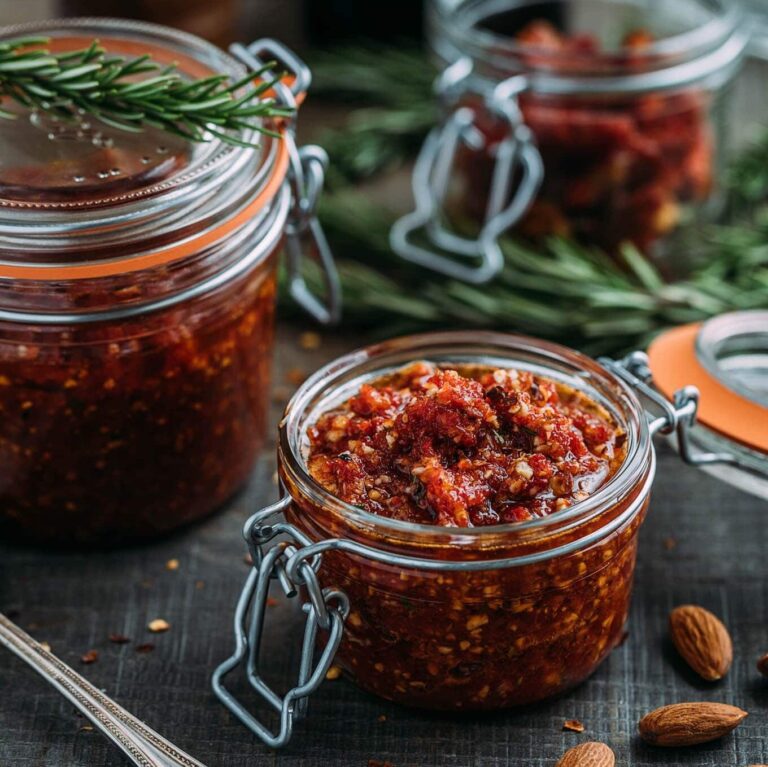
• Combines arugula with sun-dried tomatoes or ricotta forte
• Served on orecchiette or as a crostini topping
Calabria
• Adds chili flakes or fresh peperoncino for heat
• Sometimes paired with ‘nduja or spicy salumi
A Pesto with Bite and Backbone
Pesto di rucola is pesto unfiltered—fiery, fierce, and full of attitude. It’s a love letter to Southern Italy’s rough landscapes, bold flavors, and make-the-most-of-what-you-have cooking style.
It may not be for everyone. But if you like your sauces with character, this peppery green wonder will earn a permanent spot in your kitchen.

And best of all? It’s ready in 5 minutes. No excuses.
Disclosure: Our blog contains affiliate links to products. We may receive a commission for purchases made through these links. However, this does not impact our reviews and comparisons. We try our best to keep things fair and balanced, in order to help you make the best choice for you.
Written by José Villalobos — Food writer and founder of Calitalia Food. Based in Sacramento, CA. Read more →