
What Italian Ingredients Cost in the United States, and What Too Cheap Means
Rough price bands for the main pantry and salumi categories, what drives each, how to judge a price that looks too good, and how to buy well rather than cheaply.
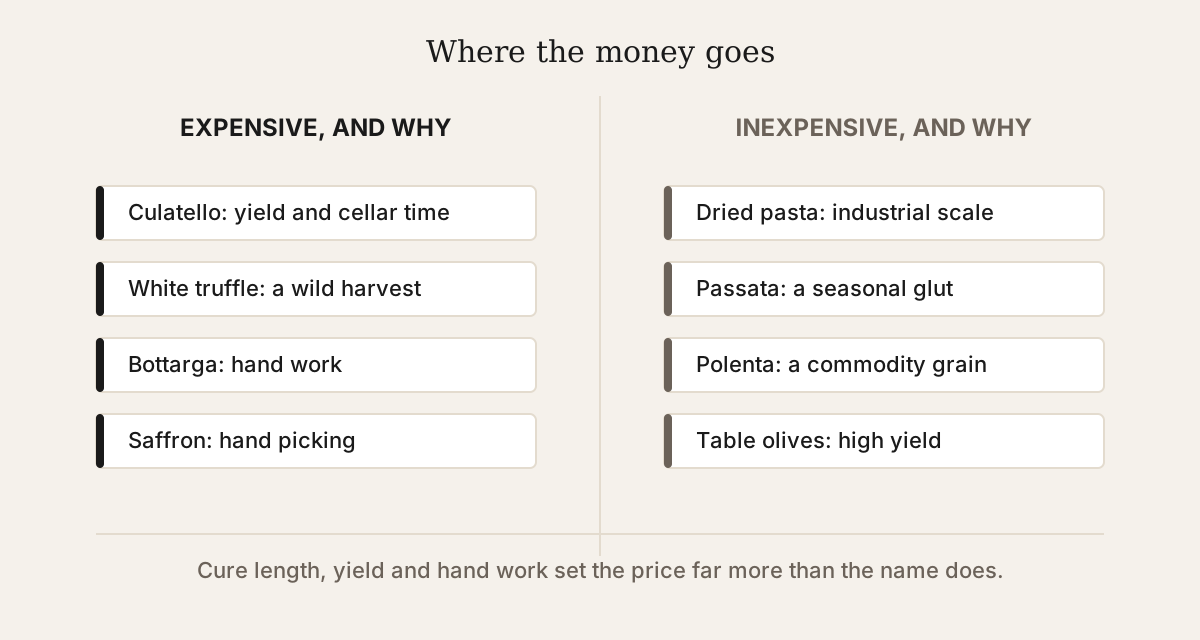
Price is a useful signal for Italian ingredients precisely because the costs are structural: a long cure, a protected supply chain or a low yield cannot be shortened, so a product priced far below its category has saved money somewhere the label will usually reveal. It is a screening tool rather than a quality measure. Read that way, it helps separate the Italian ingredients worth paying more for from those that are merely expensive.
The rule that follows from that is narrow and worth stating: price tells you what to check, not what to buy.
Rough bands, and what drives each
The bands below are broad United States ranges for genuine product, not precise quotes, and they move with the exchange rate and with shipping.
Hard aged cheese, roughly 18 to 30 dollars a pound. Driven by ageing time and by a protected milk supply. Parmigiano Reggiano at 24 months sits mid-band; 36 months runs higher.
Dry-cured whole muscle, roughly 25 to 45 dollars a pound. Driven by cure length and weight loss during it. Prosciutto di Parma and lardo di Colonnata both sit here.
Dry-cured salami, roughly 18 to 32 dollars a pound. Driven by cure length and yield, with pressed products like soppressata at the upper end because they lose more.
Cooked salumi, roughly 14 to 25 dollars a pound. Lower because there is no long cure, and shorter-lived as a result.
Preserved pantry items, wide. Colatura at 15 to 30 dollars for 100 millilitres, driven by yield. Castelvetrano olives at 8 to 16 dollars a jar, driven by very little, which is why they are among the best value on the site.
Fresh seasonal, volatile. Alba white truffle moves week to week with the harvest and is the one category where the price is genuinely unpredictable rather than merely high.
The four things that actually cost money
Understanding the driver tells you whether a low price is plausible or not.
Time. A 24-month cheese has been someone’s inventory for two years. A six-month lardo has been in a basin for six months. That cost cannot be compressed, and a product claiming the age at a fraction of the price has not been aged.
Yield. Colatura converts a large quantity of anchovies into a small quantity of liquid. Guanciale comes from a small cut and the jowl yield per pig is low. Low yield sets a floor under the price regardless of everything else.
A protected supply chain. Where a discipline dictates the breed, the feed and the geography, the raw material costs more before anything is made from it.
Shipping and cold chain. For perishables this is a real component, and it is why an imported cooked product costs more relative to its production cost than a shelf-stable one does.
Reading a price that looks too good
A price well below its band is information, and the ingredient list almost always explains it.
On cheese, a generic name rather than a protected one. Parmesan rather than Parmigiano Reggiano.
On pesto, cashews for pine nuts, a second cheaper oil, or a bulking agent.
On salumi, a shorter cure or a domestic product sold with Italian styling. Neither is a fault; both are a different product from the one the price band describes.
On oil, a bottling claim standing in for an origin claim, with no harvest year and no named mill.
On truffle products, a synthetic aroma compound rather than truffle.
The check is always the same. Read the ingredient list and look for the protected mark. Price told you to look; it did not tell you the answer.
Where price is a poor guide
Price fails as a signal in three places, and knowing them prevents overpaying.
Widely distributed protected products. Parmigiano Reggiano from a supermarket counter with good turnover is the same cheese as from a specialist, and paying more does not make it better. The mark has already done the work.
Categories with no designation. Guanciale, nduja and most pancetta have no protected version, so a high price signals a producer’s positioning rather than a verified standard. Judge these on the product.
Packaging. A substantial share of the premium on some pantry goods is the bottle, the tin or the box. That is not fraud and it is not flavour.
Checked on 13 August 2026, the first page of United States results for italian olive oil price returned retailers and market commentary rather than any consumer pricing guide, which describes that search on that date. The practical reading is that there is no published reference band for a shopper to check against, which is why this page states rough ranges rather than pointing at one.
Buying well rather than cheaply
The reliable savings are in format and quantity rather than in finding a cheaper version of the same thing.
Buy whole and break it down. A whole piece of guanciale or a large wedge of Parmigiano costs less per pound than pre-cut portions and keeps considerably better.
Buy pantry items in consolidated orders, since importer shipping is charged per order rather than per item. Where to buy each item is covered separately.
Buy perishables in small quantities more often. The cheapest cured meat is the cured meat you do not throw away, and sliced salumi has a short useful life.
Buy the value categories deliberately. Castelvetrano olives, good dried pasta and tinned tomatoes deliver most of their category’s quality at a low price, which frees up budget for the categories where the gap between good and ordinary is large.
Frequently asked questions
Is expensive Italian food always better?
No, and price is a screening signal rather than a quality measure. It reliably tells you that a long cure, a low yield or a protected supply chain was involved, and it tells you nothing about ageing beyond the minimum, handling after import, or how long a leg has been open at the counter. Use it to decide what to check.
Why is guanciale more expensive than pancetta?
Yield. Guanciale comes from the jowl, which is a small cut with only two per pig, while pancetta comes from the belly, which is large and widely available. Both cure similarly, so the price difference is almost entirely about how much of each a pig produces rather than about quality.
Is domestic American salumi worth buying?
Frequently yes, and it is often better value than imported industrial product. Domestic producers cannot carry Italian protected designations, so they should be judged on the visible characteristics: fat colour and firmness, grind, cure and producer reputation. Some domestic charcuterie is excellent and priced below imported equivalents.
Why do prices for the same product vary so much between sellers?
Mostly shipping, handling and how much of the price is the packaging. For perishables the cold chain is a genuine cost that some sellers absorb and others skip, which is worth paying for. For shelf-stable goods the variation is more often margin and presentation than product.
What is the best value category?
Castelvetrano olives, good dried pasta and quality tinned tomatoes, all of which deliver most of what their category offers at a modest price. The categories where paying more genuinely changes the experience are long-aged cheese, dry-cured whole muscle and the low-yield preserved goods like colatura.
CalItalia Food covers Italian ingredients: what they are, how to tell a good one from an ordinary one, and where to buy them in the United States.