
Where to Buy Genuine Italian Ingredients in the United States
The four routes that actually work, what each is good and bad at, which to use for which item, and how to judge an importer you have not used before.
There are four routes to genuine Italian ingredients in the United States: a specialist online importer, a local Italian grocer, a cheese or salumi counter with real turnover, and a general supermarket for the small number of items it stocks properly. Each is good at different things and none covers everything. Matching the route to the item is the practical end of buying the Italian original rather than its imitation.
The useful question is not which is best but which suits the item, because the failure modes are specific: the importer cannot sell you a freshly cut wedge, and the supermarket cannot sell you colatura.
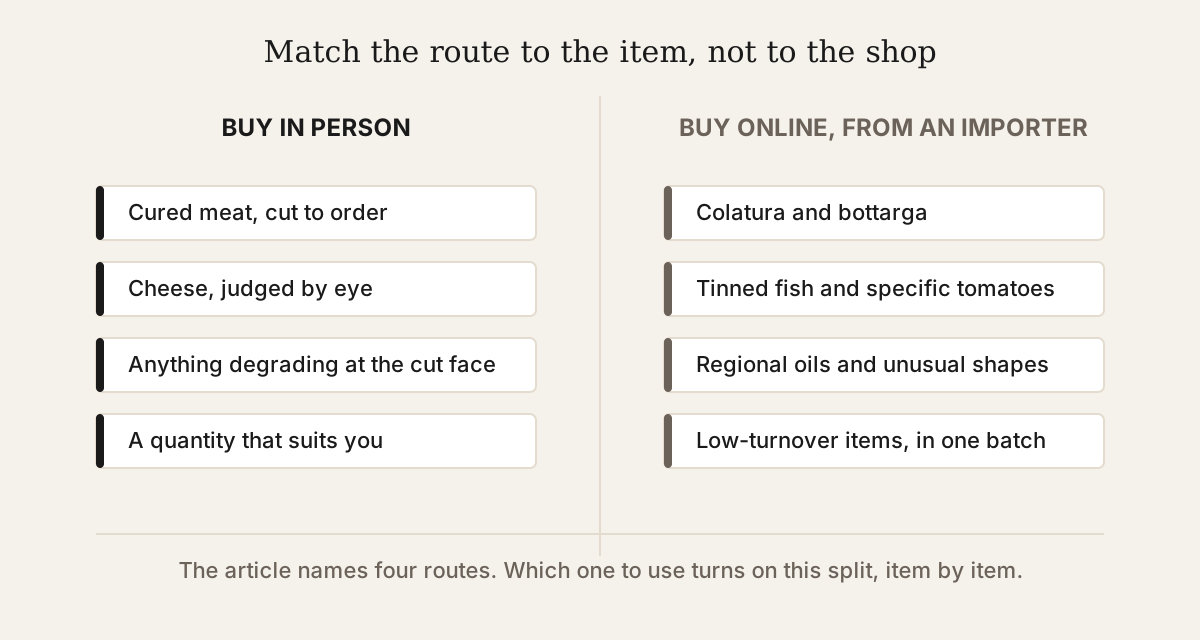
The four routes, and what each is for
Specialist online importers are the only reliable route for shelf-stable items with low retail turnover: colatura di alici, bottarga, specific tinned tomatoes, good tinned fish, unusual pasta shapes, regional oils. They ship from a warehouse that moves stock, so what arrives is rarely old.
Local Italian grocers are the best route for cured meats and cheese, because you can see the product, ask what came in recently, and buy a quantity that suits you. They are usually poor on the long tail of pantry items.
Cheese and salumi counters in good supermarkets cover Parmigiano Reggiano, prosciutto and the widely distributed cheeses well, and cover almost nothing else.
General supermarket shelves are genuinely fine for a short list: Castelvetrano olives, some tinned tomatoes, decent dried pasta. They are unreliable for anything where a protected designation matters, because the shelf carries both the protected product and its imitators side by side.
Checked on 13 August 2026, the first page of United States results for where to buy italian ingredients returned online importers and specialist food sellers rather than any single dominant retailer, which describes that search on that date rather than recommending any seller. The practical reading is that this is a fragmented category with no default answer.
How to judge an importer you have not used
Look for four things, all of which are visible on the site before you order.
Do they name producers? A good importer names the farm, the dairy or the family behind each product. A site listing only its own brand across every category is a relabeller rather than an importer.
Do they state harvest, production or arrival dates? For anything seasonal or perishable this is the difference between a reliable seller and a warehouse clearing stock. Truffle sellers should state the harvest date; oil sellers should state the harvest year.
Do they explain their shipping for perishables? Cured meat and cheese need cold shipping in summer. A seller who ships salumi in a padded envelope in July has told you what you need to know.
Do they say what something is not? The best sellers say when a product is not DOP, when a truffle is a summer truffle, when a nduja is domestically made. Precision about limitations is the single most reliable signal.
Matching the route to the item
Buy cured meat and cheese in person where possible. Both are cut to order, both degrade at the cut face, and both are things you can assess by eye. A local counter beats an online order almost every time. Why some Italian cheeses and meats reach no counter at all is covered under import restrictions.
Buy pantry and preserved items online. Colatura, bottarga, tinned fish, specific tomatoes and regional oils have low turnover in general retail, so a shop shelf is more likely to hold an old jar than an importer’s warehouse is.
Buy seasonal items from a specialist during the season only. Fresh truffle is the clearest case: there is a window, and outside it what is offered is something else.
Buy the widely distributed protected products anywhere that carries them properly, checking the mark rather than the shop. Parmigiano Reggiano from a supermarket counter with good turnover is the same cheese it is anywhere.
What to check on arrival
Open perishables the day they arrive and check temperature, the designation mark and the stated dates before anything goes into the refrigerator, because all three are easiest to resolve on the day.
Temperature. Cured meat and cheese should arrive cool. If a summer shipment arrives warm, photograph it and contact the seller the same day.
The mark, again. Check the rind or the label for the designation you paid for. This is the moment to catch a substitution.
Dates. Compare any stated production or harvest date against what the listing claimed. A discrepancy is worth raising, and a seller who handles it well is worth keeping.
A shortlist worth building
Keep a standing list of which seller you use for which item, because the fragmentation of this category is the main friction and it is solvable once.
Most people who buy Italian ingredients regularly end up with three or four sources rather than one: a counter for cheese and salumi, one importer for pantry items, one seasonal specialist, and a supermarket for the handful of things it does properly. Assembling that list takes a couple of orders and then removes the decision entirely.
Order pantry items in batches rather than singly. Shipping is the main cost penalty of the importer route, and it is charged per order rather than per item, so consolidating four items into one order is often the difference between the route being expensive and being sensible.
Reorder what worked and note what did not. The variation between importers on the same named product is smaller than the variation in how they store and ship it, so a seller who delivered a good jar once will probably do it again.
The route that does not work
Marketplace listings from unnamed third-party sellers are the one route worth avoiding for anything perishable or protected.
The specific problem is that the marketplace shows the product and hides the seller’s handling. Cured meat and cheese sold this way frequently ship without cold packing, and protected products are the most commonly substituted category because the price gap makes it worthwhile.
For shelf-stable, non-protected pantry items the risk is lower and marketplace buying is reasonable. For anything with a designation, a season or a cold chain, buy from someone who takes responsibility for it.
Frequently asked questions
Is it cheaper to buy Italian ingredients online?
Usually not, once shipping is included, and that is rarely the reason to do it. Online importers exist to solve availability rather than price, particularly for items with low retail turnover. Where they do win on cost is bulk pantry buying, since shipping is amortised across a larger order.
How do I know an importer is not relabelling?
Look for named producers. A genuine importer credits the farm, dairy or family behind each item, because that provenance is what it is selling. A site where every product across every category carries the same house brand is buying finished goods and putting its own label on them, which is a different business.
Can I trust supermarket Italian products?
For a short list, yes: Castelvetrano olives, decent tinned tomatoes, good dried pasta. For anything carrying a protected designation, check the mark rather than the shelf position, since supermarkets stock protected products and their imitators side by side and the packaging is deliberately similar.
What should I buy in person rather than online?
Cured meat and cheese, because both are cut to order, both degrade at the cut face, and both can be assessed by eye before purchase. Everything shelf-stable and low-turnover is better online. Fresh seasonal items sit in between and depend entirely on the seller’s shipping speed.
How do I check something arrived as described?
Open perishables the day they arrive, confirm they are still cool, check the rind or label for the designation you paid for, and compare any production or harvest date against the listing. Raising a discrepancy immediately is both more likely to be resolved and a useful test of whether the seller is worth using again.
CalItalia Food covers Italian ingredients: what they are, how to tell a good one from an ordinary one, and where to buy them in the United States.