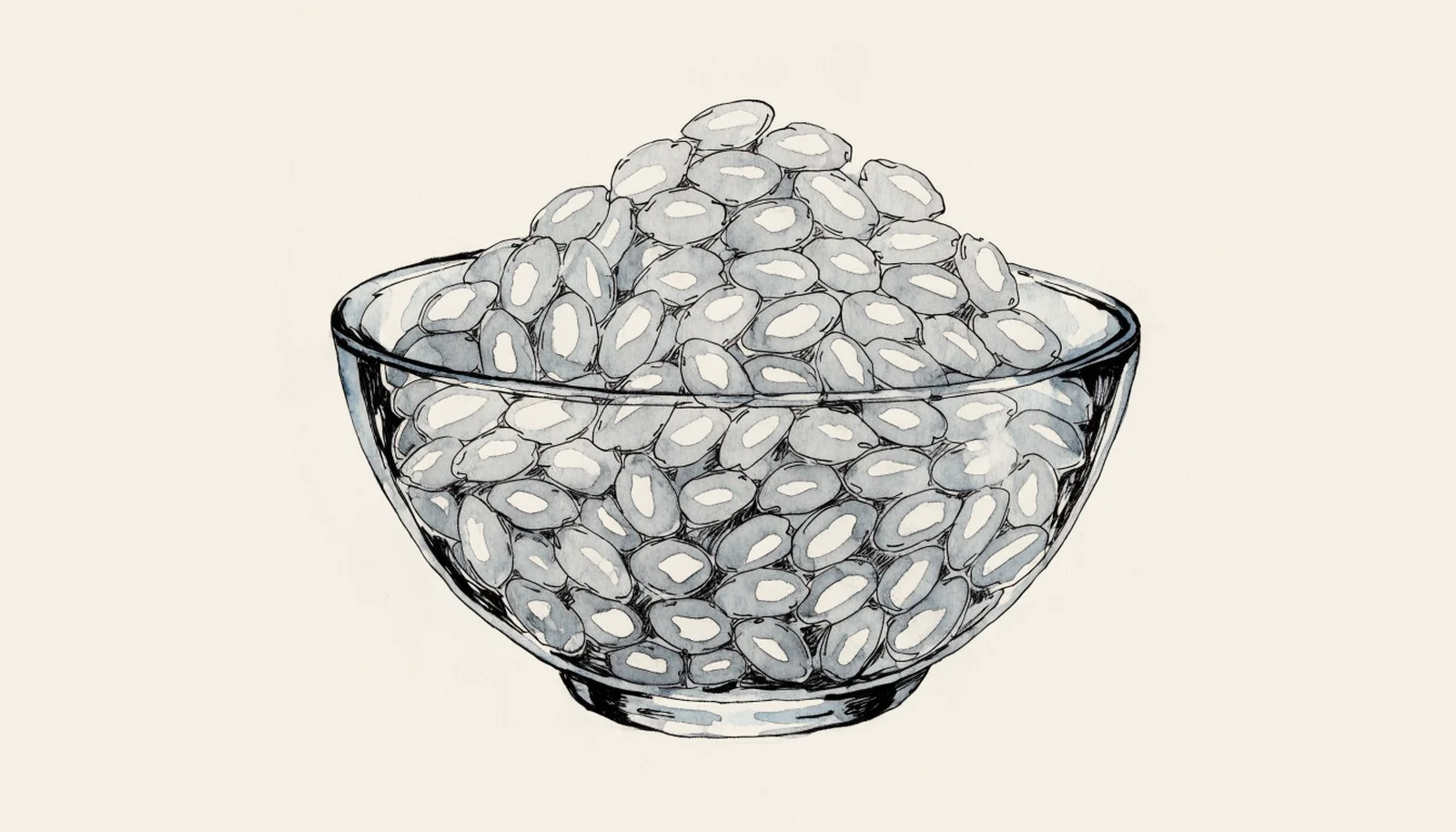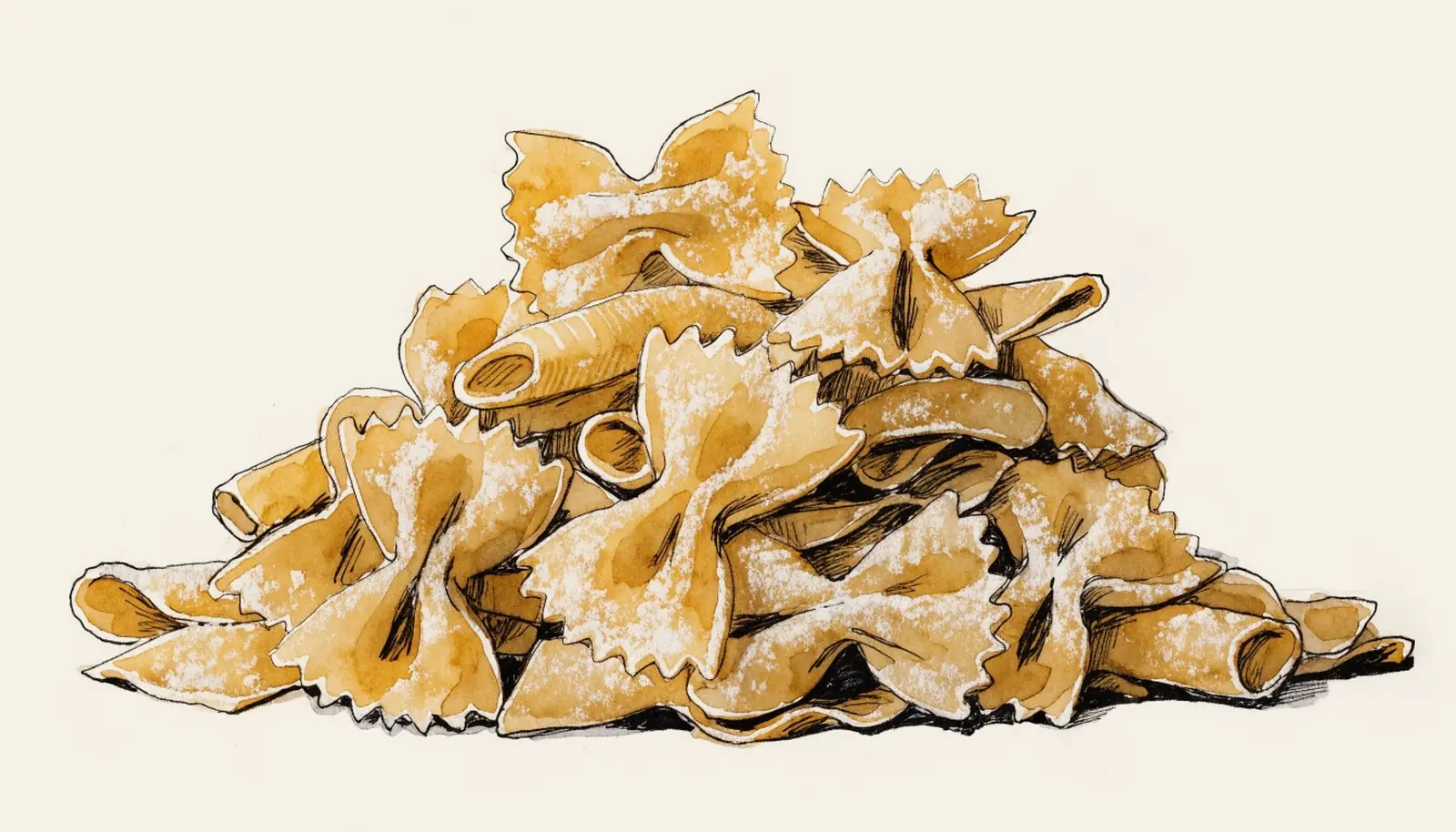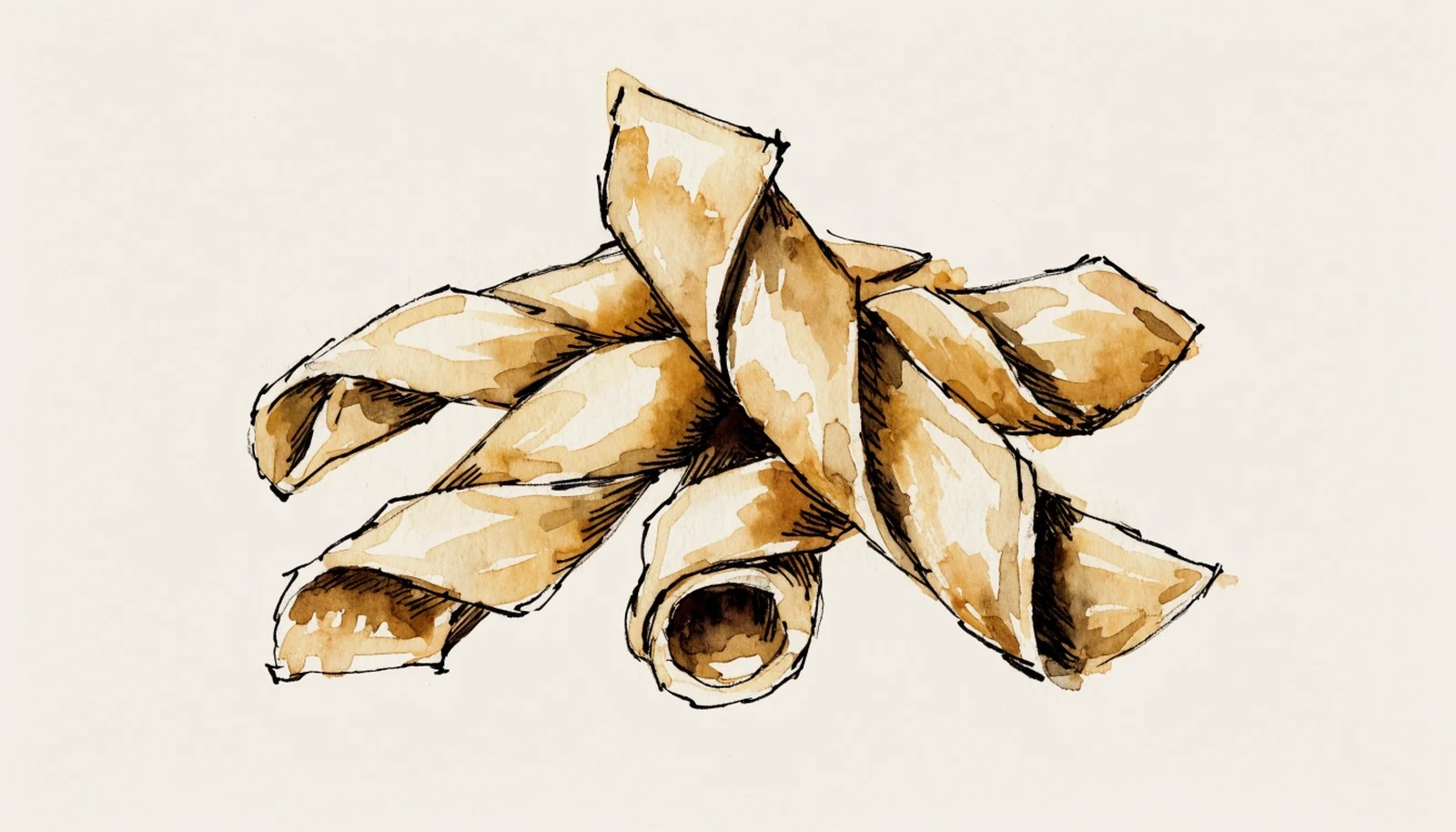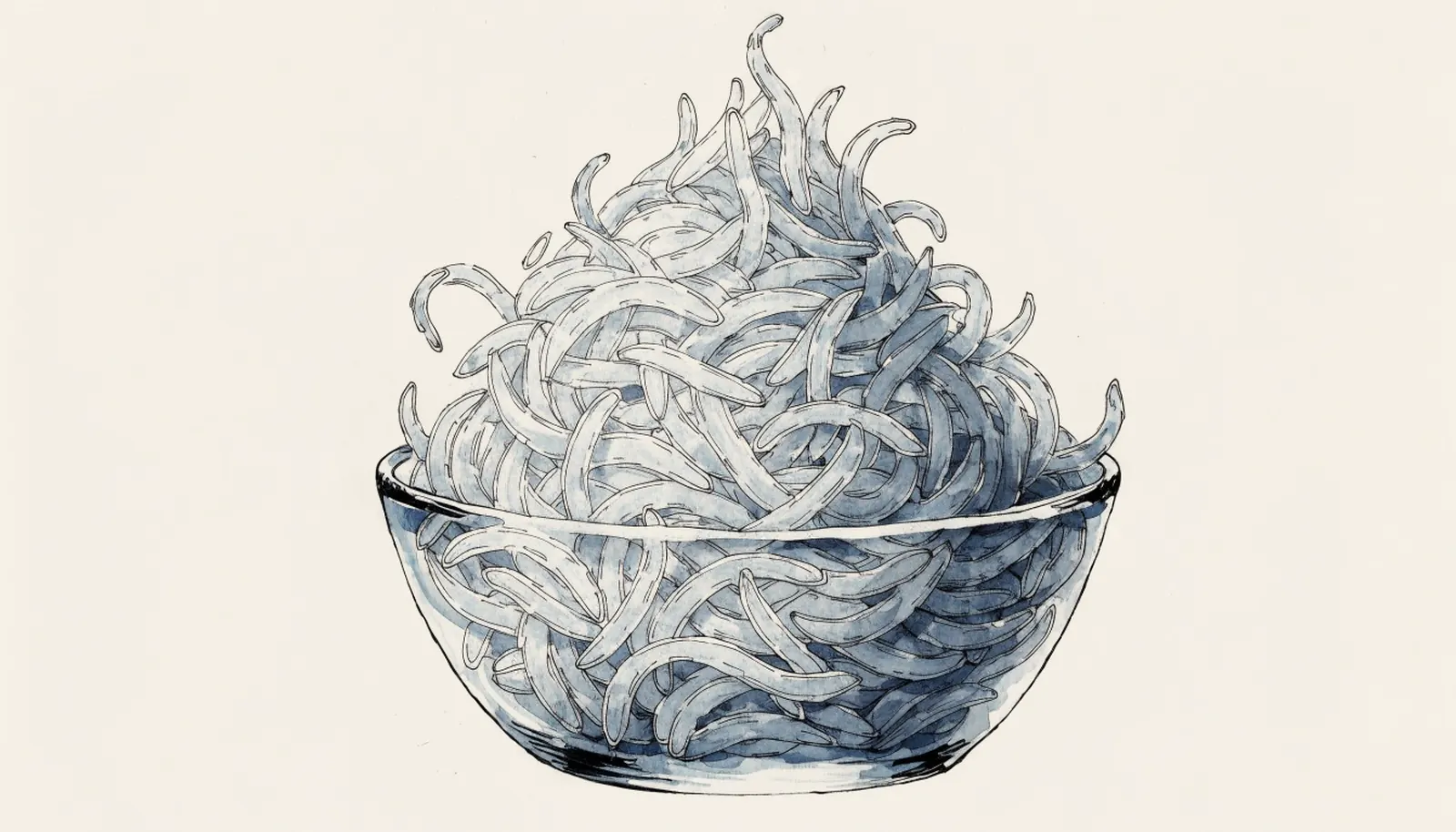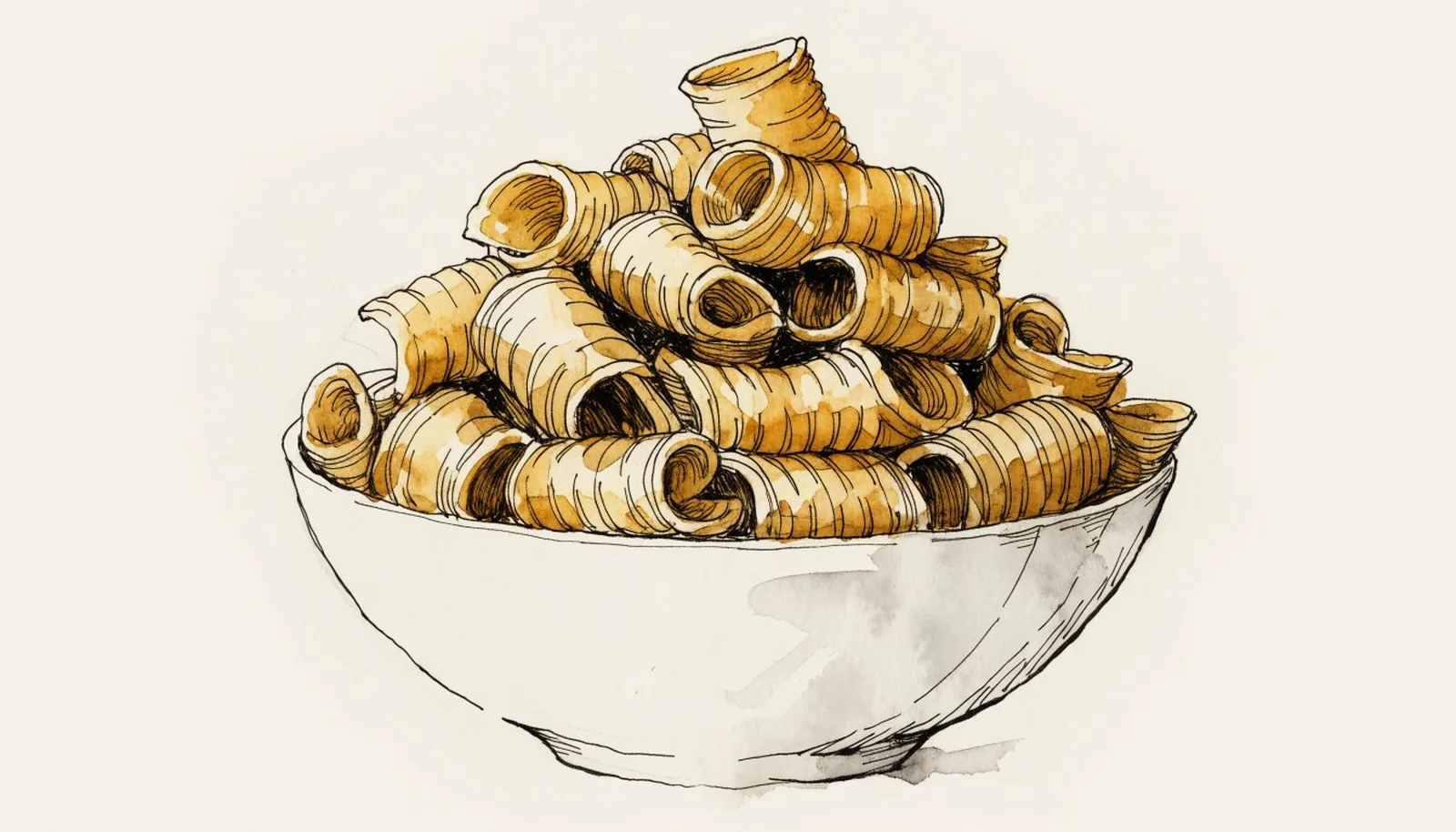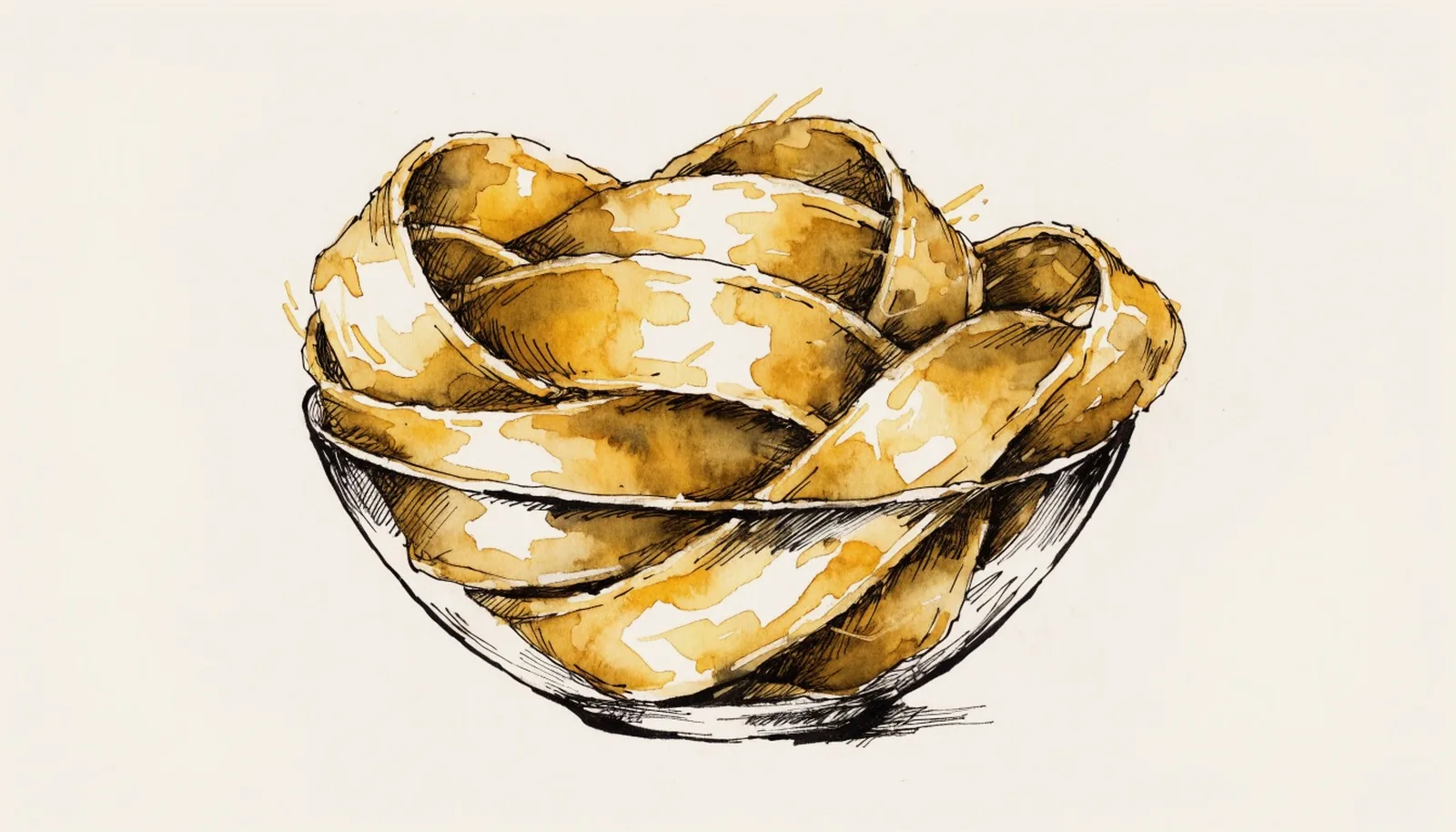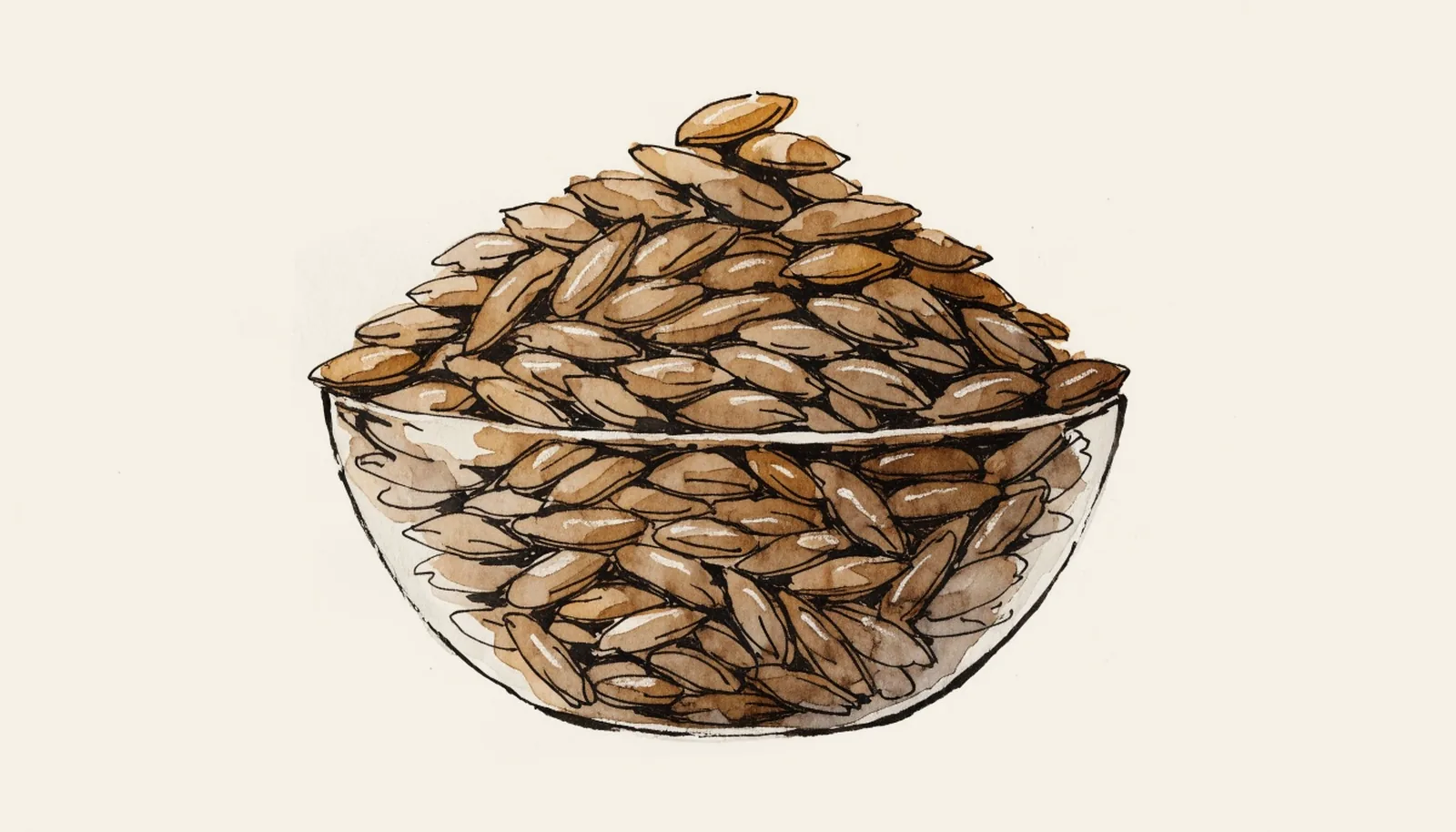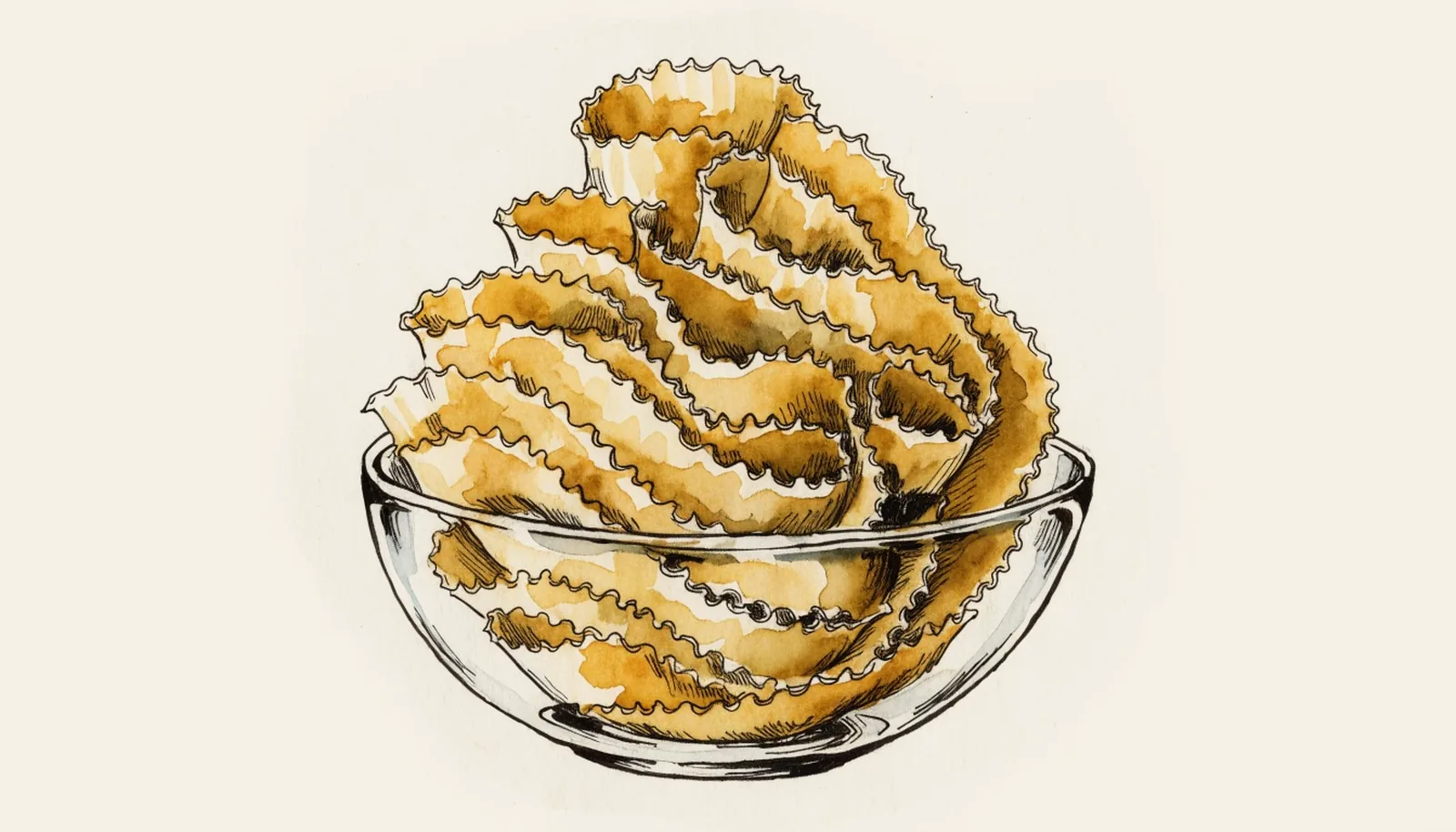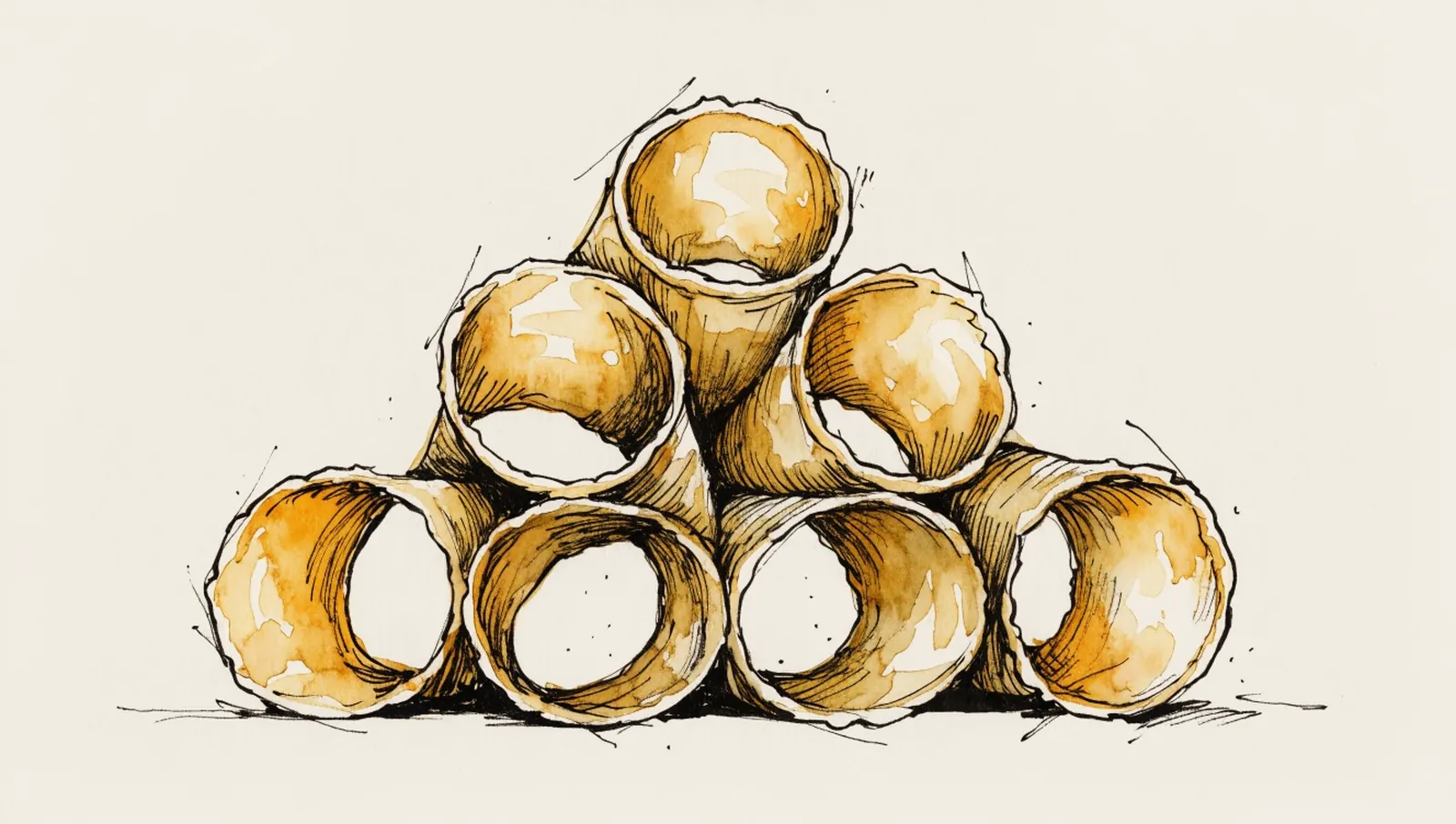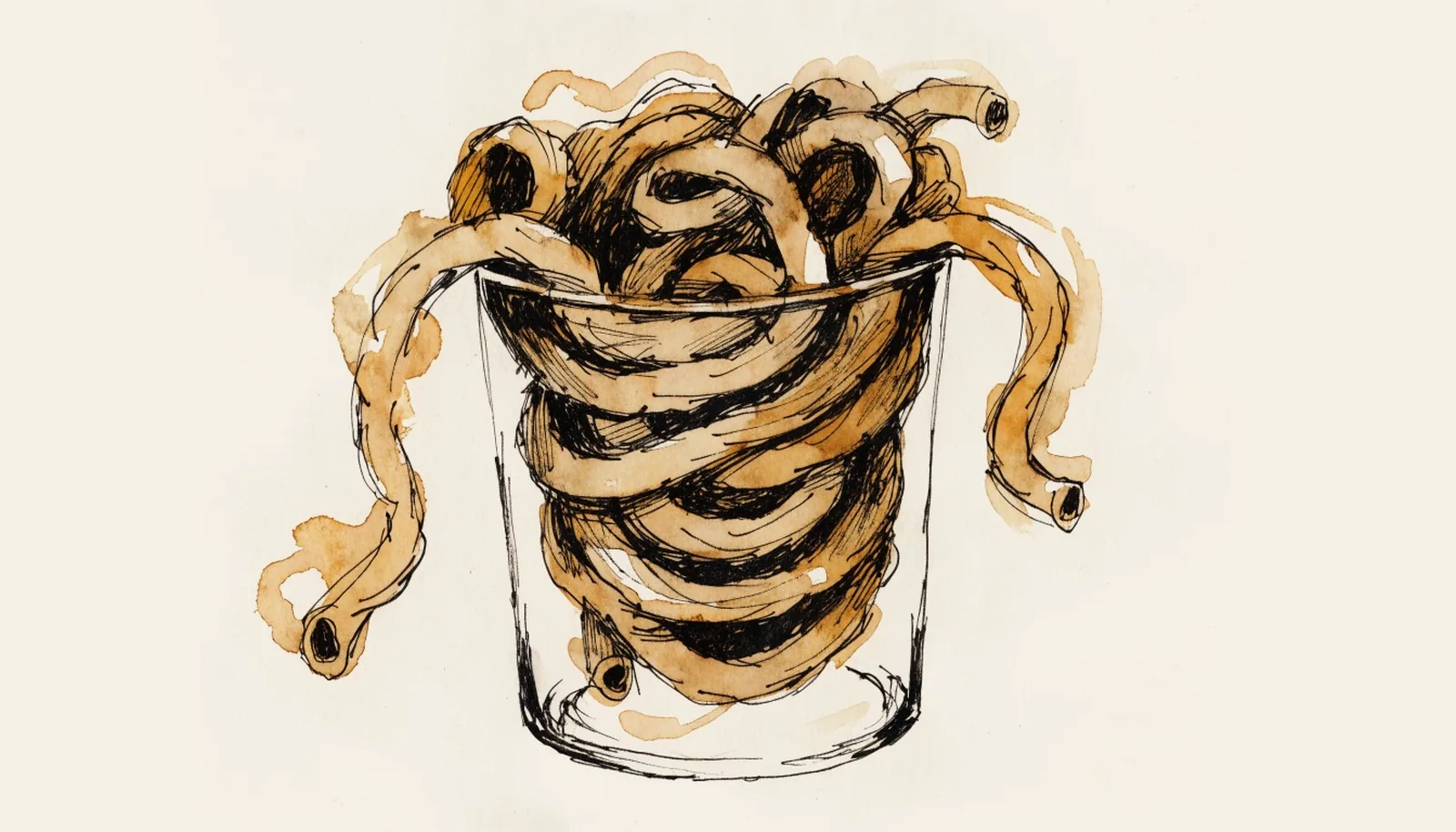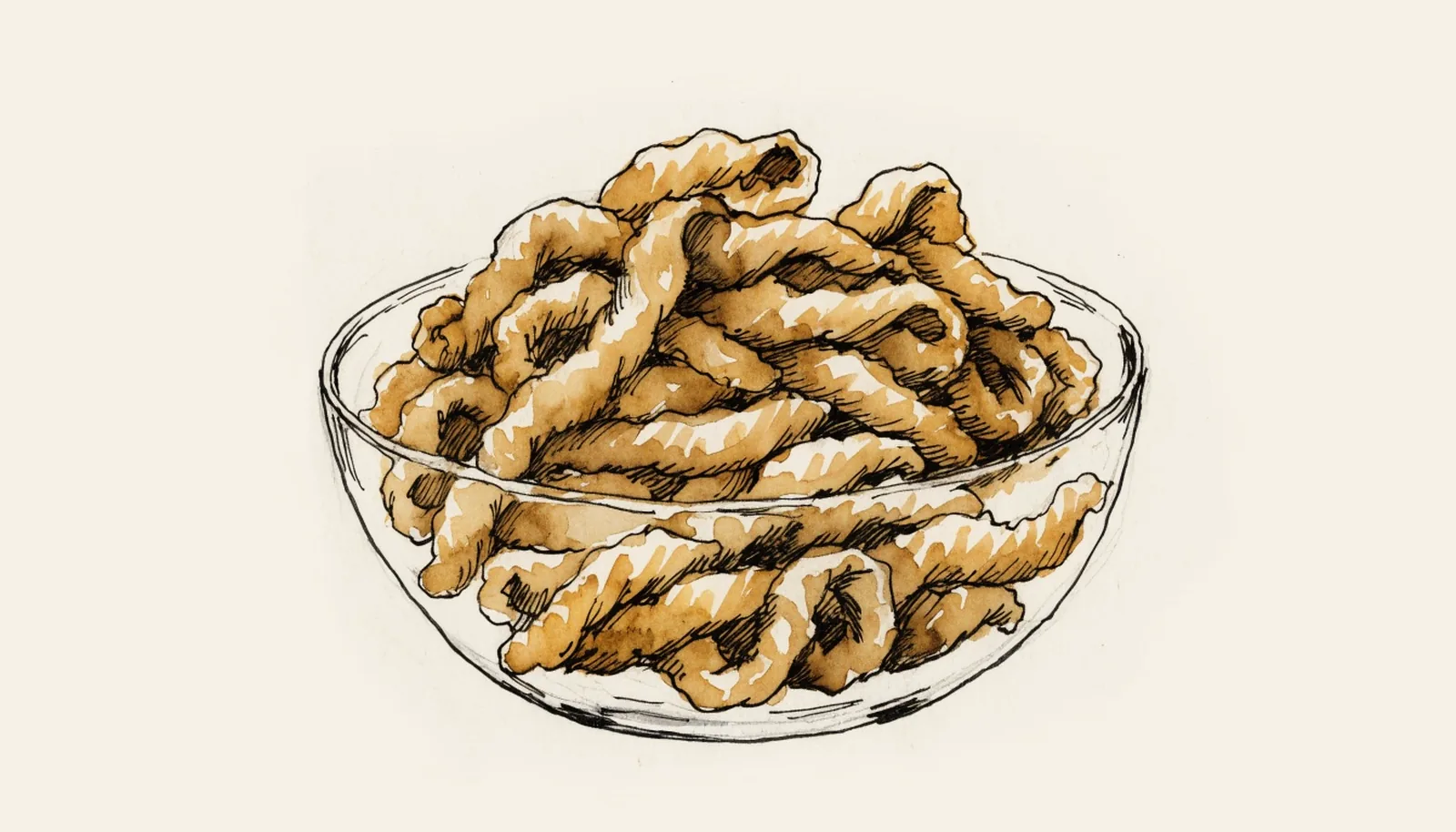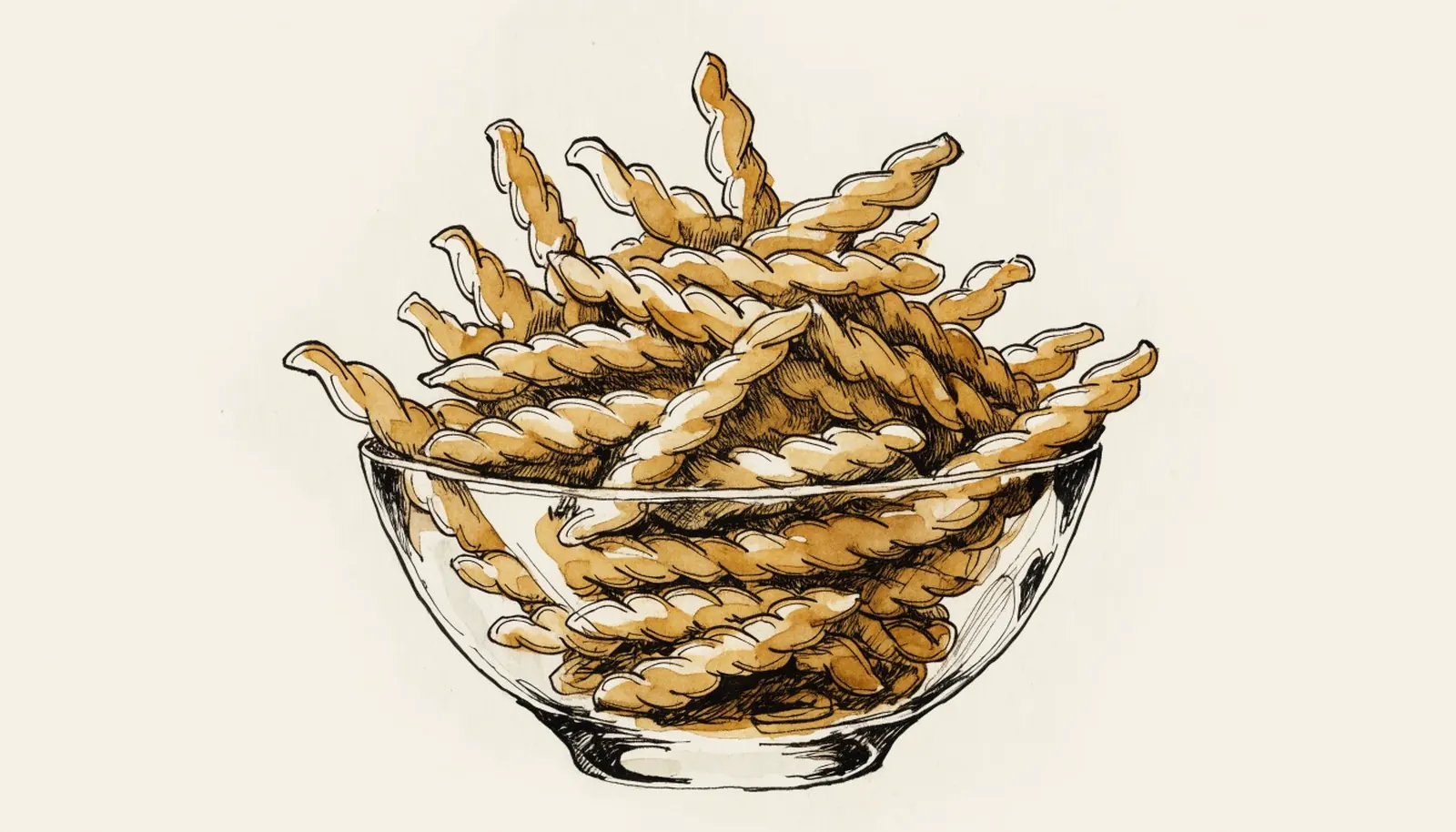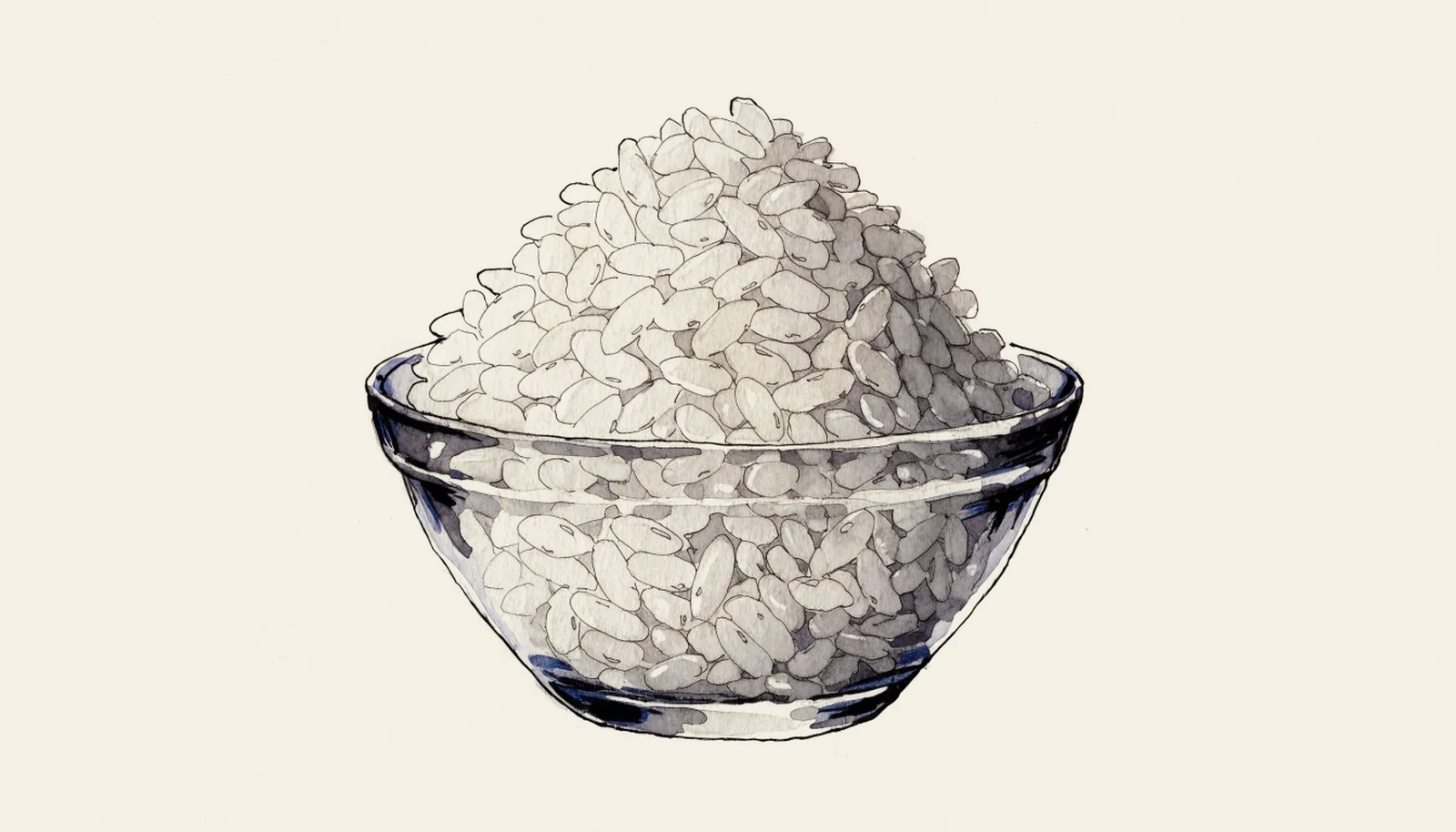
Dried pasta and Italian grains are judged on how they were made more than on where. Two boxes of the same shape can differ in the die the dough was pushed through and the wheat it was milled from, and both show up in the pot.
How to judge a box or a bag
Bronze-die pasta looks chalky, holds sauce better and costs more, and the rough surface can be seen through the box window. The flour is the next thing: semola and semola rimacinata are different grinds of durum wheat for different jobs, and Senatore Cappelli is an old wheat variety whose premium claims are worth checking. Where the wheat was grown is a label question, and what Made in Italy and Product of Italy each claim matters on a pasta box. Words can hide the product: farro is three different wheats sold under one name, and the packet often does not say which.
Rice and polenta
Arborio is the risotto rice most Americans can buy, carnaroli holds its bite better, and vialone nano carries an IGP; what an IGP guarantees is origin and method, not a better grain. Polenta bramata is a coarse stone-ground cornmeal, and the grind decides the cooking time.
Price, and where to buy
What Italian ingredients cost in the United States explains what a fair price looks like and what too cheap usually means, and where to buy genuine Italian ingredients says which routes to use for pasta, rice and flour. Every box here is one case of the Italian ingredient and the gap worth paying for.