
Semolina Flour: Semola, Rimacinata, and What Each Is For
Durum wheat milled coarse or twice-milled fine. What the Italian labels mean, why pasta and bread want different ones, what to buy, and what to use each for.
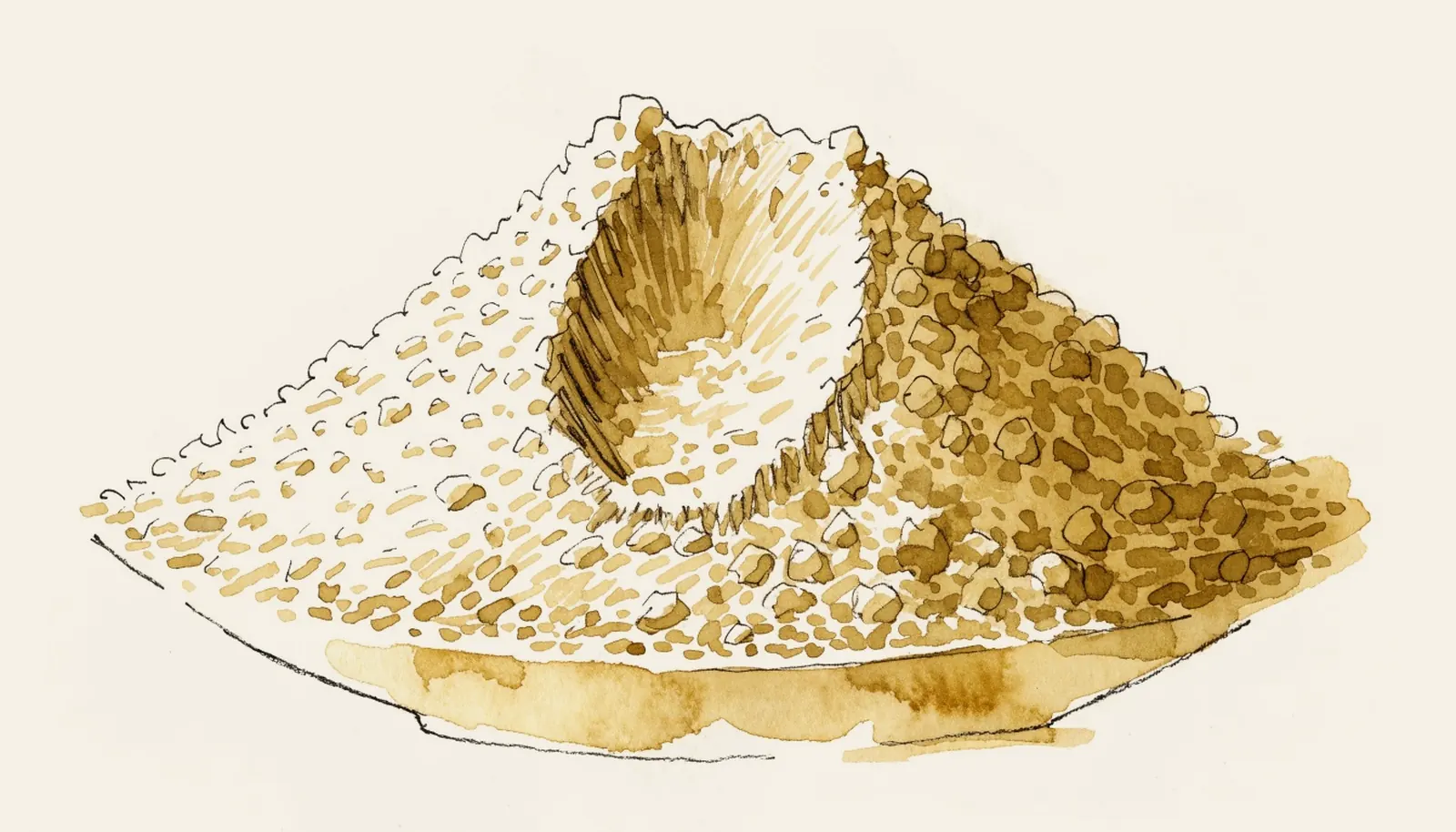
Semolina is coarsely milled durum wheat, and in Italian the useful distinction is between semola, the coarse grind, and semola rimacinata, the same wheat milled a second time to a fine powder. Getting the grind right is part of sourcing Italian ingredients in the United States.
An American bag reading semolina flour is usually the coarse grind, and most Italian recipes calling for semolina want the twice-milled one.
What semolina actually is
Semolina is the coarse fraction of milled durum wheat, Triticum durum, which is a harder wheat than the soft wheat used for bread flour.
Durum is high in protein and gluten, which is why it holds shape in extruded pasta.
It mills into gritty particles rather than a powder, because the endosperm is hard and vitreous.
The colour is pale yellow, from carotenoid pigments in the grain.
Semolina is not the same as semolina pudding wheat sold in some countries, which is often soft wheat, though the words overlap.
Semola against semola rimacinata
The difference is a second milling, and it changes what the flour can be used for.
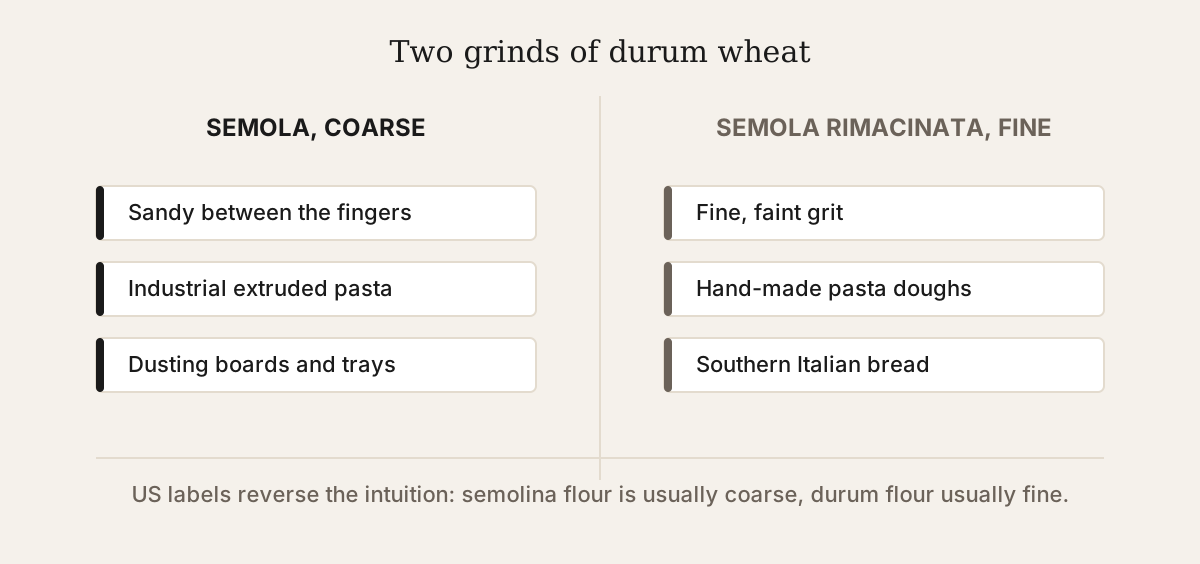
Semola is the standard coarse grind, sandy between the fingers.
Semola rimacinata di grano duro has been through the mill twice and is fine, closer to a soft powder with a faint grit.
Rimacinata is what southern Italian bread and hand-made pasta use.
Semola is what industrial extruded pasta uses, and what you dust a board with.
An Italian recipe saying simply semola in a pasta or bread context usually means rimacinata, and the recipe assumes you know.
What each is for
Match the grind to the job, since substituting one for the other changes the dough materially.
Hand-made pasta, orecchiette and cavatelli, wants rimacinata. Coarse semola will not hydrate into a smooth dough.
Southern Italian bread, particularly Pane di Altamura, is made from rimacinata.
Extruded dried pasta is made industrially from coarse semola under pressure, which is not reproducible at home. The die it passes through is covered under bronze die pasta.
Dusting boards and trays wants coarse semola, which acts like tiny ball bearings and stops sticking better than flour.
Pizza bases sometimes take a proportion of rimacinata for bite and colour.
Buying it
Look for grano duro on the label, and for the word rimacinata if you need the fine grind.
Semola di grano duro is the coarse grind.
Semola rimacinata di grano duro is the fine one, and the word rimacinata is the one to look for.
American bags labelled semolina flour are usually coarse, and American bags labelled durum flour are usually fine, which reverses the intuition.
Checked on 13 August 2026, United States listings for imported Italian semola rimacinata clustered between roughly four and ten dollars per kilogram. Counting rule: a listing counts when it is an imported Italian durum wheat semolina with a stated grind. That describes what was visible on that date and is not a recommendation of any seller.
Italian grocers stock rimacinata reliably; general supermarkets usually carry only the coarse grind.
Working with it
Durum dough hydrates slowly and needs longer resting than soft wheat dough.
Let it rest. Thirty minutes minimum and an hour is better, since durum absorbs water slowly.
It resists kneading at first and becomes smooth suddenly rather than gradually.
Use less water than a soft wheat recipe suggests, typically around sixty percent hydration for hand-made pasta.
It does not need egg. Southern Italian pasta is semolina and water, and the dough holds together on gluten alone. Egg pasta belongs to the northern soft wheat tradition instead.
Storage
Semolina keeps six to twelve months airtight and is more stable than whole grain flours.
Keep it dry, since it clumps readily.
It does not carry the germ in most commercial milling, so it keeps better than wholemeal.
Refrigerate in a hot kitchen to deter pantry moths, which favour semolina.
Frequently asked questions
What is the difference between semola and semola rimacinata?
A second milling. Semola is coarse and sandy; semola rimacinata has been milled again to a fine powder with a faint grit. Rimacinata is used for hand-made pasta and southern Italian bread, and coarse semola is used industrially for extruded pasta and for dusting boards.
Can I use semolina flour for pasta?
For hand-made pasta you want semola rimacinata, the twice-milled fine grind, which hydrates into a smooth workable dough. Coarse semolina will not, and produces a gritty dough that tears. For dusting the board as you work, coarse semola is exactly right.
Is semolina the same as durum flour?
They are both milled from durum wheat and differ in grind. American labelling is inconsistent and often reverses the intuition, with semolina flour usually meaning the coarse grind and durum flour usually meaning the fine one. Reading the particle description matters more than the name on the front.
Does semolina pasta need eggs?
No. Southern Italian pasta is traditionally semolina and water with no egg, and the gluten in durum wheat holds the dough together without one. Egg pasta is a northern Italian tradition using soft wheat, and the two are different products rather than one being a shortcut.
Why is my semolina dough so stiff?
Durum absorbs water slowly, so a dough that feels stiff at first usually softens considerably after resting. Thirty minutes is a minimum and an hour is better. Adding more water immediately, before the resting period has done its work, tends to produce a dough that is too slack later.
CalItalia Food covers Italian ingredients: what they are, how to tell a good one from an ordinary one, and where to buy them in the United States.