
Arborio Rice: The Common One, and Its Real Weakness
The risotto rice most Americans can buy, why it goes from perfect to blown out quickly, and when it is the right one to use anyway.
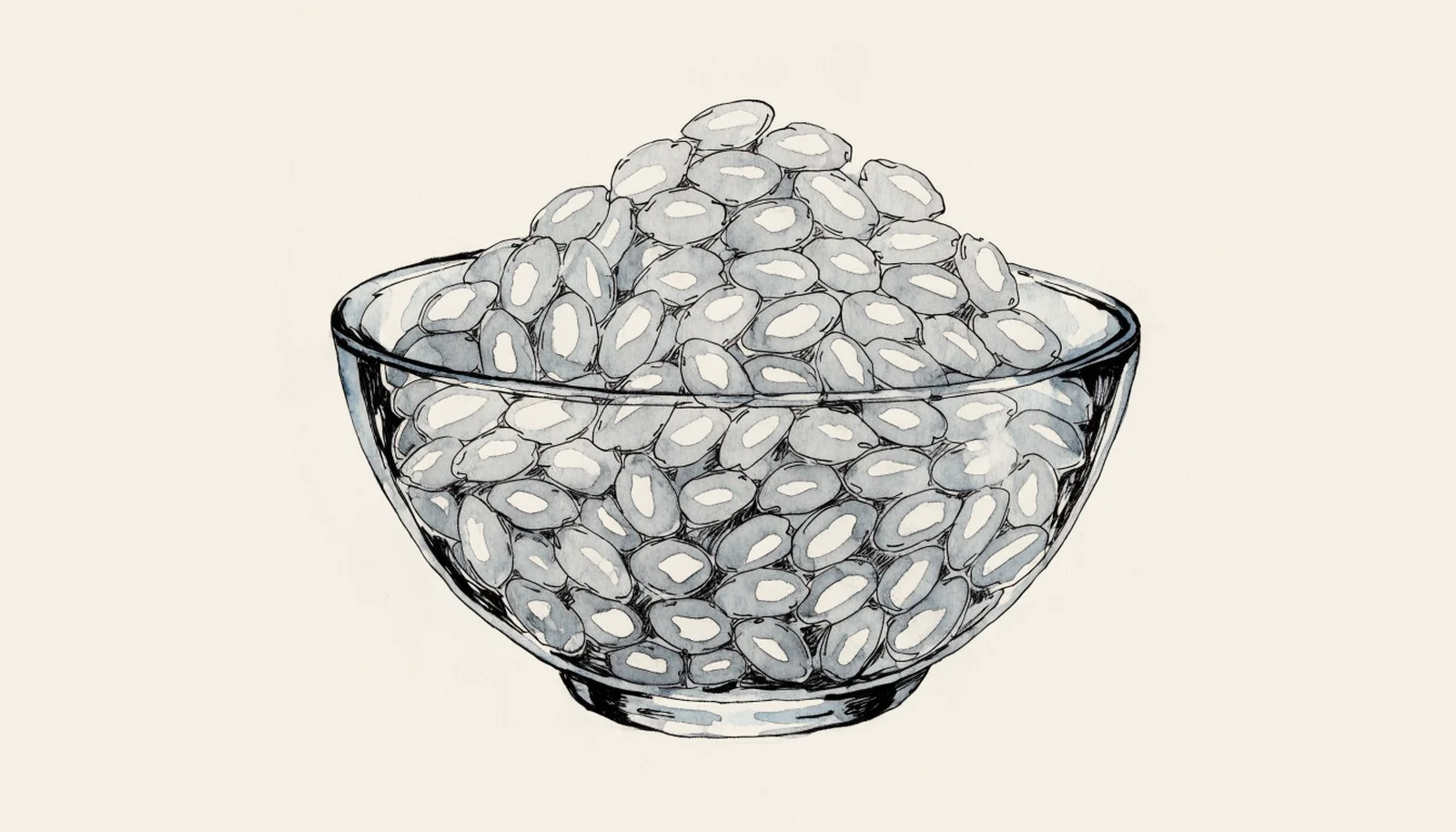
Arborio is a short, plump Italian rice variety named after a town in the Vercelli province, and it is the risotto rice most widely available in the United States. Knowing its limits is part of buying Italian rice with some judgement.
It releases starch generously and holds its centre less well than carnaroli, which is the whole of its reputation in one sentence.
What arborio is
Arborio is a superfino Italian rice variety, short and rounded, grown principally in the Po valley.
It is named after Arborio, a town in the Vercelli province of Piedmont.
The grain is short and plump with a visible white opaque centre, the pearl, which is a starch deposit.
Superfino describes its size class and says nothing about quality.
It is the most planted risotto variety and the most exported, which is why it dominates United States shelves. It is one of several risotto rices, alongside carnaroli and vialone nano.
Why it blows out
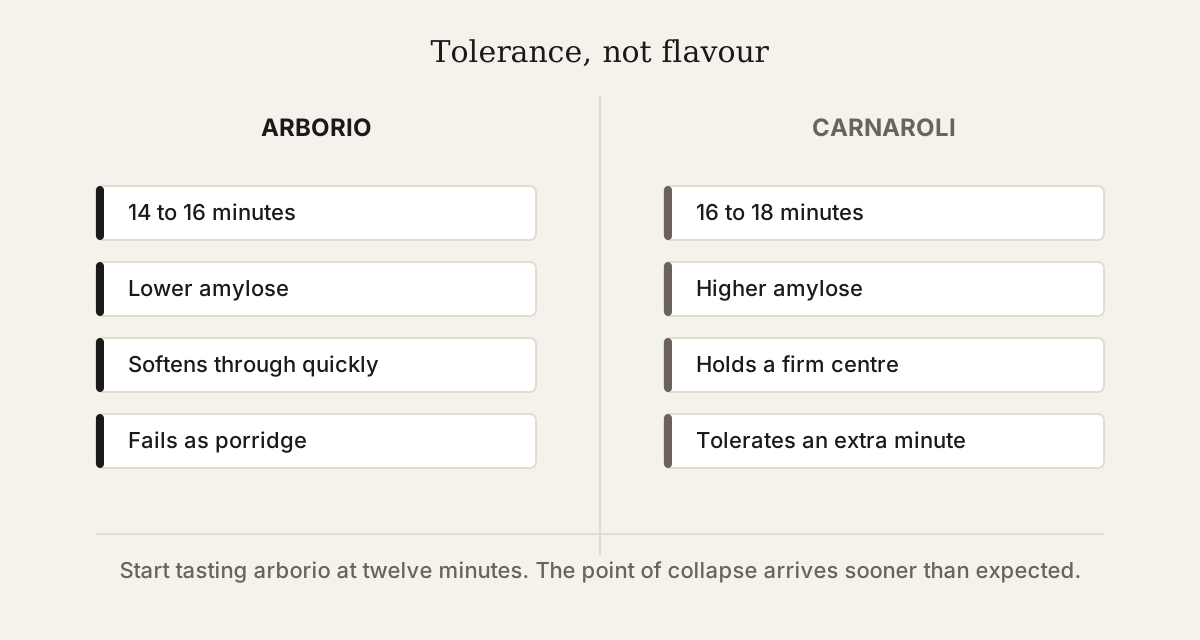
Arborio carries less amylose than carnaroli, so the grain softens through to the centre sooner after the surface starch has dissolved.
Amylose holds the grain firm. Arborio has proportionally less of it.
The exterior gives up starch readily, which is why arborio risotto is creamy easily.
The centre follows quickly, which is why it turns to porridge with a minute’s inattention.
The window is genuinely narrower rather than a matter of skill, though skill widens it.
It absorbs less liquid than carnaroli, so recipes written for one need adjusting for the other.
When arborio is the right choice
Arborio suits rice dishes where creaminess matters more than a distinct grain, and it is what most recipes assume.
Creamy risottos where the texture should be flowing rather than distinct.
Rice pudding, where the starch release is an asset and the grain integrity is irrelevant.
Suppli and arancini, where the rice is cooked, cooled and formed, and a softer grain binds better.
Anywhere availability matters, which is most home kitchens outside Italy.
It is not the choice for a risotto served al dente with clearly separate grains, which is what carnaroli does better.
How to cook it
Toast, add hot stock gradually, and start testing two minutes before you expect to.
Toast the dry grain in fat until the edges turn translucent.
Hot stock, a ladle at a time.
Count on fourteen to sixteen minutes, which is shorter than carnaroli.
Start tasting at twelve. The point of collapse arrives faster than most cooks expect.
Finish off the heat with cold butter and cheese, beaten in vigorously.
Serve immediately. Arborio continues to soften in the pan and a risotto held for five minutes is a different dish.
Buying it
Look for Italian origin, vacuum packing and a named variety rather than a generic risotto rice label.
The bag should say arborio, not risotto rice.
Italian-grown is preferable and arborio is also grown in the United States, principally in California and Arkansas, at lower cost.
Checked on 13 August 2026, United States listings for imported Italian arborio clustered between roughly four and ten dollars per kilogram, with domestically grown arborio below that. Counting rule: a listing counts when it is a rice sold as arborio. That describes what was visible on that date and is not a recommendation of any seller.
It is stocked by general supermarkets, unlike carnaroli, which is the practical argument for it.
Storage
Airtight and dark, arborio keeps a year or more without refrigeration.
Keep it away from strong odours, which white rice absorbs.
Older rice takes up more liquid and cooks slightly differently, which is worth allowing for.
It does not spoil under normal storage.
Frequently asked questions
Is arborio worse than carnaroli?
Arborio is less forgiving rather than worse. It has a narrower cooking window because it carries less amylose, so it passes from correct to collapsed faster. In careful hands it makes excellent risotto, and it is creamier by nature. Carnaroli is the safer choice and arborio is the more available one.
Why did my arborio risotto turn to porridge?
Almost always a minute or two of overcooking, sometimes compounded by holding the finished risotto before serving. Arborio softens through to the centre quickly once the surface starch has gone. Start tasting at twelve minutes and serve the moment it is right, since it keeps cooking in the pan.
Can I use arborio for paella?
Not well. Paella wants a rice that absorbs liquid and flavour while staying separate, such as bomba or calasparra, and arborio releases starch that makes the dish creamy rather than dry and distinct. The two dishes want opposite behaviour from their rice.
Should I rinse arborio?
Arborio should never be rinsed. The surface starch is what creates the creaminess in risotto, and rinsing removes it. Arborio goes into the pan dry and unrinsed. This is the opposite of the handling that most long-grain rice dishes require.
Is arborio the same as risotto rice?
Arborio is one of several risotto rices, alongside carnaroli, vialone nano and a few others. A bag labelled only risotto rice with no variety named is telling you very little, and it is usually arborio. Buying the named variety is more informative.
CalItalia Food covers Italian ingredients: what they are, how to tell a good one from an ordinary one, and where to buy them in the United States.