
Farro: Which Grain You Are Actually Buying
Farro is three different wheats sold under one word, and the packet often does not say which. How to judge which one you buy, and why it changes the cooking time.
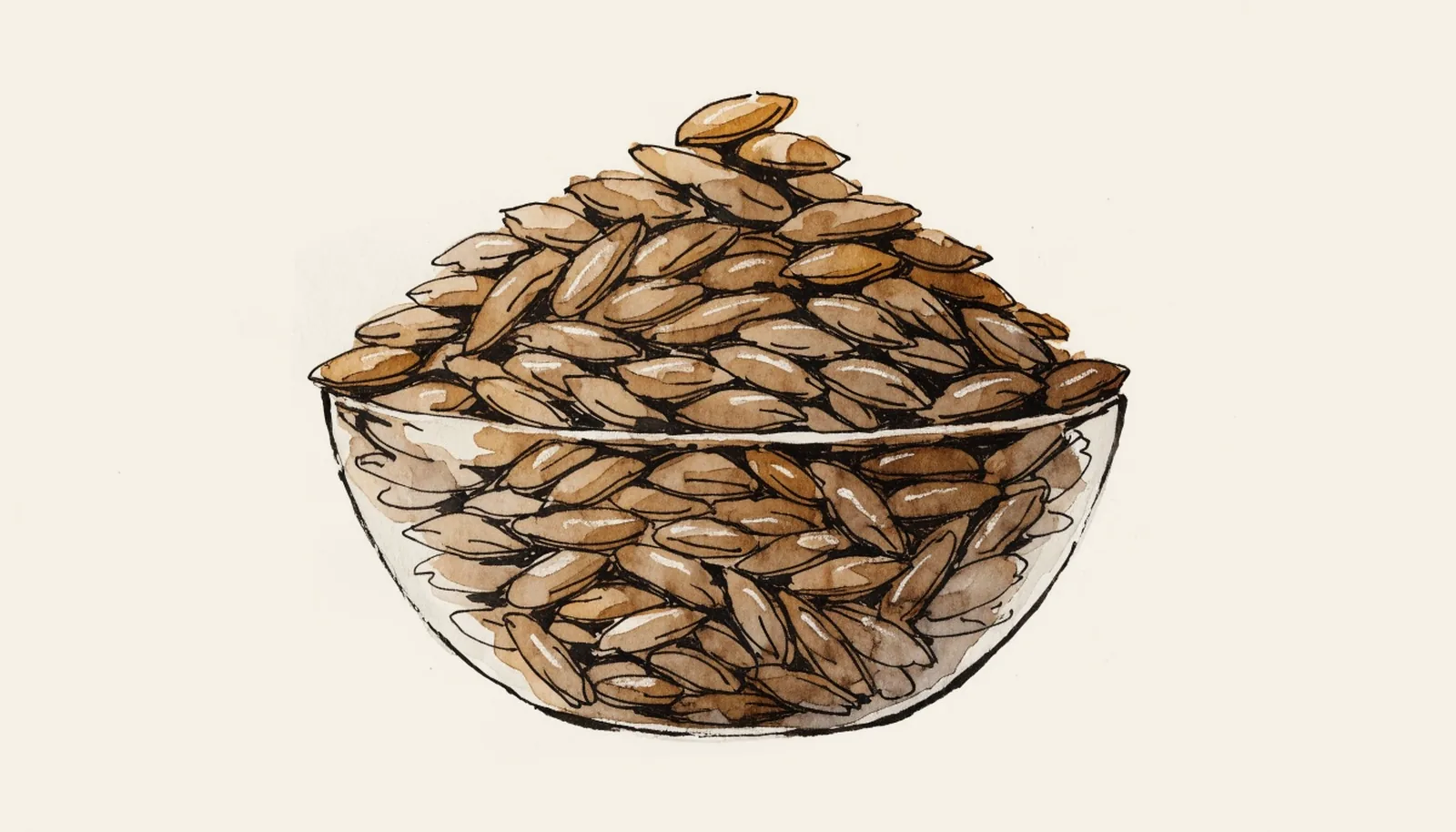
Farro is an Italian word covering three distinct ancient wheat species, emmer, einkorn and spelt, and a packet labelled simply farro in the United States is most often emmer. It is a plain case of an Italian word that hides which product you are getting.
The species matters because they cook differently, and the second thing that matters is how much of the bran has been removed, which the packet may not say either.
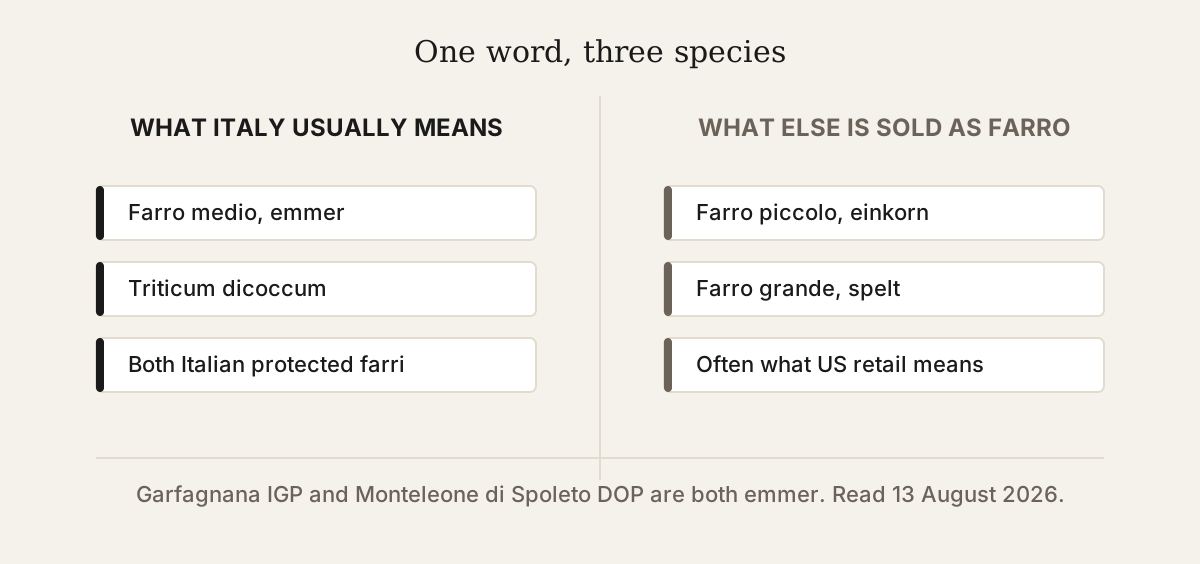
The three species
Farro covers three hulled wheats, and Italian distinguishes them where English generally does not.
| Italian | English | Botanical | Notes |
|---|---|---|---|
| farro medio | emmer | Triticum dicoccum | the default, and what most Italian farro is |
| farro piccolo | einkorn | Triticum monococcum | smallest grain, oldest, rarest |
| farro grande | spelt | Triticum spelta | largest, most common outside Italy |
Emmer is what Italy usually means. Farro della Garfagnana IGP and Farro di Monteleone di Spoleto DOP are both emmer.
Spelt is what is often sold as farro in the United States, which is why the two words are used interchangeably in English and should not be.
Einkorn is a speciality and is rarely what a general packet contains.
The packet frequently does not say. Where it does not, emmer is the safer assumption for an Italian import.
The three processing grades
How much bran has been removed changes the soaking and cooking time more than the species does.
Farro integrale is whole, with the bran intact. It needs soaking, typically overnight, and cooks in forty minutes or more.
Farro semiperlato is partly pearled, some bran removed. No soaking strictly required, twenty-five to thirty minutes.
Farro perlato is fully pearled. No soaking, fifteen to twenty minutes.
Perlato is the most common in United States retail and the most forgiving.
Integrale keeps more fibre and more chew and is the version worth seeking out for salads where texture matters.
A packet with no grade stated is usually semiperlato or perlato, since integrale is a selling point producers mention.
How to cook it
Rinse, simmer in plenty of salted water like pasta, and drain when the grain is tender with a firm centre.
Treat it like pasta, not like rice. Cook in abundant water and drain; there is no absorption ratio to get right.
Salt the water.
Soak only integrale, and overnight is sufficient.
Test for a firm centre. Farro is meant to keep a chew and goes pasty if cooked to complete softness.
Dress it warm if making a salad, since the grain absorbs dressing better before it cools.
What it tastes of and where it belongs
Farro is nutty and faintly sweet with a substantial chew, and it belongs in soups, salads and as a side.
Zuppa di farro is the Tuscan and Umbrian classic, with beans and vegetables.
Grain salads suit it, since it holds its texture in dressing without going soft.
As a side in place of rice or potato.
In place of rice in a risotto-style dish, sometimes called farrotto, which works though the grain does not release starch the way arborio does.
It is not a substitute for rice in a true risotto, for that reason. That job belongs to a risotto rice such as carnaroli.
Buying it
Look for the species and the processing grade on the packet, and prefer an IGP or DOP designation where the origin matters.
Farro della Garfagnana IGP from Tuscany and Farro di Monteleone di Spoleto DOP from Umbria are the two protected Italian designations, and both are emmer.
Check for a grade. Integrale, semiperlato and perlato should be stated, and the absence of any grade usually means pearled.
Checked on 13 August 2026, United States listings for imported Italian farro clustered between roughly five and twelve dollars for a 500 gram packet, with protected-designation grain above that. Counting rule: a listing counts when it is an imported Italian farro. That describes what was visible on that date and is not a recommendation of any seller.
American-grown farro is widely available and is usually emmer or spelt, generally cheaper and often perfectly good.
Storage
Farro keeps a year or more in an airtight container, and whole grain keeps less well than pearled.
Integrale contains the germ, which carries oil and eventually goes rancid.
Refrigerate whole farro if keeping it beyond a few months.
Pearled farro is stable at room temperature for a year or more.
Smell it before cooking an old packet. Rancidity is detectable and is the failure mode.
Frequently asked questions
Is farro the same as spelt?
Not exactly. Farro is an Italian word covering three species, and spelt is one of them, farro grande. Italian farro is usually emmer, farro medio. In the United States the word farro is often applied to spelt, which is why the two are used interchangeably in English. Checking the packet for the species is the only way to be sure.
Do I need to soak farro?
Only whole farro, farro integrale, which benefits from an overnight soak. Semipearled and pearled farro need no soaking and cook in twenty to thirty minutes and fifteen to twenty respectively. Most farro sold in United States supermarkets is pearled and needs none.
Is farro gluten free?
No. Farro is wheat, in all three of its species, and contains gluten. It is sometimes described as easier to digest than modern bread wheat, which is a separate claim from being gluten free and is not a basis for anyone with coeliac disease to eat it.
Why is my farro mushy?
Usually overcooking, sometimes the wrong grade. Farro is meant to keep a firm centre and turns pasty when cooked to complete softness. Pearled farro cooks fast, in fifteen to twenty minutes, and a packet cooked to the timing for whole grain will be ruined.
What is the difference between farro perlato and integrale?
How much bran has been removed. Integrale is the whole grain with the bran intact, needing an overnight soak and forty minutes or more of cooking, keeping more fibre and more chew. Perlato has the bran removed, needs no soaking and cooks in under twenty minutes, with a softer result.
CalItalia Food covers Italian ingredients: what they are, how to tell a good one from an ordinary one, and where to buy them in the United States.