
Polenta Bramata: The Coarse Grind, and Why It Matters
Coarse stone-ground cornmeal from northern Italy. What bramata means, how it differs from fioretto and instant polenta, how to judge a bag you buy, and how long it takes.
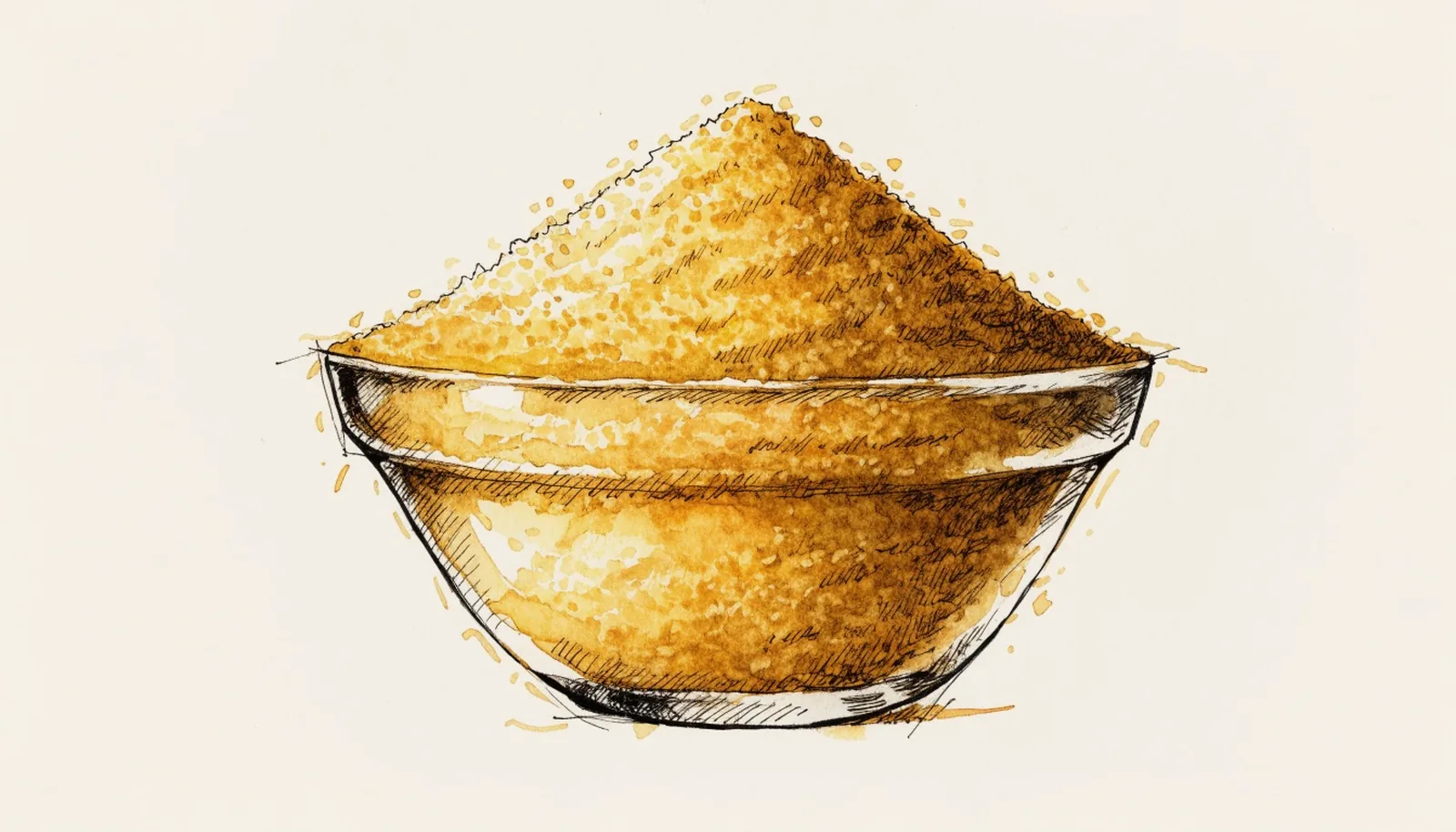
Polenta bramata is coarsely ground Italian cornmeal, the grind used for the traditional slow-cooked polenta of the north, giving a granular texture that finer grinds do not. The grind is one of the details that separate an Italian staple from its shortcut version.
Bramata describes the grind, not the corn variety and not the region, and it is the word that tells you what you are buying.
What bramata means
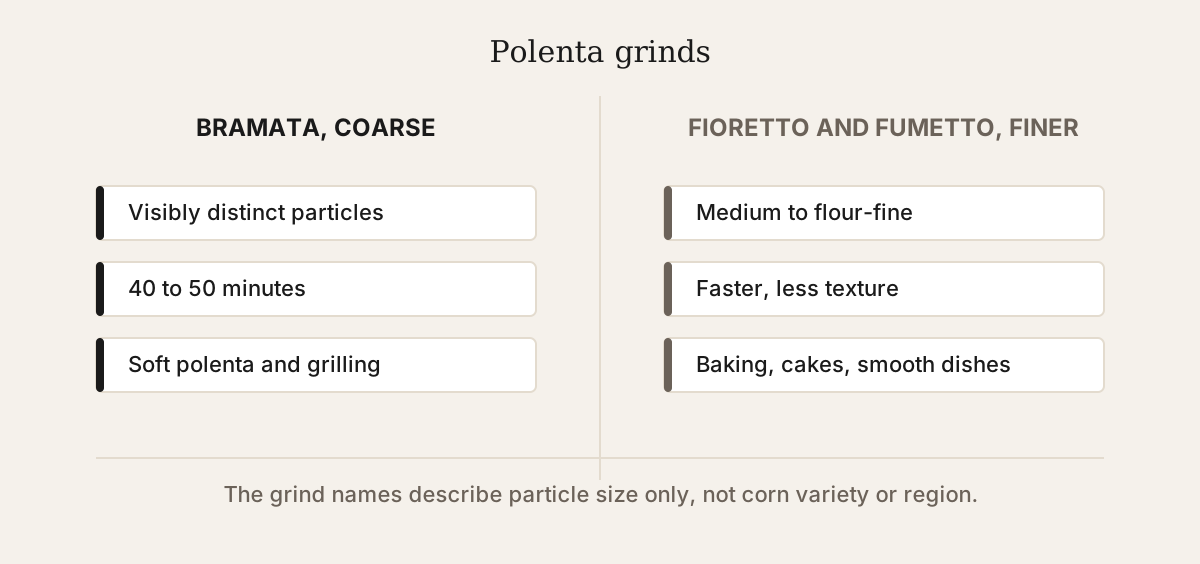
Bramata is the coarsest of the standard Italian polenta grinds, with visibly distinct particles.
The Italian grinds run coarse to fine: bramata, fioretto, fumetto. Durum wheat is sold by grind in the same way, as semola and semola rimacinata.
Bramata particles are visible individually and feel gritty between the fingers.
Fioretto is medium, used for softer polenta and for baking.
Fumetto is fine, closer to flour, used in cakes and for very smooth preparations.
None of these words indicates the corn variety, only the grind.
Stone-ground against roller-milled
Stone grinding leaves the germ in and produces uneven particles; roller milling removes it and produces uniform ones.
Stone-ground polenta keeps the germ, which carries oil, flavour and a shorter shelf life.
Roller-milled polenta is degerminated, more uniform, and keeps far longer.
The flavour difference is real. Stone-ground has a fuller corn taste.
So is the storage difference. Stone-ground polenta goes rancid within months and belongs in the refrigerator or freezer.
A bag saying macinata a pietra is stone-ground.
How long it takes
Traditional bramata polenta takes forty to fifty minutes of cooking, and the instant versions take five.
Forty to fifty minutes is the honest figure for coarse stone-ground polenta.
Stirring is needed but not constantly, contrary to the usual advice. Regular stirring every few minutes prevents catching.
Instant polenta is pre-cooked and dried, which is why it takes five minutes, and it produces a noticeably flatter result.
A wide heavy pan helps more than any technique, since the heat is even and the surface area lets steam escape.
The ratio is roughly four to one, water to polenta by volume, adjusted for how loose you want it.
What it is for
Bramata polenta suits everything served soft alongside a sauce, and everything sliced and grilled afterwards.
Soft polenta with braised meat, sausage or mushrooms, which is the northern Italian default.
Set, sliced and grilled or fried, using yesterday’s polenta poured into a tray and cooled.
Polenta taragna is a Lombard version mixing buckwheat with the corn, using the same coarse grind.
It is not for baking. Cakes and biscuits want fioretto or fumetto, and bramata makes them gritty.
Buying it
Look for a stated grind, stone-grinding if you want flavour, and a recent packing date.
The bag should say bramata, and if it says only polenta the grind is unstated.
Macinata a pietra indicates stone grinding.
Check for a date. Stone-ground cornmeal has a real shelf life and old stock is the common problem. Seller turnover matters for that reason, as covered in where to buy Italian ingredients.
Checked on 13 August 2026, United States listings for imported Italian bramata polenta clustered between roughly four and twelve dollars per 500 grams, with stone-ground and single-variety corn at the upper end. Counting rule: a listing counts when it is an imported Italian polenta with a stated grind. That describes what was visible on that date and is not a recommendation of any seller.
Instant polenta is cheaper and clearly labelled as such, usually as polenta istantanea.
Storage
Roller-milled polenta keeps a year in a cupboard; stone-ground keeps a few months and belongs in the freezer.
The germ is the difference. It carries oil that oxidises. Whole farro keeps less well for the same reason.
Freeze stone-ground cornmeal and use it from frozen without thawing.
Smell it before cooking. Rancid cornmeal has an unmistakable stale-oil smell and will ruin the dish.
Airtight in every case, since cornmeal takes up moisture and odours.
Frequently asked questions
What does bramata mean?
Bramata denotes the coarsest of the standard Italian polenta grinds, with visibly distinct particles that feel gritty between the fingers. It describes the grind alone and says nothing about the corn variety or the region. The finer grades are fioretto and fumetto.
Is instant polenta the same thing?
No. Instant polenta has been pre-cooked and dried so it rehydrates in about five minutes, and it produces a flatter, less textured result than traditional bramata cooked for forty to fifty minutes. It is a convenience product rather than a different grind, and it is clearly labelled.
Do I really have to stir polenta constantly?
Regular stirring is needed and constant stirring is not. Stirring every few minutes with a wide heavy pan over moderate heat prevents catching and gives the same result. The instruction to stir without stopping is inherited advice rather than a requirement.
How long does polenta bramata take to cook?
Forty to fifty minutes for the coarse traditional grind. Finer grinds cook faster, and instant polenta takes about five minutes. Recipes claiming twenty minutes for bramata are either using a finer grind or accepting an undercooked, gritty result.
Why does my polenta taste stale?
Most likely the cornmeal is rancid. Stone-ground polenta retains the germ, which carries oil that oxidises within months at room temperature. Storing it in the freezer prevents this, and a stale-oil smell in the dry meal is the test before you commit forty minutes to cooking it.
CalItalia Food covers Italian ingredients: what they are, how to tell a good one from an ordinary one, and where to buy them in the United States.