
Vialone Nano: The Veneto Risotto Rice With an IGP
A short semifino rice from the Verona plain, the one to use for wetter Venetian risottos, and one of three Italian rices with an EU geographical protection to check for when you buy.
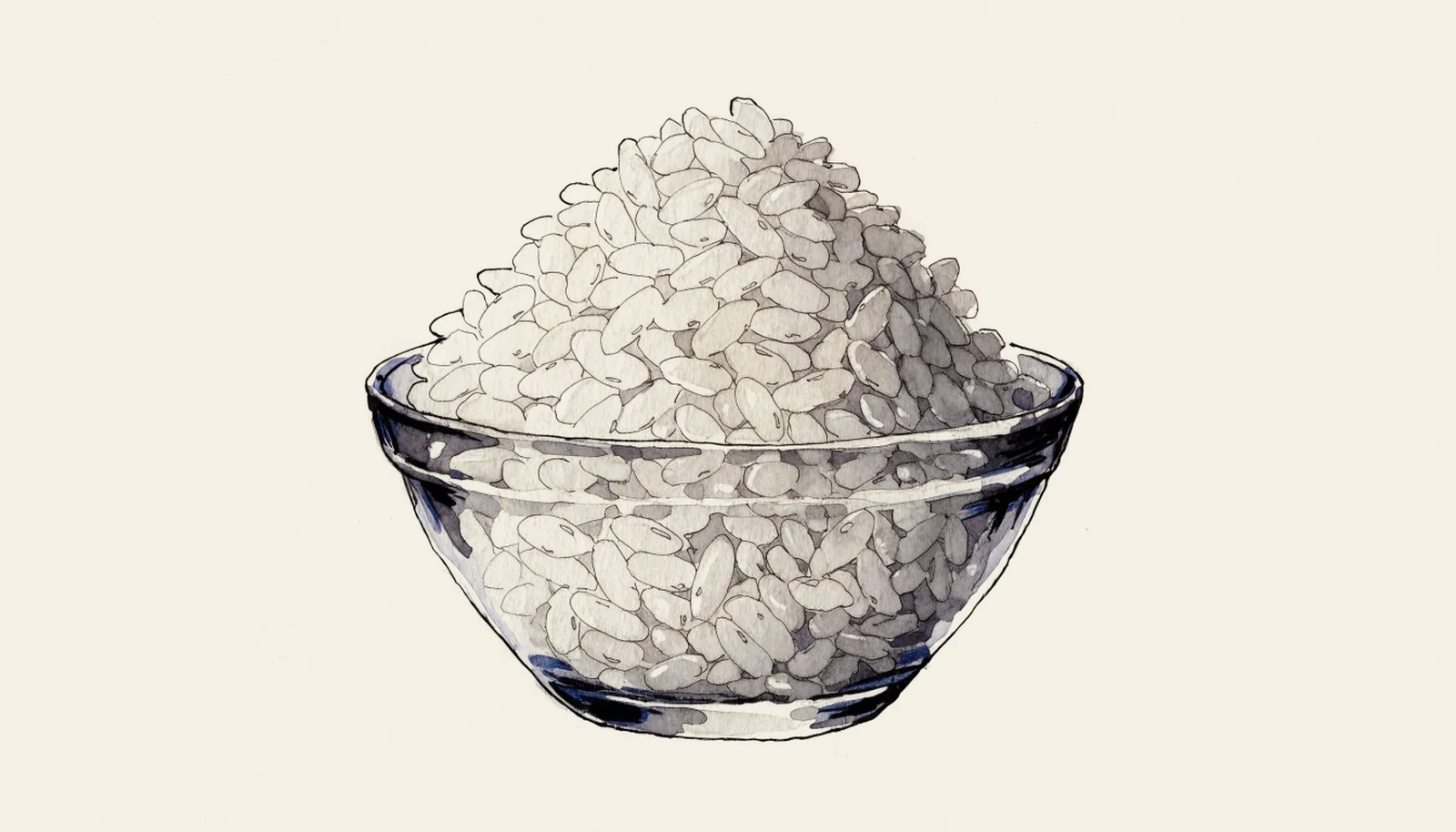
Vialone nano is a short round Italian rice from the Veneto, classified semifino rather than superfino, and it is the traditional rice of Venetian risotto. Its IGP puts it among the Italian staples whose origin can be checked on the bag.
Riso Nano Vialone Veronese carries an IGP, one of three Italian rice designations. The other two, Riso di Baraggia Biellese e Vercellese DOP and Riso del Delta del Po IGP, cover arborio and carnaroli grown in their own areas, so those varieties can carry a protection too, but only under a place name.
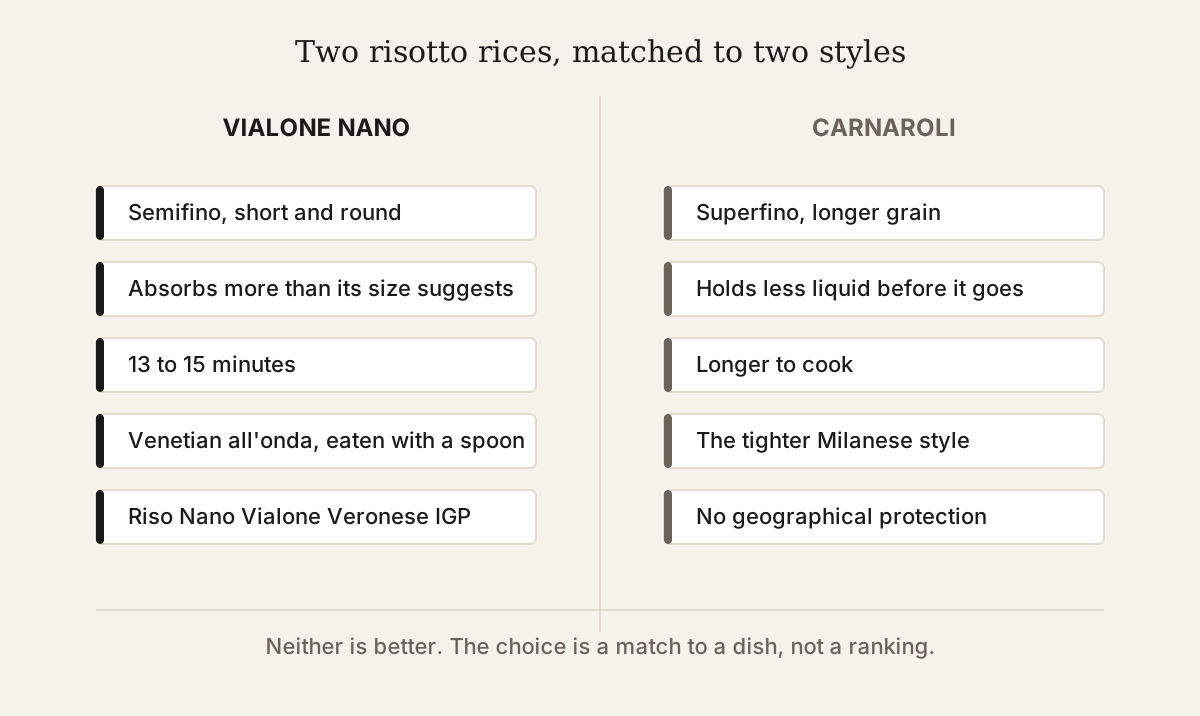
What vialone nano is
Vialone nano is a semifino rice variety, shorter and rounder than carnaroli, grown on the Verona plain and in the surrounding Veneto.
Semifino is a size classification denoting a shorter, rounder grain than superfino, and it is not a statement about quality.
Nano means dwarf, referring to the short stature of the plant rather than the grain.
It was selected in 1937, crossing vialone with nano.
Riso Nano Vialone Veronese IGP protects rice grown in a defined area south of Verona. It is one of three Italian rice designations, and the only one of the three that covers a single variety.
Rice sold simply as vialone nano may be grown anywhere, since the variety is not restricted.
How it behaves
Vialone nano absorbs a great deal of liquid while keeping a firm centre, and it produces a looser risotto than carnaroli.
It absorbs more than its size suggests, which is why Venetian risottos use more stock.
It releases starch steadily rather than all at once.
The grain holds firm despite the high absorption, which is the combination that makes it prized locally.
It cooks faster than carnaroli, typically thirteen to fifteen minutes.
All’onda, and why the rice suits it
Venetian risotto is served all’onda, meaning wavy, and vialone nano is the rice that does it well.
All’onda describes a risotto loose enough to ripple when the pan is tilted, considerably wetter than the Milanese style.
It is eaten with a spoon rather than a fork in the Veneto.
The high absorption of vialone nano lets the dish carry that much liquid without the grain disintegrating.
Risi e bisi, the Venetian rice and pea dish, sits between a risotto and a soup and depends on this behaviour.
Using carnaroli for an all’onda risotto works less well, since it holds less liquid before the texture goes wrong.
How to cook it
Toast, add hot stock generously, and expect to use more liquid and less time than carnaroli.
Toast the dry grain as with any risotto rice.
Use more stock than a carnaroli recipe specifies, by a noticeable margin.
Thirteen to fifteen minutes from the first ladle.
Stop while it is still loose. It will tighten off the heat, and a risotto that looks correct in the pan will be stiff on the plate.
Mantecare off the heat with cold butter and cheese as usual.
Buying it
Look for the IGP mark if origin matters, and for vacuum packing in any case.
Riso Nano Vialone Veronese IGP is the protected designation and appears on the bag where it applies.
Vialone nano without the IGP is the same variety grown elsewhere, and is usually cheaper.
Checked on 13 August 2026, United States listings for imported vialone nano clustered between roughly seven and sixteen dollars per kilogram, with IGP rice at the upper end. Counting rule: a listing counts when it is an imported Italian rice sold as vialone nano. That describes what was visible on that date and is not a recommendation of any seller.
It is less widely stocked than arborio or carnaroli in the United States and is reliably found through Italian importers.
Storage
Airtight and dark, vialone nano keeps a year or more and needs no refrigeration.
It absorbs odours like any white rice.
Older rice takes up even more liquid, which matters more with this variety than with the others.
It does not spoil under normal storage.
Frequently asked questions
Is vialone nano better than carnaroli?
Neither is better; they suit different risottos. Vialone nano absorbs more liquid and produces the loose all’onda style of the Veneto. Carnaroli holds a firmer grain in a tighter risotto and tolerates overcooking better. The regional dish generally indicates which to use.
What does semifino mean?
Semifino is an Italian rice size classification denoting a shorter, rounder grain than superfino. Vialone nano is semifino; arborio and carnaroli are superfino. The classification describes grain dimensions only and carries no implication about quality.
What is risotto all’onda?
All’onda means wavy, and it describes a Venetian risotto loose enough to ripple when the pan is tilted. It is considerably wetter than the Milanese style and is eaten with a spoon. Vialone nano is the rice traditionally used for it because it absorbs enough liquid to carry that texture.
Does vialone nano have a protected designation?
Riso Nano Vialone Veronese holds an IGP covering rice grown in a defined area south of Verona, and it is one of three Italian rices with a European geographical protection, alongside Riso di Baraggia Biellese e Vercellese DOP and Riso del Delta del Po IGP. The variety itself is not restricted, so vialone nano grown outside that area is sold under the variety name without the IGP.
Can I substitute arborio for vialone nano?
For a standard risotto, acceptably. For a Venetian all’onda risotto or risi e bisi, less so, since arborio absorbs less liquid and softens through to the centre before it can carry that much stock. The dish will be tighter and the grain will suffer.
CalItalia Food covers Italian ingredients: what they are, how to tell a good one from an ordinary one, and where to buy them in the United States.