
Mafaldine: The Ribbon With Ruffled Edges
A long flat pasta with wavy edges, named for a princess. What the ruffles do for sauce, how to judge a box before you buy, and what mafaldine are called elsewhere.
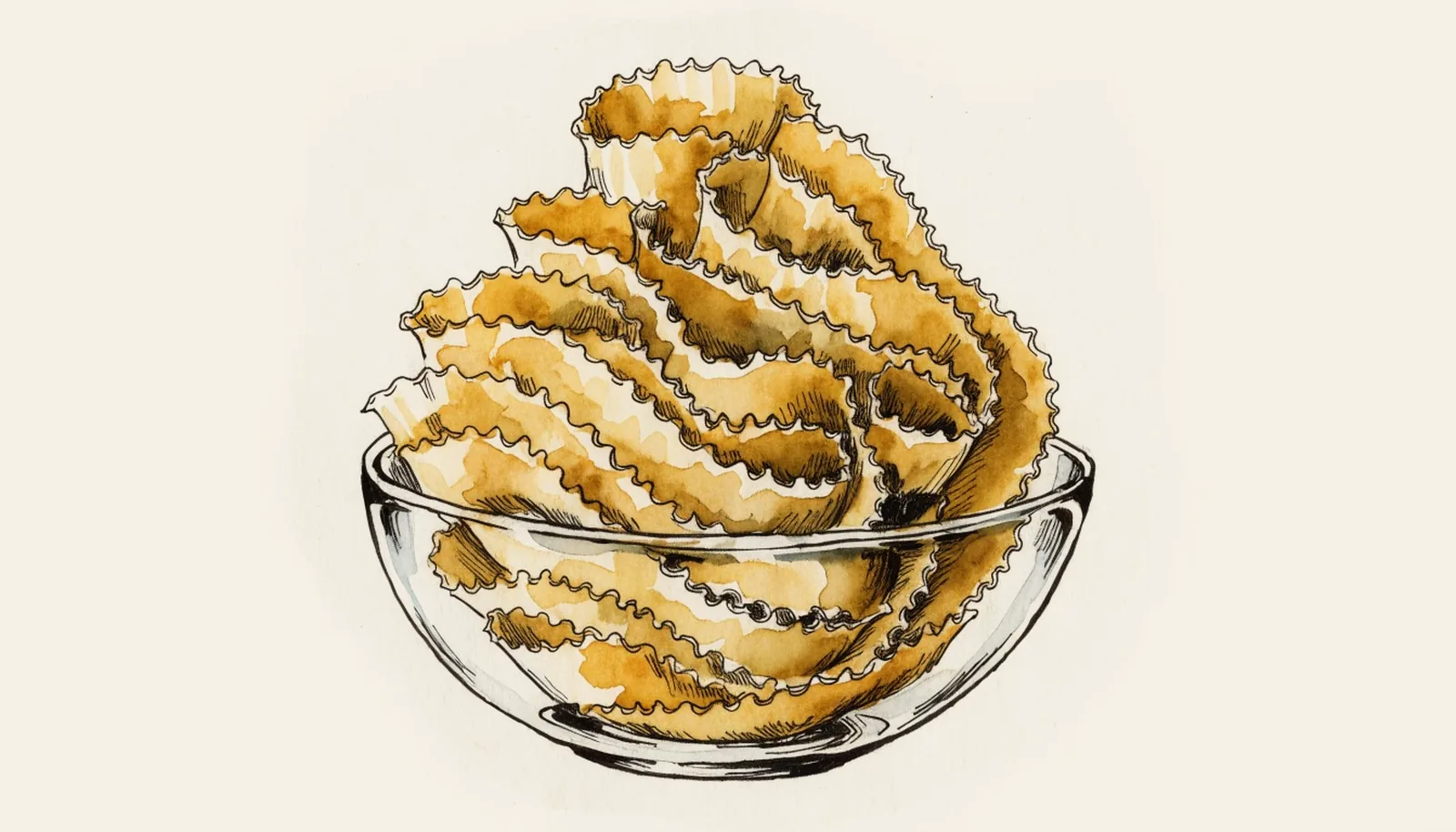
Mafaldine are long flat pasta ribbons with ruffled edges on both sides, roughly a centimetre wide, from Naples. They sit among the Italian dried pastas worth buying by shape.
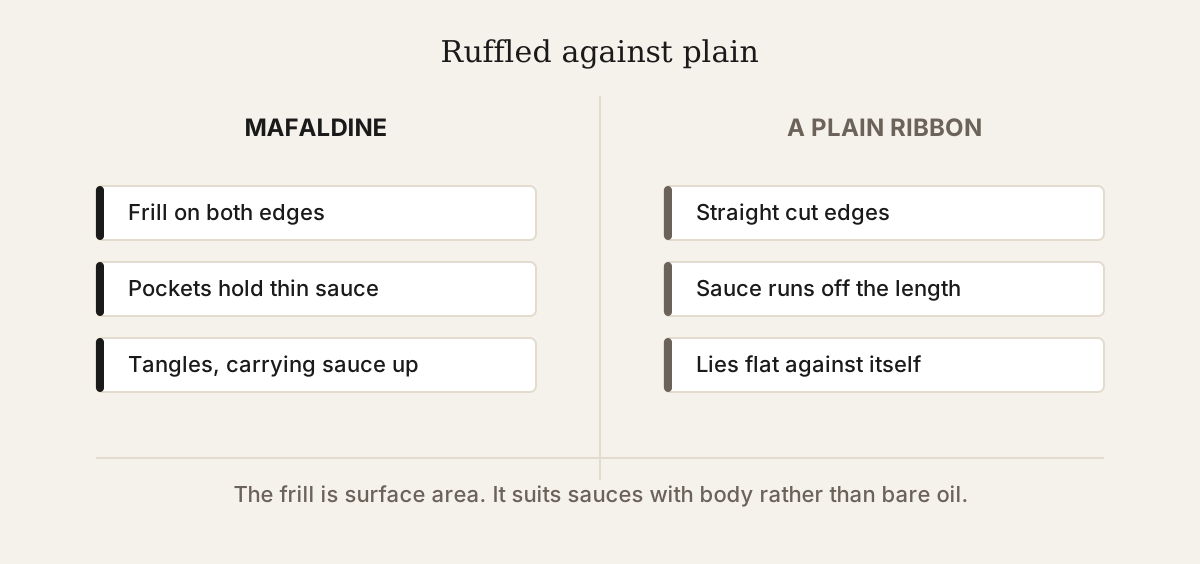
The ruffles are functional rather than decorative: they catch sauce that a smooth ribbon of the same width would shed.
What mafaldine are
Mafaldine are long ribbons of durum semolina pasta with a flat centre and a wavy frill running down each edge.
They are Neapolitan in origin.
The name honours Princess Mafalda of Savoy, born 1902, and the shape was created in her honour.
They are about a centimetre wide including the ruffles.
The centre is flat and thin, so they cook quickly for a long shape.
Reginette is the same shape under a different name, meaning little queens, and the two words are used interchangeably.
What the ruffles do
The frilled edges add surface area and create small pockets that hold sauce along the length of each ribbon.
A smooth ribbon sheds a thin sauce down its length.
The frill interrupts that, catching liquid in the folds.
They also tangle more than a smooth ribbon, which helps carry sauce to the fork.
The effect is most noticeable with medium-bodied sauces, thicker than oil and thinner than a heavy ragù.
What to serve them with
Mafaldine suit medium-bodied sauces: tomato and ricotta, light meat ragù, mushroom and cream.
Tomato-based sauces with some body.
Ricotta-based sauces, which cling to the frill.
Mushroom and cream works particularly well.
A heavy chunky ragù overwhelms them, since the ribbon is thin and the pieces slide off rather than lodging.
A bare oil dressing wastes the shape for the same reason it wastes any ruffled pasta.
Buying them
Look for intact ribbons with clearly defined ruffles, and expect some breakage in any box.
The frill should be pronounced. A shallow wave suggests a worn die.
Breakage is normal in a long flat shape and a box that is half fragments has been handled badly.
Bronze extrusion helps here as on any shape meant to hold sauce.
Checked on 13 August 2026, United States listings for imported mafaldine clustered between roughly four and nine dollars for a 500 gram box. Counting rule: a listing counts when it is an imported Italian dried mafaldine or reginette. That describes what was visible on that date and is not a recommendation of any seller.
Search under both names, since United States retail uses reginette about as often. The places to look are set out in where to buy Italian ingredients.
Cooking them
Cook in plenty of water, stir early to stop them sticking, and drain carefully.
Stir within the first thirty seconds. Flat ribbons stick to each other as they hydrate.
They cook fast for a long shape, since the centre is thin.
Lift them out rather than tipping into a colander, which breaks them.
Finish in the sauce with cooking water.
Do not overcook. The thin centre goes soft well before the frilled edge does, and the shape turns limp.
Storage
Dried mafaldine keep two to three years airtight, and the risk is breakage rather than staling.
Store flat rather than upright.
Do not decant into a bag, which crushes the ribbons.
They stale rather than spoil.
Frequently asked questions
What is the difference between mafaldine and reginette?
There is none. Mafaldine and reginette are two names for the same ruffled ribbon, mafaldine honouring Princess Mafalda of Savoy and reginette meaning little queens. Different producers and different regions favour one name or the other, and United States retail uses both.
Are mafaldine the same as lasagnette?
Not quite. Lasagnette are narrow lasagne sheets, flat with straight or wavy edges depending on the producer, and generally wider than mafaldine. The names overlap in retail and the distinguishing feature of mafaldine is a ruffle on both edges with a flat centre.
What sauce goes with mafaldine?
Medium-bodied sauces. Tomato with some substance, ricotta-based sauces, mushroom and cream all cling to the frilled edges. A heavy chunky ragù is too much for the thin ribbon and a bare oil dressing is too little, so the shape rewards the middle of the range.
Why do mine break in the box?
Long flat shapes with ruffled edges are fragile, and some breakage in transit is normal rather than a defect. It becomes a problem when the box has been dropped or packed loose. Storing the box flat and not decanting the pasta into a bag preserves what arrives intact.
Do mafaldine cook faster than tagliatelle?
Usually slightly, because the centre of the ribbon is thin, though it depends on the producer and the thickness. The practical approach is to start testing two minutes before the box time, since the thin centre softens before the frilled edge and the shape goes limp once it does.
CalItalia Food covers Italian ingredients: what they are, how to tell a good one from an ordinary one, and where to buy them in the United States.