Trofie: The Ligurian Twist Made for Pesto
Short hand-rolled twists from Liguria, traditionally flour and water only. Why the shape suits pesto, how the dried version differs, and how to judge a box before you buy.
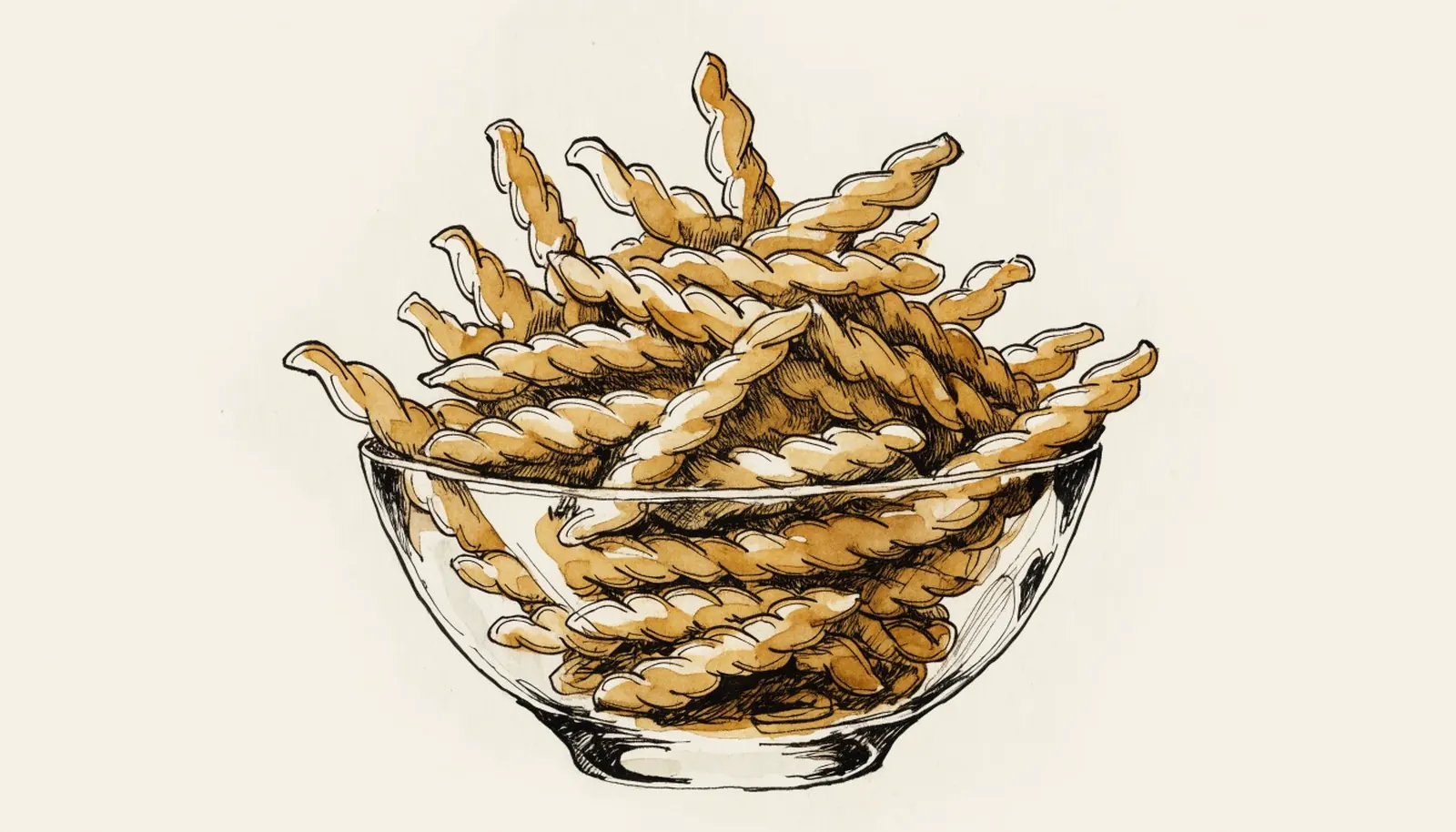
Trofie are short thin hand-rolled pasta twists from Liguria, traditionally made from flour and water with no egg, and they are the shape pesto alla genovese is conventionally served with. The pairing makes them a good example of putting an Italian ingredient to its proper use.
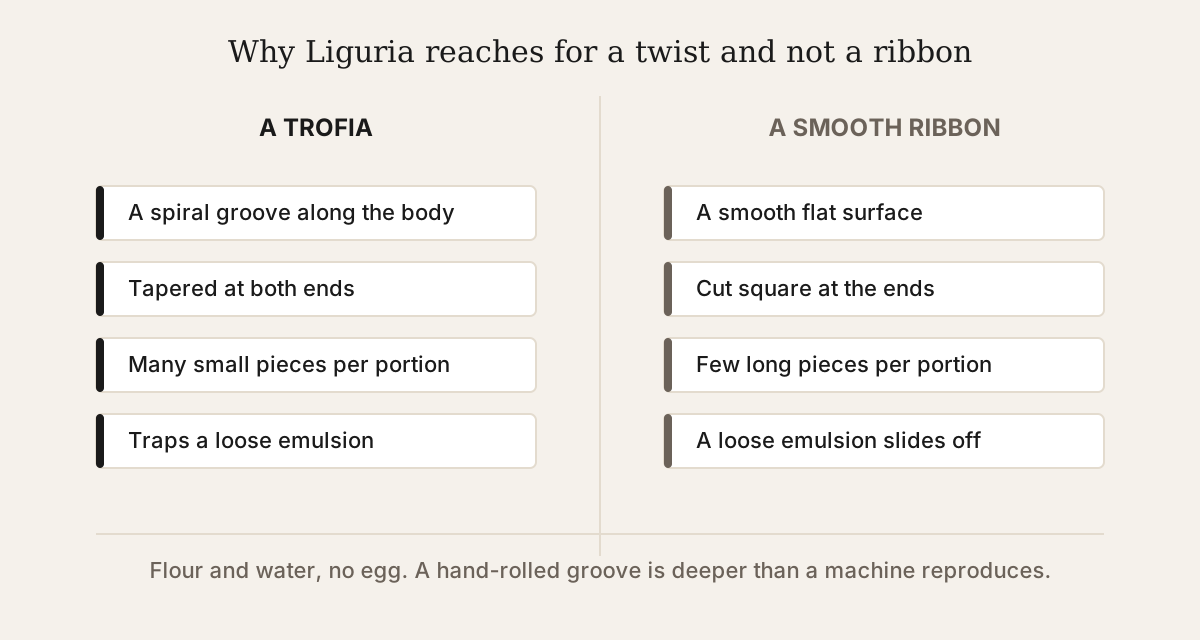
The twist is what holds the sauce, and it is the reason a Ligurian kitchen reaches for this shape rather than a ribbon.
What trofie are
Trofie are small pasta twists roughly two to three centimetres long, tapered at both ends, with a spiral groove running along the body.
They are Ligurian, from the coastal region around Genoa, and specifically associated with Recco and the surrounding villages.
The traditional dough is flour and water only. No egg, which distinguishes them from the northern egg pastas.
They are rolled by hand in the traditional method, a small piece of dough pushed and twisted against a board with the side of the palm.
Some versions include chestnut flour, which was historical and is now a speciality rather than the default.
The tapered ends are characteristic and are a consequence of the rolling method rather than a decorative choice.
Why the shape suits pesto
The spiral groove and the tapered ends give trofie more sauce-holding surface than a smooth shape of the same size.
Pesto is a loose emulsion rather than a clinging sauce, and it slides off smooth surfaces.
The groove traps it along the length of each piece.
The small size means many pieces per portion, multiplying the surface the sauce can hold.
They are eaten with a fork alone, which suits a shape that needs no cutting or twirling.
The classic dish adds potato and green beans, cooked in the same water, which is Ligurian rather than an embellishment.
Hand-rolled against dried
Fresh hand-rolled trofie and dried factory trofie are both legitimate and behave differently.
Hand-rolled fresh trofie are irregular, cook in two to three minutes and have a softer chew.
Dried trofie are uniform, cook in eight to twelve minutes and hold a firmer bite.
The groove is deeper on hand-rolled ones, since a machine cannot reproduce the palm twist exactly.
Dried is the practical choice outside Liguria and is what most United States retail carries.
Frozen fresh trofie are sold by some importers and sit between the two.
What to look for
Look for bronze extrusion on dried trofie, an irregular twist rather than a uniform one, and a short ingredient list.
Flour and water only on the ingredient list is correct for the traditional shape. Egg indicates a different product.
Irregularity is a good sign in a premium dried trofie, since it suggests slower forming.
Bronze extrusion matters here as on any shape meant for a loose sauce.
Ligurian producers are the reference point, though good trofie are made elsewhere.
Checked on 13 August 2026, United States listings for imported dried trofie clustered between roughly four and ten dollars for a 500 gram box. Counting rule: a listing counts when it is an imported Italian dried trofie. That describes what was visible on that date and is not a recommendation of any seller.
How to cook them
Cook in well-salted water, add potato and beans if you are following the Ligurian dish, and dress off the heat.
Salt the water properly, since a flour-and-water pasta carries no seasoning of its own.
Add cubed potato and green beans to the same pot if making the classic version, timed so everything finishes together.
Reserve cooking water before draining. Pesto needs loosening and the starchy water is what does it.
Dress off the heat. Pesto is a raw sauce and heating it dulls the basil and can make the cheese grainy.
Toss in a warm bowl rather than in the hot pan.
Storage
Dried trofie keep two to three years airtight; fresh keeps a few days refrigerated and freezes well.
Dried stales rather than spoils.
Fresh trofie stick together if stored loose and should be floured and spread out.
Freeze fresh on a tray first, then bag them, and cook from frozen without thawing.
Frequently asked questions
What is the difference between trofie and gnocchetti?
Trofie are hand-rolled twists of flour and water with tapered ends and a spiral groove, from Liguria. Gnocchetti sardi, also called malloreddus, are small ridged shells from Sardinia, usually made with semolina and sometimes saffron. They look similar in a bowl and come from different regions and traditions.
Do trofie contain egg?
Traditionally no. The Ligurian dough is flour and water, which is characteristic of the region’s pasta and distinguishes it from the egg pastas of Emilia-Romagna and Piedmont. A packet listing egg is making a different product, which may be perfectly good and is not the traditional shape.
Why are trofie served with pesto?
Because the spiral groove and tapered ends hold a loose sauce that would slide off a smooth shape. Pesto is an emulsion rather than a clinging sauce, and the geometry of the twist is what keeps it on the pasta. The pairing is Ligurian in origin, both the shape and the sauce coming from the same region.
Should I add potato and green beans?
That is the classic Ligurian preparation, trofie al pesto with potato and green beans cooked in the same water. It is not obligatory and it is genuinely traditional rather than a modern addition. The starch from the potato also helps the pesto coat.
Can I make trofie by hand?
Trofie can be rolled by hand with practice. A small piece of flour-and-water dough is pushed and twisted against a board with the side of the palm, which produces the taper and the groove in one motion. It is slow work and the results are irregular, which is part of the character rather than a flaw.
CalItalia Food covers Italian ingredients: what they are, how to tell a good one from an ordinary one, and where to buy them in the United States.