
What Cannot Be Imported, and Why Some Italian Foods Are Not Sold Here
The sixty-day rule on raw milk cheese, the restrictions on cured meat, why certain Italian products simply do not appear on American shelves, and how to judge what you can buy instead.
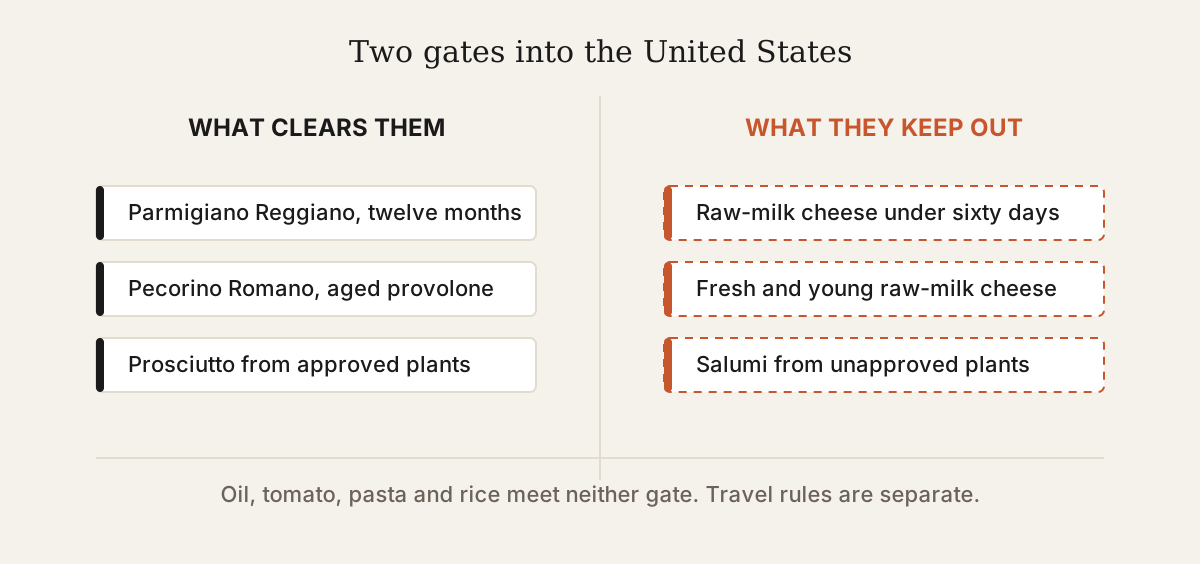
The main reason some Italian foods are unavailable in the United States is a federal rule requiring raw milk cheese to be aged at least sixty days before import or sale, which excludes an entire category of young raw-milk cheeses. Cured meat faces a separate set of animal-health restrictions on which establishments may export. These rules decide part of what reaches an American buyer of Italian food.
This page is about availability rather than about travel. What a visitor may carry in a suitcase is a different question with different rules, and conflating the two is the most common confusion here.
The sixty-day rule
Cheese made from unpasteurised milk may generally be imported into and sold in the United States only if it has been aged for at least sixty days at a controlled temperature. Younger raw-milk cheese is excluded.
The reasoning is that a sixty-day cure at temperature reduces pathogen risk in a raw-milk cheese to an acceptable level. Whether sixty days is the right number is argued about at length by people qualified to argue about it, and the rule is what it is.
What passes comfortably. Parmigiano Reggiano, which is raw milk and aged a minimum of twelve months. Pecorino Romano. Aged provolone. Most of the hard Italian cheeses that matter for cooking clear the threshold by an enormous margin.
What does not. Young raw-milk cheeses, fresh raw-milk cheeses, and a range of soft and semi-soft regional products that are eaten within weeks in Italy. These are simply absent from the American market rather than expensive.
The workaround producers use is making a pasteurised version for export. That is a legitimate product and it is not the same cheese, which is worth knowing when a cheese you had in Italy tastes different bought here.
Cured meat, and the establishment rule
Cured meat faces a different gate: the exporting establishment must be approved, and approval is granted plant by plant rather than to a country or a product category.
That is why a specific producer’s prosciutto may be available while a neighbouring producer’s identical product is not. It is an administrative boundary rather than a judgement about the food.
The practical effect is uneven availability within a category. Prosciutto di Parma and San Daniele are widely available because major consortium producers hold approvals. Export approval is a separate matter from the DOP mark a ham may carry. Small regional salumi from unapproved plants are not.
Historic animal-health restrictions have also shaped the market. Restrictions relating to disease status in specific regions have at various times limited or blocked pork products from parts of Italy, and the picture changes over time as statuses are updated.
This is the reason a great deal of American guanciale, nduja and soppressata is domestically produced. The demand exists, the imported supply is constrained, and domestic charcuterie filled the gap. Much of it is very good.
Travel is a different question entirely
Rules about what a traveller may carry in personal baggage are separate from rules about commercial import, and they are stricter in some respects and looser in others.
The general shape is that hard cured cheese is usually permitted and most meat products are not, but the details change, enforcement is at the border officer’s discretion, and this page is not the place to rely on for a specific trip.
Check the current federal guidance before travelling. The rules are updated, and outdated advice circulates widely.
Checked on 13 August 2026, the first page of United States results for raw milk cheese import restrictions usa returned food publications and regulatory explainers rather than a single consumer authority, which describes that search on that date. The practical reading is that even the explanatory material is fragmented, which is why the official guidance is worth going to directly.
What this means when you shop
Three consequences follow from the two gates above, and together they change how you should read an empty space on a shelf.
An absence is often regulatory rather than commercial. A cheese you cannot find may not be unpopular; it may be ineligible. Asking an importer to source it will not help if the rule is the obstacle.
A pasteurised export version is a real thing. Where a famous cheese is available here and tasted different in Italy, the export version is a likely explanation, and good sellers will tell you which you are buying.
Domestic equivalents deserve a fair hearing. In the categories most constrained by import rules, American producers have had the strongest incentive to make the product properly, and dismissing them on origin alone means missing the best available version.
What is not restricted
Most of the pantry is unaffected, and it is worth saying so, because the restrictions are easy to over-generalise.
Olive oil, vinegar, tinned tomatoes, dried pasta, rice, preserved fish, colatura, olives, flour and shelf-stable preserves face no comparable barrier. The constraints are concentrated in fresh dairy and in meat.
So the categories where sourcing is genuinely hard are narrow, and for most of what this site covers the limiting factor is retail turnover rather than regulation. For everything else, where to buy Italian ingredients is set out separately.
Frequently asked questions
Why can I not buy certain Italian cheeses in the United States?
Most often because they are made from unpasteurised milk and aged less than sixty days, which is the federal threshold for raw-milk cheese to be imported or sold. Young raw-milk cheeses are therefore absent from the market entirely rather than merely expensive. Some producers make a pasteurised version for export, which is a different product.
Is Parmigiano Reggiano affected by the raw milk rule?
No. It is made from unpasteurised milk and aged a minimum of twelve months, which clears the sixty-day threshold by a wide margin. The same is true of Pecorino Romano and most of the hard Italian cheeses used in cooking. The rule bites on young and fresh cheeses rather than aged ones.
Can I bring Italian cheese or meat back from a trip?
Personal baggage rules are separate from commercial import rules and are enforced at the border with some discretion. Hard cured cheese is generally more likely to be permitted than meat products. Because the guidance changes and outdated advice circulates widely, check current federal guidance before travelling rather than relying on a food article.
Why is some prosciutto available and other Italian ham is not?
Because approval to export is granted establishment by establishment rather than to a country or a category. A large consortium producer may hold approval while a small regional producer does not, which produces uneven availability within what looks like a single product category. It is administrative rather than a judgement about quality.
Is domestic American salumi a fair substitute?
Often yes, and in the most import-constrained categories it is frequently the best available option. Guanciale, nduja and soppressata are all made domestically to a serious standard because import constraints created the demand. Judge them on the cut, the cure and the producer rather than on where the plant is.
CalItalia Food covers Italian ingredients: what they are, how to tell a good one from an ordinary one, and where to buy them in the United States.