
Peperoncino Calabrese: The Chilli That Defines Calabrian Food
The small red chilli behind nduja, salsiccia piccante and Calabrian cooking generally. What it is, how hot it is, the forms to buy it in, and where to use it.
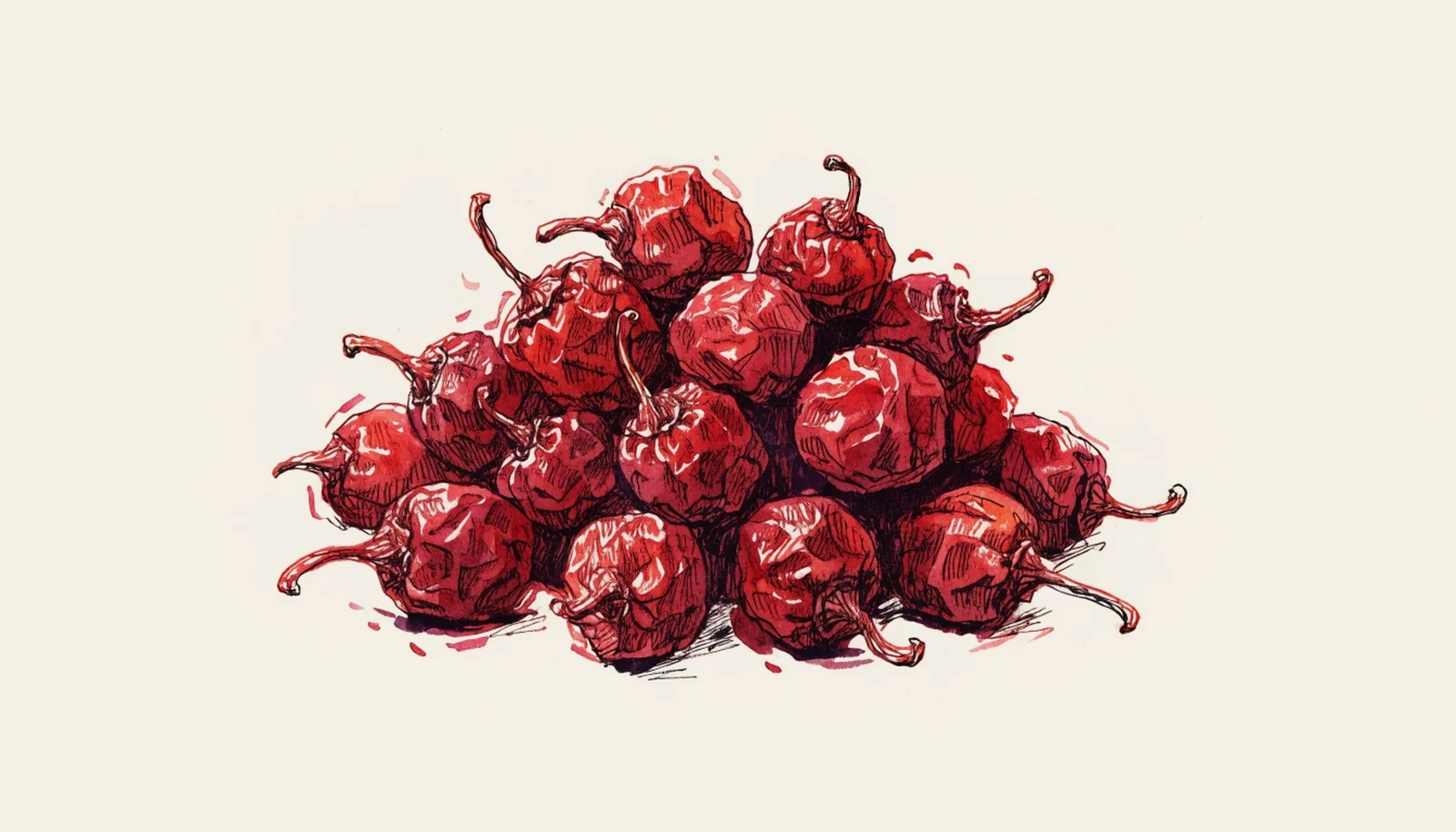
Peperoncino calabrese is the small red chilli grown across Calabria, moderately hot and distinctly fruity, and it is the single ingredient that most defines the region’s cooking. It belongs with the southern Italian ingredients worth seeking out by name.
Calabria uses more chilli than any other Italian region by a wide margin, and almost every preserved product the region exports contains it.
What it is
Peperoncino calabrese is a group of small Capsicum annuum varieties grown throughout Calabria rather than a single protected cultivar.
The fruit is small, typically three to six centimetres, conical and bright red when ripe.
Several local varieties exist and are grown from saved seed rather than as standardised cultivars.
It is not a protected designation. No DOP or IGP covers Calabrian chilli itself.
It is grown across the region, with Diamante on the Tyrrhenian coast the town most associated with it.
Heat runs moderate, roughly 15,000 to 30,000 Scoville units, comparable to a cayenne or a hot serrano.
What it tastes of
Calabrian chilli is fruity and slightly sweet under the heat, with a warmth that builds rather than spikes.
Fruitiness is the distinguishing quality and is what separates it from a generic dried chilli flake.
The heat is moderate and sustained.
Sun drying concentrates the sweetness, which is the traditional preservation method.
Fermented and preserved forms develop a deeper, rounder character.
It is not an extreme chilli, and its reputation rests on flavour rather than on intensity.
The forms it is sold in
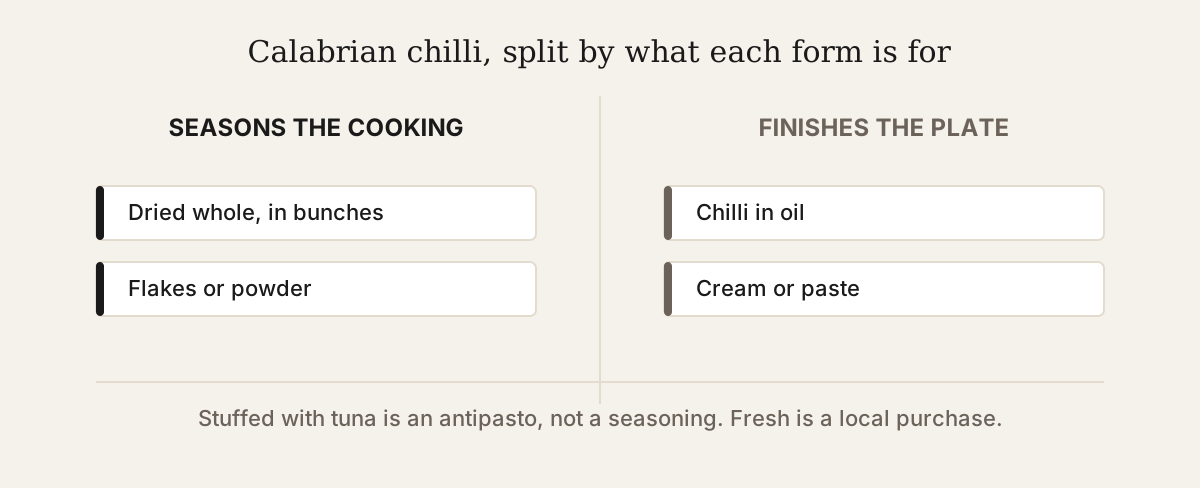
Calabrian chilli reaches the shelf in six main forms and they are not interchangeable.
Fresh, mainly locally and in season.
Dried whole, strung in bunches, the traditional keeping form.
Flakes and powder, which are the everyday cooking forms.
In oil, whole or chopped, ready to spoon onto food, in the sott’olio tradition.
As a cream or paste, blended with oil and salt, sometimes with other ingredients.
Stuffed, with tuna or anchovy and packed in oil, which is an antipasto rather than a seasoning.
Read the ingredient list on creams and pastes, since many contain a majority of other ingredients.
Where it belongs
Peperoncino calabrese belongs throughout Calabrian cooking and in the preserved products the region exports.
Nduja, the spreadable spiced salami, which is built on it.
Salsiccia piccante and other Calabrian cured meats.
Pasta dishes, particularly with garlic and oil.
On pizza, in oil form.
In sauces and stews, added early so the heat distributes.
With fish, which is a Tyrrhenian coastal habit.
Checked on 13 August 2026, United States listings for Calabrian chilli products clustered between roughly seven and twenty dollars per 200 to 300 gram jar. Counting rule: a listing counts when it is an imported Italian product naming Calabrian chilli. That describes what was visible on that date and is not a recommendation of any seller.
Storage
Dried chilli keeps a year airtight; oil-packed and cream forms need refrigeration once opened.
Dried whole chillies keep longest and hold their aroma better than flakes.
Flakes and powder fade within months and lose the fruitiness first.
Refrigerate oil-packed and cream products after opening and keep the contents submerged.
Colour fading indicates age, and a brownish red chilli has lost most of its character.
Frequently asked questions
How hot is Calabrian chilli?
Moderate, roughly 15,000 to 30,000 Scoville units, comparable to a cayenne or a hot serrano. It is meaningfully hot without being extreme, and its reputation rests on a fruity sweetness under the heat rather than on intensity. Individual varieties and batches vary, since it is grown from saved seed rather than as a standardised cultivar.
Is peperoncino calabrese a protected designation?
No. Calabrian chilli is a group of locally grown varieties rather than a single protected cultivar, and no DOP or IGP covers it. Products naming it are describing regional origin and type rather than certifying it, which is unusual among the Italian ingredients on this site.
What is the difference between Calabrian chilli paste and chilli in oil?
Chilli in oil is whole or chopped chilli submerged in oil, so you spoon out recognisable pieces. A paste or cream is blended smooth, often with additional ingredients, and reads as a condiment rather than an ingredient. Reading the label matters, since many creams contain a majority of ingredients other than chilli.
Can I substitute ordinary chilli flakes?
You can, for heat, and the fruity sweetness that distinguishes Calabrian chilli will be missing. Generic dried flakes are frequently a blend of unnamed varieties and read as flat heat. Where the chilli is a background note the substitution passes; in a dish built around it, such as a garlic and oil pasta, the difference shows.
Why does Calabria use so much chilli?
Chilli arrived in southern Italy after the Columbian exchange and took particularly firm hold in Calabria, where it suited both the climate and a cuisine built on preserved meat and fish. It became the region’s defining seasoning, and it is used more heavily there than anywhere else in Italy.
CalItalia Food covers Italian ingredients: what they are, how to tell a good one from an ordinary one, and where to buy them in the United States.