Taggiasca Olives: Small, Dark and Full of Stones
The Ligurian table olive behind Niçoise salad and Ligurian cooking. Why they are sold with stones in, what to do about it, and how to buy and use them.
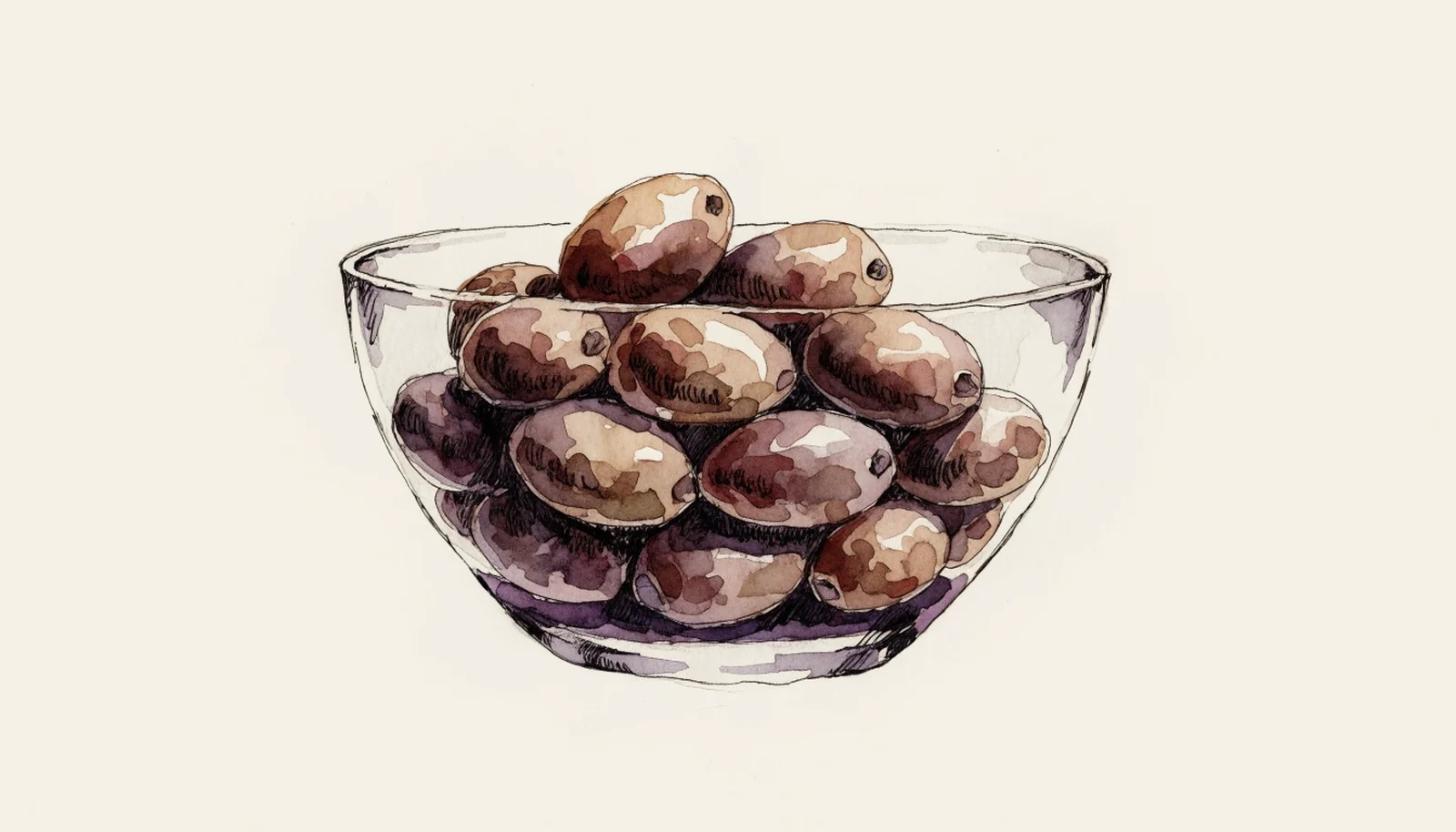
Taggiasca olives are small dark Ligurian table olives, brown to purple-black, mild and slightly sweet, usually sold in brine or oil with the stones still in. They are among the Italian ingredients this site follows from shelf to plate.
The stones are the first practical thing to know about them, because the fruit is small and pitting it yourself is tedious.
What taggiasca olives are
Taggiasca olives are the cured fruit of the taggiasca cultivar, grown on the Ligurian Riviera, principally in the province of Imperia.
The fruit is small, considerably smaller than most table olives.
The colour runs brown through purple to near black, depending on ripeness at picking and on curing.
They are the same cultivar as the Provençal cailletier, sold in France as the Niçoise olive.
The same variety produces Ligurian olive oil, which is covered separately on this site.
They are harvested late, often into winter, when fully ripe.
What they taste of
Taggiasca olives are mild, sweet and nutty, with much less of the salt and bitterness of a Greek-style olive.
Sweetness is the leading note.
Almond and a faint herbal quality sit underneath.
They are low in bitterness compared with most cured olives.
The texture is soft rather than firm, and they are not a crunchy olive.
They are among the mildest table olives sold, which makes them a good entry point for anyone who dislikes assertive olives. Castelvetrano olives play the same role among green olives.
Why they come with stones
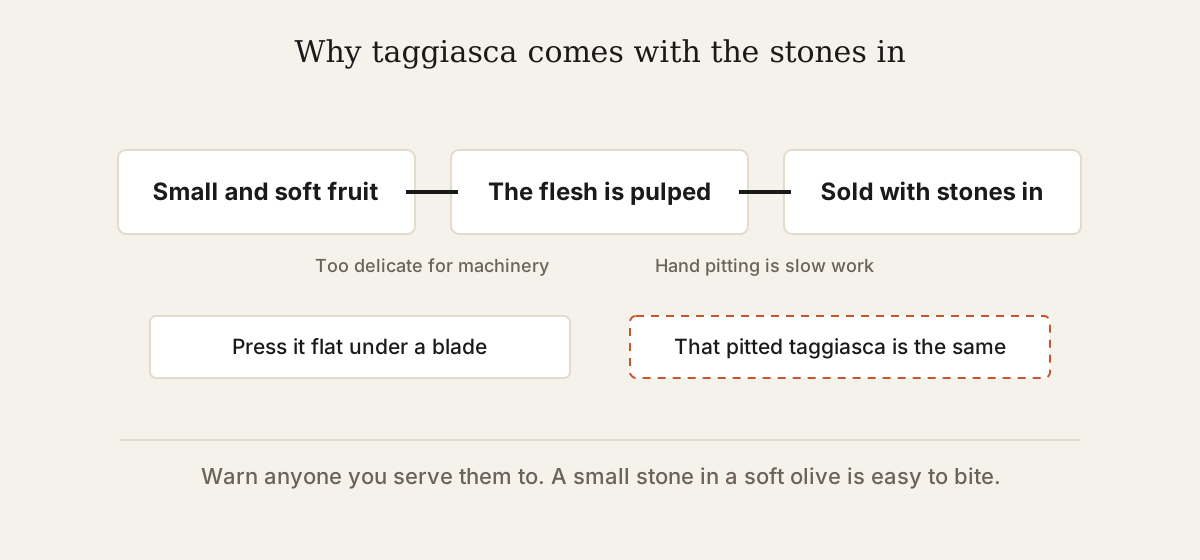
Taggiasca olives are usually sold unpitted because the fruit is too small and soft to pit mechanically without destroying it.
Pitting machines damage small soft fruit, leaving a pulp rather than a whole olive.
Pitted taggiasca exists and is usually more expensive and less intact.
Pitting them by hand is slow and is what the recipe often quietly assumes.
Stones are best removed by pressing the olive flat under a knife blade, which splits the flesh cleanly.
Warn anyone you serve them to, since a small stone in a soft olive is easy to bite unexpectedly.
Brine, oil or vacuum
Taggiasca olives are sold three ways and the packing affects both flavour and keeping.
In brine is the most common and the mildest, and they should be rinsed before use.
In olive oil with herbs, which is richer and where the oil is itself usable afterwards.
Vacuum packed dry-ish, which concentrates the flavour and gives the shortest keeping life once opened.
Check the ingredient list on oil-packed jars. Sunflower oil is frequently used and is not what the price implies.
Checked on 13 August 2026, United States listings for imported taggiasca olives clustered between roughly eight and twenty-two dollars per 200 to 350 gram jar. Counting rule: a listing counts when it is an imported jarred or pouched taggiasca olive. That describes what was visible on that date and is not a recommendation of any seller.
Where they belong
Taggiasca olives belong in Ligurian cooking, in salads and anywhere their mildness will not be overwhelmed.
Coniglio alla ligure, the Ligurian rabbit dish, is their classic home.
Salade niçoise, under their French name.
With fish, particularly baked whole fish with potatoes.
In focaccia, pressed into the dough.
On their own with bread and a glass of wine, which is their simplest use.
They are overwhelmed by strong sauces, where a Kalamata or a Gaeta olive holds up better.
Storage
Unopened jars keep a year or more; once opened, refrigerate and use within two weeks.
Keep them submerged in their brine or oil, which is what protects them.
Top up with brine rather than water if the level drops.
Oil-packed olives solidify in the refrigerator, which is normal and reverses at room temperature.
Discard any that smell fermented or fizzy, which indicates spoilage rather than curing.
Frequently asked questions
Are taggiasca olives the same as Niçoise olives?
They are the same or near-identical cultivar, taggiasca in Liguria and cailletier in Provence, separated by a national border rather than by botany. The cured products differ somewhat because Ligurian and Provençal curing practices differ, and the fruit itself is the same small dark olive.
Why do taggiasca olives still have their stones?
The fruit is small and soft, and mechanical pitting damages it into pulp rather than leaving a whole olive. Pitted versions exist, cost more and are usually less intact. Removing the stone by pressing the olive flat under a knife blade is the practical approach where a recipe needs them pitted.
Are taggiasca olives salty?
They are among the mildest cured olives sold, low in both salt and bitterness compared with Greek-style or Gaeta olives. Rinsing brine-packed ones removes most of the surface salt. Anyone who finds ordinary table olives too aggressive usually finds these approachable.
Can I use taggiasca olives in a puttanesca?
You can, and a stronger olive suits the sauce better. Puttanesca is built on anchovy, caper and chilli, and taggiasca’s mildness disappears against them. Gaeta olives or a Kalamata hold their own in that company, and taggiasca is better kept for dishes where it can be tasted.
What is the oil in the jar for?
Where taggiasca olives are packed in genuine olive oil, that oil takes up their flavour and is worth using on bread, in a dressing or over vegetables. Where the jar is packed in sunflower oil, which is common and cheaper, it is less worth keeping. The ingredient list is the only way to tell.
CalItalia Food covers Italian ingredients: what they are, how to tell a good one from an ordinary one, and where to buy them in the United States.