
Bottarga di Muggine: Grey Mullet Roe, and the One You Actually Want
Salted pressed dried mullet roe from Sardinia, grated over pasta. Why muggine outsells tonno on quality rather than price, and how to judge and buy a lobe.
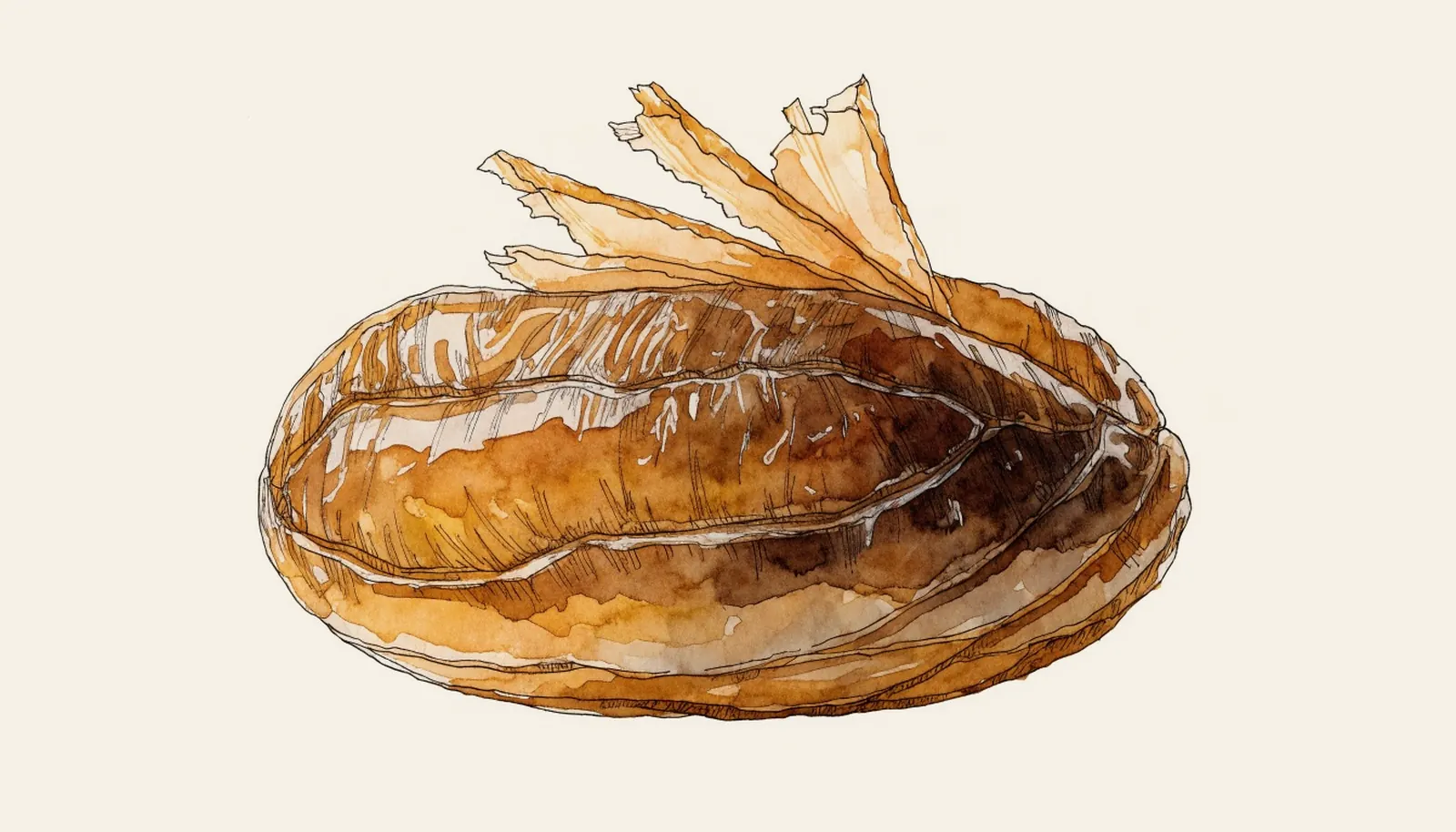
Bottarga di muggine is the salted, pressed and air-dried roe sac of the grey mullet, made principally in Sardinia and grated over pasta. It is the more prized of Italy’s two bottarghe, ahead of the tuna version, and the preference is about flavour rather than scarcity. It is a clear case of the Italian ingredient worth paying extra for.
Anyone approaching bottarga for the first time is choosing between two products with one name, and mullet is the one nearly every Italian cook would pick.
What bottarga di muggine actually is
Bottarga di muggine is the intact ovary sac of a female grey mullet, removed whole, salted, pressed under weight, and air-dried for weeks until firm.
The sac is kept intact. Its membrane holds the roe together through pressing and drying, which is why bottarga is a solid lobe rather than loose eggs.
Salting draws out water and preserves. The lobe is buried in salt for days, then washed and pressed.
Pressing flattens and compacts it, and drying follows over several weeks in air.
The finished lobe is amber to deep orange, translucent when held to light, firm enough to grate and just soft enough to shave.
Sardinia is the centre, particularly around the lagoons of Cabras and Oristano, where the mullet fishery is traditional.
Some lobes are sold coated in wax to protect them, which is normal and is peeled away.
Why muggine is preferred over tonno
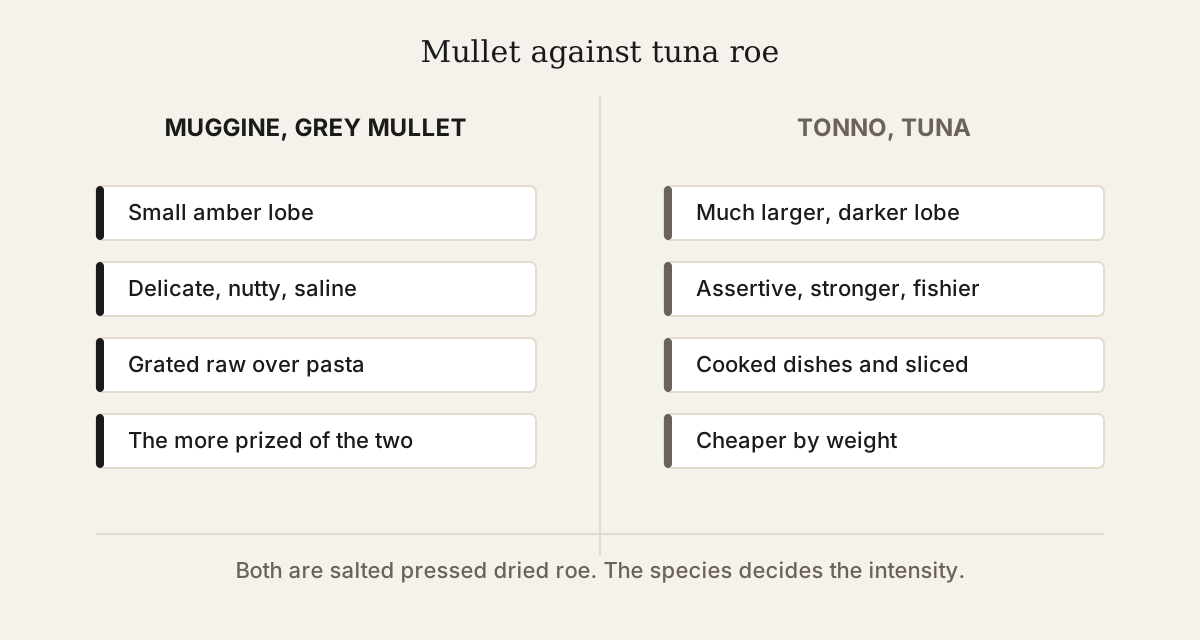
Italy makes bottarga from grey mullet and from tuna, and the mullet version commands both the higher price and the higher regard.
Mullet bottarga is finer grained and dissolves more readily against warm pasta.
Its flavour is more delicate and more complex, with a nutty, faintly bitter almond note behind the marine savour.
Tuna bottarga is coarser, saltier and more directly fishy, and it is a bigger, blunter product.
The lobes differ hugely in size. A mullet sac weighs perhaps 100 to 300 grams; a tuna one can weigh well over a kilogram.
Tuna bottarga is not a poor product. It is cheaper, robust, and better where it will be cooked into something assertive.
But where bottarga is the point of the dish, which is usually the case, muggine is what the recipe means.
How to judge a lobe
Judge it on colour, then firmness, then smell.
It should be amber to deep orange, even in tone, and translucent at the edges when held up to light.
A dark brown lobe is over-dried and will be hard, bitter and difficult to grate.
A pale or greyish lobe is under-cured and will taste flat and be prone to spoiling.
It should be firm but yielding slightly, like a hard cheese rather than like a stone.
It should smell marine and nutty, clean, with no rancid or ammoniated note. Rancidity is the fault to check, since the roe is oily.
Whole lobes beat pre-grated jars decisively. Ground bottarga oxidises within days and loses most of what it was bought for.
Checked on 13 August 2026, United States retail for bottarga di muggine runs to Italian specialty importers and gourmet retailers rather than general grocers, which describes availability on that date rather than recommending any seller.
What it should cost
Expect roughly 90 to 160 dollars a pound in the United States, which is generally sold as a lobe of 100 to 200 grams for 30 to 70 dollars.
The price follows from yield. One female mullet gives one sac, the fishery is small and seasonal, and the curing takes weeks with substantial weight loss to drying.
Tuna bottarga costs considerably less, which reflects the vastly larger lobes as much as the lower regard.
Pre-grated jars are cheaper per gram and are poor value, since the product degrades quickly once ground.
Sardinian origin carries a premium and there is bottarga made elsewhere in the Mediterranean, some of it good.
A little goes very far. A single lobe seasons many meals, which makes the price per plate modest despite the price per pound.
How to use it
Grate or shave it raw over hot pasta, off the heat, at the last moment.
Its saltiness and its marine depth make it a seasoning rather than an ingredient, and the classic use is spaghetti with oil, garlic and grated bottarga and nothing else.
Add it off the heat. Direct heat makes it bitter and drives off the aroma, so the pasta is dressed and then the bottarga goes on. Colatura di alici goes on the same way, at the end.
Use a fine grater for pasta and a peeler or a sharp knife for shavings on a plate.
Do not add salt to the dish before tasting. Bottarga carries a great deal.
Shaved raw with olive oil and lemon on bread or over vegetables is the simplest good use.
It suits artichokes, celery and fennel raw, where the bitterness in the roe meets the bitterness in the vegetable.
Do not put it under a grill or into a hot sauce. That is what tuna bottarga is for.
Storage
Whole and wrapped, refrigerated, several months. Once cut, a few weeks.
Wrap the cut face closely in film or wax paper so it does not dry and darken, and trim a thin slice before the next use if it has.
Leave any wax coating on the uncut portion, since it is there to protect the lobe.
Refrigerate rather than freeze for normal use. Freezing works for very long storage and coarsens the texture slightly.
Do not store it near strong smells, since an oily cured roe absorbs them.
Grate only what you need. Ground bottarga oxidises within days and there is no reason to prepare it in advance.
Frequently asked questions
What is the difference between bottarga di muggine and bottarga di tonno?
Bottarga di muggine is grey mullet roe and bottarga di tonno is tuna roe. Mullet lobes are small, amber, fine-grained and delicately nutty, and they are more prized and more expensive. Tuna lobes are far larger, darker, coarser, saltier and more directly fishy. Where bottarga is the point of a dish, mullet is what the recipe means; tuna suits assertive cooked preparations.
How do you use bottarga?
Bottarga is grated or shaved raw over food at the last moment, off the heat, since direct heat makes it bitter and drives off its aroma. The classic use is over spaghetti dressed with olive oil and garlic. It is a seasoning rather than an ingredient, carries a great deal of salt, and should go on before any additional salt is considered.
Why is bottarga so expensive?
One female grey mullet yields one roe sac, the fishery is small and seasonal, and the curing takes weeks of salting, pressing and air drying with substantial weight loss. That yield sets the price. A single lobe seasons many meals, so the cost per plate is modest even though the cost per pound is high.
Should I buy bottarga whole or grated?
Buy a whole lobe. Ground bottarga oxidises within days of grating and loses most of the delicate nutty aroma that justifies the price, so a jar of pre-grated roe is poor value however cheap it looks per gram. Grate only what a dish needs and keep the rest of the lobe wrapped and refrigerated.
How can I tell if bottarga has gone off?
The fault to check for is rancidity, since the roe is oily, and it announces itself as a sharp stale smell rather than the clean marine and nutty aroma of a good lobe. A very dark brown lobe has been over-dried and will be hard and bitter rather than spoiled. A pale or greyish one is under-cured and will both taste flat and keep badly.
CalItalia Food covers Italian ingredients: what they are, how to tell a good one from an ordinary one, and where to buy them in the United States.