
Carciofini: Baby Artichokes in Oil, and Why the Cheap Jars Are Watery
Small artichoke hearts preserved sott olio or in brine. What separates a jar worth eating from a filler, why the packing liquid decides it, and how to judge and use one.
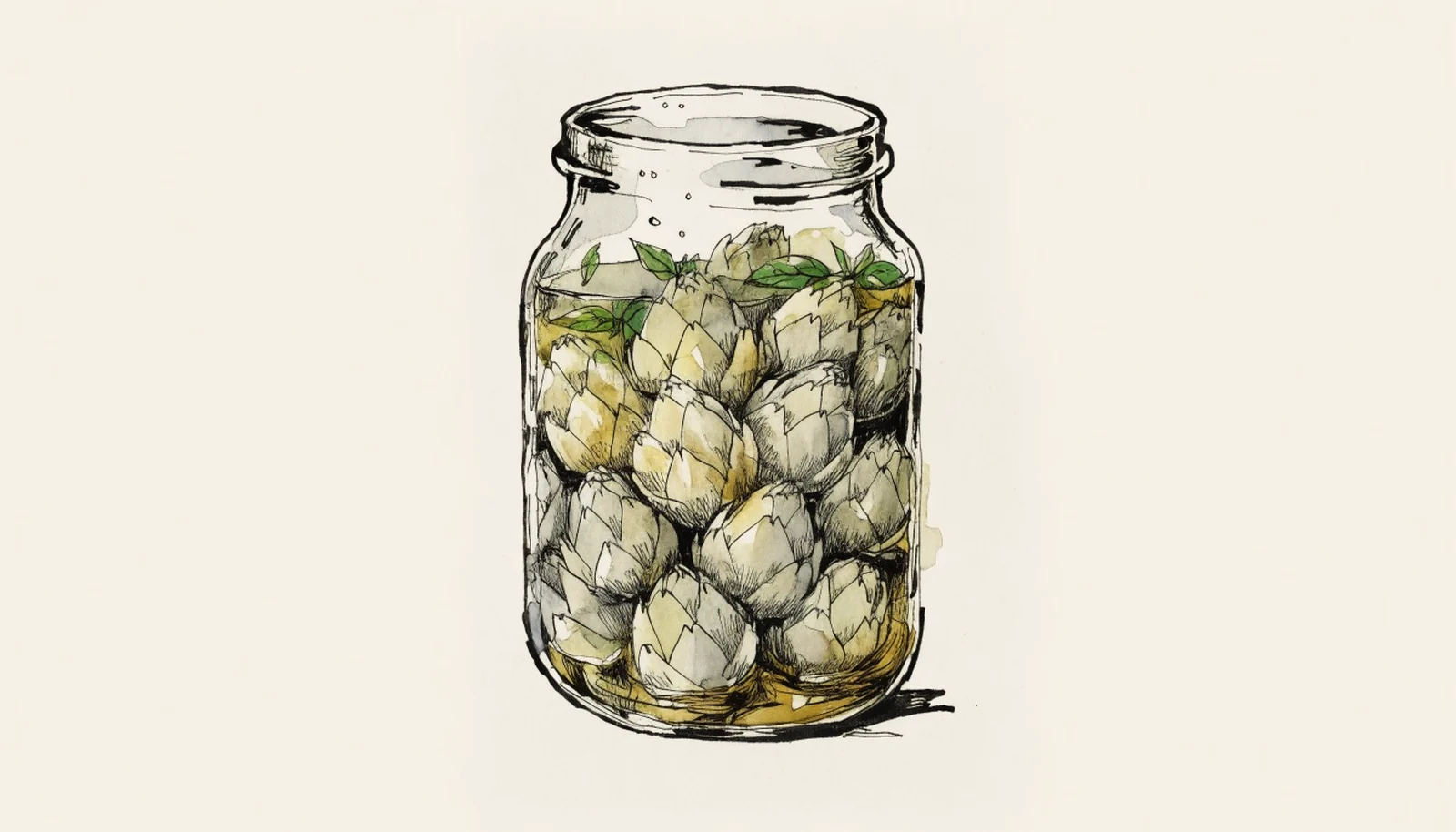
Carciofini are small artichokes, trimmed to the tender heart and preserved in oil or in brine, sold in jars and by weight from a deli counter. The word simply means little artichokes. They are an everyday case of the gap between a good Italian ingredient and an ordinary one.
The gap between a good jar and a poor one is larger here than for almost anything else in this section, and it is decided by two things a buyer can check before opening it.
What carciofini actually are
Carciofini are immature artichokes, picked small before the choke develops, trimmed of outer leaves and stem, blanched in an acidulated liquid and packed in oil or brine.
They are picked young by design. A small artichoke has no fibrous choke to remove, so the whole heart is edible.
Trimming is the labour. The tough outer bracts are stripped by hand and the base is turned, which is why the yield from a raw artichoke is a fraction of its weight.
Blanching in water with lemon or vinegar stops discolouration and softens them before packing.
Packing is in oil, in a vinegar brine, or in a mixture, and this is the main quality variable.
Sott’olio means under oil and is the traditional preservation, covered separately on this site as a category.
They are Italian across the board, with Liguria, Puglia, Sicily and Lazio all producing them, and no DOP covers the preserved product generally.
Why the cheap jars are watery
The two failures in a poor jar are traceable and visible.
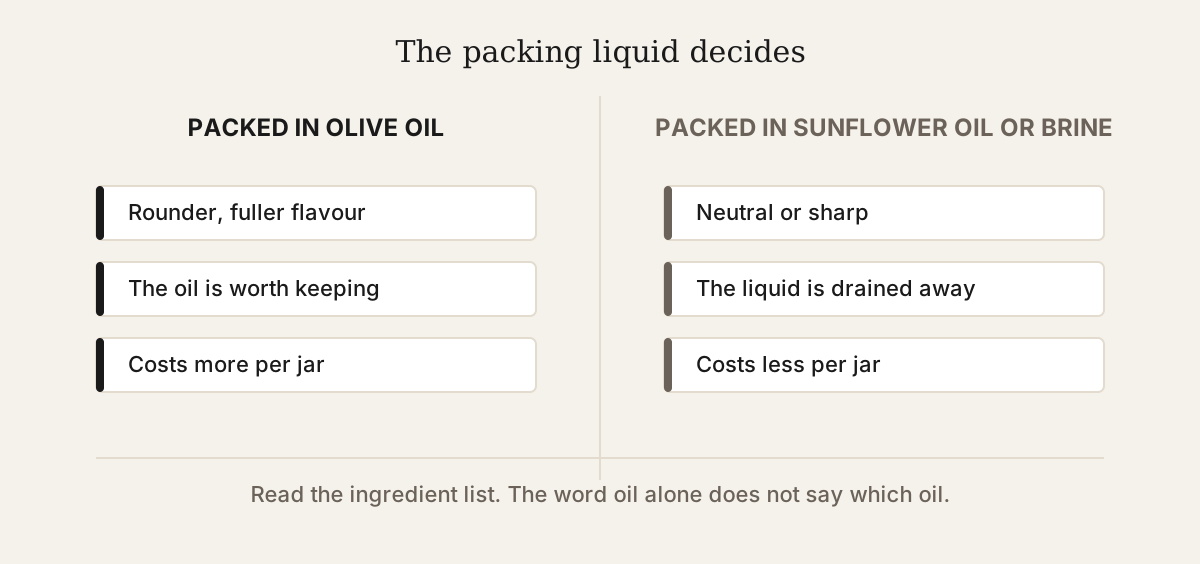
Sunflower oil instead of olive oil is the first. It costs a fraction, contributes nothing, and it is what most inexpensive jars are packed in. The label will say.
Over-blanching is the second. Artichokes boiled too long before packing collapse into something soft and waterlogged that no packing liquid can rescue.
Excess vinegar masks both. A heavily acidulated brine covers the blandness of a poorly made product, which is why very sharp carciofini are usually a warning rather than a style.
Small size does not guarantee quality. A tiny artichoke that was over-blanched is still limp.
Read the oil before the artichoke, in the same way as for tinned sardines, since the two sit together for months.
Checked on 13 August 2026, United States retail for carciofini runs to Italian importers, deli counters and general grocers, which describes availability on that date rather than recommending any seller.
How to judge a jar
Judge it on the ingredient list, then the fruit, then the liquid.
The ingredient list should be short. Artichokes, olive oil, vinegar or citric acid, salt, and perhaps herbs. Anything longer is doing work the artichoke should be doing.
Extra virgin olive oil is the mark of a serious jar, and the oil is worth using afterwards.
The hearts should be intact and firm, holding their shape, pale green to cream, with visible layered structure at the cut.
Brown or grey discolouration means poor handling or oxidation.
They should not be uniformly limp. A good carciofino gives a slight resistance.
The liquid should be clear, not cloudy with sediment, which suggests breakdown.
Grilled or chargrilled versions are a distinct product and legitimate, and the char should be visible rather than a flavouring.
What they should cost
Expect roughly 8 to 20 dollars for a 280 to 300 gram jar in the United States, and the range is meaningful.
Hand trimming is the cost, and there is no way to mechanise stripping an artichoke to its heart at quality. The oil is the second cost.
A cheap jar is sunflower oil and industrial handling, which is a fair product for chopping into a filling where texture matters less.
The expensive end is genuinely different and is worth it if the artichokes are being eaten whole on a plate.
Deli-counter carciofini sold loose are frequently better value than jarred and should be judged on the same criteria.
Frozen artichoke hearts are a separate category and are often better than a poor jar for cooking, since they are not preserved in anything.
How to use them
Serve them at room temperature as antipasto, or chop them into things where their texture survives.
Their mild bitterness and the oil they carry mean they want acid and salt nearby: lemon, capers, anchovy, a hard cheese, a bitter leaf.
Serve at room temperature. Cold, the oil is stiff and the flavour is closed.
Use the oil from a good jar in a dressing rather than discarding it.
They are excellent on a pizza added after baking, or on a piadina or a sandwich.
Chopped through pasta with lemon and parmesan takes minutes and is the best quick use.
Do not cook them long. They are already cooked and further heat turns them to mush.
Drain them briefly before plating, since a pool of oil on the plate is unappealing.
Storage
Unopened jars keep a year or more in a cool dark cupboard. Once opened, refrigerated, two to three weeks.
Keep them submerged in their oil, topping up with olive oil if the level drops. Any piece exposed to air will darken.
Use a clean utensil each time, since introduced bacteria are what spoil an open jar.
The oil will solidify in the refrigerator, which is harmless and reverses at room temperature.
Do not freeze them. The texture collapses entirely.
Discard any jar with a bulging lid or a fermented smell without tasting it, which is the one rule here with a safety consequence.
Frequently asked questions
What are carciofini?
Carciofini are small artichokes, picked young before the fibrous choke develops, trimmed by hand to the tender heart, blanched and preserved in oil or brine. The word means little artichokes. Because they are picked immature, the whole heart is edible and no choke needs removing, which is what distinguishes them from a full-sized artichoke.
Why are some jars of carciofini so cheap?
Cheap jars are packed in sunflower oil rather than olive oil, which costs a fraction and contributes nothing, and the artichokes are frequently over-blanched into something soft and waterlogged. Heavy vinegar in the brine is often used to mask the resulting blandness. Reading the packing oil on the label is the fastest way to place a jar before opening it.
Should carciofini be packed in oil or brine?
Oil-packed carciofini, particularly in extra virgin olive oil, generally taste better and have a better texture, and the oil itself is usable afterwards in a dressing. Brine or vinegar packing gives a sharper, leaner product that suits chopping into a filling or a salad. Very sharply acidic carciofini are usually masking a poorly made artichoke rather than expressing a style.
Can I cook with carciofini?
Carciofini are already cooked, having been blanched before packing, so further cooking turns them to mush. They are best used at room temperature as antipasto, chopped through pasta off the heat, or added to a pizza after baking. For a dish that genuinely requires cooked artichoke, frozen artichoke hearts are the better raw material.
How long do carciofini last once opened?
An opened jar keeps two to three weeks refrigerated, provided the artichokes stay submerged in their oil and a clean utensil is used each time. Any piece exposed above the oil line will darken and deteriorate, so topping up with olive oil is worth doing. Unopened jars keep a year or more in a cool dark cupboard.
CalItalia Food covers Italian ingredients: what they are, how to tell a good one from an ordinary one, and where to buy them in the United States.