
Gaeta Olives: The Wrinkled Purple Ones, and Two Different Cures Under One Name
Small dark Lazio olives sold either brine-cured and smooth or dry-salted and wrinkled. Which one a recipe means, how to judge a jar, and how to use them in cooking.
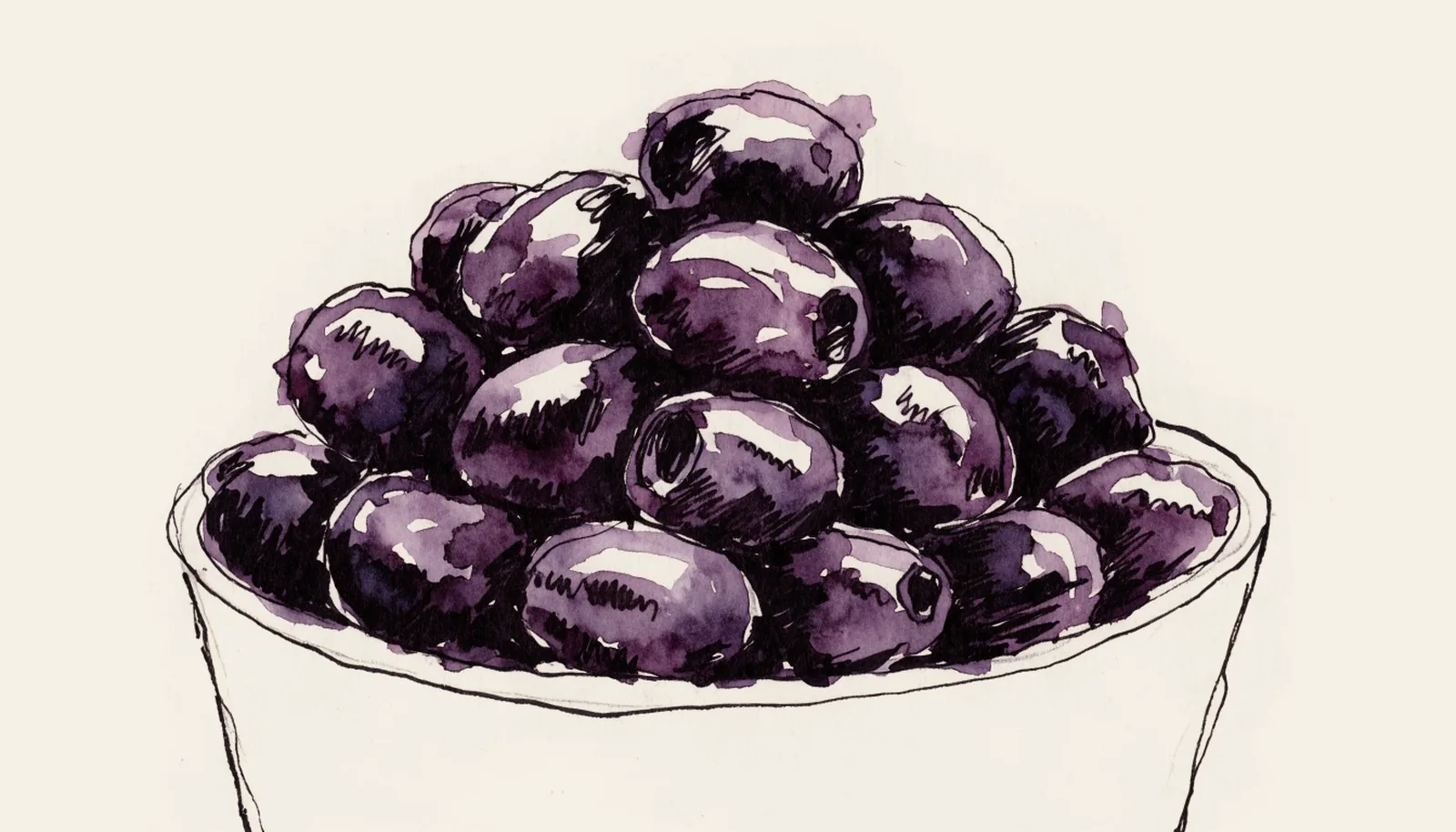
Gaeta olives are small, dark purple-brown olives associated with the town of Gaeta in southern Lazio, and they reach a shelf in two quite different states: brine-cured, smooth and plump, or dry-salt-cured, wrinkled and chewy. Both are legitimately Gaeta olives. Which one is in the jar is exactly the sort of question this site exists to answer.
A recipe calling for them almost never says which, and the two behave differently enough that it is worth working out before you buy.
What Gaeta olives actually are
Gaeta olives are small dark olives, traditionally of the Itrana cultivar, grown in southern Lazio around Gaeta and Itri, picked ripe and cured by one of two methods.
They are picked fully ripe, which is why they are dark purple-brown to near-black naturally rather than through treatment.
The fruit is small with a relatively large stone, so the flesh yield is modest.
The flavour is winey and faintly bitter, more assertive than a Cerignola and less salty than a Greek dry-cured olive.
Itrana is the cultivar in the traditional product, and Oliva di Gaeta carries protected recognition in Italy, though a great deal sold under the name is not from the zone.
They are a Lazio and southern Italian staple, used in cooking far more than as a table olive.
The name is used loosely in the United States, where Gaeta-style dark olives from elsewhere are common.
The two cures
The single most useful thing to know about Gaeta olives is which cure produced the ones in front of you.
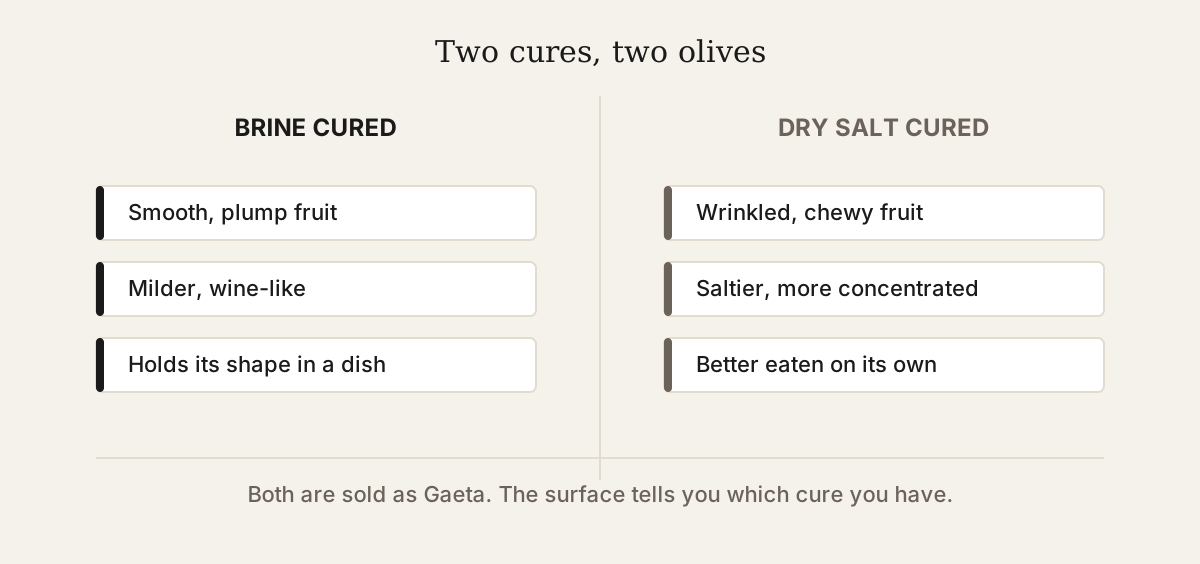
Brine-cured Gaeta are smooth and plump. Fermented in salt water over weeks, they stay juicy, are moderately salty and have a soft yielding flesh with a winey tang.
Salt-cured Gaeta are wrinkled and chewy. Packed in dry salt, which draws the water out, they are considerably saltier, denser, more concentrated and often rubbed with oil afterwards.
The wrinkled ones are what most people picture when they think of a Gaeta olive, and the smooth ones are more common in Italy.
They are not interchangeable in a dish. A salt-cured olive will make a sauce noticeably saltier and will not soften; a brine-cured one will contribute moisture and less punch.
Neither is more authentic. Both are traditional and the choice is regional and personal.
The label rarely says which, so the visual test is the reliable one: wrinkled means salt-cured, smooth means brine.
How to judge a jar
Judge it on the fruit, then the liquid, then the smell.
Brine-cured should be plump and unbroken, dark purple-brown, with intact skin and no mushiness.
Salt-cured should be evenly wrinkled, glossy if oiled, and pliable rather than rock hard.
Colour should vary between olives. A perfectly uniform deep black suggests oxidation treatment rather than natural ripening, which is common in the wider olive trade.
The brine should be clear to faintly cloudy, smelling clean and winey. Murky brine or a sharply sour smell means a fermentation fault.
Stones should be present. Pitted Gaeta olives lose flavour to the brine quickly and go soft.
The floor for this page rests on a thin competitor sample. Only two extractable competitors were found for the head, so any figure here is a guide rather than a surveyed measurement.
Checked on 13 August 2026, the first page of United States results for gaeta olives returned Italian food retailers and specialist grocers, which describes that search on that date rather than recommending any seller.
What they should cost
Expect roughly 9 to 16 dollars a pound in the United States, below the large table olives.
Small fruit with a large stone gives a modest flesh yield, and the cure is long, but these have never been a luxury product and the price reflects that.
Salt-cured usually costs slightly more than brine, reflecting the weight lost to the salt.
Genuine Itrana fruit from the Gaeta zone costs more than generic dark olives sold under the name, and the distinction is rarely marked.
Very cheap black olives sold as Gaeta are frequently a different cultivar, oxidation-darkened, which is a different product at a fair price rather than a fraud.
How to use them
Use them in cooking. Gaeta olives are a cooking olive first and a table olive second.
Their winey bitterness stands up to heat and to strong company, which is exactly what a Cerignola cannot do.
They are the olive for puttanesca and for most southern Italian braises, where they contribute salt, bitterness and depth.
Pit them yourself shortly before cooking rather than buying pitted, which are softer and less flavourful.
Add salt-cured ones late and taste before seasoning the dish, since they carry a great deal of salt.
They suit slow-cooked chicken, rabbit and fish, and any tomato sauce that wants an edge.
Serve them at room temperature if putting them on a table, where the winey note is far more legible. For a milder table olive, a Castelvetrano is the more obvious choice.
Storage
In their brine, refrigerated after opening, three to four weeks. Salt-cured in oil keep longer, a couple of months.
Keep brine-cured olives submerged, topping up with a light salt brine rather than water if the level drops.
Keep salt-cured olives covered in oil if they came that way, which protects them and keeps them pliable.
Use a clean utensil each time, since introduced bacteria spoil an open jar.
Unopened jars keep a year or more in a cool dark cupboard.
Do not freeze them. The flesh collapses, particularly the brine-cured ones.
Frequently asked questions
What is the difference between brine-cured and salt-cured Gaeta olives?
Brine-cured Gaeta olives are fermented in salt water and stay smooth, plump, juicy and moderately salty with a winey tang. Salt-cured ones are packed in dry salt that draws the water out, leaving them wrinkled, chewy, denser and considerably saltier, often rubbed with oil afterwards. Both are traditional. The visual test is reliable: wrinkled means salt-cured, smooth means brine.
Are Gaeta olives from Gaeta?
Traditional Gaeta olives are Itrana cultivar fruit grown in southern Lazio around Gaeta and Itri, and Oliva di Gaeta carries protected recognition in Italy. A great deal of what is sold under the name in the United States is a different dark cultivar from elsewhere, sold in the same style. The name is used loosely and rarely carries an origin guarantee here.
Are Gaeta olives naturally black?
Gaeta olives are picked fully ripe and are naturally dark purple-brown to near-black, without treatment. A jar in which the olives vary in colour between fruit is showing natural ripening. A perfectly uniform deep black across every olive suggests oxidation darkening, which is common in the wider olive trade and is worth checking the ingredient list for.
What can I substitute for Gaeta olives?
Kalamata olives are the closest widely available substitute for brine-cured Gaeta, being similarly dark, winey and assertive, though somewhat sharper. For salt-cured Gaeta, a Moroccan or Greek dry-cured black olive is close. Green table olives are not a substitute in either case, since the bitterness and the winey depth are what the recipe wants.
Can I use Gaeta olives on a cheeseboard?
Gaeta olives work on a board and are better used in cooking, since their winey bitterness and their small size suit a sauce or a braise more than a plate. For a table olive, a large mild Cerignola or a buttery Castelvetrano is the more obvious choice. Serving Gaeta at room temperature rather than cold makes a considerable difference if they are going out whole.
CalItalia Food covers Italian ingredients: what they are, how to tell a good one from an ordinary one, and where to buy them in the United States.