
Passata: The Uncooked Sieved Tomato
Raw tomatoes crushed and strained, not a cooked sauce. What separates passata from purée and from tinned tomatoes, and how to buy and use a good bottle.
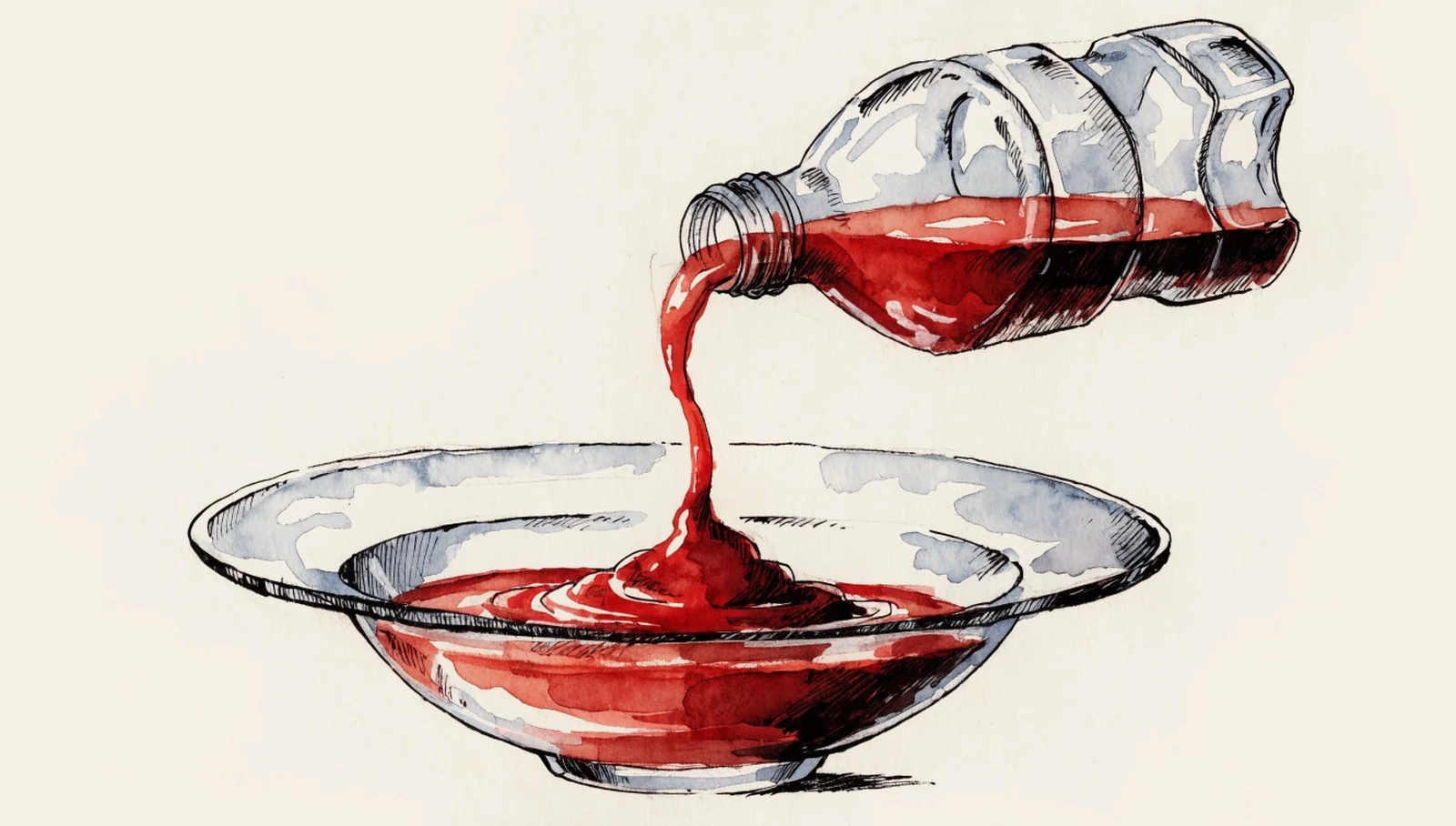
Passata is raw tomato that has been crushed and passed through a sieve to remove skins and seeds, bottled and pasteurised, with nothing added. Like every ingredient on this site, it is judged by the gap between the real product and what the label suggests.
It is not a sauce, not a purée and not a concentrate, and the English-language habit of calling every tomato product tomato purée is where the confusion starts.
What passata is
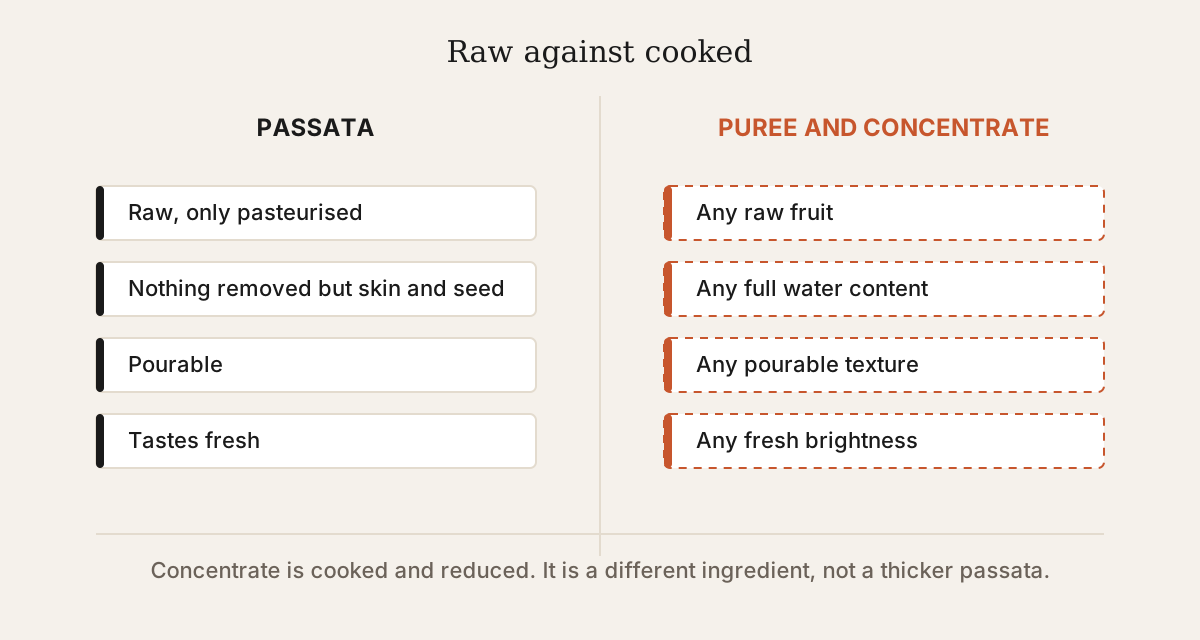
Passata is uncooked tomato, sieved smooth, bottled and heat-treated for shelf stability.
The tomatoes are raw when sieved, which is the defining characteristic.
Skins and seeds are removed by the sieving, which is what passata means.
It is pasteurised in the bottle rather than cooked as a sauce.
Nothing is added in a proper passata, no salt, no herbs, no acid.
The texture is pourable, thinner than purée and thicker than juice.
Passata rustica is a coarser version with some texture retained.
How it differs from the neighbours
Four tomato products are routinely confused and each is made differently.
| Product | Cooked? | Water removed | Texture |
|---|---|---|---|
| Passata | no, pasteurised only | none | smooth, pourable |
| Tomato purée, UK sense | yes | substantial | thick paste |
| Tomato purée, US sense | yes | some | thick liquid |
| Concentrate, doppio concentrato | yes | most | very thick paste |
| Tinned whole or chopped | briefly | none | pieces in juice |
The word purée is the problem. It means a thick concentrate in British usage and a thinner cooked product in American usage, and neither is passata.
Concentrate is a different ingredient with a cooked, caramelised flavour, used in small quantities for depth.
Tinned whole tomatoes keep their pieces, which passata by definition does not.
Passata rustica and the smooth kind
Two grades of passata are sold and the difference is how finely the tomato was sieved.
Standard passata is sieved smooth and pours cleanly, with no visible texture.
Passata rustica is coarser, retaining some pulp and body, and it sits between passata and crushed tomatoes.
Rustica suits dishes wanting texture, including rustic pasta sauces and vegetable stews.
Smooth passata suits pizza and soups, where an even coating or a clean body is wanted.
Neither is a quality grade. Both are made the same way and differ only in the sieve.
Producers state which on the label, and rustica is usually the more expensive of the two.
Why the raw part matters
Passata tastes fresher than any cooked tomato product because it has not been cooked before you get it.
Cooking develops sweetness and depth and loses brightness.
Passata arrives with the brightness intact, so the cooking you do is the only cooking it gets.
That makes it the better base for a quick sauce, where twenty minutes in the pan is the whole preparation.
It is a poorer choice where you want depth without effort, which is what a good tinned tomato slowly cooked provides.
How to buy it
Read the ingredient list, look at the colour, and check where the tomatoes were grown.
The ingredient list should read tomatoes, and nothing else. Salt, citric acid and basil all appear in lesser products.
Colour should be bright red rather than orange or brown. Brownish passata has been overheated.
Glass bottles are the norm and let you see the colour before buying.
Country of origin for the fruit is more informative than where it was bottled.
Checked on 13 August 2026, United States listings for imported Italian passata clustered between roughly three and nine dollars per 680 to 700 gram bottle. Counting rule: a listing counts when it is an imported Italian sieved tomato sold as passata. That describes what was visible on that date and is not a recommendation of any seller.
Cheap passata is frequently made from concentrate reconstituted with water, which the ingredient list will show.
Making it at home
Passata is made at home by crushing raw tomatoes and passing them through a food mill, and it is the traditional late-summer job in much of Italy.
Use ripe plum tomatoes, such as San Marzano, since round salad tomatoes carry too much water.
Quarter them raw and pass them through a food mill fitted with a fine plate, which separates the skins and seeds without cooking.
A passatutto or passapomodoro is the traditional tool, and a modern electric tomato mill does the same job faster.
Do not blend them. A blender pulverises the seeds and skins into the purée and turns it bitter and pale.
Bottle and process in a boiling water bath if keeping it, following a tested procedure for acidity and timing.
Freezing is the simpler home route and avoids the preserving question entirely.
The bottling season
Passata is bottled once a year in Italy, and that seasonality explains both the quality variation and the price.
Tomatoes are processed in late summer, from roughly July through September.
The whole year’s supply is made then, which is why a producer’s bad year shows on the shelf.
Fresher stock tastes brighter, and bottles carry a production or best-before date that indicates the harvest.
Buying soon after the season gets the current year’s fruit.
Home bottling follows the same calendar, which is why Italian families set aside a weekend for it.
How to use it
Passata suits quick sauces, pizza and anything where fresh tomato flavour is the point.
A twenty-minute sauce with garlic, oil and basil, which is its home use. Tinned datterini suit the same short cooking.
Pizza, either raw or barely cooked.
Soups and stews, added as a base.
Not where you want long-cooked depth, which tinned whole tomatoes and a longer simmer deliver better.
Season it yourself. Passata arrives unseasoned by design, and salting it early in the pan improves it.
Storage
An unopened bottle keeps a year or more; once opened, refrigerate and use within four or five days.
Refrigerate immediately after opening.
It freezes well, and freezing in portions is the practical answer to a large bottle.
A film of oil on top slows spoilage in the refrigerator.
Discard if it smells fermented or the bottle has bulged, without tasting.
Frequently asked questions
Is passata the same as tomato purée?
No, and the word purée is the source of the confusion. In British usage tomato purée means a thick cooked concentrate; in American usage it means a thinner cooked product. Passata is neither, being raw tomato sieved smooth and pasteurised rather than cooked, with nothing removed but skins and seeds.
Can I substitute tinned tomatoes for passata?
You can, by blending tinned whole tomatoes and straining out the seeds, which gets close. The result will taste slightly more cooked, since tinned tomatoes are briefly heat-treated with their skins on. For a quick sauce the difference is noticeable; in a long-cooked dish it disappears.
Why is my passata orange rather than red?
Orange or brownish colour usually means the product was overheated during processing, or that it was made from reconstituted concentrate rather than from fresh fruit. Good passata is bright red. Checking the ingredient list for concentrate and buying in glass so the colour is visible are the two practical defences.
Should passata contain salt?
A proper passata contains tomatoes and nothing else. Salt, citric acid, basil and other additions all appear in cheaper products and all indicate a lesser one, since they let a producer compensate for poorer fruit. Seasoning is the cook’s job and is better done in the pan.
Is passata cooked?
Passata is pasteurised for shelf stability and not cooked as a sauce, which is the distinction that matters. The tomatoes are raw when they are crushed and sieved, and the heat treatment that follows is short. That is why passata tastes fresher than any product that was simmered before bottling.
CalItalia Food covers Italian ingredients: what they are, how to tell a good one from an ordinary one, and where to buy them in the United States.