
Sott'Olio: Italian Vegetables Preserved Under Oil
What sott'olio actually means, why the vegetables are acidified first, how to judge a properly made jar against a risky one, and how to use the contents.
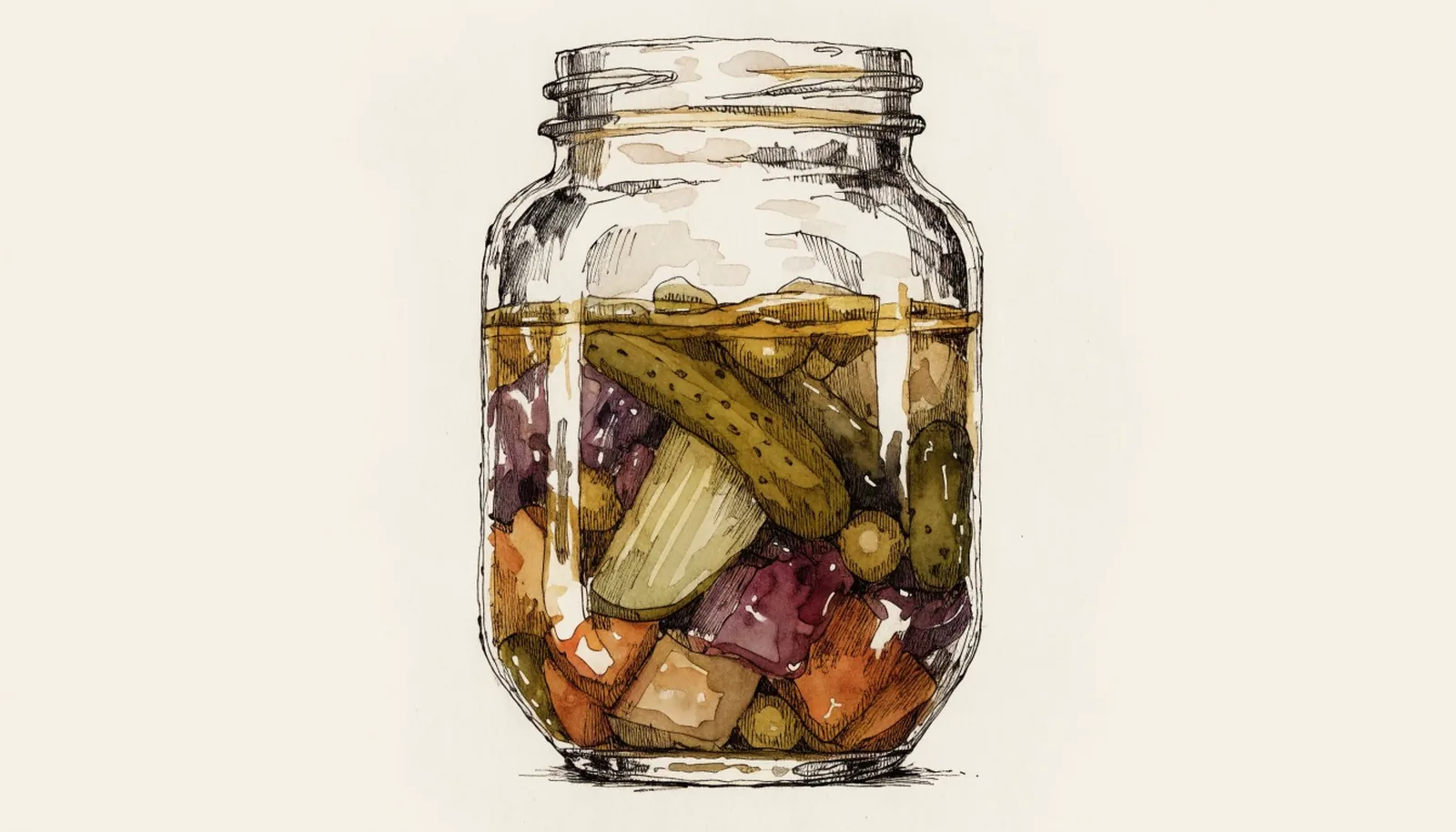
Sott’olio means under oil, and it describes the Italian tradition of preserving vegetables by cooking or curing them and then covering them with oil in a sealed jar. Judging such a jar falls under the four questions this site asks of every ingredient.
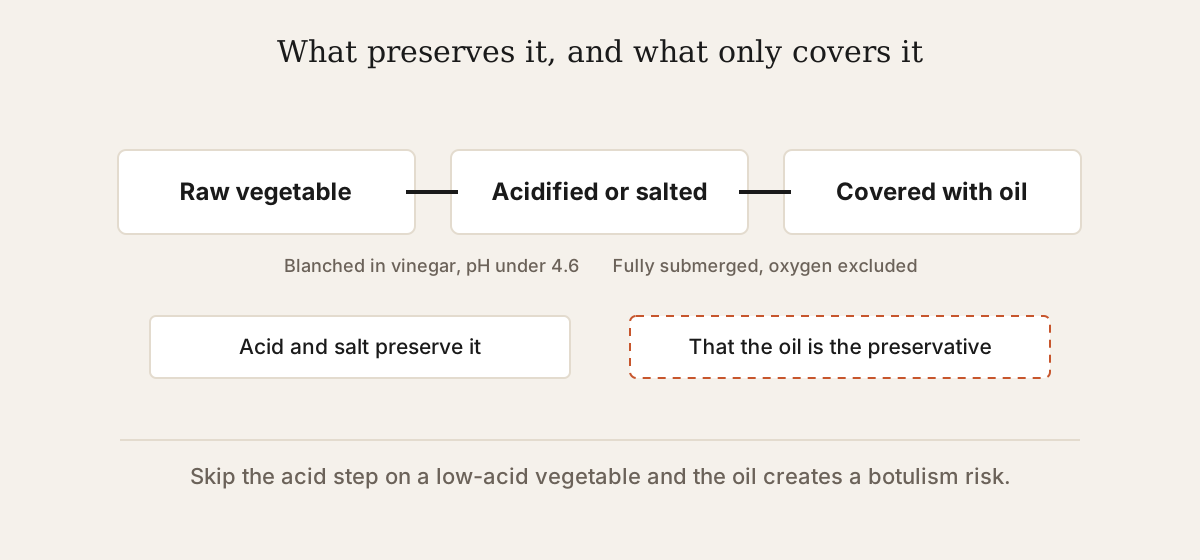
The oil is not the preservative. Acid and salt are, and the oil excludes air, which is a distinction that matters for safety as well as for flavour.
What sott’olio actually is
Sott’olio describes vegetables preserved under oil after they have been made safe by another means.
Sott’olio is the packing method, not the preservation method.
Sott’aceto is the parallel term for vegetables preserved under vinegar.
The vegetables are usually blanched in vinegar or a vinegar and wine mixture first, which lowers the pH.
Some are salt-cured instead, drawing out water before oiling.
The oil then excludes oxygen, which slows oxidation and keeps the vegetable from drying.
Common examples are artichokes, aubergine, peppers, mushrooms, dried tomatoes and courgette.
Why the acid step matters
Covering a low-acid vegetable in oil without acidifying it creates the same anaerobic conditions that make garlic in oil hazardous.
Oil excludes oxygen, which is exactly what Clostridium botulinum requires.
Acidification below roughly pH 4.6 prevents the bacterium growing.
Commercially made sott’olio is acidified and frequently pasteurised as well.
Home preserving without a tested recipe is where the risk sits, and Italian regional health authorities publish guidance specifically on this preparation.
This site reports the guidance and is not a food safety authority. Anyone preserving at home should follow a tested method.
How to judge a jar
Look at the oil, the vegetables and the ingredient list, in that order.
The oil should be clear rather than cloudy or separated in an odd way. Cloudiness from cold is normal and resolves at room temperature.
Vegetables should be fully submerged. Any piece above the oil line is exposed.
The lid should be sealed and should pop when opened.
Read the oil. Sunflower oil is common and cheaper, and an olive oil jar will say so and cost more. The same check applies to oil-packed taggiasca olives.
Look for vinegar or citric acid in the ingredients, which indicates the acid step.
Checked on 13 August 2026, United States listings for imported Italian sott’olio vegetables clustered between roughly seven and twenty-two dollars per 280 to 500 gram jar. Counting rule: a listing counts when it is an imported Italian vegetable preserve packed in oil. That describes what was visible on that date and is not a recommendation of any seller.
What to do with them
Sott’olio vegetables are an antipasto first and an ingredient second.
On an antipasto board, which is their home use.
In sandwiches and panini, particularly grilled vegetables and artichokes.
Chopped into pasta off the heat.
On pizza after baking rather than before.
The oil is worth keeping where it is olive oil, having taken up the vegetable’s flavour.
Drain them before adding to a hot dish, or the oil will make it greasy.
Storage
An unopened jar keeps a year or more; once opened it needs refrigeration and the vegetables must stay submerged.
Refrigerate after opening.
Keep everything under the oil. Press the vegetables down and top up with more oil if the level falls.
Use a clean utensil each time, since introducing crumbs or moisture shortens the life considerably.
Two to three weeks refrigerated is a reasonable working limit once opened.
Discard anything with a bulging lid, a bad smell or gas on opening, without tasting it.
Frequently asked questions
Does the oil preserve the vegetables?
No, and this is the common misunderstanding. The oil excludes air, which slows oxidation and drying. Preservation comes from the acid or salt step applied before the vegetables go into the jar. Oil alone over a low-acid vegetable creates the anaerobic conditions that make the preparation hazardous rather than safe.
Is homemade sott’olio safe?
Homemade sott’olio is safe when made to a tested recipe that acidifies the vegetables properly, and risky when it does not. The hazard is Clostridium botulinum, which grows in low-acid food in the absence of oxygen. Italian regional health authorities publish guidance on this specific preparation, and following a tested method rather than improvising is the practical answer.
What is the difference between sott’olio and sott’aceto?
Sott’olio means under oil and sott’aceto means under vinegar. Sott’aceto vegetables sit in vinegar, which both preserves and flavours them and leaves them sharp. Sott’olio vegetables are acidified or salted first and then covered in oil, which gives a rounder, less acidic result.
Can I reuse the oil from the jar?
Where the jar is packed in genuine olive oil, that oil has taken up the vegetables’ flavour and is worth using in dressings or over bread. Where it is sunflower oil, which is common in cheaper jars, it is less worth keeping. Either way it should be refrigerated once the jar is open.
How long does an opened jar last?
Two to three weeks refrigerated is a reasonable limit, provided the vegetables stay fully submerged in oil and a clean utensil is used each time. Anything above the oil line spoils faster. A bulging lid, a fermented smell or gas on opening means the jar goes out without tasting.
CalItalia Food covers Italian ingredients: what they are, how to tell a good one from an ordinary one, and where to buy them in the United States.