
Capperi di Pantelleria: The IGP Caper, and Why Salt Beats Vinegar
Sun-dried salt-packed capers from a volcanic island between Sicily and Tunisia. What the IGP covers, why the salt cure is the better one, and how to judge, rinse and use them.
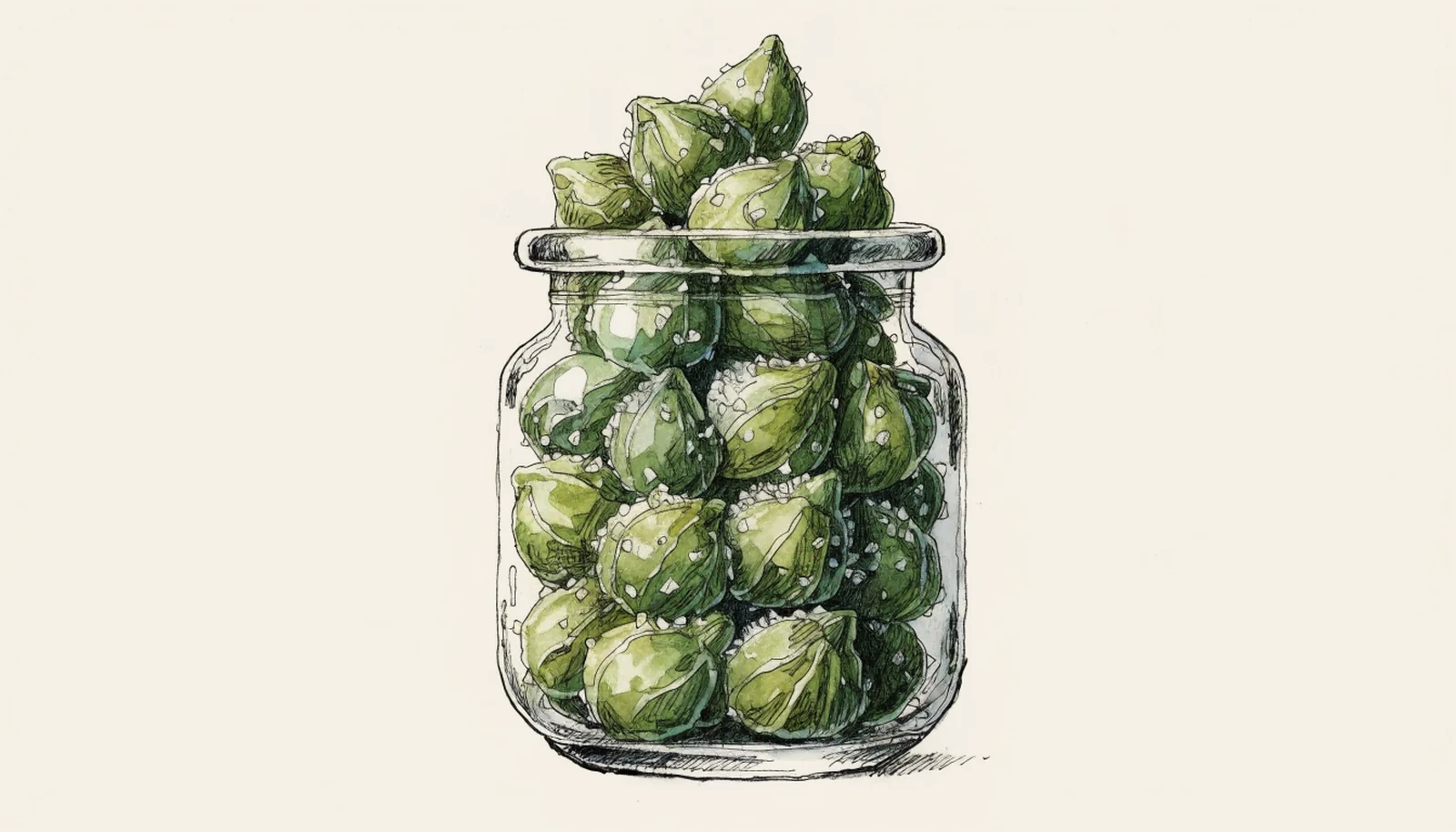
Cappero di Pantelleria IGP is the caper of a small volcanic island between Sicily and Tunisia, packed in sea salt rather than vinegar brine. The salt cure is the reason it tastes of caper rather than of pickle. That one choice is the gap between the genuine article and the supermarket version in miniature.
That distinction is the single most useful thing on this page. A brined caper and a salted caper are not two grades of one product; they taste different in a way that changes the dish.
What capers from Pantelleria actually are
Capers are the unopened flower buds of Capparis spinosa, picked by hand before they open, wilted in the sun and layered with sea salt to cure.
Pantelleria is a volcanic island roughly seventy kilometres from Tunisia and considerably further from Sicily, with a hot dry climate and mineral soil.
The plants grow on terraces and walls, unirrigated, in conditions that would kill most crops, and the harsh site is generally held to concentrate the flavour.
Picking is done by hand, daily, in summer, since a bud that opens is worthless and the window is short.
They are graded by size. The smallest, sometimes called nonpareil-grade, are the most prized and the most expensive, being more concentrated and more tender.
Cappero di Pantelleria carries an IGP, which ties production to the island.
Cucunci are the fruit rather than the bud, the caper berry, and are a different product covered separately.
Why salt beats vinegar
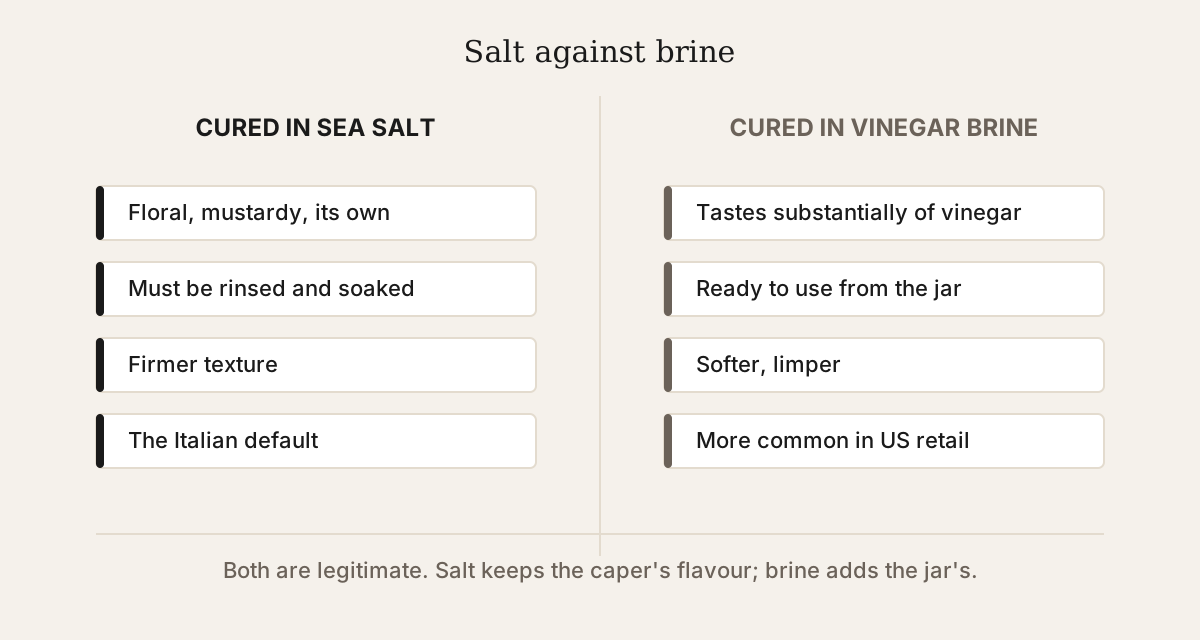
Salt-packed and brine-packed capers are the same bud treated two ways, and the results are not close.
Salt draws water out and concentrates. The bud loses moisture, the flavour intensifies, and the mustard-oil compounds that give a caper its character develop.
Vinegar brine masks. A caper in acid tastes substantially of the acid, and the floral, faintly mustardy quality is buried under it.
Texture differs. Salt-cured capers stay firm and slightly crunchy; brined ones go soft.
Salt-cured capers keep almost indefinitely unopened, since salt is the preservative, while brined ones deteriorate once the jar is opened.
Brined capers are not useless. They are cheaper, need no rinsing and are perfectly adequate where the dish is already acidic. But if the caper is meant to be tasted, the salt-packed one is the buy.
This is the same argument as salted against tinned anchovies, and it goes the same way.
How to rinse them properly
Salt-packed capers must be rinsed, and doing it badly is the usual reason people conclude they are too salty.
Rinse under cold running water first, rubbing the crystals off with your fingers, for a good thirty seconds.
Then soak. Ten to fifteen minutes in cold water for a normal use, changing the water once.
Taste one before using them. This is the step people skip and it is the only reliable check, since the salt loading varies between jars and grades.
Do not soak them for hours. Over-soaking leaches the flavour out along with the salt, leaving a limp, bland bud.
Pat them dry before adding to anything that will be fried, or they will spit.
Do not rinse the whole jar. Take what you need, since rinsed capers do not go back into storage well.
How to judge a jar
Judge them on size, then colour, then the salt.
Smaller is better. The smallest grades are more tender and more concentrated, and they cost more for that reason.
They should be uniform in size within a jar, which indicates proper grading.
Colour should be olive to greyish-green, dull rather than bright. A vivid green suggests a brined product or added colour.
The salt should be dry and crystalline, coating the buds, not damp or caked into a paste.
None should be open. A bud that has flowered is a picking failure and has little flavour.
Look for the IGP mark if you want the Pantelleria guarantee, since capers from elsewhere are widely sold and are frequently good.
Checked on 13 August 2026, the first page of United States results for capers pantelleria returned Italian specialty importers and a general marketplace listing, which describes that search on that date rather than recommending any seller. Availability here is reasonable through specialist sellers.
What they should cost
Expect roughly 12 to 25 dollars for a 100 gram jar of salt-packed IGP capers in the United States, with the smallest grades at the upper end.
Hand-picking daily through a hot summer on terraced volcanic ground is the cost, and the yield per plant is small.
Brined supermarket capers cost a fraction of that and are a different product rather than a cheaper version of the same one.
Non-IGP salt-packed capers from Sicily or elsewhere are usually cheaper and can be excellent, and the salt cure matters more than the island.
The smallest grade is worth the premium if the capers are being tasted rather than buried.
How to use them
Rinse, soak briefly, taste, then add near the end of cooking or raw.
Their floral, mustardy sharpness is a seasoning rather than an ingredient, and they belong with fish, tomato, lemon, butter and anything rich enough to need cutting.
Add them late. Long cooking dulls them, so a caper going into a sauce belongs in the last few minutes.
Fried whole they open into a crisp flower, which is a genuine technique and an excellent garnish for fish.
They are essential in puttanesca and in a good salsa verde, and they are what makes a butter sauce for fish work.
Do not add salt to a dish before tasting it with the capers in. Even rinsed, they carry salt.
Chop them or leave them whole deliberately. Chopped, they distribute; whole, they give bursts.
Storage
Salt-packed capers keep a year or more unopened in a cool cupboard, and months once opened.
Keep them covered in their salt. Any bud exposed above the salt line will darken and dry.
Top up with coarse sea salt if the level drops, which is entirely acceptable.
They do not need refrigeration while salt-packed, which is one of their practical advantages.
Rinsed capers do not store. Use what you rinse.
Brined capers, by contrast, must be refrigerated after opening and used within a few weeks.
Frequently asked questions
Are salt-packed capers better than capers in brine?
Salt-packed capers taste considerably more of caper, because the salt draws out water and concentrates the floral, faintly mustardy flavour, while vinegar brine masks it with acid. Salt-cured buds also stay firm rather than going soft. Brined capers are cheaper and adequate where the dish is already acidic, and where the caper is meant to be tasted the salt-packed one is the better buy.
How do you rinse salt-packed capers?
Rinse them under cold running water for about thirty seconds, rubbing the salt crystals off with your fingers, then soak in cold water for ten to fifteen minutes, changing the water once. Taste one before using them, since the salt loading varies between jars. Do not soak for hours, which leaches out the flavour along with the salt and leaves a limp, bland bud.
What does the Pantelleria IGP guarantee?
Cappero di Pantelleria IGP ties the capers to the volcanic island between Sicily and Tunisia, covering their production there. The island’s hot dry climate, mineral soil and unirrigated terraced cultivation are held to concentrate the flavour. Capers from Sicily and elsewhere are widely sold without the mark and are frequently very good, so the salt cure matters more to the finished dish than the island does.
What is the difference between capers and caper berries?
Capers are the unopened flower buds of the caper plant, picked before they open, and are small and intensely flavoured. Caper berries, called cucunci, are the fruit that forms if a flower is allowed to open and set, and they are much larger, milder and usually served whole with a stalk. They are the same plant at two stages rather than two products.
Are smaller capers better?
Smaller capers are more tender and more concentrated in flavour, and they are graded and priced accordingly, with the smallest commanding a premium. Larger buds are coarser and less intense without being poor. Where the capers will be buried in a long-cooked sauce the size matters little; where they will be tasted, the small grades are worth the difference.
CalItalia Food covers Italian ingredients: what they are, how to tell a good one from an ordinary one, and where to buy them in the United States.