
Colatura di Alici: The Anchovy Liquid Worth the Price
A clear amber anchovy sauce from Cetara, made by pressing salted anchovies for months. What separates real colatura from fish sauce, and how to buy and use a small bottle.
Colatura di alici is the clear amber liquid drawn off anchovies that have been layered with salt and pressed in wooden barrels for months, and it comes from Cetara on the Amalfi coast. It is not a fish sauce substitute and not an anchovy paste; it is the concentrated liquid the fish gives up. It is a clear case of the gap between the real article and its stand-ins.
It is one of the few Italian pantry items where a very small bottle at a high price is genuinely correct, because a teaspoon does the work of a great deal of salt and depth.
What colatura actually is
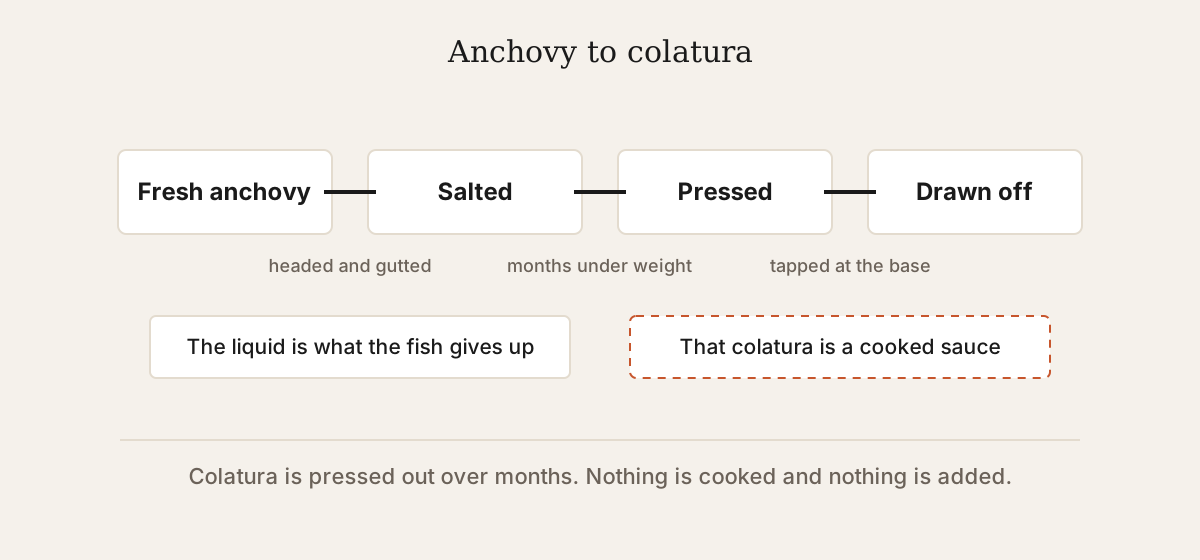
Colatura di alici is made by layering cleaned anchovies with sea salt in a wooden barrel, weighting them, and letting the liquid that forms drain slowly over several months before it is drawn off and filtered. Two ingredients: anchovies and salt.
The barrel matters to the traditional product. Chestnut or oak barrels, called terzigni, are the vessel of record, and the maturation runs through the warm months so the fish break down slowly under salt rather than spoiling.
The finished liquid is clear, amber to mahogany, and intensely savoury rather than fishy. Good colatura smells of the sea and of cured fish, not of decay.
Cetara, and the designation position
Colatura di Alici di Cetara holds IGP protection, which ties the production to the Cetara tradition and its method. That is a genuine mark and it is worth looking for.
Products labelled simply colatura di alici without the Cetara designation may still be well made, and some are made elsewhere on the Amalfi coast to the same method. The mark narrows the field rather than defining the whole of it.
How it differs from Asian fish sauce
Colatura and Asian fish sauce are both fermented anchovy liquids and are not interchangeable, because the fermentation length, the fish-to-salt ratio and the filtration all differ.
Colatura is shorter, saltier per volume and cleaner. It is drawn off rather than fermented to completion, so it carries less of the funk that a long-fermented Southeast Asian fish sauce develops.
Colour tells you a lot. Colatura runs amber and translucent. Most fish sauces run darker brown and more opaque.
In practice the substitution runs one way. A good fish sauce can stand in for colatura at reduced quantity and will bring more funk. Colatura substituting for fish sauce in a Southeast Asian dish will taste thin and salty rather than deep, because the fermentation that dish expects has not happened.
Neither is a substitute for anchovy fillets, which bring fat and texture as well as savour.
How to judge a bottle
Look at the colour, the clarity and the ingredient list, in that order, and expect a very short list.
The list should read anchovies and salt. Anything else, and particularly water, is a dilution. Some producers list an anchovy percentage; higher is better.
The liquid should be clear rather than cloudy, with no sediment. Cloudiness suggests either poor filtration or a product that has been shaken up and stored badly.
Amber to deep mahogany is right. Very pale suggests a young or diluted product; very dark and opaque suggests something closer to a fish sauce.
Small bottles are the norm and the correct format. Colatura is used in teaspoons, and a large bottle will oxidise long before you finish it.
What it should cost
Expect roughly 15 to 30 dollars for a 100 millilitre bottle in the United States, and treat that as reasonable rather than steep given the yield.
The price reflects a real conversion: a large quantity of anchovies produces a small quantity of liquid over months, and none of that process can be shortened. A cheap colatura is usually either diluted or a fish sauce relabelled.
Per use it is inexpensive. A bottle at 20 dollars used a teaspoon at a time lasts many months, which makes the per-dish cost lower than most premium pantry items on this site.
Where to buy it
Specialist Italian importers and serious online food sellers carry it; ordinary supermarkets almost never do.
Checked on 13 August 2026, the first page of United States results for colatura di alici returned specialist importers and reference material, including Gustiamo and a general marketplace. That describes that search on that date rather than recommending any seller.
This is one of the items where buying online from an importer is genuinely the practical route rather than a fallback, because turnover in general retail is too low for it to be widely stocked.
How to use it
Use it raw and at the end, in quantities of a teaspoon or two, because heat drives off the aromatics and leaves only the salt.
The classic use is spaghetti alla colatura: garlic and chilli warmed in olive oil off the heat, colatura stirred through, tossed with pasta and parsley, with no added salt at all. The dish takes minutes and demonstrates the ingredient better than anything else.
Beyond that it goes into dressings, over roasted or grilled vegetables, into a bean dish at the end, brushed on grilled fish, or stirred into a tomato sauce off the heat.
Do not add salt to a dish you have seasoned with colatura until you have tasted it. It is very salty, and over-salting is the most common first mistake.
Do not boil it. Adding colatura to a simmering sauce wastes most of what you paid for.
Storage
Keep it cool and dark, and refrigerate after opening. It will hold for a year or more but its aromatics fade after a few months.
Light is the main enemy, which is why good producers bottle it in dark glass. A bottle left on a sunny counter will flatten noticeably.
It does not spoil in a dangerous way. Salt at that concentration is self-preserving, so the failure mode is dullness rather than risk.
Frequently asked questions
Is colatura the same as garum?
They are relatives rather than the same thing. Garum was the Roman fermented fish condiment, and colatura is generally understood as a descendant of that tradition surviving on the Amalfi coast. The modern product is made to its own method with a specific fish and a specific process, so calling colatura garum is a historical gesture rather than an accurate description.
Can I substitute fish sauce for colatura?
You can, using less than the recipe calls for, and accepting a funkier and less clean result. Southeast Asian fish sauces ferment longer and taste correspondingly deeper and more pungent. In a dish like spaghetti alla colatura, where the ingredient is the whole point, the substitution changes the dish substantially.
Does colatura smell fishy?
It smells strongly of cured fish and of the sea, which most people find savoury rather than unpleasant, and it should not smell of decay or ammonia. In a finished dish the fishiness recedes almost entirely and reads as depth and salt. If a bottle smells sharp or ammoniac, it has gone.
How much colatura should I use?
Start with a teaspoon for two servings and adjust upward. It is intensely salty and concentrated, and the most common error is treating it like a cooking liquid rather than a seasoning. Season the dish with colatura first and add salt afterwards only if it needs it.
Is Colatura di Alici di Cetara IGP worth paying more for?
The mark ties the product to the Cetara method and area, which is a real guarantee about how it was made. Products from the same coast made the same way without the designation can be excellent. Treat the IGP as a reliable shortcut when you cannot assess the producer, rather than as the only route to a good bottle.
CalItalia Food covers Italian ingredients: what they are, how to tell a good one from an ordinary one, and where to buy them in the United States.