
Piennolo Tomatoes: The Vesuvian Tomato Hung in Bunches
A small thick-skinned tomato from the slopes of Vesuvius, traditionally hung to keep for months. What the DOP covers, what makes the fruit unusual, and how to buy and use it.
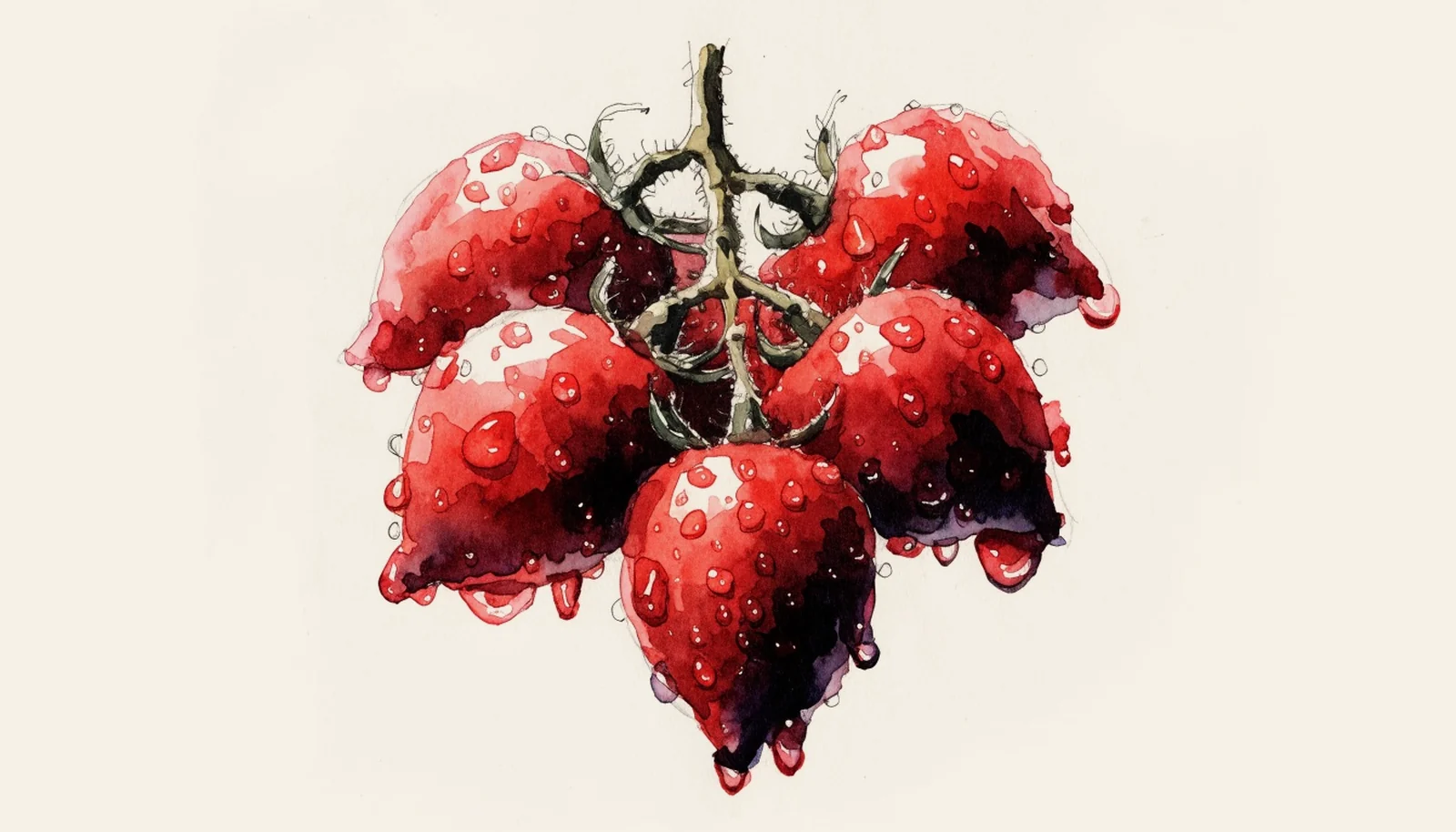
Pomodorino del Piennolo del Vesuvio DOP is a small thick-skinned tomato grown on the volcanic slopes of Vesuvius, traditionally tied into large bunches and hung to keep through the winter. It is one of the protected Italian ingredients worth understanding before buying.
The hanging is the point. These tomatoes were bred to survive months off the vine without refrigeration or processing.
What piennolo tomatoes are
Piennolo tomatoes are a small oval tomato with a pointed tip, thick skin and dense flesh, grown on the volcanic soils around Vesuvius.
Piennolo means pendulum in Neapolitan, describing the hanging bunch.
The fruit is small, roughly 20 to 25 grams each.
The skin is notably thick and the flesh is dense and low in water.
A pointed tip, the pizzo, is characteristic.
Acidity is high and sugar is concentrated, which is the flavour signature.
The DOP covers a defined area on the slopes of Vesuvius and Monte Somma.
Why they keep
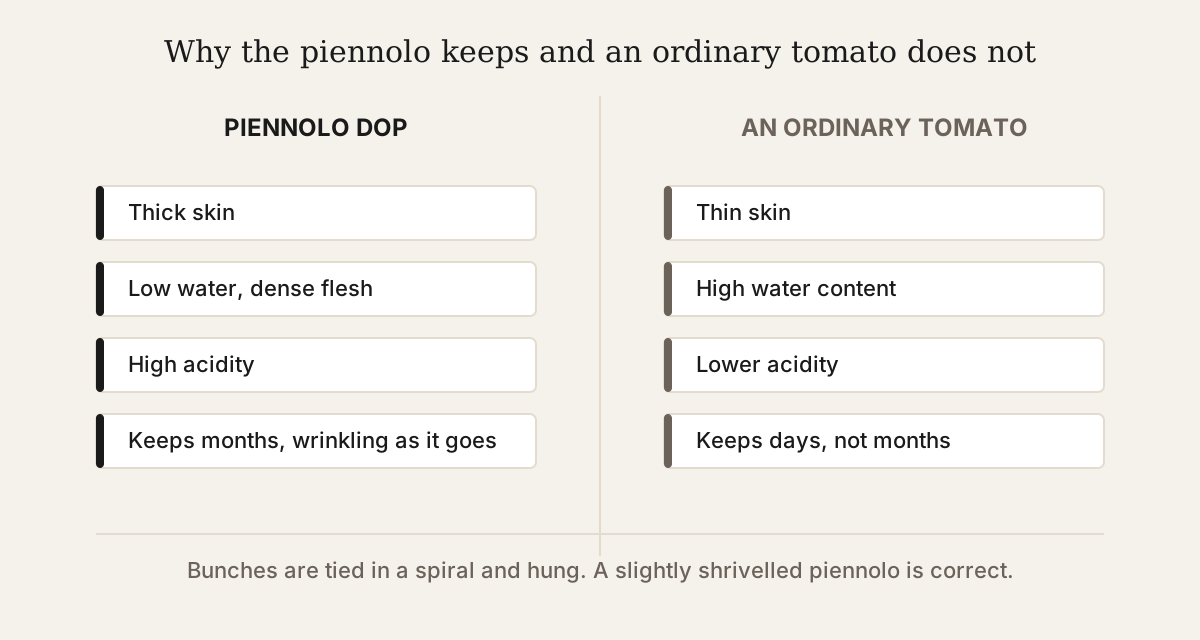
The combination of thick skin, low water content and high acidity lets the fruit hold for months without processing.
Thick skin resists water loss and physical damage.
Low water content means less to lose.
High acidity inhibits spoilage.
Bunches are tied in a spiral around a circle of hemp twine and hung in a ventilated place.
They keep from harvest in summer through to the following spring, concentrating in flavour as they go.
They wrinkle rather than rot, and a slightly shrivelled piennolo is correct rather than past it.
Fresh, in bunches and in jars
Piennolo tomatoes reach the market in three forms and each is a different product.
Fresh loose fruit in season, mainly locally.
Hung bunches, the traditional form, sold whole and kept at home for months.
Preserved in jars, peeled in their own juice, which is the form most exported.
The DOP covers all three, with separate requirements for the preserved product.
Jarred piennolo is not a lesser product, and the fruit is processed within a short window of picking.
Checked on 13 August 2026, United States listings for imported piennolo DOP tomatoes clustered between roughly nine and twenty-five dollars per 500 gram jar. Counting rule: a listing counts when it is an imported tomato naming the Piennolo del Vesuvio DOP. That describes what was visible on that date and is not a recommendation of any seller.
How to use them
Piennolo tomatoes suit quick sauces, pizza and anything where their acidity and concentration are the point.
Spaghetti al pomodorino, cooked briefly so the fruit bursts rather than breaks down.
On pizza, crushed by hand rather than blended.
With fish, particularly in an acqua pazza.
Whole in a pan with garlic and oil, which is the Neapolitan default.
They do not want long cooking. Their character is fresh acidity and it flattens with time. The same holds for datterini, another small southern tomato.
Do not seed them. The gel around the seeds carries much of the flavour and there is little of it.
Piennolo against San Marzano
Both are Campanian DOP tomatoes and they are different fruit for different jobs.
San Marzano is a large plum tomato bred for peeling and long cooking into sauce.
Piennolo is a small round-to-oval tomato bred for keeping and for quick cooking.
San Marzano is sweeter and lower in acid.
Piennolo is sharper and more concentrated.
Using one for the other’s job produces a recognisably different dish rather than a failure.
Frequently asked questions
Why are piennolo tomatoes hung in bunches?
The bunches let air circulate around the fruit, which is how they keep for months without refrigeration or processing. The tomato was bred for exactly this, with a thick skin, dense low-water flesh and high acidity, and the practice predates domestic refrigeration on the slopes of Vesuvius.
What does piennolo mean?
Piennolo is Neapolitan for pendulum, describing the large hanging bunch the tomatoes are tied into. The full DOP name, Pomodorino del Piennolo del Vesuvio, names both the hanging form and the volcanic area on the slopes of Vesuvius where the fruit is grown.
Are wrinkled piennolo tomatoes still good?
Wrinkling is expected and is a sign the fruit is doing what it was bred to do, losing water slowly while concentrating in flavour. A hung bunch is meant to shrivel over the months. Softness, mould or a fermented smell are different matters and mean the fruit has gone.
What is the difference between piennolo and San Marzano?
San Marzano is a large plum tomato bred for peeling and long cooking into sauce, sweeter and lower in acid. Piennolo is small, thick-skinned and sharply acidic, bred for keeping and for quick cooking where the fruit bursts rather than breaks down. Both are Campanian DOP tomatoes for different jobs.
Should I buy jarred or fresh piennolo?
Jarred piennolo DOP is what reaches the United States reliably and is processed within a short window of picking, so it is not a compromise product. Fresh hung bunches are largely a local Campanian purchase. For sauce and pizza the jarred fruit does the job the tomato is known for.
CalItalia Food covers Italian ingredients: what they are, how to tell a good one from an ordinary one, and where to buy them in the United States.